I’ve learned the hard way that six materials actually survive outdoors. Corten steel, which develops a distinctive rusted orange patina, lasts 30–50 years once that patina settles in 6–12 months. Marine-grade aluminum, specifically 5052 or 6061 alloy at 1/8-inch thick, resists salt spray effectively with just a quarterly rinse. Fiberglass offers practical advantages at 10–15 pounds for a 24-inch box compared to concrete’s 80+ pounds, with 3/16-inch walls and UV-stable resin.
Western red cedar naturally resists rot for 15–20 years. Concrete and thick-walled polyethylene complete the list, though concrete requires significant effort to move and cheap plastic cracks under stress. Each material performs differently through freeze-thaw cycles, so the right choice depends on your climate, budget, and physical capacity to handle weight.
What Really Makes Outdoor Planters Last
What actually separates a planter that’ll crack before your petunias bloom from one that’ll outlast your mortgage? It’s all about material performance and construction quality, not just looks.
Take fiberglass planters, for example. They’re incredibly lightweight (think 10–15 pounds for a 24-inch box versus 80+ for concrete), yet they deliver serious durability through UV-protected finishes that keep colors from fading to that sad, chalky gray. They handle freeze-thaw resistance through brutal Midwest winters without cracking, which ceramic can’t claim.
Weather resistance comes down to smart details: proper drainage systems (holes at least ½-inch wide, elevated ¼-inch off the ground), wall thickness (aim for 3/16-inch minimum), and resin quality. Skip any of these, and you’re replacing planters in three seasons.
Corten Steel Outdoor Planters: 50-Year Durability With Patina
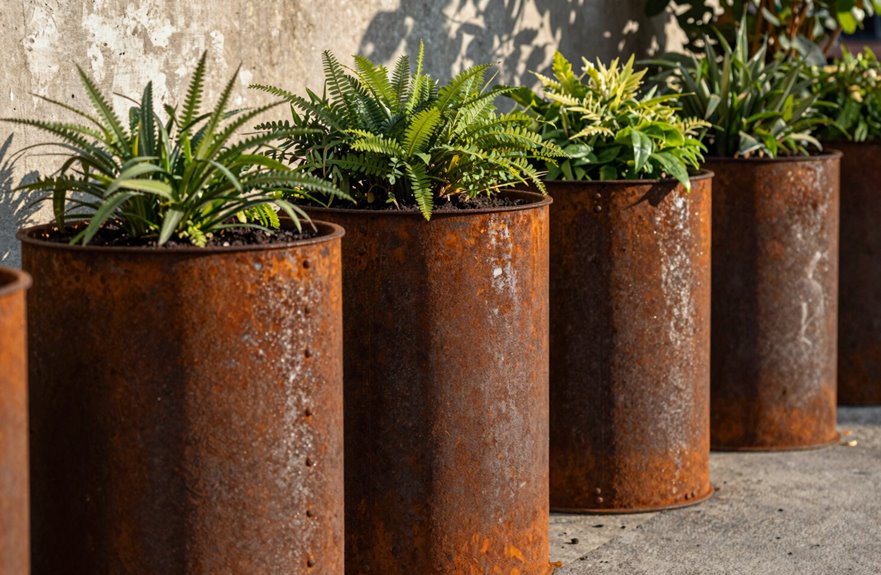
I’ve seen planters come and go, but Corten steel is the one material that actually gets better with age. Within 6–12 months, these planters develop a rich, protective patina that locks in their weather resistance, making them essentially maintenance-free.
The durability here is remarkable. Expert ratings reach 9.5/10 with a lifespan stretching 30–50+ years. The freeze-thaw resistance is notable; these planters withstand harsh winters and thrive in coastal climates where salt air destroys lesser materials.
For optimal performance, keep 18+ inches from light-colored pavers to prevent early runoff stains, and let moisture cycle naturally to speed the patina. For big planters over 24 inches, specify welded ribs and proper thickness: 1/8 inch for planters under 36 inches, 3/16 inch for those beyond.
Aluminum Outdoor Planters: Rust-Proof Performance for Coastlines
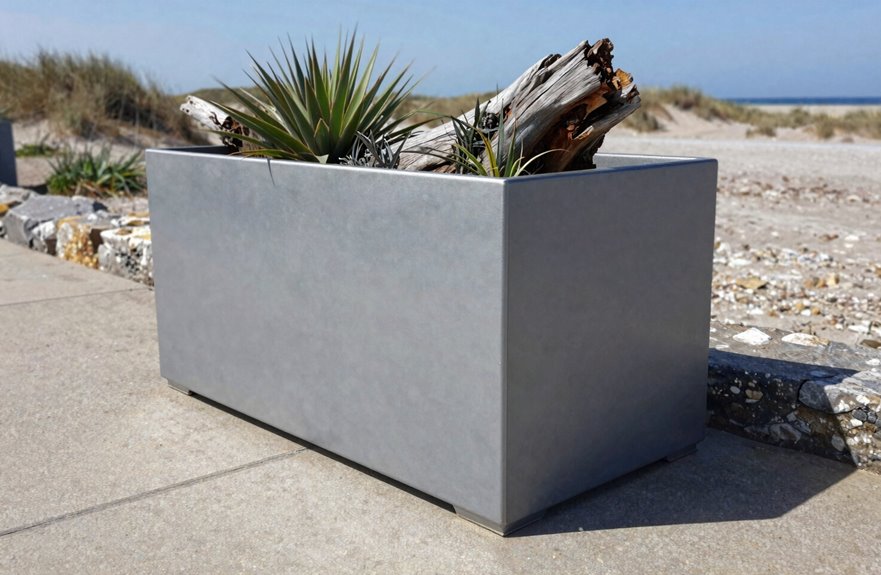
Aluminum’s my go-to recommendation when clients or neighbors panic about salt air destroying everything they own. Unlike steel, which corrodes within months of ocean exposure, aluminum forms its own protective shield, aluminum oxide, that resists corrosive spray. You’ll want 5052 or 6061 alloy, marine-grade material identical to what’s used on boats. Specify at least 1/8-inch thickness for anything over two feet. I’ve seen thinner walls buckle like a soda can, so this specification matters for structural integrity.
Marine-Grade Advantages
Marine-grade aluminum brings serious coastal credibility to your planter game. This material forms a natural aluminum oxide coating that locks out moisture, providing built-in corrosion resistance without any additional treatments. It weighs one-third that of steel (making rearranging easy), yet still delivers the lightweight durability needed for large statement pieces.
You’ll want 5052 or 6061 alloy, with 1/8-inch minimum thickness for anything over 24 inches. Add powder-coat finishes and you get color that survives brutal coastal environments. The weather resistance is substantial; no rust protection is needed, ever. Simply rinse quarterly to handle maintenance near salt air. This approach is clean and simple, keeping your planters protected on the shoreline.
Coastal Climate Resilience
Salt air can absolutely wreck ordinary metals, but aluminum planters offer superior performance. Many gardeners replace rusted containers after one season, so coastal climate resilience is a practical necessity.
Unlike fiberglass planters, which crack in freeze/thaw cycles, aluminum offers genuine corrosion resistance through its natural oxide coating. It’s the durable outdoor planter material that actually survives seaside living.
What matters most:
- Marine-grade alloys – 5052 or 6061 with 1/8-inch minimum thickness (non-negotiable for planters over 24 inches)
- Powder-coated finishes – extra moisture barrier against salt spray
- Proper drainage – prevents standing water that accelerates weather resistance failures
- Quarterly rinses – simple maintenance prevents costly annual replacements
Skip unfinished interiors, and your planters will perform reliably for years.
Fiberglass Outdoor Planters: Lightweight Strength for Modern Spaces
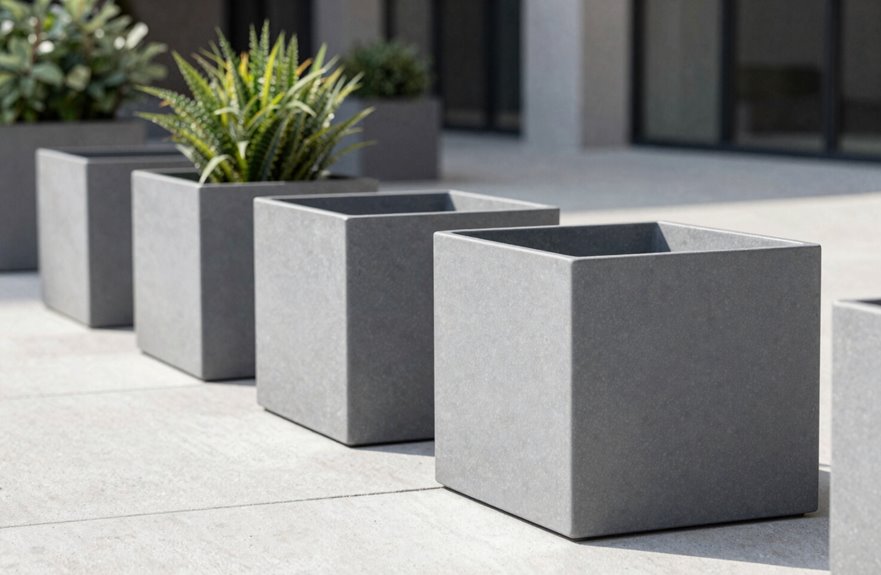
Fiberglass planters offer a practical balance between durability and portability. Reinforced with resin and glass fibers, they resist cracking, fading, and warping through years of outdoor use while supporting heavy root balls without buckling. Their weather-resistant, UV-stable shells protect soil moisture and come in multiple finishes, from matte to gloss, suitable for contemporary design. Unlike traditional planters, fiberglass requires no resealing or repainting once installed. Simply select your color, plant, and enjoy the results.
Weather-Resistant Performance
Why settle for planters that crack under pressure when fiberglass handles whatever Mother Nature throws at it? Too many planters fail during freeze-thaw cycles, but fiberglass planters withstand temperature swings from -20°F to 120°F.
What makes them weather-resistant:
- Cracking resistance — reinforced resin with glass fibers flexes instead of shattering when soil expands
- UV-stable finish — automotive-grade paint (the same stuff on car bumpers) prevents fading and chalking
- Non-porous walls — zero moisture absorption means no rot, no rust, no surprise failures
- Lightweight durability — a 24-inch planter can be moved solo yet supports 50+ pounds of root-heavy soil
These planters perform reliably in outdoor conditions year-round.
Sleek Design Versatility
Weather resistance is only half the story. As someone who wants my patio to look intentional rather than like a garden center exploded back there, fiberglass planters solve this problem. They’re lightweight yet durable, so I’m not straining my back repositioning a 24-inch cube for better feng shui.
| Shape | Finish | Best Use |
|---|---|---|
| Cube | Matte | Mid-century patios |
| Cylinder | High-gloss | Balconies needing height |
| Trough | Textured | Herb gardens, railings |
| Bowl | Metallic | Poolside drama |
The design versatility is the key differentiator. Shapes and finishes range from Scandinavian minimalism to Palm Springs glam. The aircraft-grade resin with UV protection resists weathering without chalking or fading. For outdoor use, fiberglass planters deliver both portability and a finished aesthetic that rivals permanent installations.
Cedar Outdoor Planters: Rot-Resistant Wood for Natural Gardens
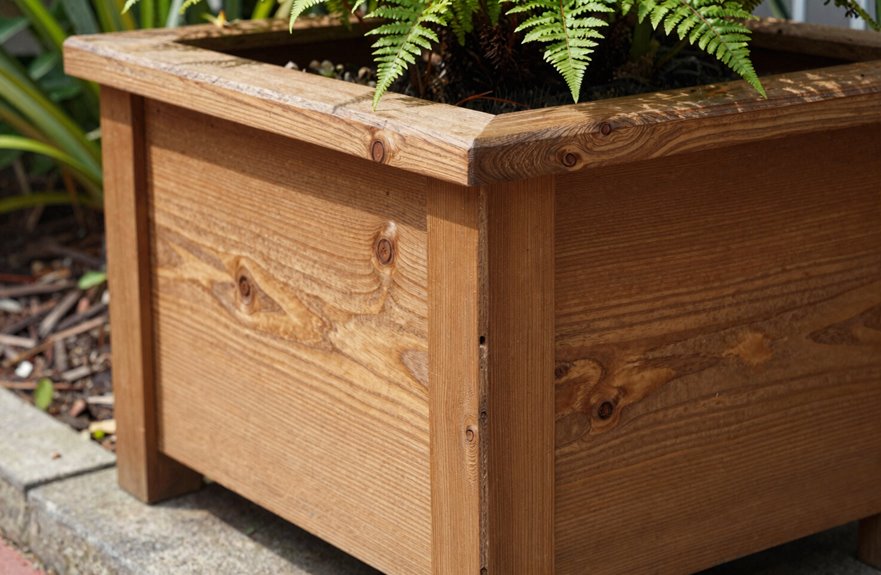
Where do I turn when I want planters that actually feel like they belong in my garden instead of sitting on top of it? I reach for cedar outdoor planters, specifically Western Red Cedar.
- Natural chemistry protects your investment – cedar contains thujaplicins, natural insect repellent compounds and fungal decay resistance agents that provide built-in protection.
- Outdoor planter durability meets manageable weight – I can move a 24-inch box solo without requiring heavy equipment.
- Natural garden aesthetics that age gracefully – choose between a silver-gray patina or fresh sealant application.
- Maintenance in outdoor cedar planters is straightforward – annual oiling preserves the warm tone. Without it, you still get decades of reliable service.
Cedar combines sustainability with lasting performance. A Western Red Cedar planter resists decay naturally, withstands weather exposure, and maintains structural integrity for 15-20+ years with minimal care.
Pick the Right Outdoor Planter for Your Weather and Wallet
How do I match a planter to my actual life, not some fantasy garden I’ll never maintain? I start with honesty about my weather, my budget, and my willingness to drag heavy pots around.
Fiberglass planters hit my sweet spot: lightweight enough that I move them solo (roughly 40% lighter than concrete), yet their weather resistance handles temperature fluctuations without cracking. The durability means I’m not replacing them every two seasons.
For coastal folks like my sister in Florida, corrosion resistance matters. Marine-grade aluminum resists salt spray where steel surrenders. Corten steel’s 30–50 year lifespan sounds dreamy, but that 6–12 month patina phase (rust runoff, basically) requires patience I don’t possess.
Low maintenance equals belonging in my own yard. When my investment pays in years rather than weekends spent sealing or staining, the planter choice proves itself.