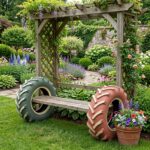
These outdoor wood projects run from a simple serving tray to a built-in grill station, and the deciding factor is whether you have 3 tools or a full shop.
A simple potting bench or pallet bench comes together with just a saw, a drill, and a sander, while the swing frame and grill station need clamps, impact drivers, and space to spread out.
1. Wooden Swing
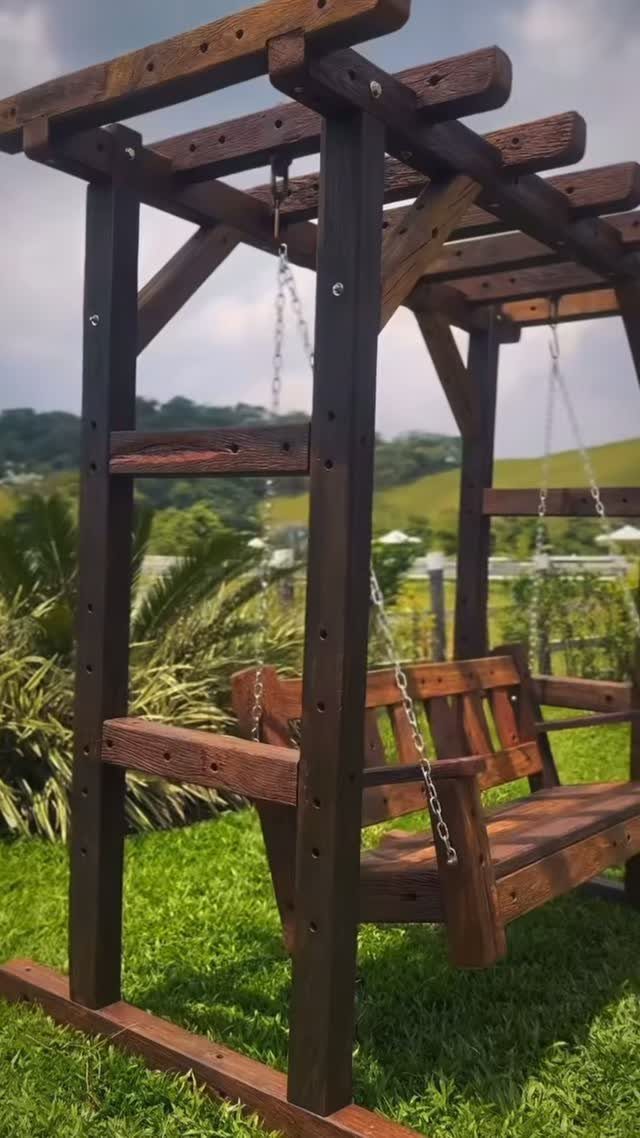
A freestanding wooden swing needs a frame strong enough to hold moving weight, not just the bench itself.
I would build the swing seat first and test it on a sturdy tree branch before committing to the full frame, especially if your budget is tight.
A simple pergola-style arbor frame with pressure-treated 4x4s and a cedar seat runs about as much as a decent grill in materials and a Saturday to assemble.
You also can vary the back design, choosing from curved, gable or round styling. You’ll need basic tools, and it only costs around $20 to $100 to make this stunning outside wooden furniture set!
2. Outdoor Privacy Screen
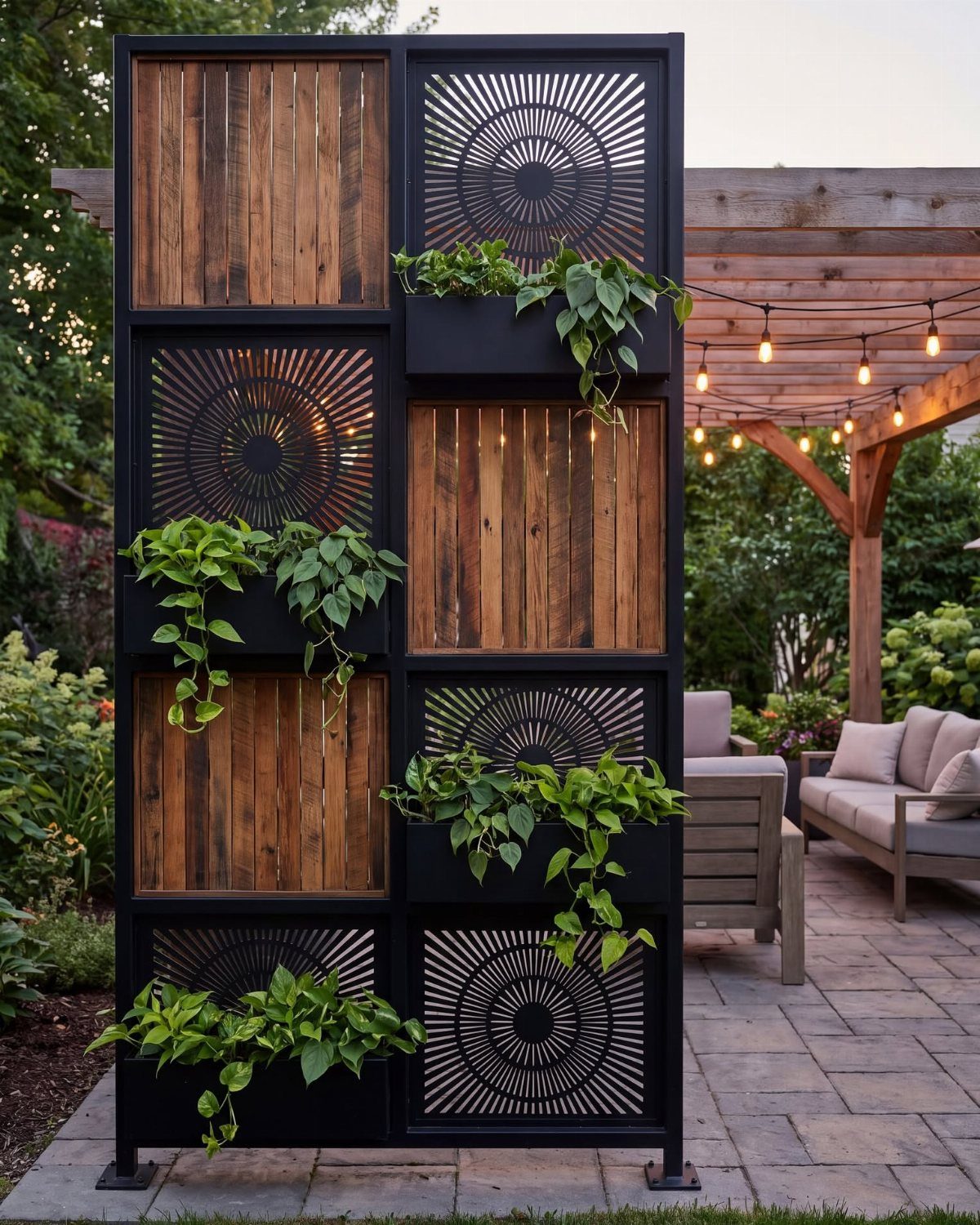
Privacy screens work best when they solve a specific sightline problem rather than boxing you in on all sides.
The mixed materials here, metal frame with wood slat infill, handle weather differently; the wood will move and the metal won’t, so fastening methods matter more than with all-wood builds.
I would check which direction your prevailing wind comes from before setting height and placement; a tall screen catches more gust than you’d expect.
Planters at the base add weight and greenery but also require drainage that won’t stain your patio stone.
3. Wooden Storage Shed
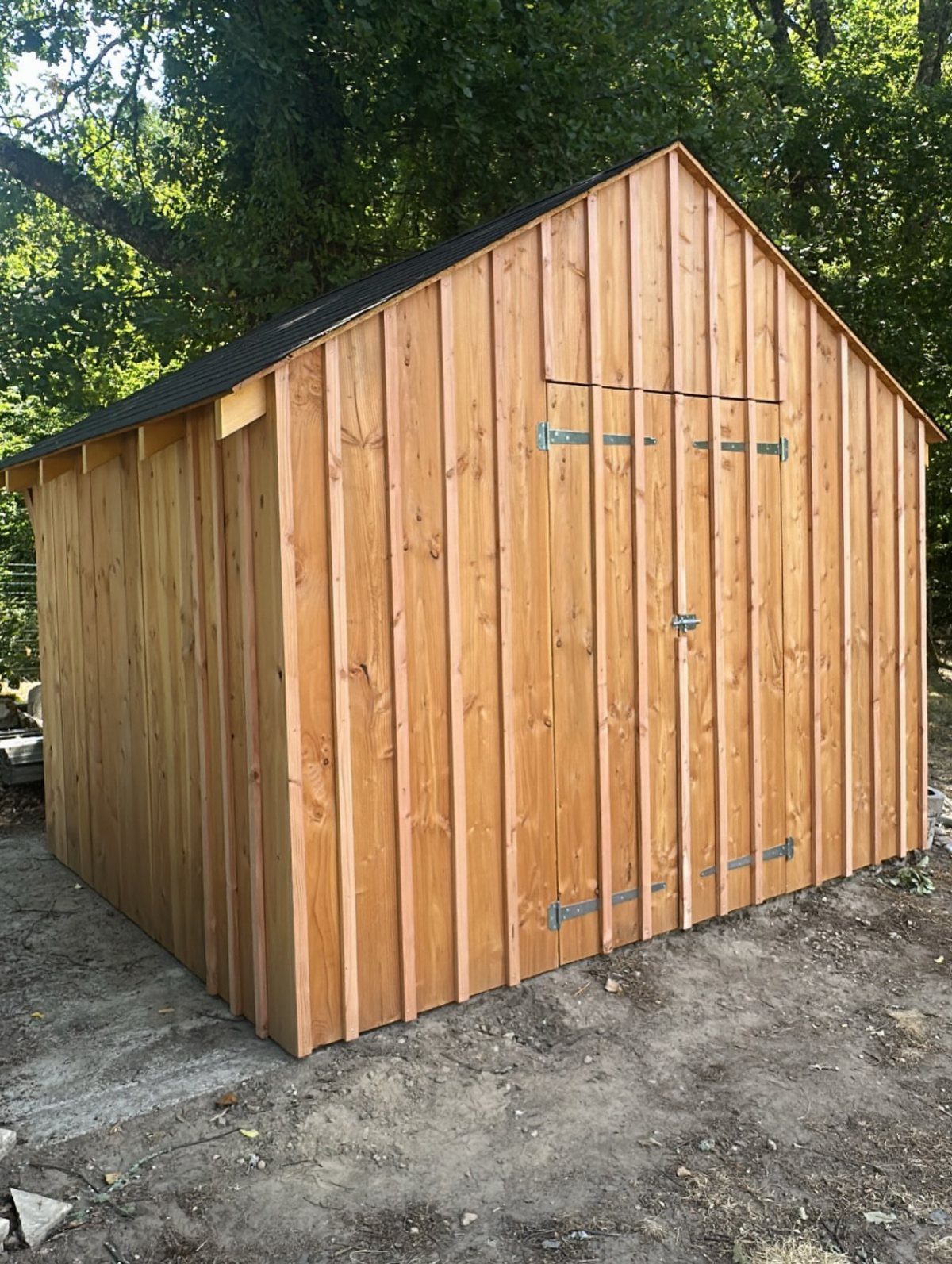
A board-and-batten shed like this one sheds water well because the vertical planks overlap rather than sitting flat; the battens cover the seams.
Double doors need a header across the top of the opening, and that header wants to be one solid piece, not pieced, or the doors will sag within a season.
I would pour a gravel pad or concrete slab before walls go up; bare ground wicks moisture and your floor rots from below even with pressure-treated lumber.
Check local setback rules before you build; most towns want some breathing room from property lines.
4. Wooden Tool Storage Cubby
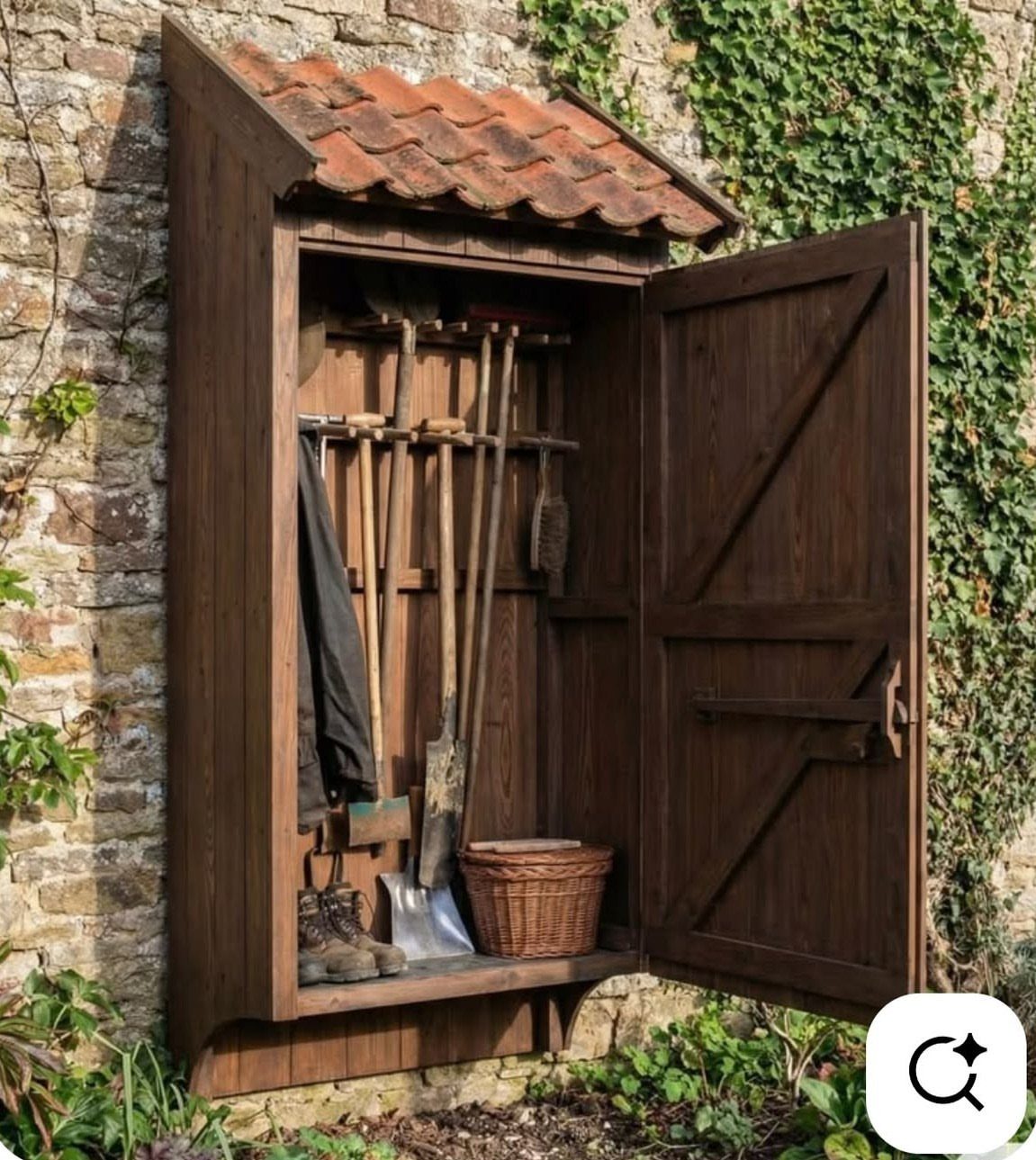
Wall-mounted storage keeps tools off the ground and dry, but the mounting surface carries everything.
A stone wall like this one takes masonry anchors and a hammer drill; if your wall is stucco over frame, you are fastening to studs behind it and the tile roof adds weight you may not want.
I would measure my longest shovel and add a little extra before cutting any shelf depth; the cubby looks tidy until a handle sticks out the front.
Clay tile roofing is decorative and heavy; corrugated metal or leaving it open saves weight and cost with no real loss of function.
5. Outdoor Dining Table
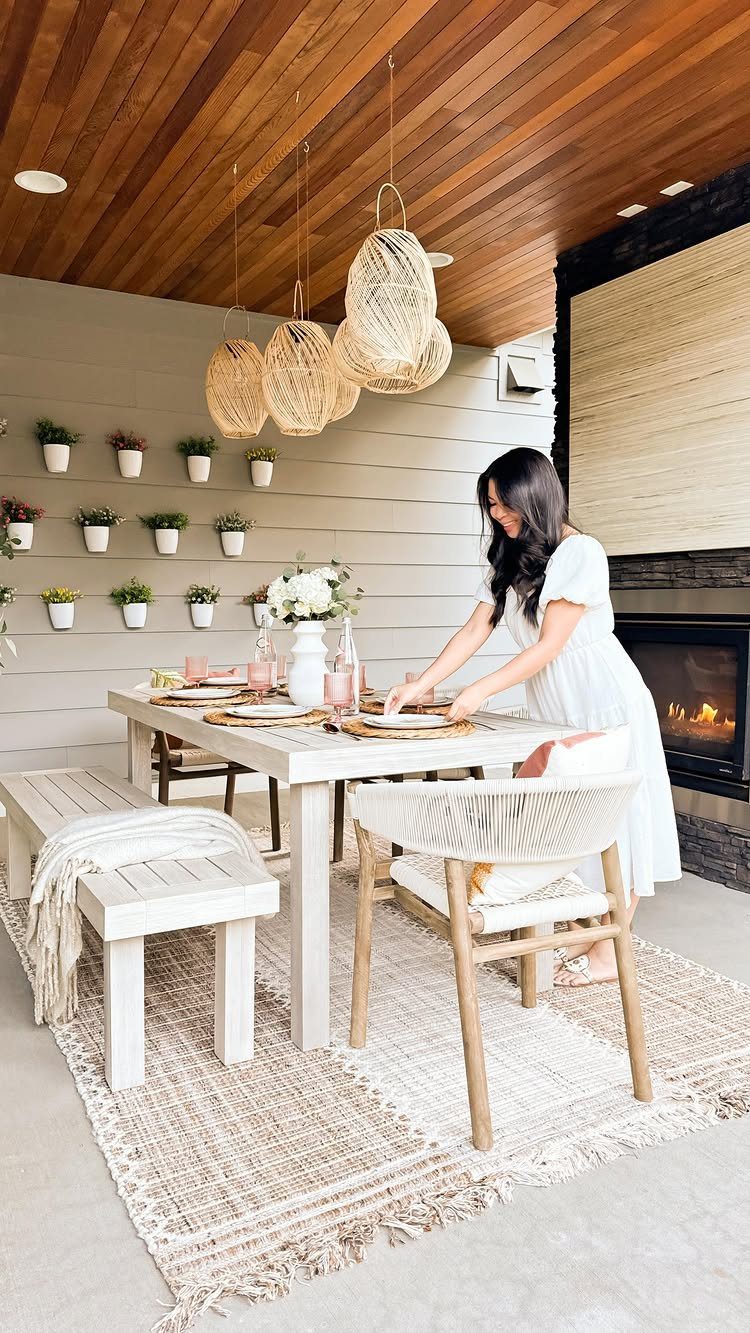
A natural wood finish table stays cooler to the touch than painted surfaces, which matters on covered patios that still get afternoon sun. Build the top from 5/4 deck boards on a simple apron frame, then seal it.
6. Potting Bench
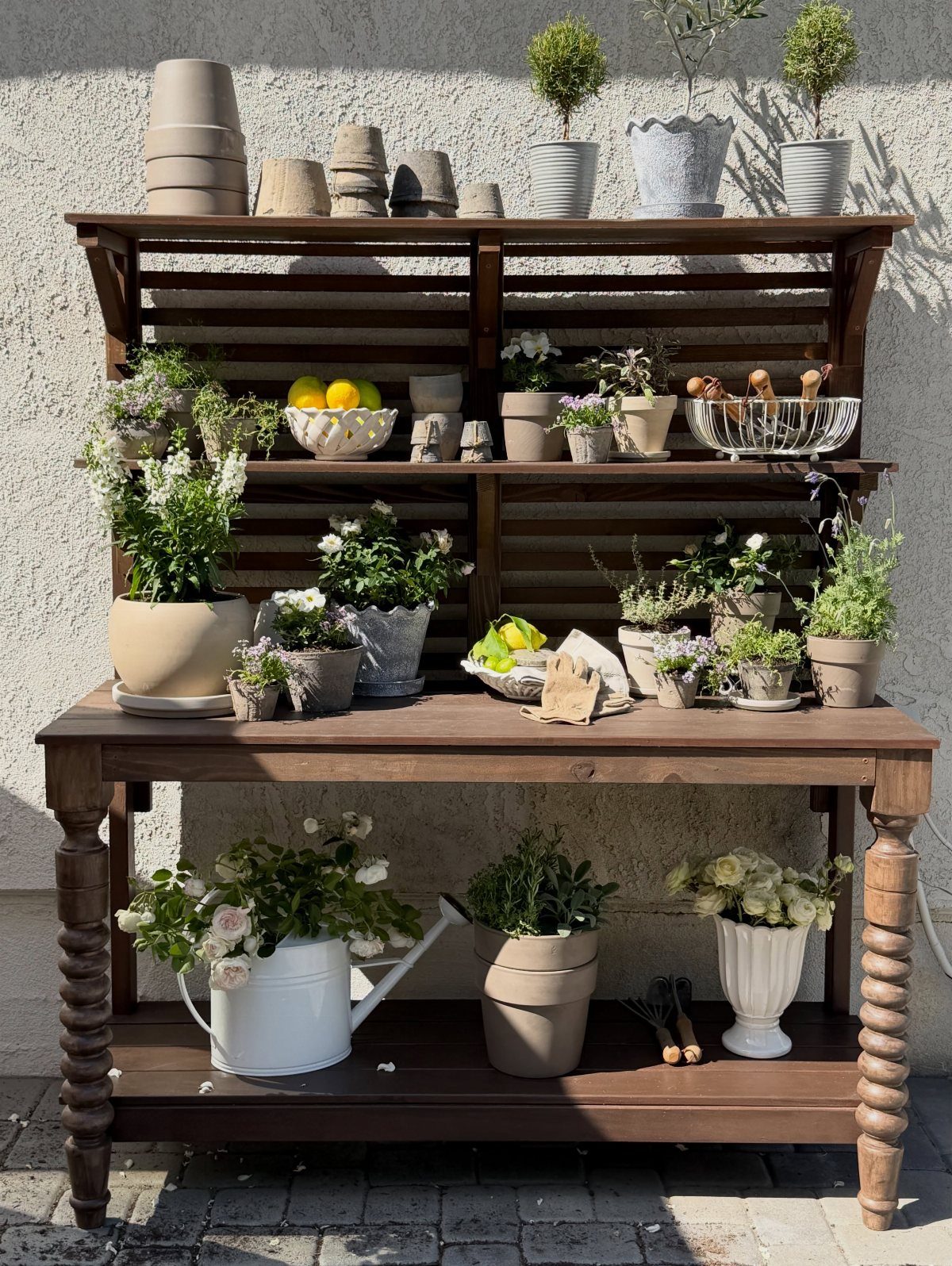
A potting bench lives outside year-round, so the shelf spacing matters more than the finish.
The lower shelf here holds terra cotta and wet pots; slatted construction lets water through instead of pooling. I would build the top at standard counter height and add a back lip to stop soil from falling behind.
The stucco wall behind this one gives protection on one side; if yours sits in open yard, face the back with the same siding as your house or let it weather to gray.
A simple 2×4 frame with 1×6 top and shelves runs cheap and goes together fast.
7. DIY Vertical Herb Planter
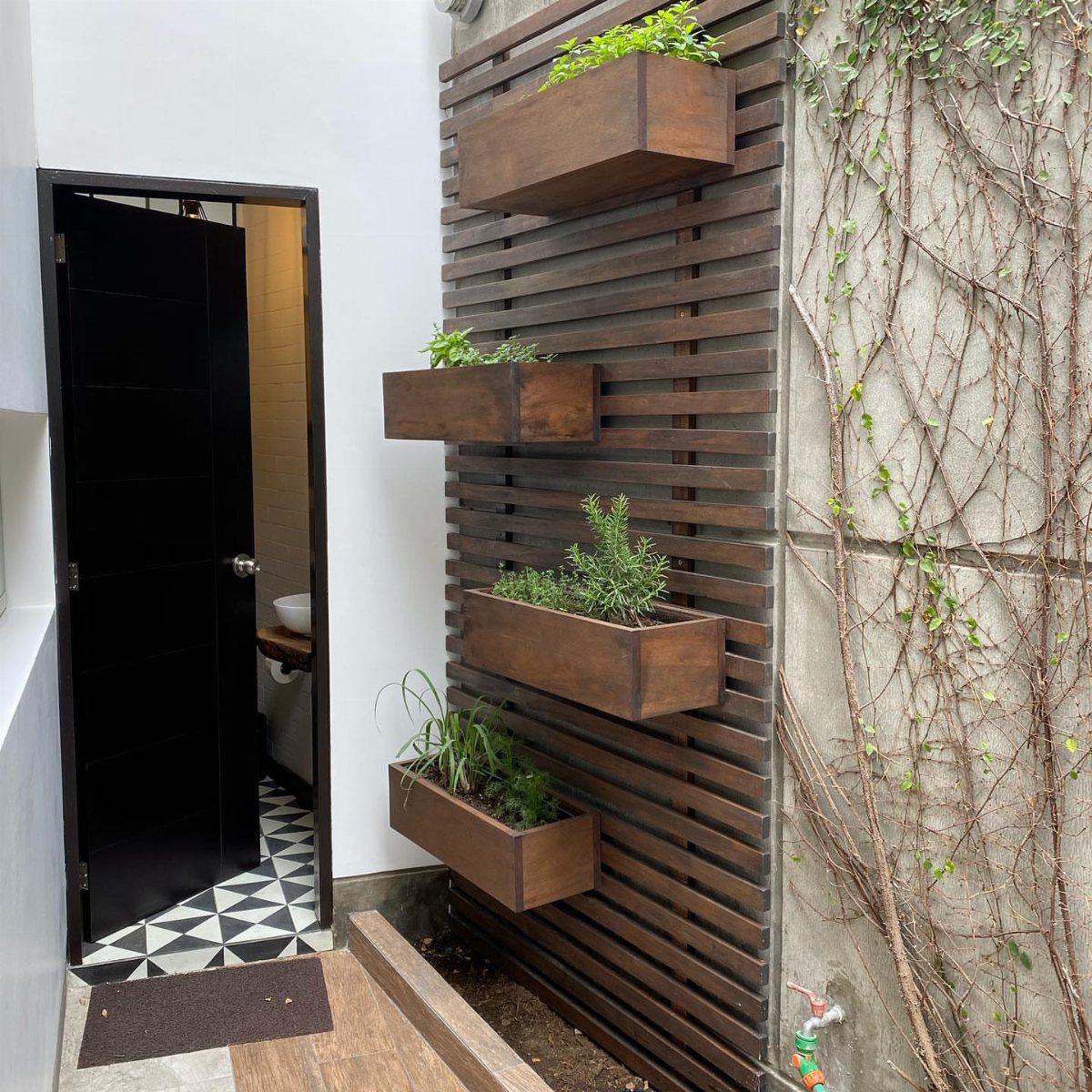
Vertical planters keep herbs within arm’s reach on a patio where ground space is tight.
Pressure-treated pine left to weather gray would save half the material cost against cedar, and I think the silvery tone suits a kitchen garden just as well.
Planter boxes need gaps or drain holes, since herbs rot faster from wet roots than dry ones. Mount the wall to studs or masonry, not siding; the weight adds up fast with damp soil.
8. Wooden Pallet Bench
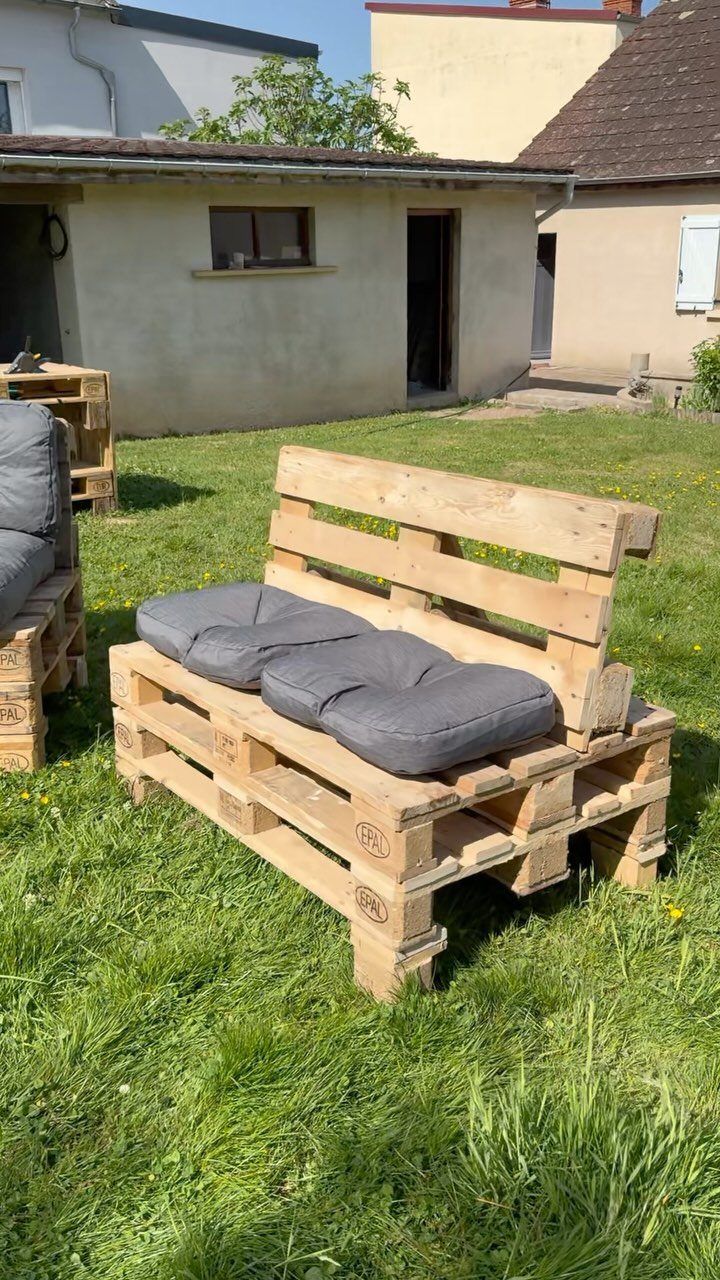
Pallet benches look simple but the wood is rough and full of fasteners. I would pull every nail and run a sander over the boards before assembly; splinters are not the rustic look anyone wants.
The EPAL stamp means European standard pallets, usually hardwood, harder to drive screws through but longer-lasting than softwood shipping pallets.
2 cushions soften the slats; without them, the gap pattern prints on your thighs fast enough to matter. Check pallet markings: "HT" means heat-treated and safe, "MB" means methyl bromide and belongs nowhere near your yard.
9. Wooden Serving Tray
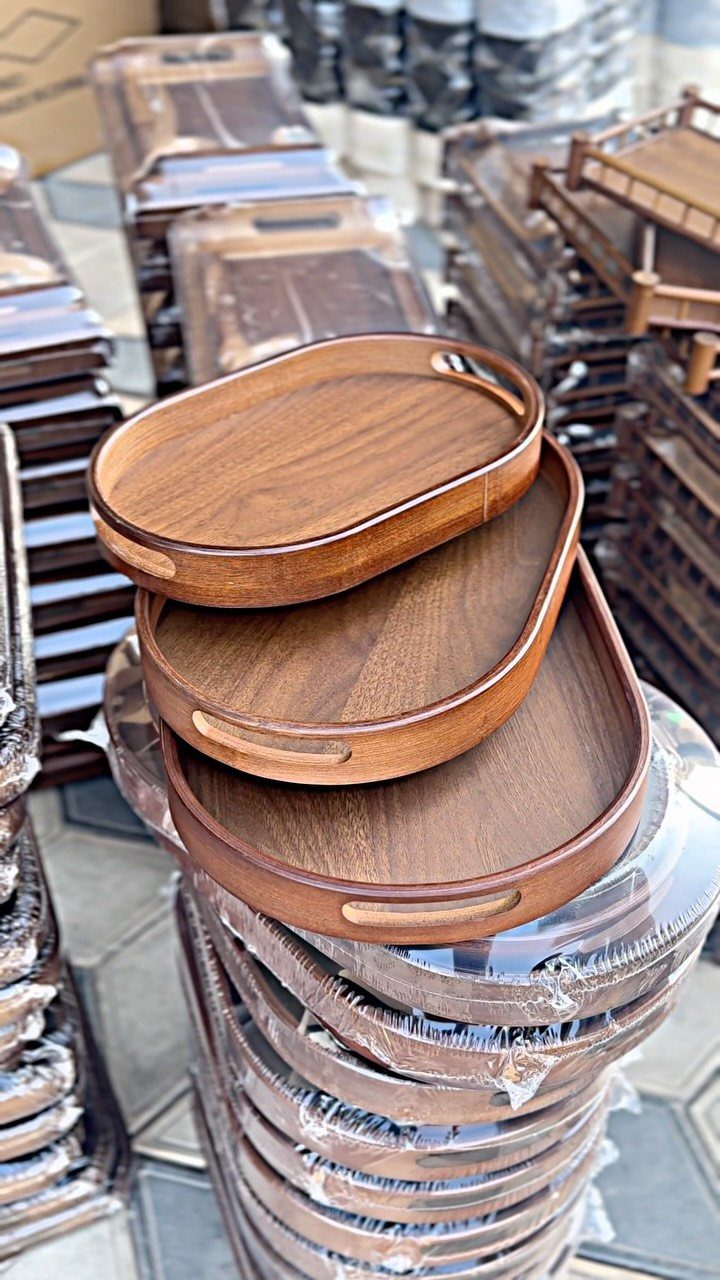
Oval trays with integrated handles skip hardware that rusts or snags.
An integrated grip cut from the same board keeps the grain continuous so the handle does not snap off when loaded. I would make this from oak or maple; softer woods dent under a heavy pitcher.
Stackable shapes save space between uses, which matters on a small patio table. Finish with food-safe oil, not film-forming polyurethane; knife marks and spills will need a fresh coat now and then, and oil sands smooth where varnish flakes.
10. Wooden Window Box Planter
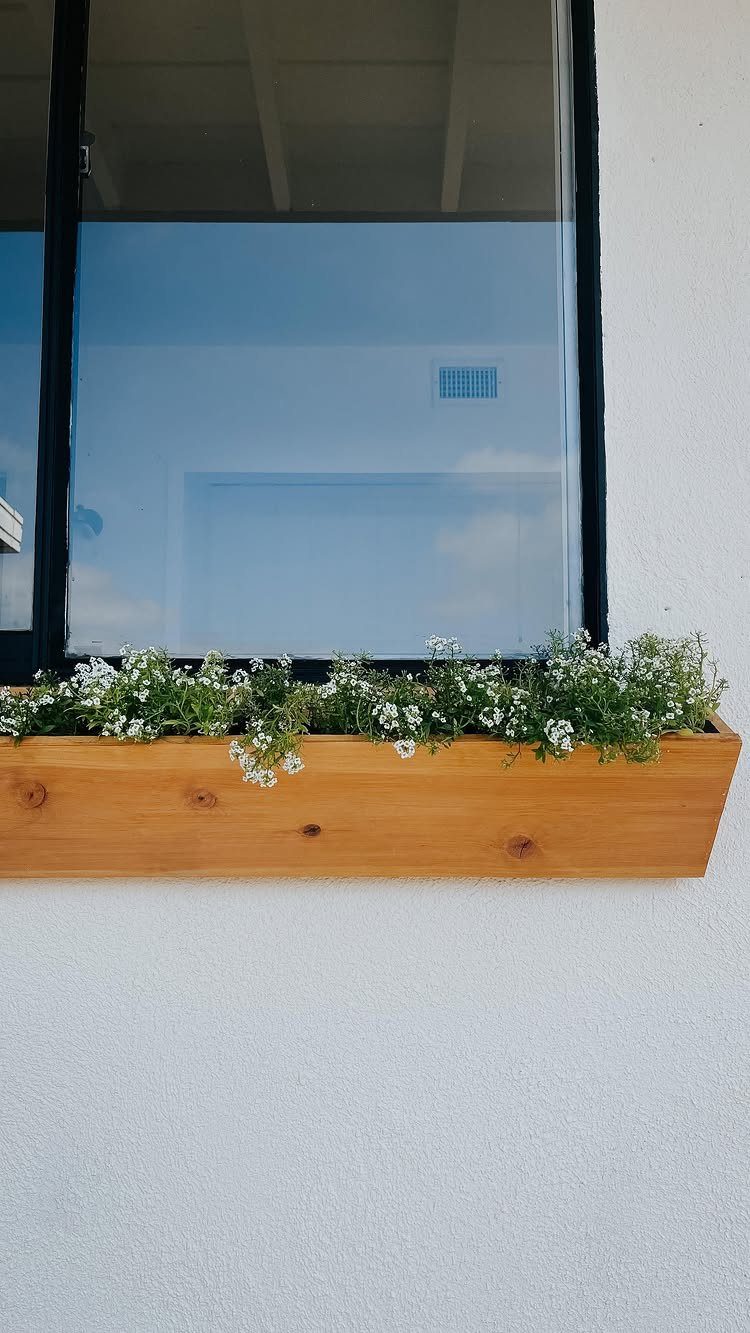
Window boxes fail when they sag away from the wall or rot the sill beneath.
I would bolt a cleat to the wall studs first and set the box on it, rather than trusting brackets screwed to siding; the weight of wet soil is surprising.
A natural finish like this one needs fresh oil every season or it grays unevenly.
Drill drain holes and leave a gap behind the box so water does not sit against the house trim. A painted box needs touch-ups where soil scuffs the rim; raw wood weathers that wear without complaint.
11. Adirondack Chairs
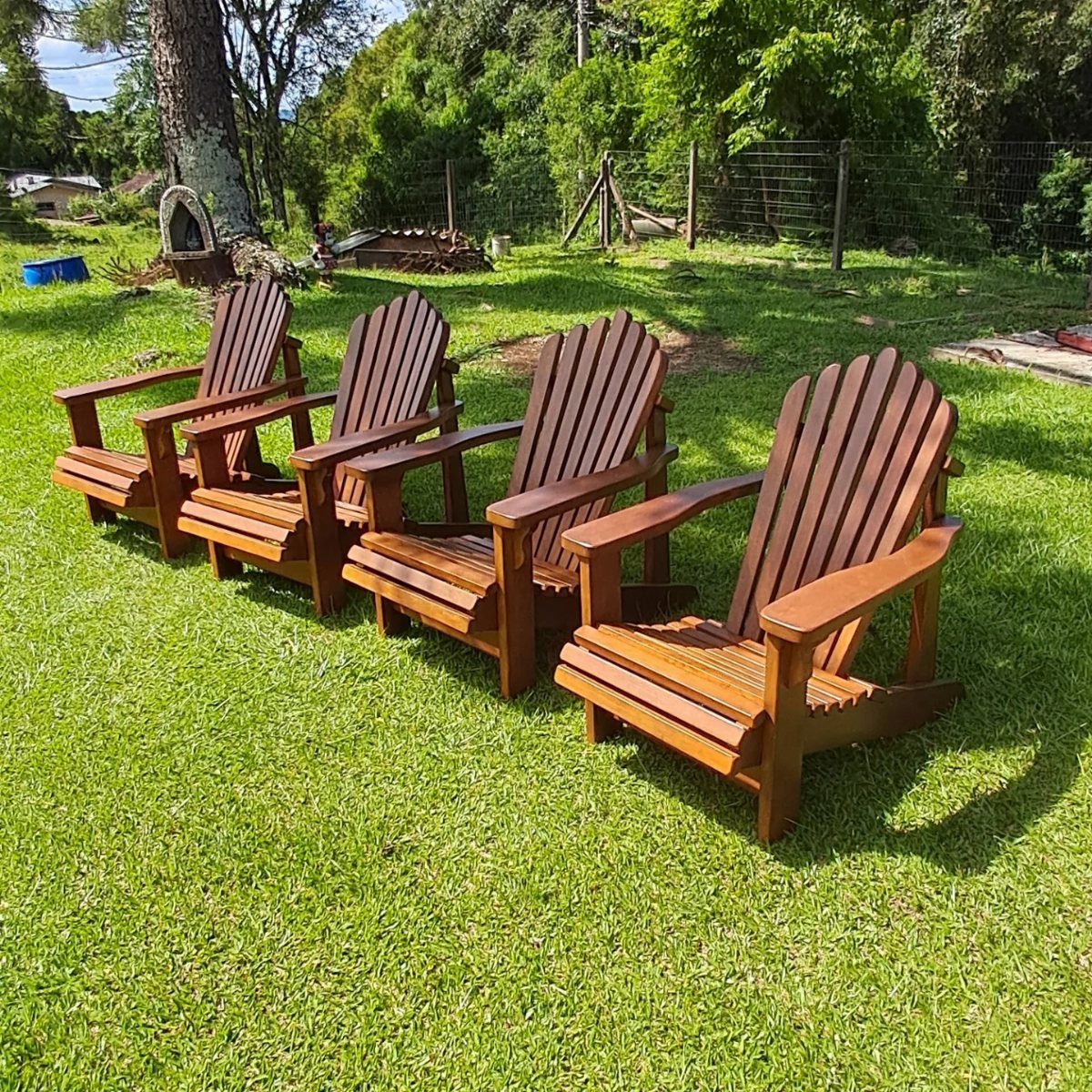
Adirondack chairs sit low and reclined, which is the point on flat lawn but awkward on a sloped yard or crowded deck.
The seat slants back and the front rail is high; getting up from one takes more leg strength than a standard chair, so I would not pick these for aging parents without armrests to push against.
Cedar or cypress weathers to that reddish driftwood tone; pine needs paint or it rots at the ground contact in a few years. The wide arms hold a drink can, barely; I prefer them an inch deeper.
12. Birdhouses
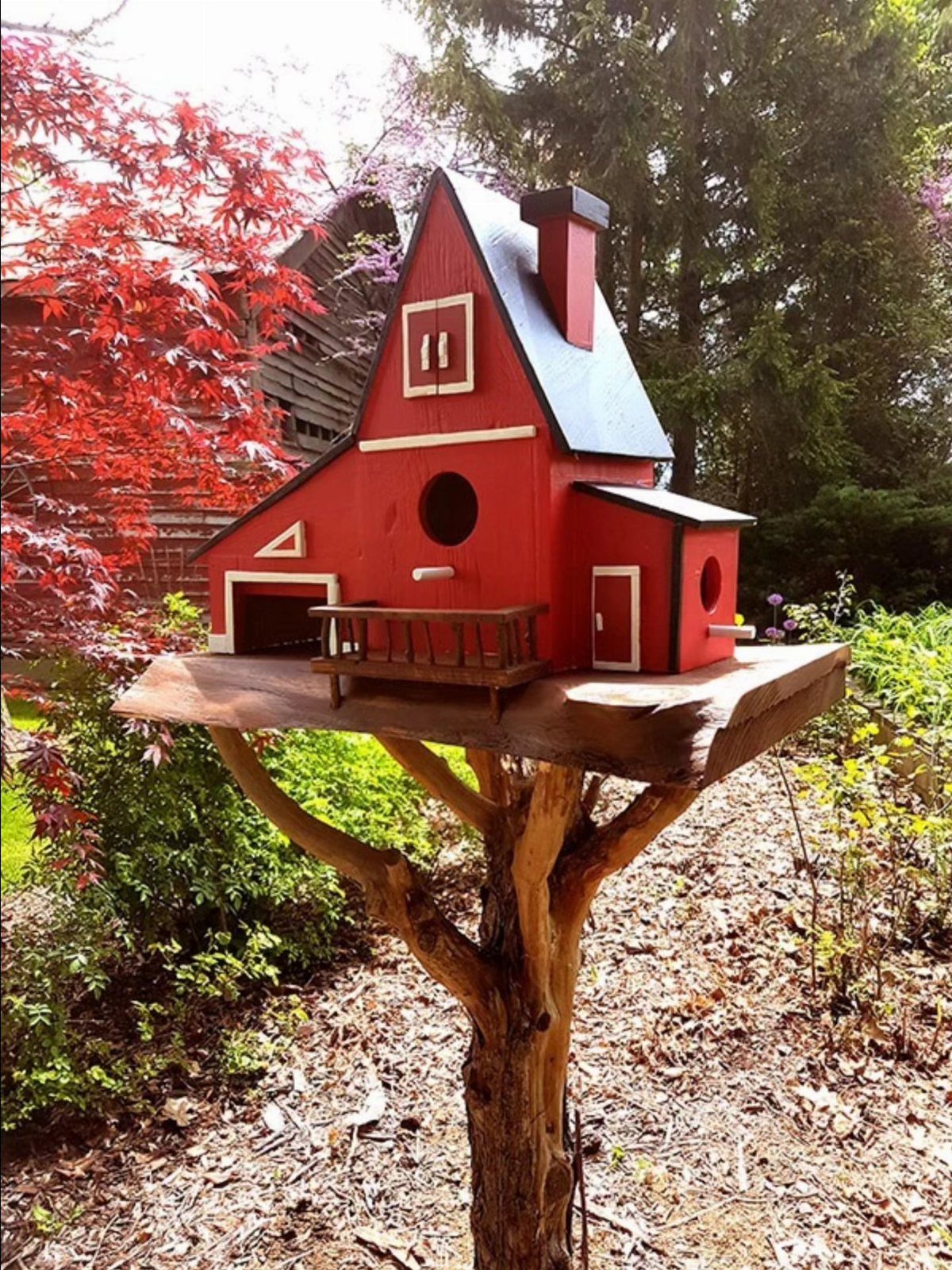
Birdhouses charm people more than birds unless the hole size, depth and placement suit the species you have. A small entry hole excludes starlings; I size mine for chickadees and wrens.
Mounting on a natural branch looks better than a metal pole but swings more, and some birds avoid swaying nests. I would face the opening east or southeast, away from prevailing wind and afternoon sun.
The red paint is exterior latex; lead or creosote will poison hatchlings. Clean out old nests each February or the box goes unused.
13. Outdoor Storage Bench
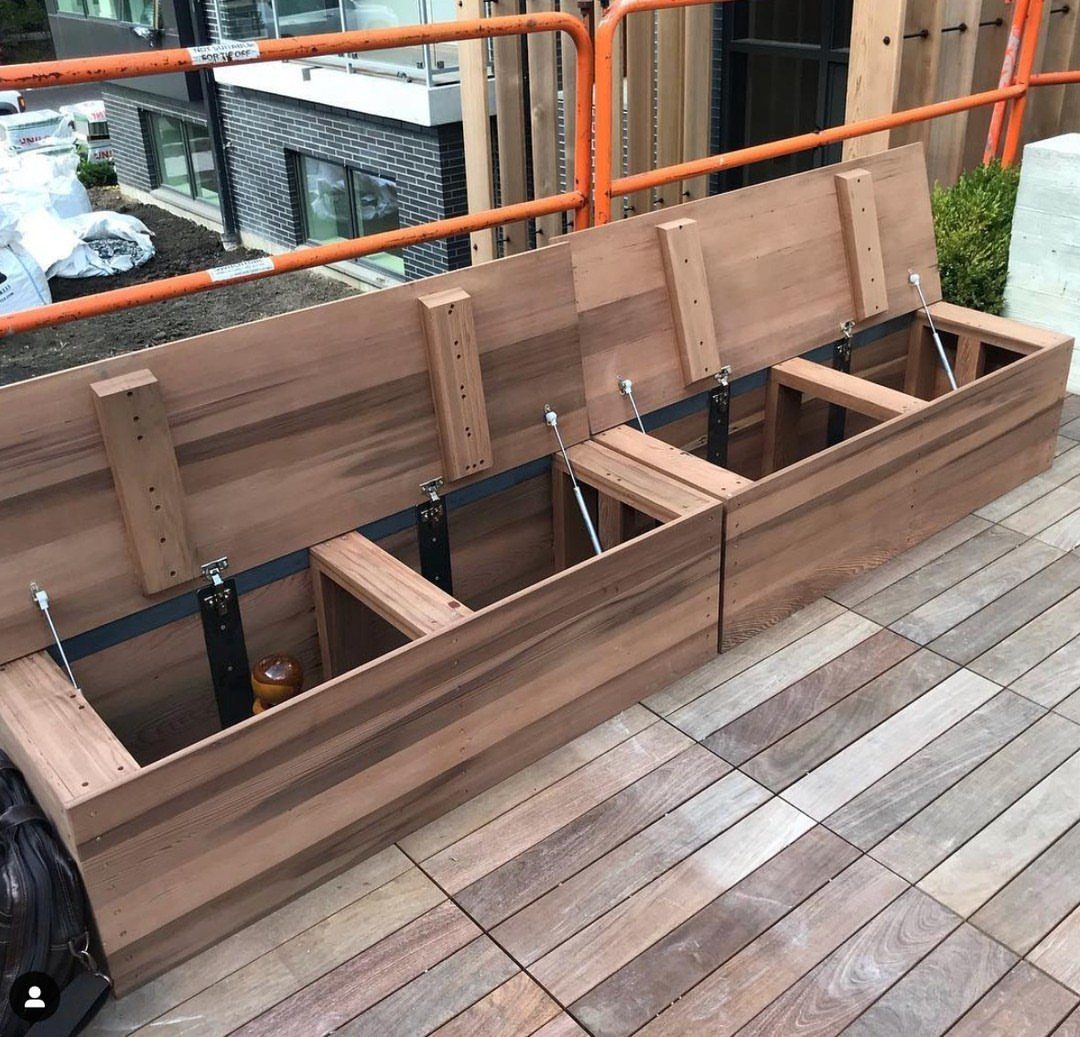
A storage bench earns its floor space only if the lid opens without fighting the cushions.
I would hinge the lid so it opens toward the wall, not into the deck, since a balcony this size leaves no room for a lid to swing wide.
The interior needs to stay dry; slatted sides look nice but let rain in.
A plywood box with a bead of silicone at the seams lasts longer. Size it for what you actually store; oversized benches become clutter magnets.
14. Outdoor Kitchen / Grill Station
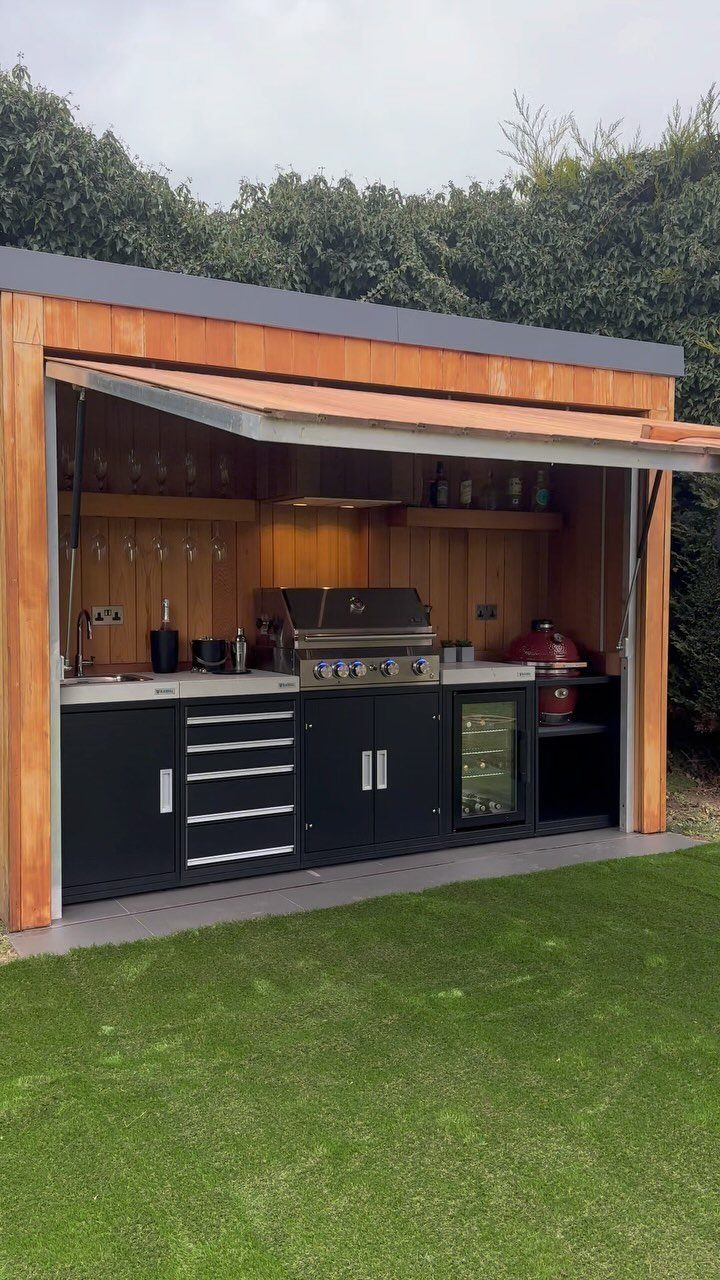
A built-in grill station frames appliances you still have to buy, and the grill alone runs more than most of this list combined.
The upward-opening awning here needs hardware rated for wind load; a standard garage door spring will sag or snap. I would check local fire codes before enclosing a smoker; many towns want open air on 3 sides.
Black cabinetry shows dust and pollen fast; wood grain hides it better.
Run a gas line if you have natural gas; swapping propane tanks in a built-in frame is awkward. The beverage fridge needs outdoor rating; indoor units burn out in summer heat.
15. DIY Garden Fence
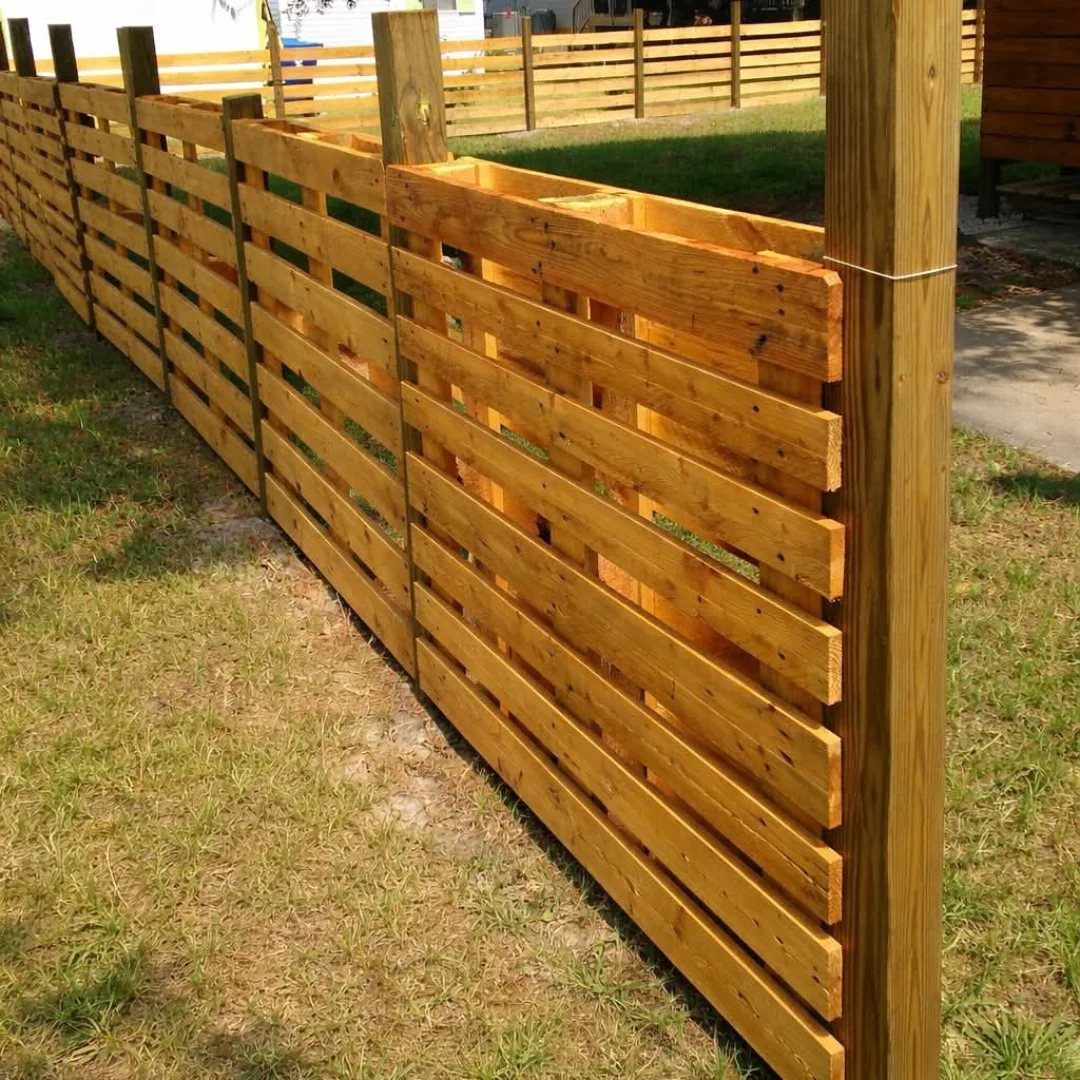
Pallet slats work as fence pickets only if you pull them without splitting; the nails leave holes that split again when fastened.
I would rip fresh 1×6 cedar instead; the cost difference is a few dollars per section and the fence lasts years longer. Square posts need enough depth in the ground, minimum, or frost will push them sideways by spring.
Horizontal slats look modern but trap leaves behind them; vertical boards shed better.
Set the bottom rail an inch above grass or it rots; pressure-treated or not, ground contact wins. Check property lines before digging; a fence even slightly off is an expensive do-over.
16. DIY Wooden Lanterns
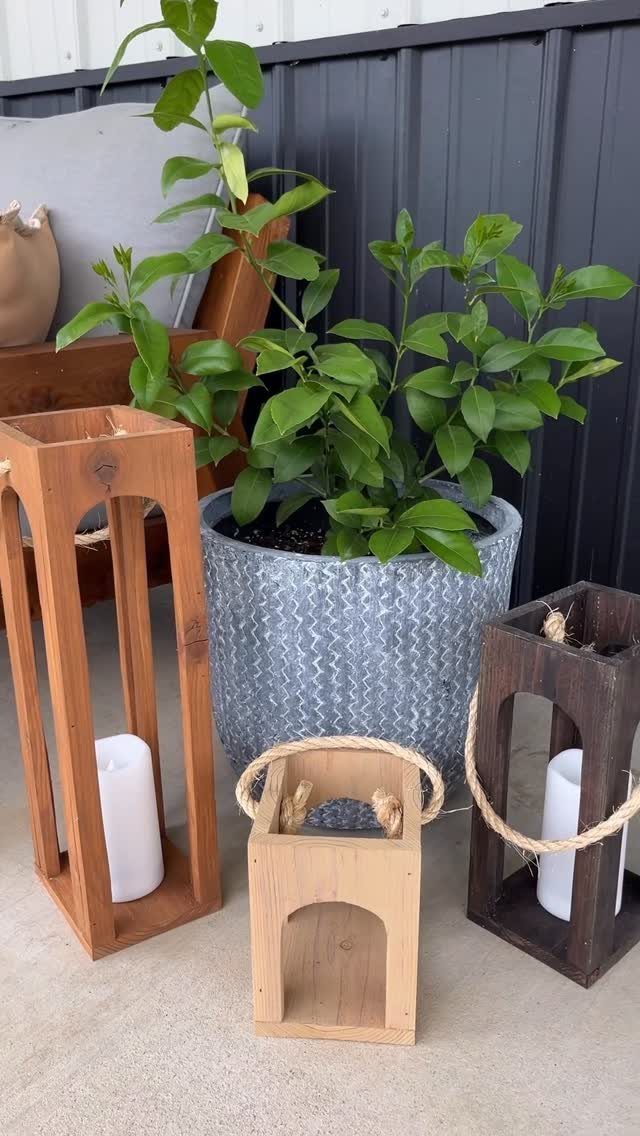
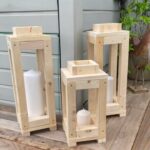
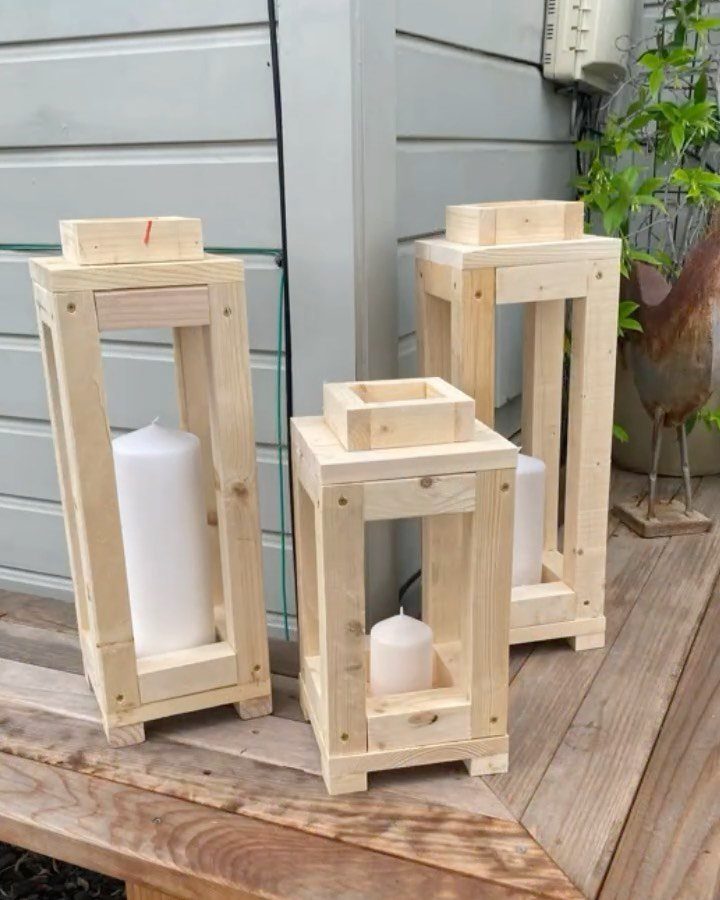
Rope handles on lanterns look nautical but fray where the wood edge rubs; I would countersink the hole and sand the rim smooth. Varying heights lets you cluster without blocking the flame; same-height lanterns read as a fence, not light.
Pillar candles melt unevenly outdoors; battery ones with flicker timers skip the wax pool and the fire watch. Stain the wood, do not paint it; paint chips from handling and shows every touch.
The rope handle is decoration, not load-bearing; carry from the base. Store them dry or the wood swells and the joints loosen.
Best Wood for Outdoor Projects
Cedar, redwood, and pressure-treated lumber handle weather well enough for most backyard builds, but they sit in the middle of a wider range.
Exotics like ipe, mahogany, teak, and purple heart carry natural oils that repel moisture and insects.
They last and look rich, yet they cost more and chew through blades faster. I would save them for surfaces I touch daily, like a dining table top, not for a fence I never see up close.
Domestic alternatives keep costs sane. White oak holds up against water because its pores are naturally filled with tyloses, a structure that blocks moisture from moving through the grain.
Cypress slows decay with its own oils. Both work where cedar or redwood run scarce.
Thermally modified wood improves stability and rot resistance without chemicals. Composite or plastic lumber skips rot entirely and often needs no finish at all, though I find it looks and feels like what it is.
Structural outdoor builds need lumber rated for your local conditions; pressure-treated southern pine handles humid southern summers, while cedar stands up to freeze-thaw cycles in northern winters without splitting. Ground contact, sun exposure, and freeze-thaw cycles punish different species differently.
Basic Tools for Woodworking
A tape measure, speed square, and pencil handle layout. I mark cuts in 2 directions so the line stays visible past the blade.
A circular saw or miter saw breaks down lumber; a table saw cleans up edges if you have one.
A drill or driver sets fasteners, and an impact driver helps without stripping heads. A random orbital sander saves hours over hand sanding and leaves fewer scratches.
Clamps matter more than beginners expect.
I own a dozen and still borrow more for glue-ups. A socket set or wrenches handle hardware on swing frames and grill stations.
Safety glasses and hearing protection sit beside every tool in my shop. They cost little and replace what I cannot.
Not every project needs the full set.
A potting bench or simple serving tray comes together with 3 tools: a saw for cuts, a drill for joinery, and a sander to knock down splinters before finish. Build what your tools allow, then add capacity as projects grow.
Outdoor Project Maintenance
Outdoor wood needs scheduled attention, not crisis repair. I sand when the surface roughs up or the finish chalks, not after rot sets in.
Stripping old finish off outdoor furniture opens up gray, weathered fibers that need sanding before new stain or paint will take evenly.
Sand past them to sound wood before reapplying anything. The new coat bonds poorly to a tired surface.
I match the finish to my environment. Marine varnish where rain lingers, penetrating oil where sun beats hardest, paint where I want color and do not mind redoing it.
Pallet benches and serving trays need oil, not polyurethane, for exactly this reason. Knife marks and handling wear oil gradually; varnish chips and looks worse faster.
Inspect fasteners yearly.
Screws back out as wood swells and shrinks. Catching one loose hinge or bracket saves the joint it was holding.
Restoration belongs in the routine, not the emergency column. A February afternoon with sandpaper beats a May scramble to replace what rotted through.
Frequently Asked Questions
What kind of wood do I need for outdoor use?
Cedar, redwood, and pressure-treated lumber handle most backyard builds well enough. Cedar and redwood resist rot naturally; pressure-treated southern pine stands up to humid summers, though cedar handles freeze-thaw cycles better in northern winters.
What are some things I can make for my garden using wood?
Planter boxes, birdhouses, potting benches, and vertical herb planters all work well in garden spaces.
A window box planter with drain holes and a gap behind it keeps water off your house trim; a potting bench at standard counter height with a back lip saves soil from falling behind.
What are some ideas for DIY outdoor projects?
Outdoor furniture like Adirondack chairs, dining tables, and pallet benches; storage solutions like tool cubbies and storage benches; and structural pieces like privacy screens, garden fences, and grill stations.
A wooden swing on a simple A-frame costs about the same as a mid-range grill in lumber and hardware, and one Saturday puts it together.
What can you craft with just wood?
A serving tray with integrated handles cut from the same board, wooden lanterns with rope handles, or a simple potting bench with 2×4 frame and 1×6 shelves.
An oval tray in oak or maple keeps the grain continuous through the handle so it does not snap under a heavy pitcher.