These 24 garden decor projects run from a few wine corks and a glue gun to a full cinder-block table with matching stools, and the one that fits you depends on whether you want something done by sundown or something that earns its spot for years.
A stack of yellow grinning pots bolted to a pole will torque in wind without a locking collar, while stamped copper labels on 14-gauge wire stakes darken to bronze and lift out for replanting season after season.
1. Stepping Stones
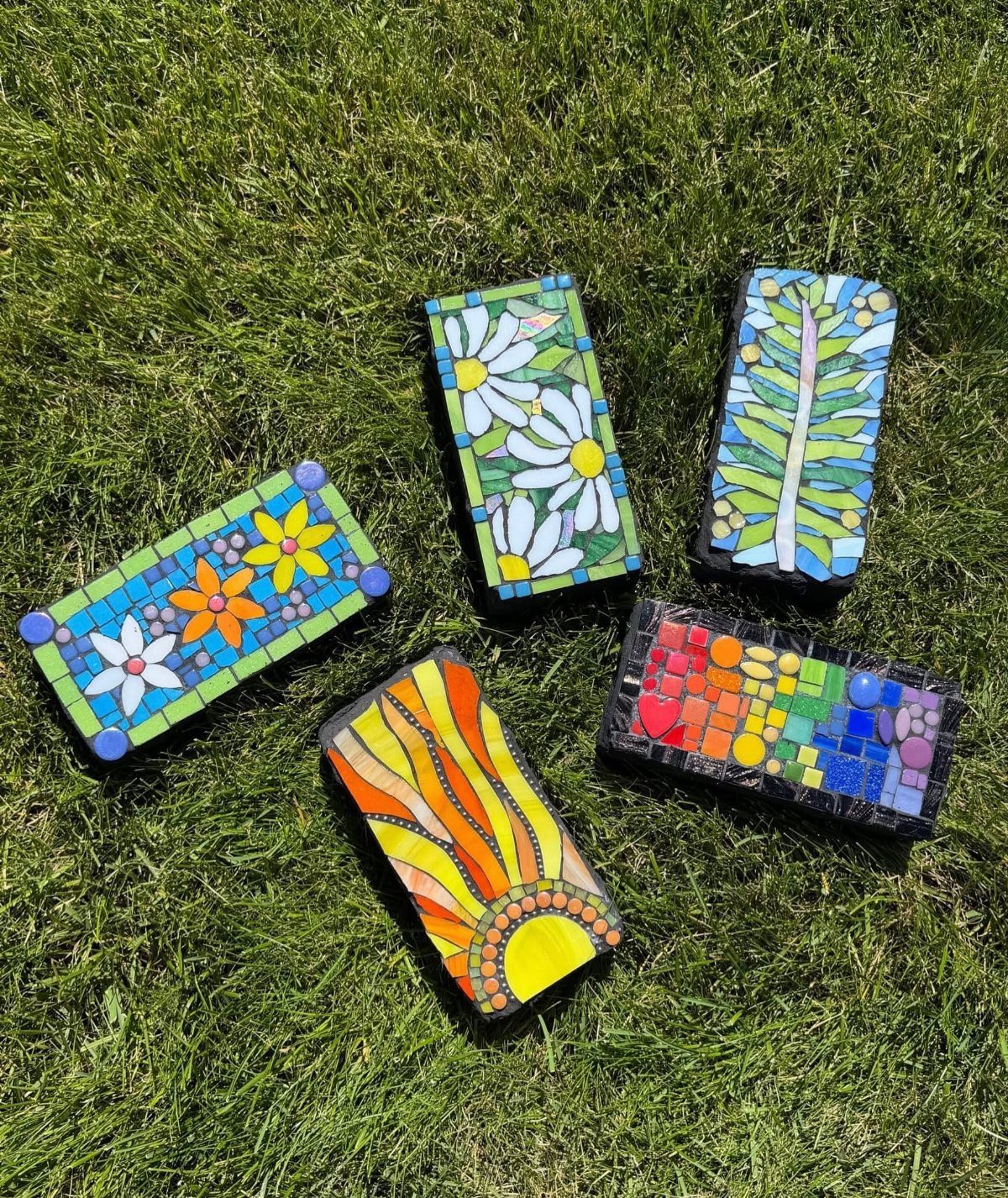
Mosaic stepping stones turn ordinary pavers into something you actually want to look down at. Broken tile or glass set in grout, sealed over concrete or stone bases, gives each stone a different pattern underfoot.
Before you start, check whether your yard freezes hard in winter. Water gets under loose pieces, freezes, and pops them off by spring.
I would use exterior-grade grout and seal the whole surface twice, especially on the edges. If your soil shifts or stays damp, pour a concrete pad underneath rather than setting them straight into dirt.
2. DIY Wind Chimes
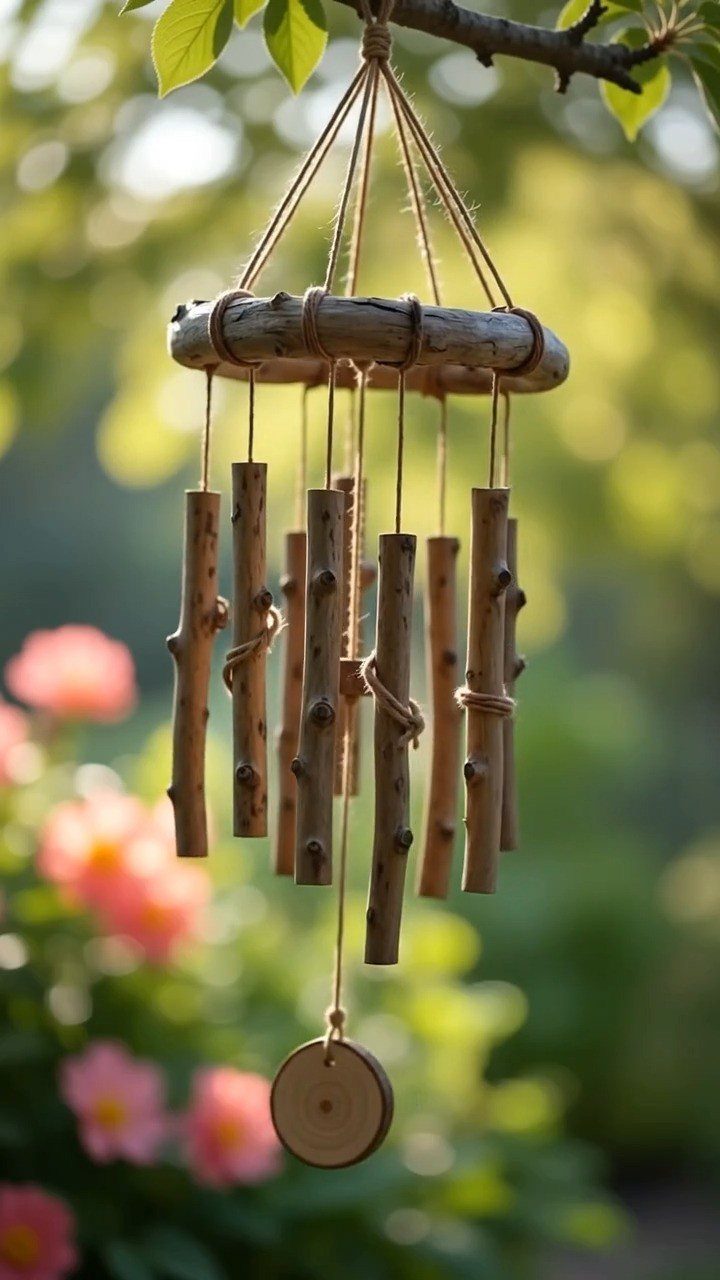
Twig and wood-slice chimes cost almost nothing if you have a pruned tree and twine.
A forked branch makes the frame, with slices drilled through the center and knotted at staggered lengths so they knock together instead of clumping in the wind.
Sound depends on wood density. I would test a few slices by tapping them; dry cedar gives a hollow knock, green oak thuds dull.
Twine rots in a season or two, so I would use jute for looks but plan to restring yearly, or start with waxed cord if you want it to last.
Hang where morning or evening breeze reaches, not in dead calm or full gale.
3. Upcycled Bird Bath
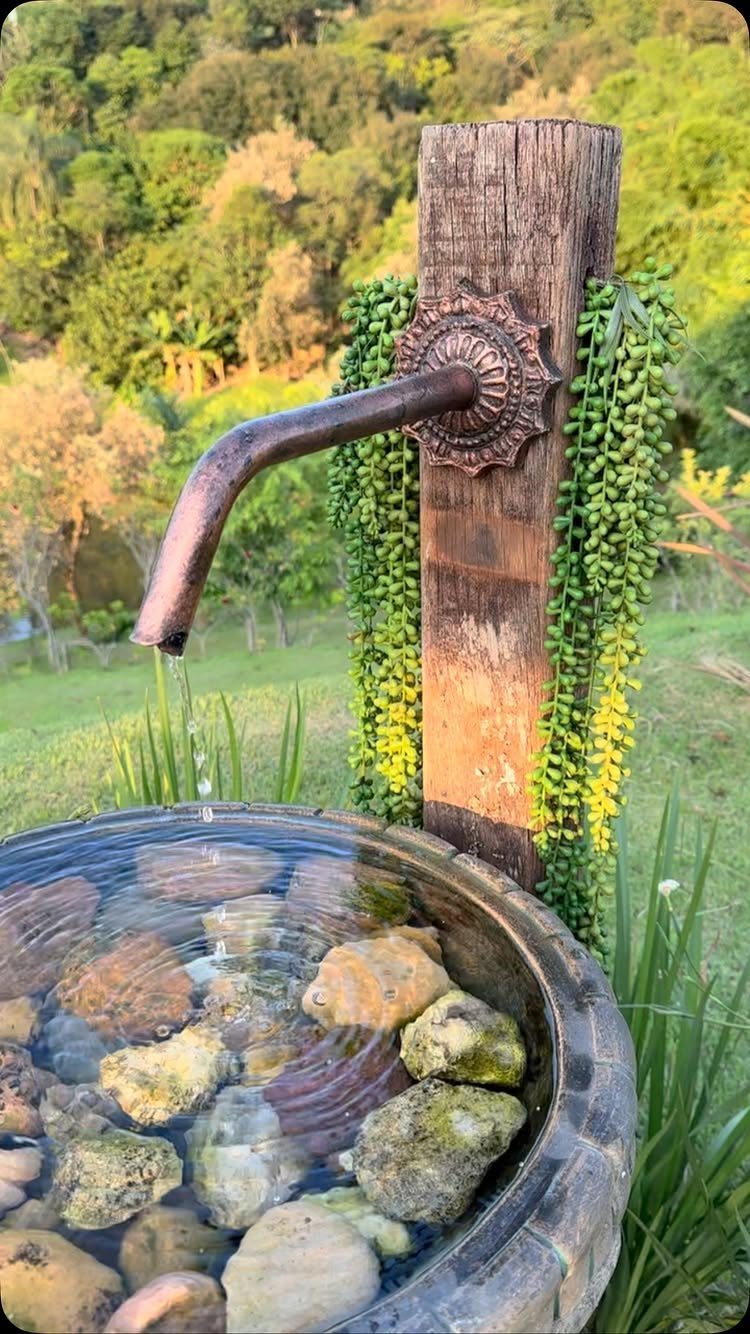
An upcycled bird bath can run on nothing but a post, a basin, and a water source that drips. A metal spout feeding a wooden bowl filled with river stones gives birds footing and keeps the bottom from growing slime.
You need a water hookup or a recirculating pump for the drip effect. Without it, you still have a basin bird bath; with it, the moving water draws more species and stays cleaner.
I would weight the base or sink the post deep, since a full basin tips easily. The succulents hanging off the side are a nice touch, but they want dry spells between waterings; keep them above the splash line.
4. Mason Jar Solar Lights

Mason jar solar lights stake along a path without wiring or an electrician’s bill. Standard solar lid inserts, the kind that replace a jar’s ring, mount on 1×2 posts with a simple L-bracket.
Check that your jars are actual Mason, not decorative glass with thicker walls; the insert needs to seat flush to charge.
I would buy lids with warm-white LEDs around 2700K, not the blue-tinted cheap ones that make a garden look like a parking lot. Posts spaced close enough give enough overlap to walk by at night without stumbling.
5. Cinder Block Garden Table
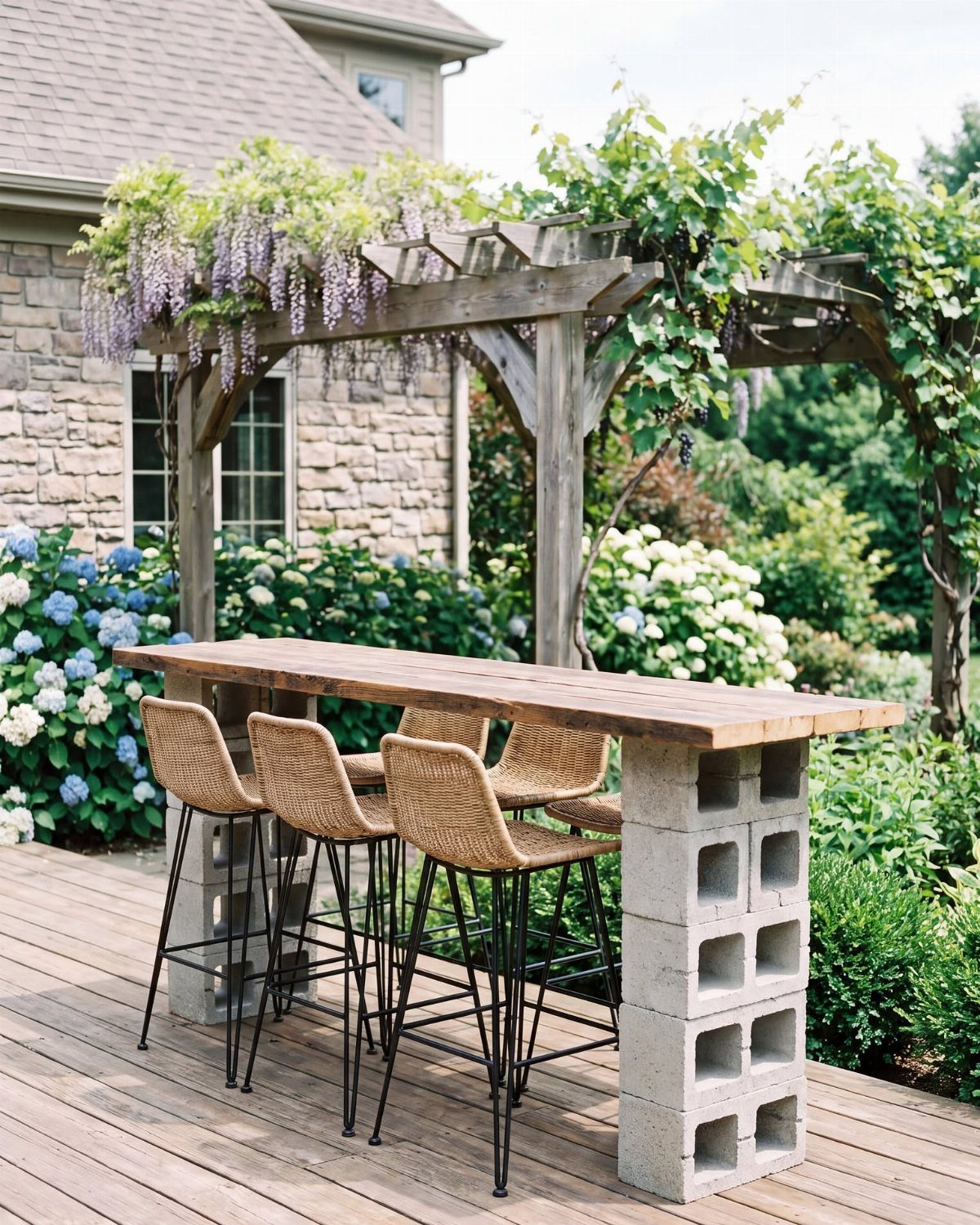
Cinder blocks and a plank make a bar-height table in an afternoon. Standard blocks stacked two high at each corner support a wooden top screwed to a frame that rests in the block cavities.
The blocks have one closed face outward, which looks cleaner and keeps spiders out of the holes; the rough, open-cell type would not do the same.
I would still cap the open tops with leftover wood or tile, or fill them with concrete.
Bar-height tables need matching stools; short seats leave too little room for knees, which gets uncomfortable fast. I would drop to counter height and use counter stools unless you already own the tall ones.
6. Tree Branch Garden Trellis
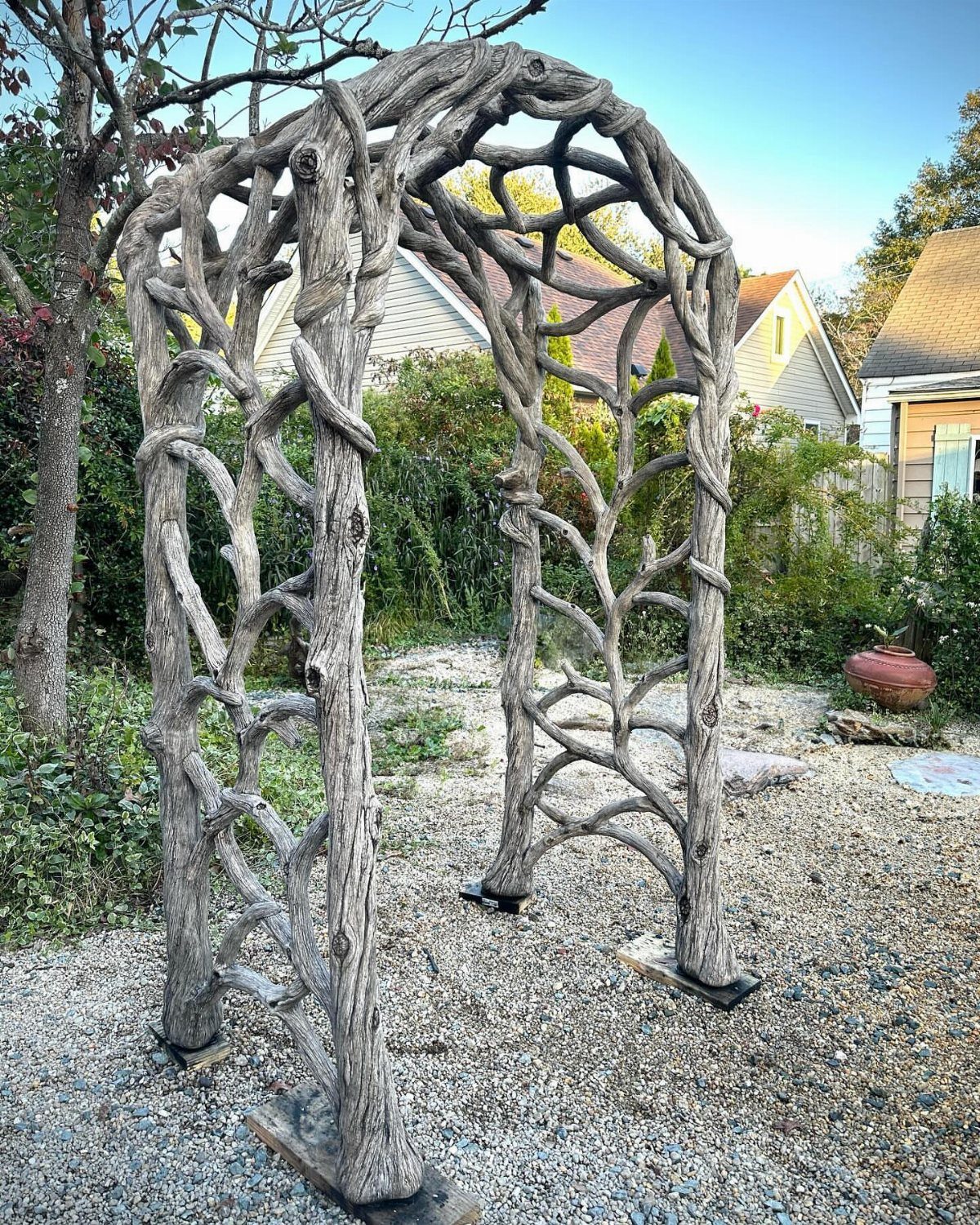
A trellis built from weathered branches costs only the time to collect and lash them.
Limbs an inch or two thick, lashed at joints with jute or wire, form the arch; wooden blocks under the ends keep them out of wet soil.
The branches are already weathered, which matters; green wood twists as it dries and your arch warps by fall. I would harvest after a season on the ground, or peel bark and let them dry a month.
The base blocks are pressure-treated 4x4s, not decorative; they rot slower than the branches will. Lashing with wire holds tighter than twine but shows more; I would use wire inside the joint and wrap jute over it for looks.
This size needs a climbing rose or clematis with some weight to it; lightweight vines disappear against the thick branches.
7. Repurposed Items
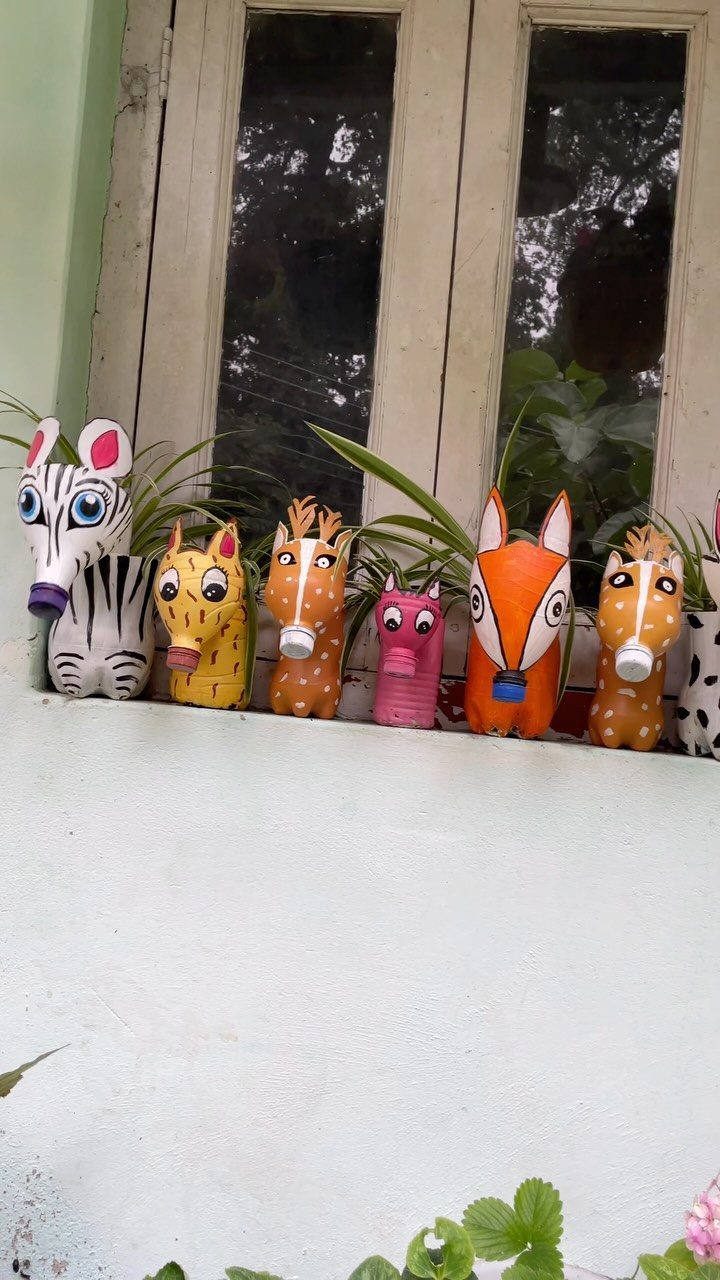
Plastic bottles cut and painted into animal shapes make planters that cost nothing but time and acrylic paint. A windowsill keeps them sheltered; left in open rain, the paint flakes and the plastic brittles faster.
I would stick to herbs or shallow-rooted greens, since a bottle’s depth is limited and drainage means poking holes that also weaken the walls.
The cartoon faces work because the shapes are simple; a zebra’s stripes need only tape lines, not freehand skill.
If you want these to last past one season, I would spray a clear sealer over the paint and bring them in before frost.
8. Glass Bottle Tree
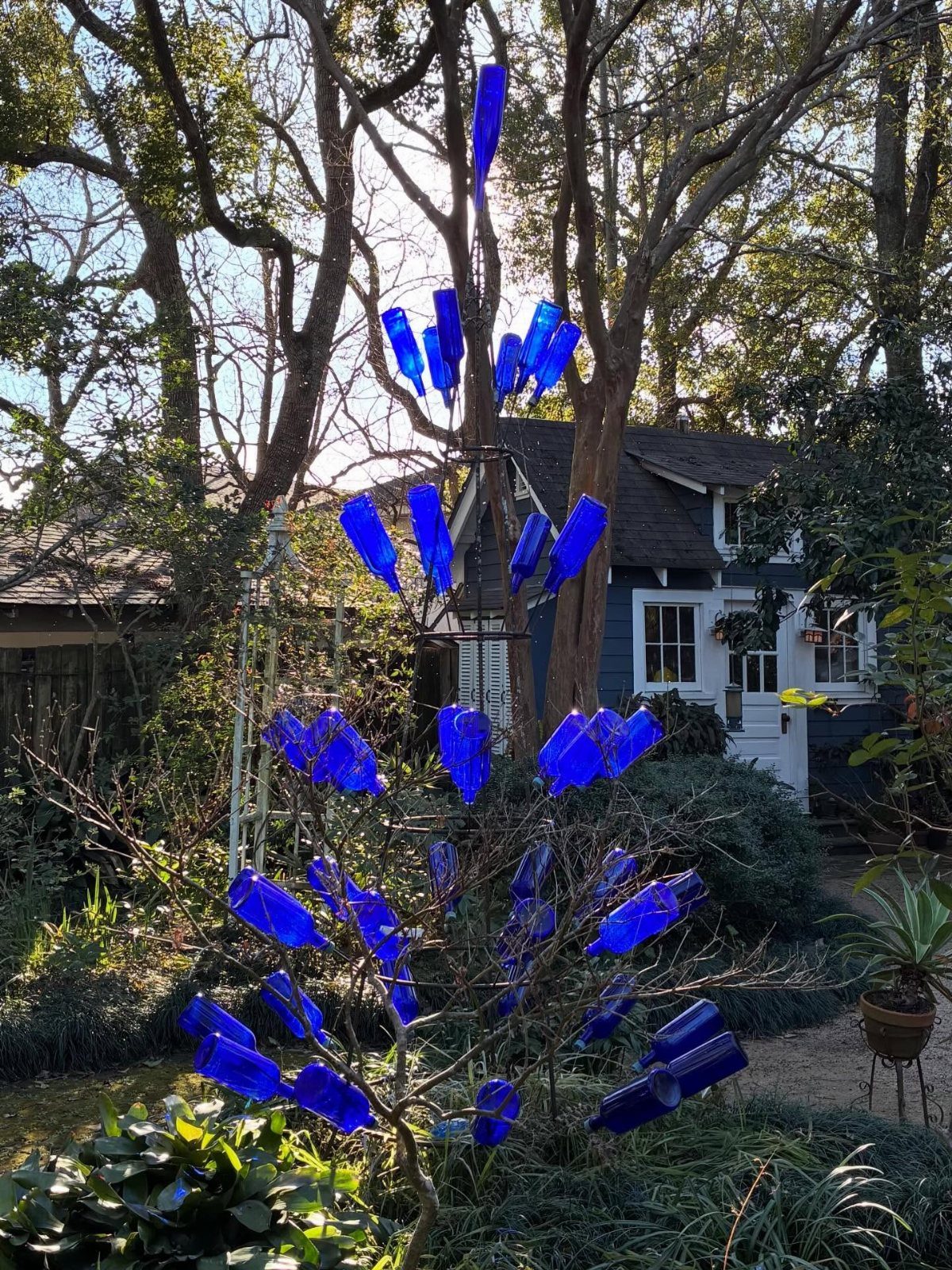
A bottle tree is just a metal frame or dead sapling with neck-down bottles slipped over each branch end.
Cobalt blue catches light and shows up from across the yard; any color works, but dark glass needs direct sun to glow.
The bottles collect rainwater and dead insects, so I would tip them after heavy rain or choose a frame angled enough that water drains. Metal rods last longer than branches, which split under the bottle weight and winter freeze.
I would anchor the base in concrete or a buried bucket; a full bottle tree catches wind like a sail. This is pure decoration, not a project for someone who wants function from every corner.
9. DIY Fairy Garden

Hanging fairy gardens scale the usual ground-level version up to eye level, where the details actually get seen. House-shaped planters on wood slices, with tiny swings and lights below, turn a fence or porch post into a vignette.
I would use plastic or resin figurines, not ceramic, since a fall from hanging height ends most clay.
The swings need stiff wire or chain, not thread, to hold weight through humidity. This suits a covered spot; full rain soaks the houses and rots the wood slices in a season.
10. Garden Signs

Painted wooden signs mark a garden’s entrance or a planted bed with words that mean something to whoever lives there. Portuguese phrases suggest a personal or family connection, which matters more than the language itself.
Exterior paint on plywood or cedar holds up; pine or MDF swells and flakes within a year.
I would seal the edges twice, where water wicks in, and raise the bottom inch off soil or mulch on a gravel bed or short post.
Stacked tiers need bracing behind or they torque in wind. The surrounding birdhouses and bench show this sign as part of a larger scene; a sign alone on bare lawn looks stranded, not welcoming.
11. DIY Painted Rocks

Flat river stones or driveway gravel, painted with words or simple shapes, scatter through beds or line a path where they catch light and read at a glance.
Short messages, 3 words at most, work because curved stone gives no room for fine print.
Acrylic paint pens cover faster than brushes on rough stone and let you write over the texture.
I would seal with spray polyurethane or exterior varnish, especially on the face; unsealed paint fades to gray by August and washes to bare stone by fall.
These are not for stepping on; place them beside the path, not in it, or the paint grinds off and the words disappear.
A fabric backdrop hints at a craft-fair origin, but the same work suits a home garden with no selling required.
12. Dragonfly DIY Yard Art

Dragonflies built from plastic spoons or spatulas, painted and wired to a clay head, stake among real plants where the artificial color reads as flower from a distance.
Sitting low in foliage rather than thrust high on poles keeps dragonflies visible at eye level among leaves.
The plastic needs exterior spray paint, not craft acrylic, or it chips when bumped by hose or knee.
I would use a heavy clay or polymer head as counterweight so the wings don’t spin on the wire; a light head leaves the whole piece twirling and tangling.
These suit a bed you view from the path, not one you work in; the wire bends, the paint marks, and the wings snap under a knee.
As permanent color among annuals that die back, they earn their spot through winter when the bed is bare.
13. DIY Copper Plant Markers

Stamped copper labels on wire stakes read clearly against soil and stay legible longer than painted wood or plastic tags. The metal darkens to a soft bronze after a season, which I prefer to the bright new shine.
Copper is soft enough to stamp with household tools, a hammer and a set of letter punches. I would use 14-gauge wire for the stake, anything thinner bends when you push it into firm soil.
The name faces one direction only, so I would plan the layout before striking. These suit herbs and vegetables you move between beds, since the stake lifts and replants without crumbling.
14. Terracotta Pitcher Water Fountain

A terracotta pitcher spilling into a matching basin gives the sound of moving water without the plumbing of a wall fountain. The clay weathers to a soft orange-brown that sits naturally among stones and moss.
The pump sits hidden in the lower basin, so the pitcher needs a hole drilled through its base for the recirculating tube.
Unglazed terracotta absorbs water and can crack in freeze, so I would bring this inside before the first hard frost or store the pieces in a shed.
The surrounding stones are not decorative only; they hide the pump cord and weight the tray so the assembly does not tip when the pitcher runs full.
15. Log Slice Rabbit Sculptures

Sliced log sections stacked and pegged into rabbit shapes sit alert on a lawn without reading as kitsch. The bark-on outer rings form the body, while thinner branch pieces angle out as ears.
Dry hardwood, maple or oak, holds peg joints better than soft pine, which swells and loosens as humidity shifts. I would cut the base slices thick, 2 inches at least, so the figure does not wobble on uneven ground.
The wood will gray in sun and attract lichen in shade; both look intentional, but I would lift them off damp grass onto a flat stone or brick to slow rot at the belly.
16. Stacked Smiling Face Planters

Stacked yellow pots with painted grinning faces turn a vertical pole into something between sculpture and planter. The faces read from below, so the expression catches you as you look up from a balcony floor or patio.
Each pot needs drainage and a securing method, since a tall stack torques in wind.
I would bolt through the pole or use a locking collar, not trust friction alone. The paint is exterior acrylic, but any face sits in sun and rain; I would expect to touch up the smiles every season or two.
This suits annuals or trailing herbs, not deep-rooted perennials that outgrow the pot in a single year.
17. Beaded Copper Wire Plant Stakes

Twisted copper wire stakes with glass beads catch window light and add height to small potted plants that otherwise disappear on a shelf. The metal darkens slowly, the beads stay bright; the contrast is the point.
Copper work-hardens as you bend it, so I would anneal with a torch or stop before the metal snaps from too many curves.
The beads need large enough holes to thread, 18- or 20-gauge wire, and must sit above soil line or they stay damp and the plating flakes.
These are indoor stakes for me; outside, the copper stains concrete and the beads fade. I would use them on herbs I keep near a kitchen window.
18. Living Succulent Wreath
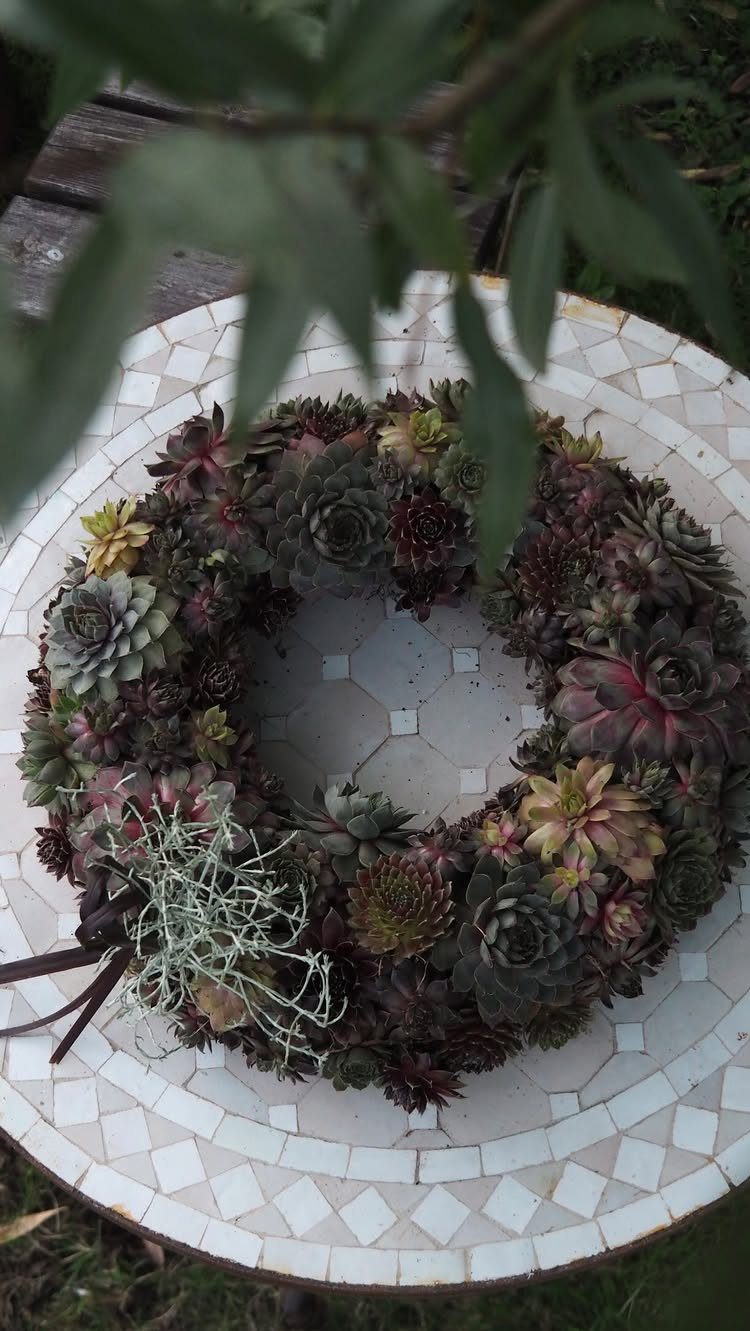
A wreath of living succulents stays green year-round in mild climates and needs no watering once its root base establishes. The rosettes root into a moss or wire form, growing slowly outward until the whole ring fills in.
The base must dry completely between waterings or the center rots first, where air moves least. I would lay the wreath flat to soak it, never hang wet, and give it morning sun with afternoon shade in summer heat.
Established wreaths weigh more than they look; a sturdy hook and a protected spot keep the form from tearing. This is a front-door piece for me, not a full-exposure garden element.
19. Sunflower Solar Yard Stake
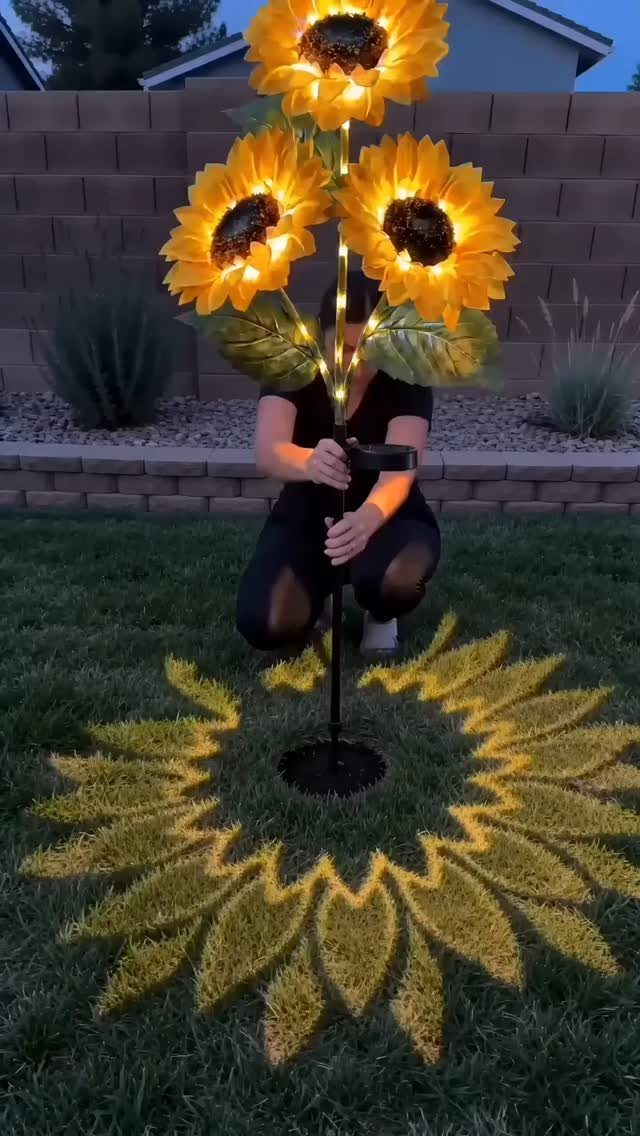
3 sunflower heads on a single stake throw petal-shaped pools of light across grass after dark. The solar cell sits at the top, so full sun during the day decides how bright and how long the show runs.
I would check the stake height against whatever grows around it; too low and the flowers drown in foliage by July, too high and the light pattern scatters thin.
These are accent pieces, not path lighting, so I would place them where the projected shape on the ground matters more than the fixture itself.
20. Hanging Woven Globe Lanterns
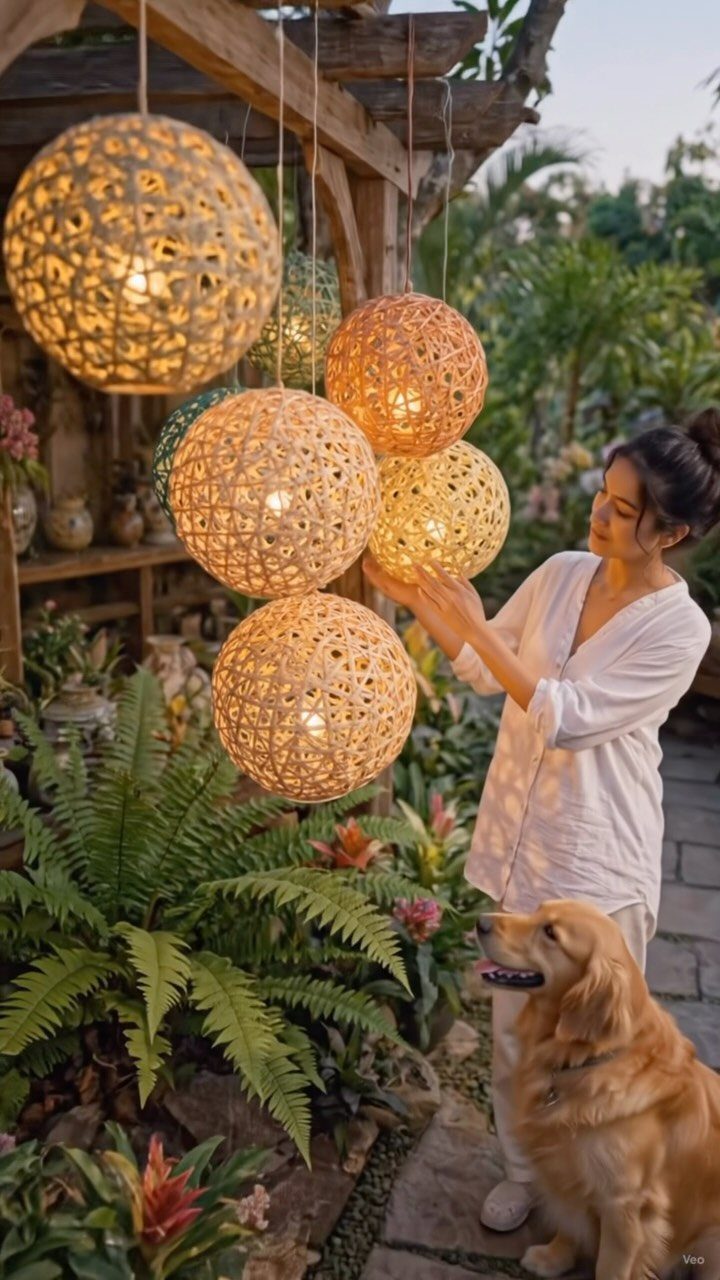
Woven globe lanterns hung from a trellis beam turn a garden walk into something you move through rather than past. The spheres are large enough to read from a distance even when unlit.
Power source matters more than the weave pattern. Battery or solar cells inside each globe keep the cords invisible; plug-in would need weather-rated cable and a plan for where it runs.
I would space them far enough apart that they do not compete, but not so far that the beam looks bare between.
21. Nature-Crafted Windsocks
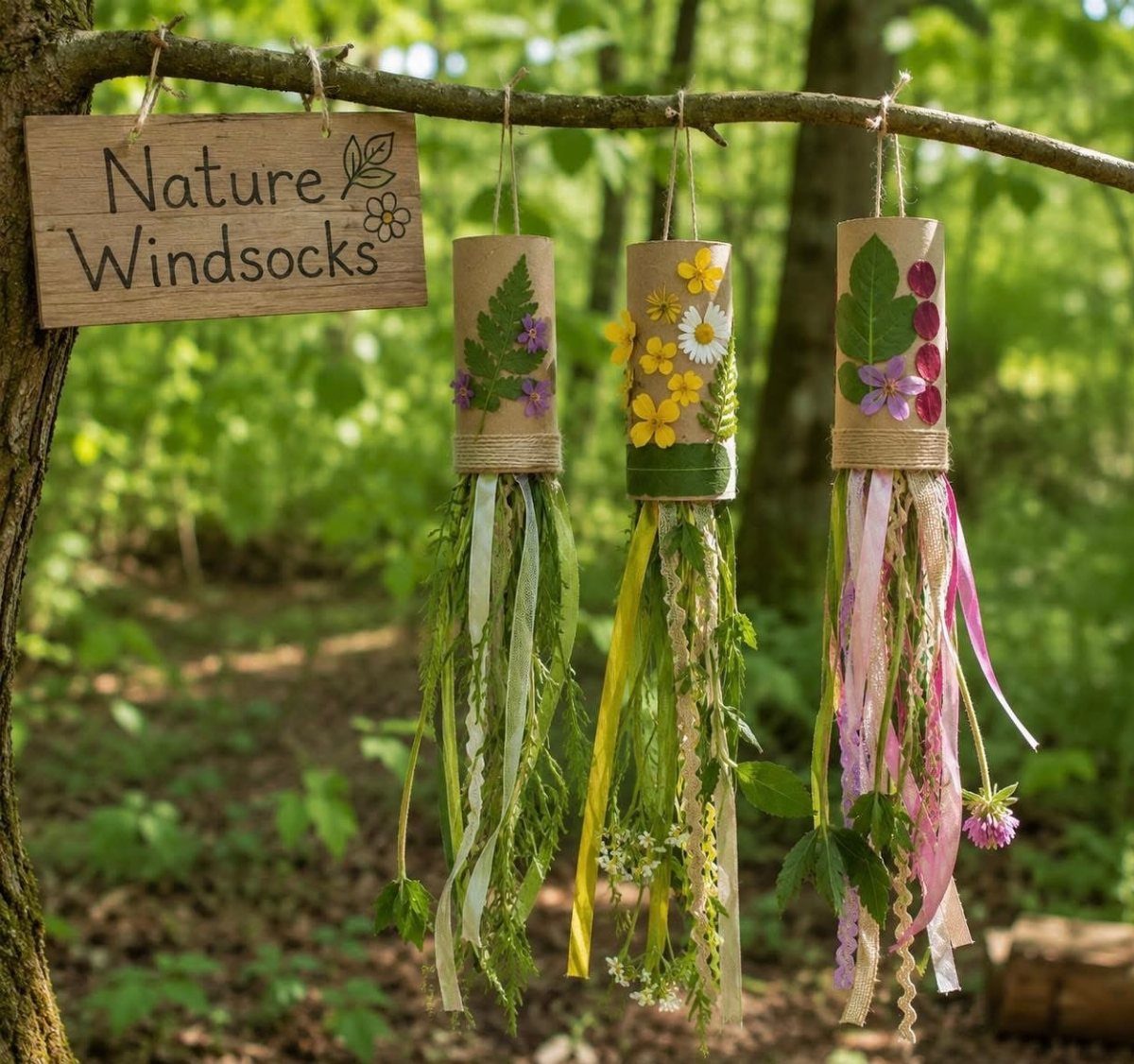
Cardboard tubes, pressed leaves and ribbon tails make windsocks that last one season and cost next to nothing. The leaves and flowers are real, dried flat, so the color stays muted and the shapes stay individual.
I would seal both sides of each pressed piece with clear acrylic or Mod Podge before gluing; unsealed, they absorb rain and darken to mush.
The tube needs a plastic lid or glued cardboard disk at the bottom, or it softens and the whole thing droops. These suit a covered porch or a dry spell in late summer, not a full-exposure yard through spring rains.
22. Mini Wine Cork Planters
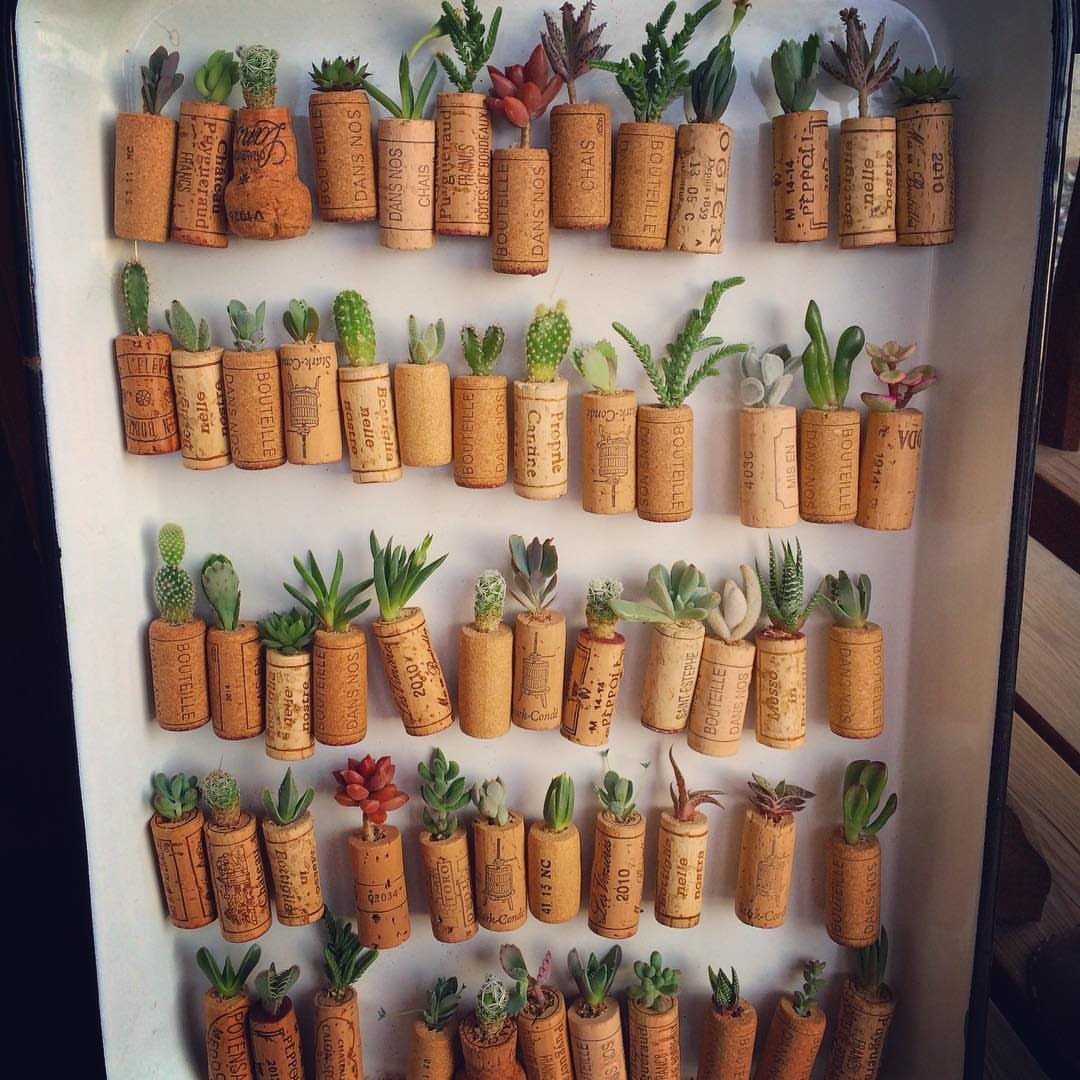
A wine cork, split lengthwise and hollowed, holds just enough soil for a succulent cutting to root. The printed labels stay visible, which is the charm; each cork names its own tiny plant.
Drilling or cutting the cavity without splitting the cork takes a sharp knife and patience, or a vise and a small spade bit.
I would stand them in a tray, not plant them in soil; the cork wicks water and rots from the base up.
Rooting hormone on the cutting speeds the week or 2 it needs to hold on its own. These are table or windowsill pieces for me, not outdoor planters.
23. Arched Trellis Planter Boxes
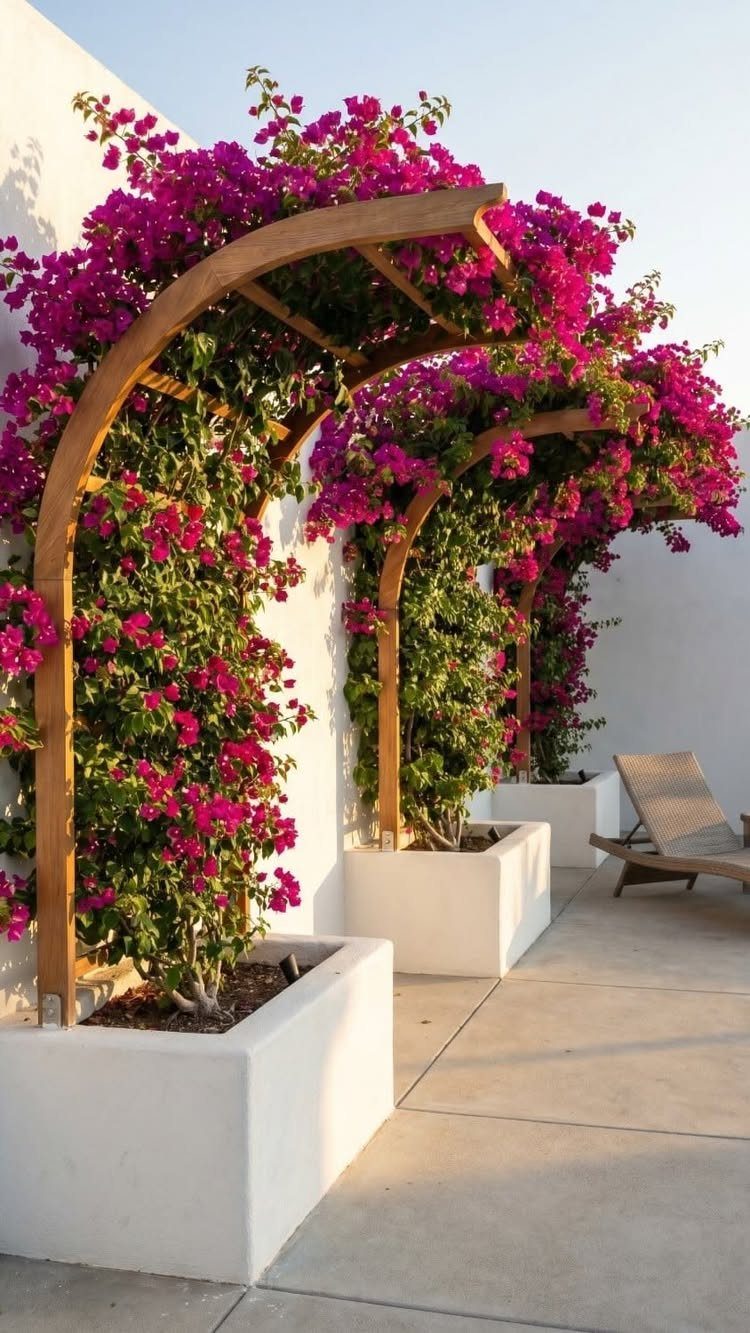
A white planter box with an arched trellis built in gives climbing vines a frame and gives you a flower wall at seating height. A heavy bloomer like bougainvillea needs the room; lighter vines would look sparse against the white.
The arch is pressure-treated or cedar, painted to match the box; anything else warps and the paint cracks along the grain within 2 seasons.
I would anchor the box feet or weight the base; a full-grown vine on a tall arch catches wind and the whole unit tips.
Drainage through the box bottom is non-negotiable, roots in standing water rot fast and the paint fails from inside.
24. Scrolled Metal Flower Trellis

White metal obelisks with scrolled tops carry clematis or other climbers into vertical space without the wait for a fence or wall. The scrollwork shows bare in early spring, then fills and reads as flower support by June.
Powder-coated steel lasts longer than painted wrought iron, which rusts at weld points and scratches.
I would set these deep into firm soil or use ground stakes; tall and narrow, they lever loose in wind once the vine adds sail area.
The white reflects light up into the flowers, a small thing that matters on overcast days. Two flanking a path or gate give symmetry; one alone needs anchoring by shrubs or a bench to feel settled, not planted at random.
Finding Vintage Items
Estate sales, garage sales, thrift stores, and flea markets are where I would look for pieces that already carry some history. Garage sales and flea markets usually price lowest, and at those two you can haggle.
I would skip anything with rot or rust that compromises structure; surface patina is fine, but a planter needs to hold soil and a chair turned planter needs legs that still carry weight.
Broken chairs with damaged seats work well for this, since the seat is already gone and the frame becomes the holder.
I would pass on anything upholstered; foam and fabric hold moisture and attract pests. Milk cans, old ladders, wheelbarrows, and chippy picket fence panels all transplant into garden use with minimal alteration.
The ladder arbor idea is sound, though I would anchor it; a clematis in full growth catches wind and a freestanding ladder will not hold.
Using Natural Elements
Field stones and logs cost nothing if you have permission to take them.
I would use them to outline beds or as upright accents in shade vignettes. Birch, cedar, or oak logs all work; birch looks lighter and more formal, cedar and oak read heavier and last longer in damp soil.
The hollowed-log planter needs drainage bored through, or water pools and the wood rots from inside. Moss, driftwood, and reclaimed terracotta share the same principle: they belong in the garden because they already look like they grew there.
I would avoid anything too polished or uniform; a matched set of stones reads installed, not collected. The balance is between enough art to matter and enough restraint that plants remain the point.
Creating Focal Points
A focal point needs a reason to exist where you put it. A bird bath surrounded by flowers draws the eye because water and bloom contrast; the same bath on bare lawn would look stranded.
I would place focal points at path turns or where sightlines naturally pause, spaced far enough apart that each one registers before the next comes into view.
A vintage chair planter or handmade sign works the same way: it rewards attention without demanding it from every angle.
The dish-filled planter idea depends on color coordination or deliberate contrast; random colors read as clutter. I would gather pieces that share a tone, blue glass against green foliage for instance, and group rather than scatter.
One strong focal point beats three competing ones. If your garden is small, one is enough; if it is large, place them where the walk between them takes you through the planting rather than around the edge.
Frequently Asked Questions
What are some easy garden projects I can do?
Mosaic stepping stones from broken tile and concrete pavers take an afternoon and cost little more than grout and sealant.
Twig and wood-slice wind chimes need only pruned branches, twine, and a forked branch for the frame. Mason jar solar lights run on standard solar lid inserts and 1×2 posts with L-brackets, no electrician needed.
Most of these fit a weekend and a real budget, the kind where you buy materials at a hardware store and still have money left for plants.
What are some creative decor ideas for my garden?
Upcycled bird baths from posts and basins with dripping water draw more species than still water. Glass bottle trees on metal frames catch light across the yard; cobalt blue shows up best.
Stacked smiling-face planters on a vertical pole read from below on a balcony or patio. I would place these as focal points you move between, not scatter them evenly.
What are the latest garden decor trends?
Upcycled materials and whimsical handmade pieces keep showing up in gardens that actually look finished, not just crafty.
Bird baths from found basins, planters from plastic bottles, signs from plywood, and bottle trees from collected glass all work because they read as intentional, not accidental.
The other thread is solar lighting without wiring, which has gotten cheaper and warmer in color. I would not chase trends that need a shop full of tools; the projects here stay in hand-tool territory.