These ideas run from a weekend mulch refresh to a pergola that needs an arborist consult, and the one that fits your yard depends on whether you are working around a single mature tree or starting fresh with saplings and time to wait.
A limelight panicle hydrangea recovers if winter kills its tips; that resilience matters more in zone 4 than in zone 9, and your hardiness zone is the filter that eliminates half the ideas before you spend a dollar.
1. Trees That Bloom
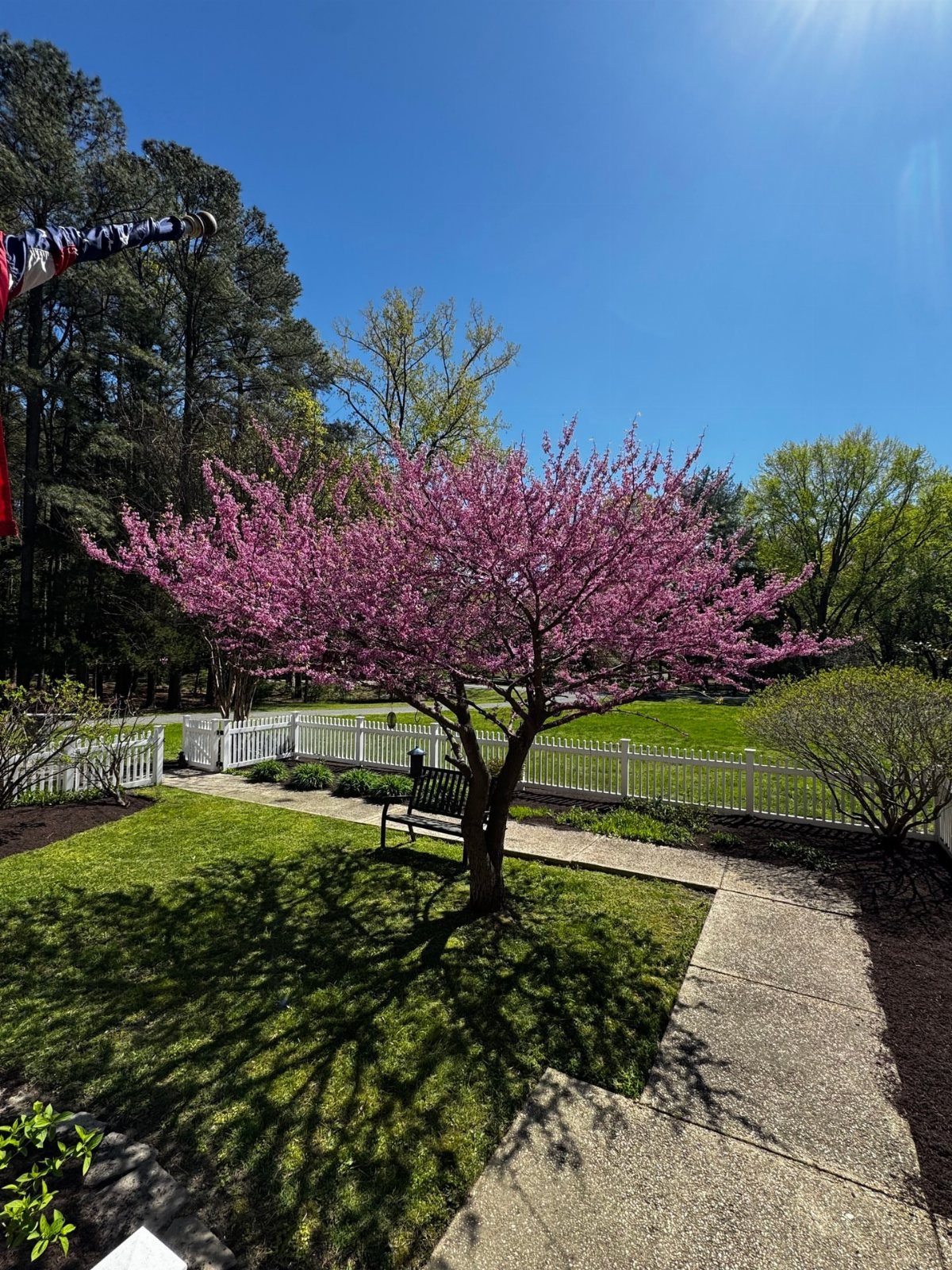
A blooming redbud gives you color in early spring before most shrubs wake up. Eastern redbuds stay small enough to fit suburban lots without crowding the fence line.
Check your hardiness zone before you buy; redbuds handle 4–9, but a southern magnolia or crape myrtle might suit you better in warmer areas.
I would place a flowering tree where you see it from a window you use daily, not tucked behind a garage where you only visit it twice a year.
2. Create a Shade Garden
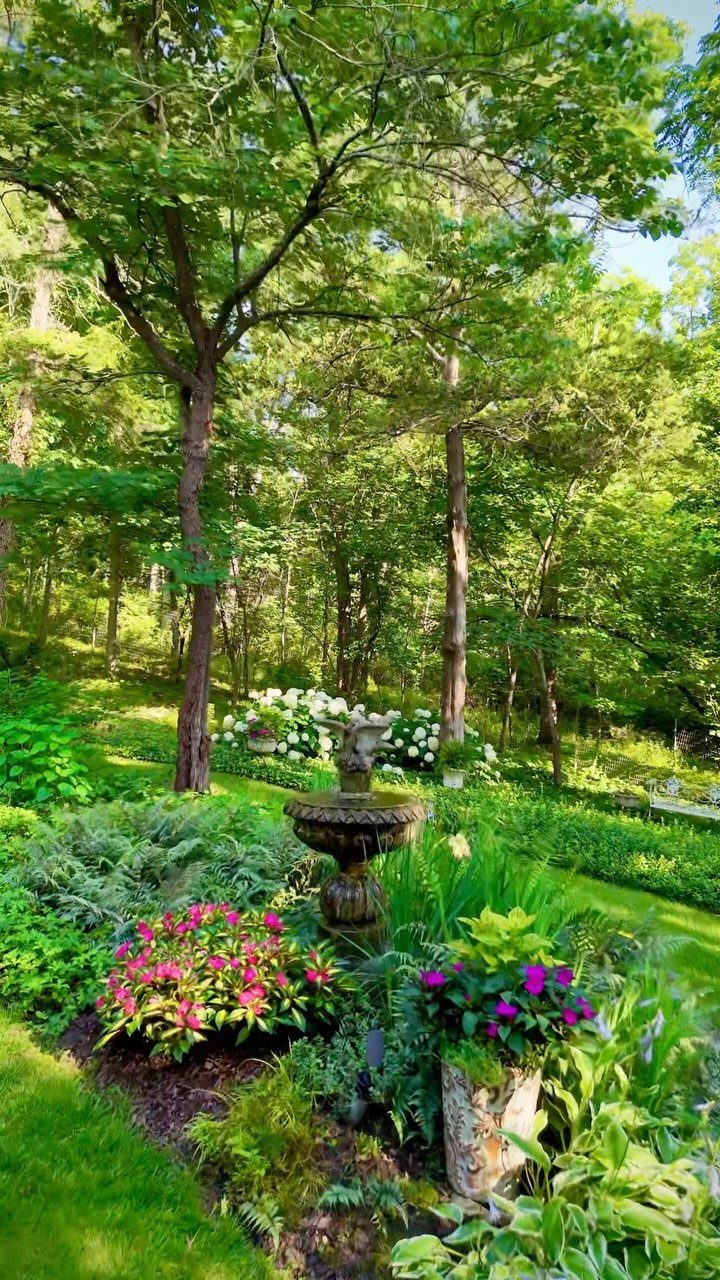
Ferns, hostas, and impatiens fill the space where grass gives up under canopy shade. A fountain is optional; the core idea is working with what the tree already gives you rather than fighting it.
Test your shade pattern through a full day before you plant. Dappled morning light with solid afternoon shade suits hostas and hydrangeas; deeper shade pushes you toward Japanese painted ferns or astilbe.
I would skip the fountain unless you want the white noise; a simple stone grouping costs less and needs no winterizing.
3. Use Trees for Privacy
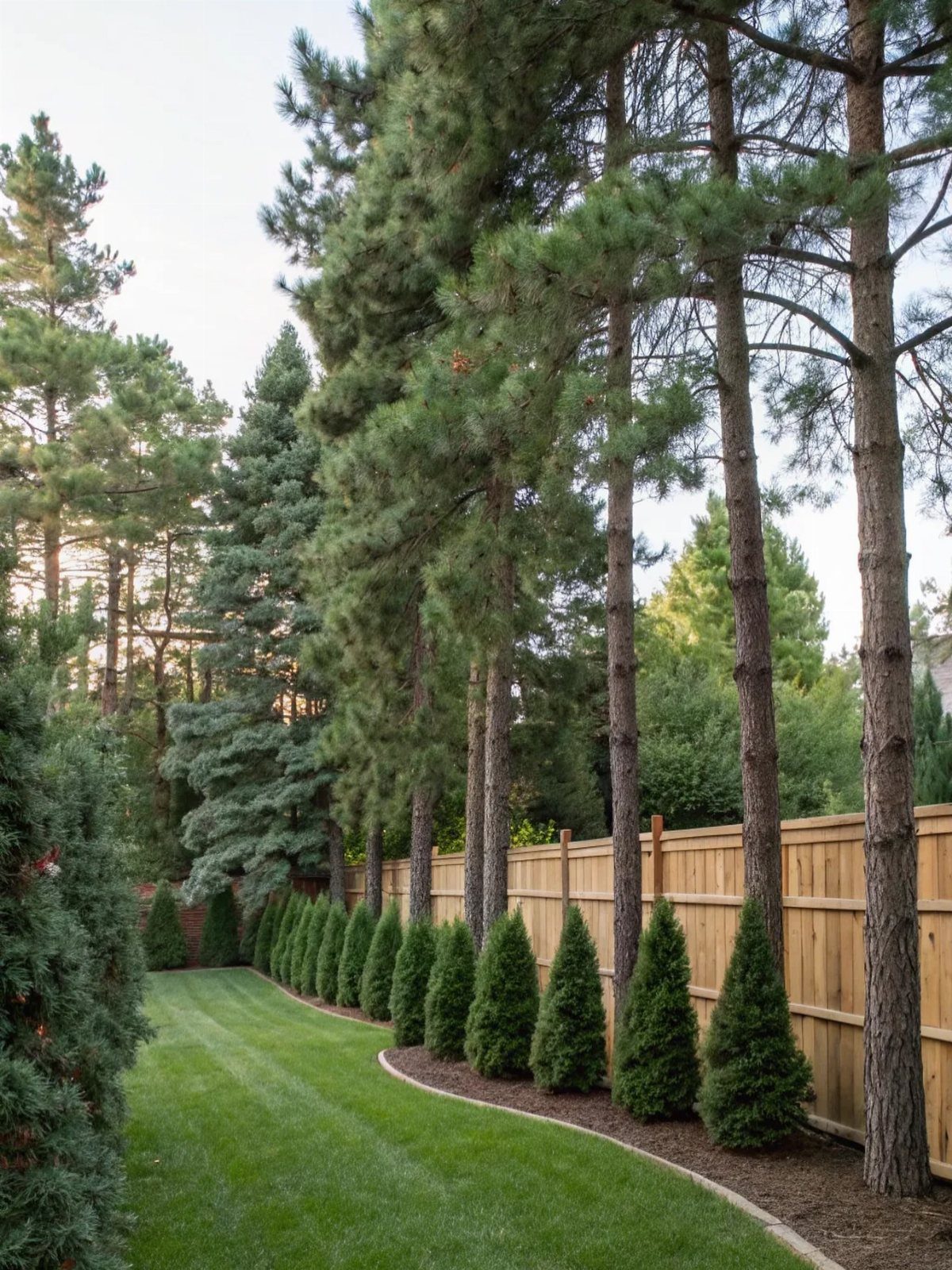
A staggered row of pines along a fence blocks sightlines faster than any single hedge grows tall.
Eastern white pine grows fast and gets too big for some yards.
Norway spruce stays narrower and denser; I would use it where space is tight. Space trees at half their mature spread, not trunk-to-trunk, or you will prune away the lower branches that do the actual screening.
4. Bistro Set Around Trees
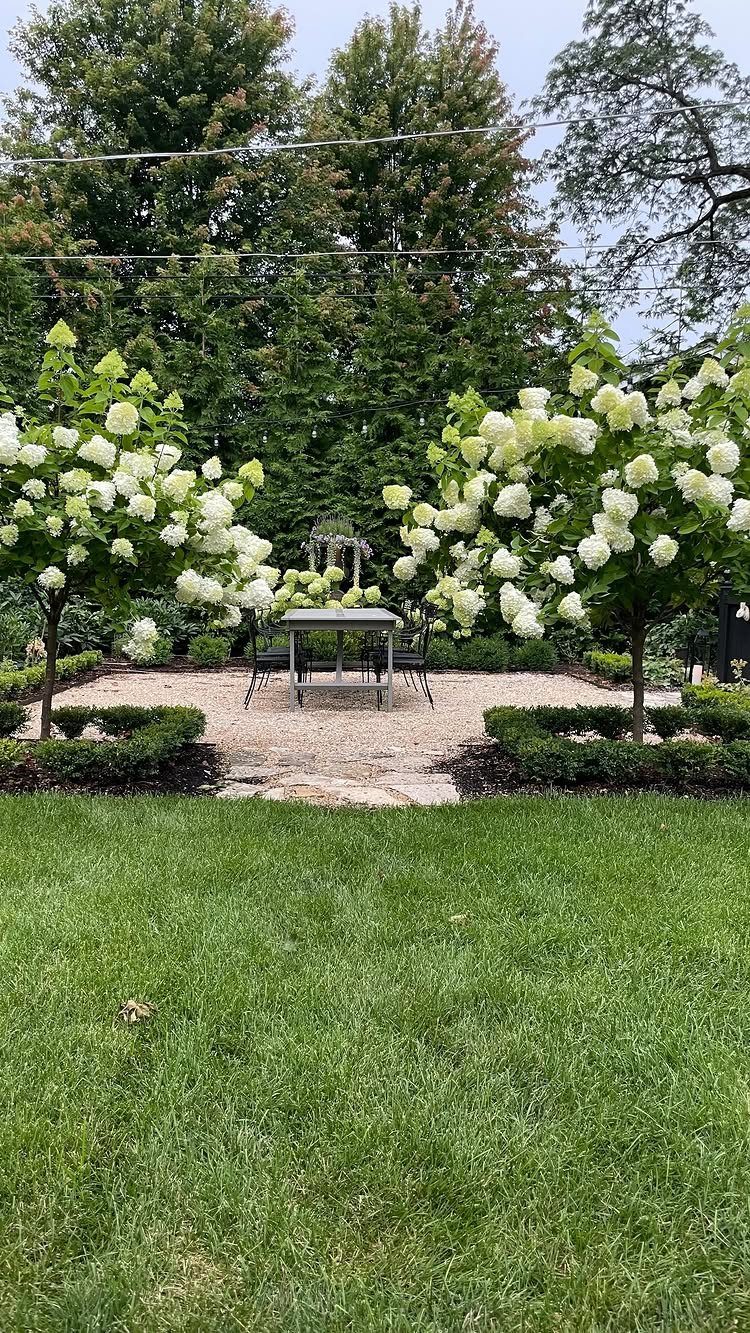
2 hydrangea trees flanking a gravel patio turn a bistro set into a destination instead of an afterthought. The white flowers are limelight panicle hydrangeas, which bloom on new wood and recover if winter kills the tips.
Gravel over compacted soil beats pavers for drainage around tree roots; crushed stone locks together and does not shift under chair legs.
I would size the table for two, not four; the intimacy is the point, and a larger set crowds the frame the trees create.
5. Mulch Around Trees
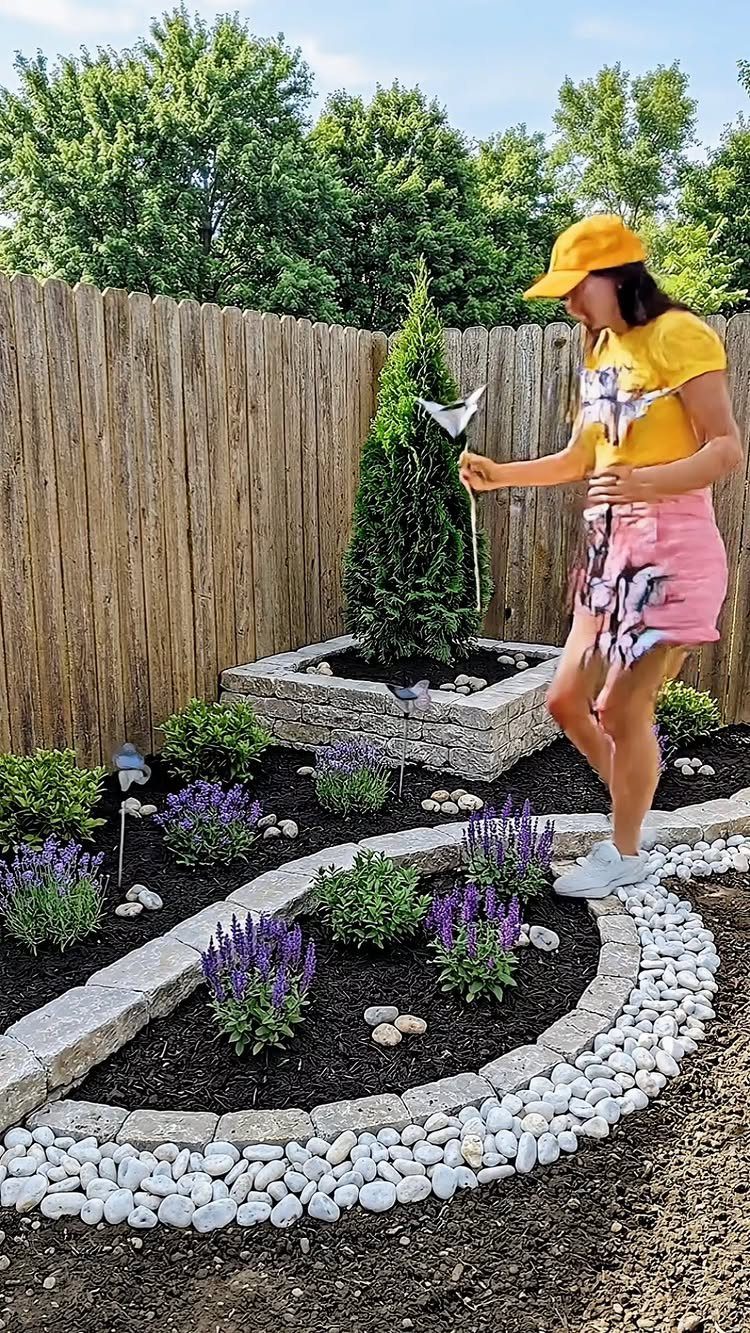
Dark mulch around trees and beds gives planting areas a finished look and cuts weeding time by half.
Keep mulch 2 inches back from trunks, piled against bark causes rot.
Shredded hardwood stays put on slopes; pine straw is cheaper but drifts. I would refresh once a year in spring, not fall, so the color carries through the season you actually use the yard.
6. Deck Around Trees
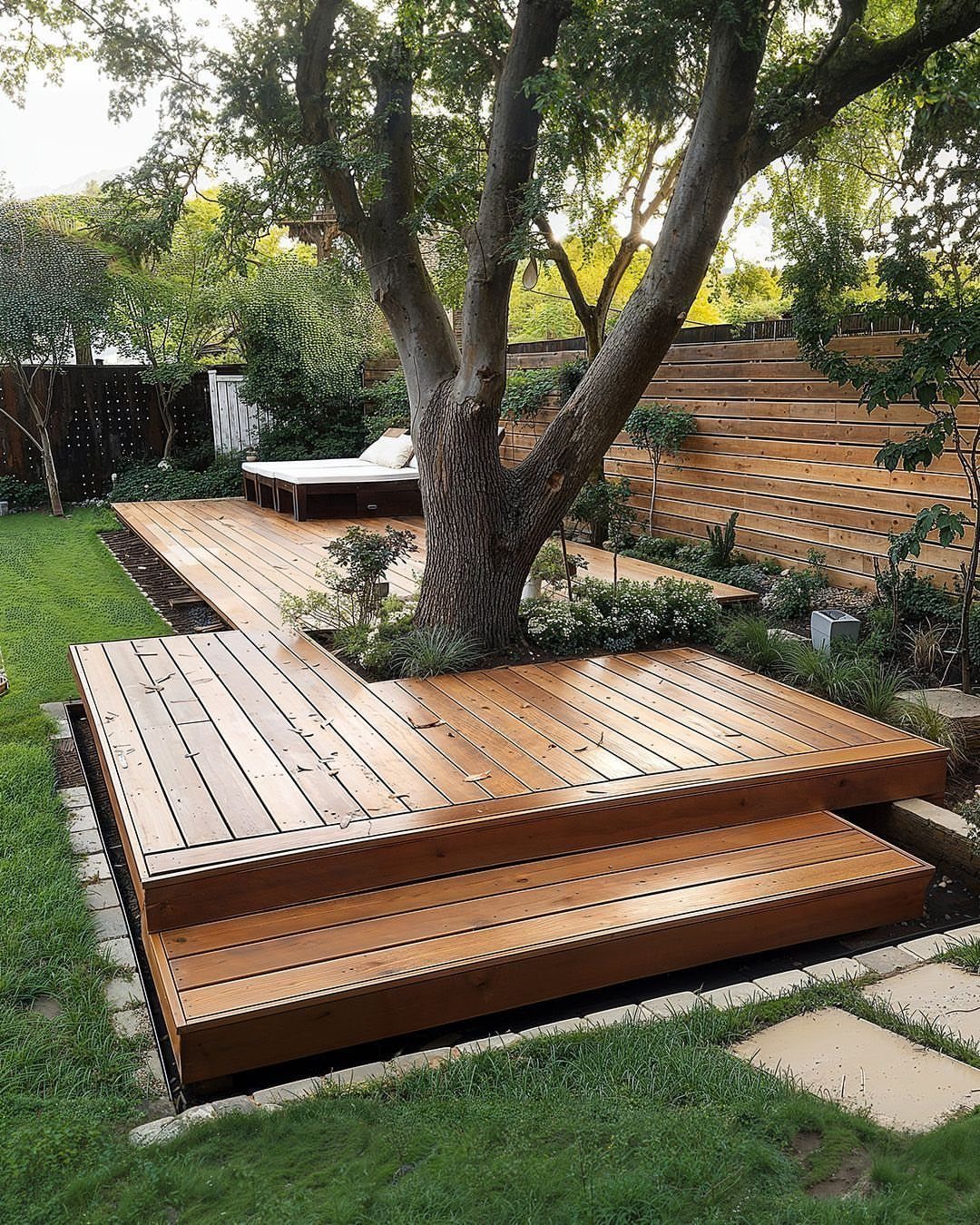
A deck built around a mature tree gains character no new construction matches, but the tree will keep growing.
Use ground-contact-rated lumber, not standard deck boards, where wood meets soil or root zone moisture.
I would plan the gap from the trunk wider than you need now, knowing it will look generous for a few years and just right later. Check the species growth rate; a silver maple demands more room than an oak.
The key to successful treescapes is envisioning the height, diameter, and silhouette of each species in 10 to 20 years’ time. Many homeowners make the mistake of planting young trees without considering how their roots and branches will spread.
7. String Lights in Tree Branches
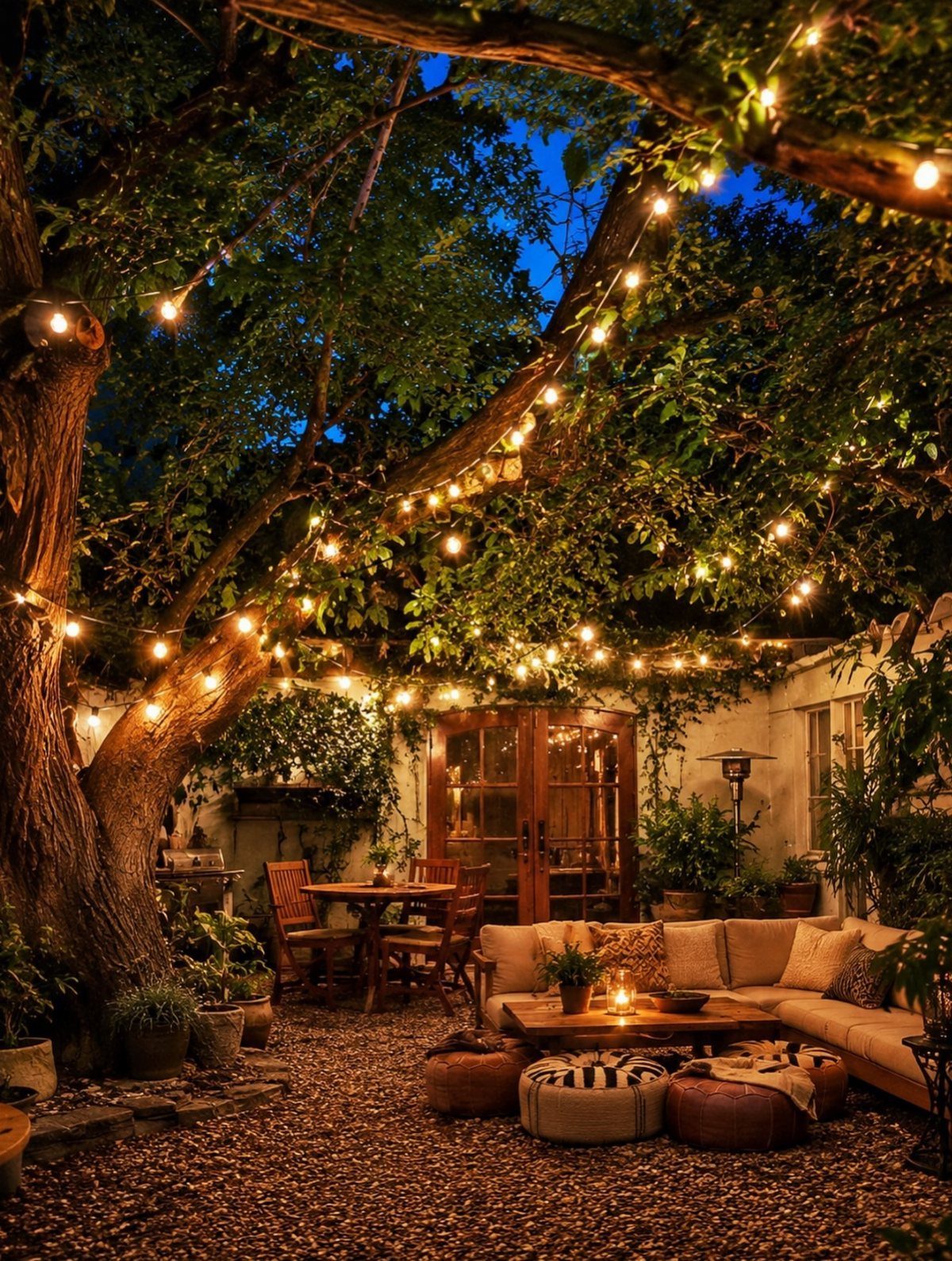
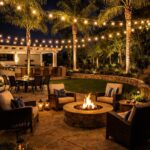
Warm string lights threaded through branches turn a basic patio into the spot you actually use after dark. LED bulbs draw so little power that a single outdoor outlet handles a long run without tripping the breaker.
Check that your trees have mature wood thick enough to support the wire weight; thin branches sag and look sloppy by August.
I would skip the bulb shapes that mimic Edison filaments unless you want a restaurant patio feel; small globes disappear against sky and leaves. Leave enough slack that wind movement does not pull sockets apart.
8. Pergola Built Around a Tree
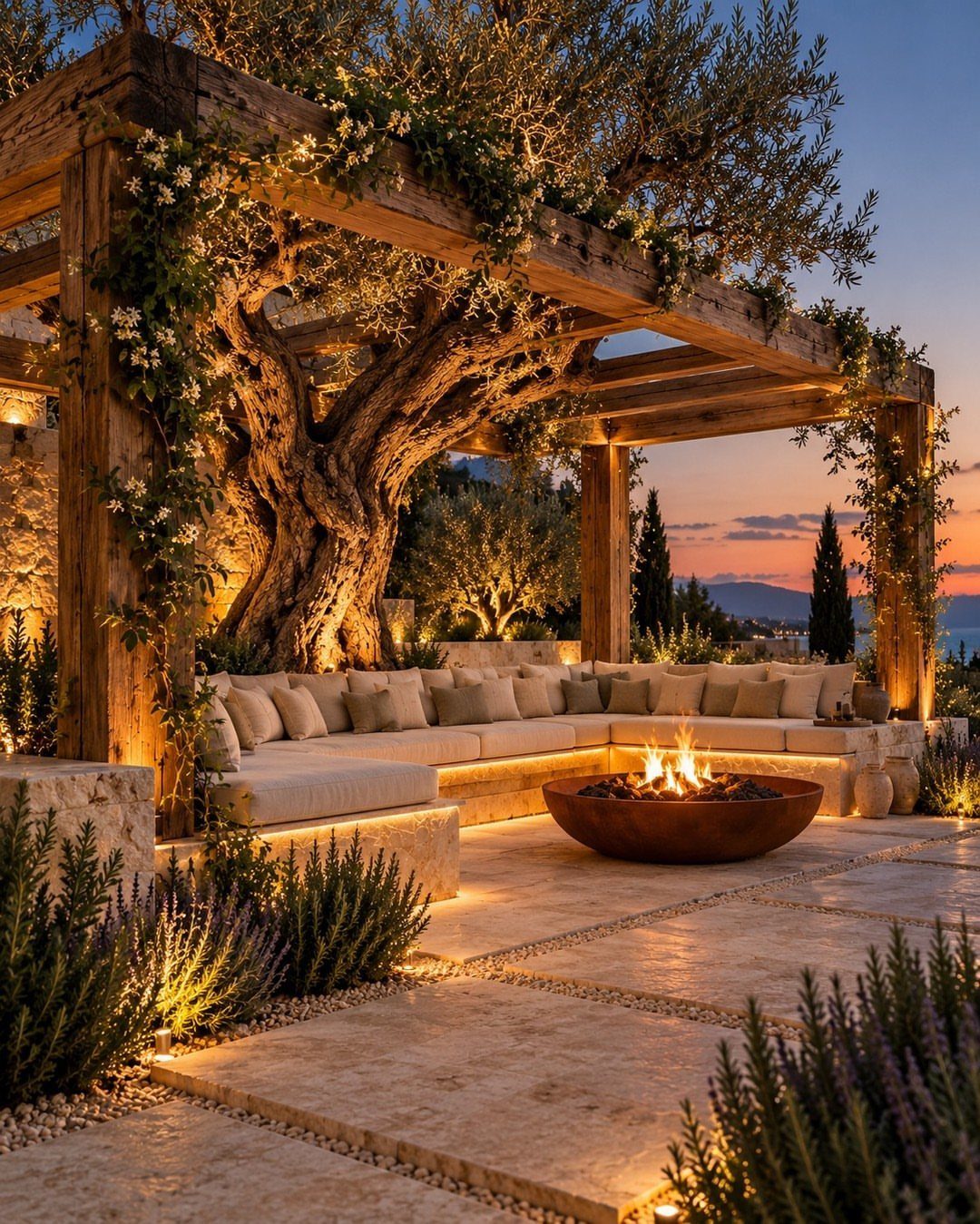
A pergola built around a living tree frames shade you cannot buy from a kit.
A pergola built around an established tree accepts what is already there instead of clearing the space; the wood frame simply leaves room for the trunk to keep growing.
You need an opening in the roof framing wider than the trunk, with extra clearance for species that thicken fast.
I would use rough-sawn cedar rather than pressure-treated pine; it grays to match bark and does not leach copper near roots.
A tree this size means professional rigging to avoid trunk damage; budget for an arborist consult even if you build the pergola yourself.
9. Courtyard Centered Around a Tree
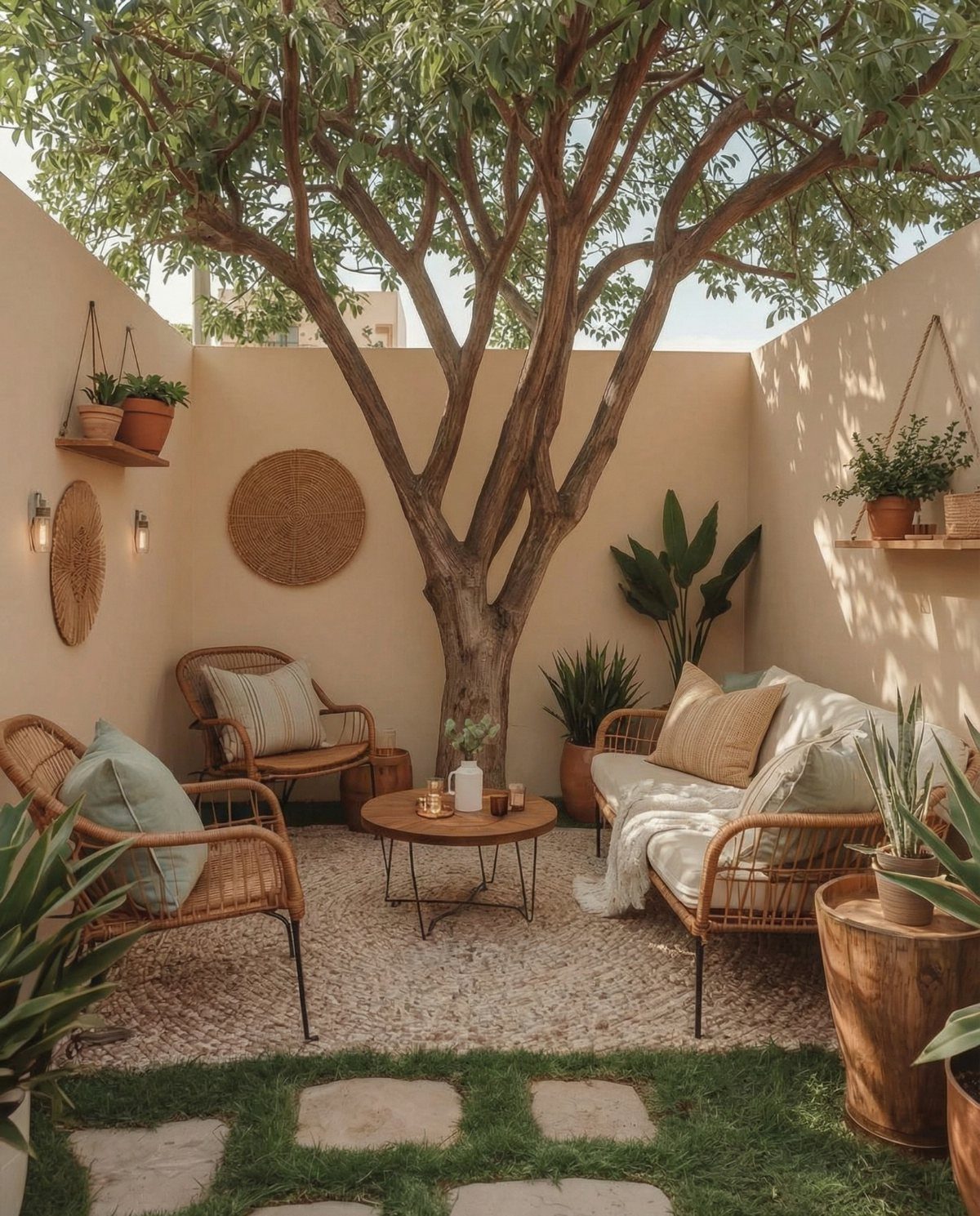
A single shade tree in a small courtyard gives you a ceiling outdoors without building one. The walls do the enclosure; the tree does the architecture.
Paved surfaces around the trunk need a permeable joint or a tree grate; roots will heave solid concrete soon enough.
I would keep furniture low and lightweight; the visual weight belongs to the tree, not the seating. Potted plants around the edges let you shift color with the season without disturbing the central root zone.
10. Tropical Palms in Garden Beds

Palm-shaped leaves and red ti plants along a lawn edge fake a climate zone you might not live in. The effect depends on density; a few plants read as an accident, a full grouping reads as intent.
Most of these tropicals are annuals north of zone 9 or houseplants brought out for summer. Elephant ears need heavy water; I would place them where a hose reaches without dragging across the lawn daily.
Once the foliage fills in, the fence behind the bed disappears; I would skip replacing it with wood, the plants do the screening for free by midsummer.
Consider Climate Compatibility
Your hardiness zone is the first filter, not the last. A tree that survives your winter still needs the right sun exposure to thrive, and the south side of your house can run noticeably hotter than the north.
I would stand at the planting site morning, noon, and late afternoon with a notebook before I committed to anything; the tag may say full sun, but morning sun versus afternoon sun changes which species will flourish.
Native species handle local soil and rainfall without the pampering a transplant demands. If you are unsure what counts as native, your county extension office keeps lists, and the staff will talk through your specific spot.
I would call them before I called an arborist; the advice is free and often just as specific.
Fast growth is a temptation that ages poorly. A fast-growing tree can overshadow your roof and your neighbor’s lot within a decade.
Check the mature spread against your property line, your foundation, and your septic field if you have one. I would rather wait on a slow oak than fight a silver maple that outgrew its welcome.
Maintenance Tips
Pruning belongs to late winter, before sap runs and when the branch structure is visible.
Cut back to a lateral branch or bud; stubs invite rot and look ragged by summer. I would remove crossing branches and anything growing toward the center first, then step back and look before I made another cut.
Watering a newly planted tree means soaking the root ball, not sprinkling the leaves.
Young trees need deep watering once weekly through dry spells; established trees rarely need supplemental water except in drought. I would check soil moisture with a screwdriver pushed 6 inches down; if it comes up dry, it is time to soak.
Mulch renews once yearly in spring, as the entries note, but the timing of other tasks matters too.
Fertilizer is rarely necessary for trees in decent soil; a soil test from your extension service costs less than a bag of synthetic feed and tells you if you are solving a problem that does not exist.
Guessing at treatment does more harm than good; soil tests and symptom checks come first.
Some jobs belong to a professional. If a branch is thicker than your wrist, if it overhangs your roof, or if the tree leans after a storm, a certified arborist has the rigging and the insurance.
Environmental Benefits
A single small tree absorbs carbon dioxide and releases oxygen in exchange; the shade it casts in summer and the wind it blocks in winter trim your energy bills without you touching the thermostat.
I would plant on the west and northwest sides of the house for the biggest cooling effect, where afternoon sun hits hardest.
Roots absorb rainfall that would otherwise sheet across pavement and into storm drains. In a heavy rain, a mature tree can intercept hundreds of gallons; the water percolates through soil instead of carrying pollutants to the nearest creek.
I would keep as much permeable surface near the trunk as I could manage, especially where local codes now require it.
Wildlife value accumulates with time. Birds nest in branching structure, insects feed on leaves that later drop to become soil, and the whole chain depends on plant species the local ecosystem recognizes.
A native oak supports hundreds of caterpillar species; an ornamental from Asia might support none. I would choose the oak, even if its fall color is quieter.
Stress reduction is harder to measure but real enough. Studies consistently find lower cortisol in people near trees, and the effect holds whether you garden beneath them or simply sit in their shade on a break from screen work.
I would place a seat where I could see canopy movement; the slow sway is the part that calms.
Frequently Asked Questions
What is the 3-5-7 rule in landscaping?
This rule is about arranging plants in odd-numbered groupings, like groups of 3, 5, or 7, to create visual balance in a planting bed.
I would treat it as a starting guideline rather than a hard rule, since a tree’s mature spread matters more than a fixed number.
Check the species size at full growth and keep the canopy clear of roofs and power lines.
Do trees in the yard increase property value?
Shade cuts summer cooling costs and wind blocks trim winter heating bills, which is where the real value shows up.
A mature tree also absorbs stormwater that would otherwise strain drainage systems, and native species add wildlife value that ornamental replacements lack. Buyers notice these practical benefits even if they do not name them.
What is a good tree for a backyard?
An Eastern redbud works well for suburban lots because it stays small and blooms early, before most shrubs wake up. I would check my hardiness zone first; redbuds handle zones 4–9, but southern magnolia or crape myrtle suit warmer areas better.