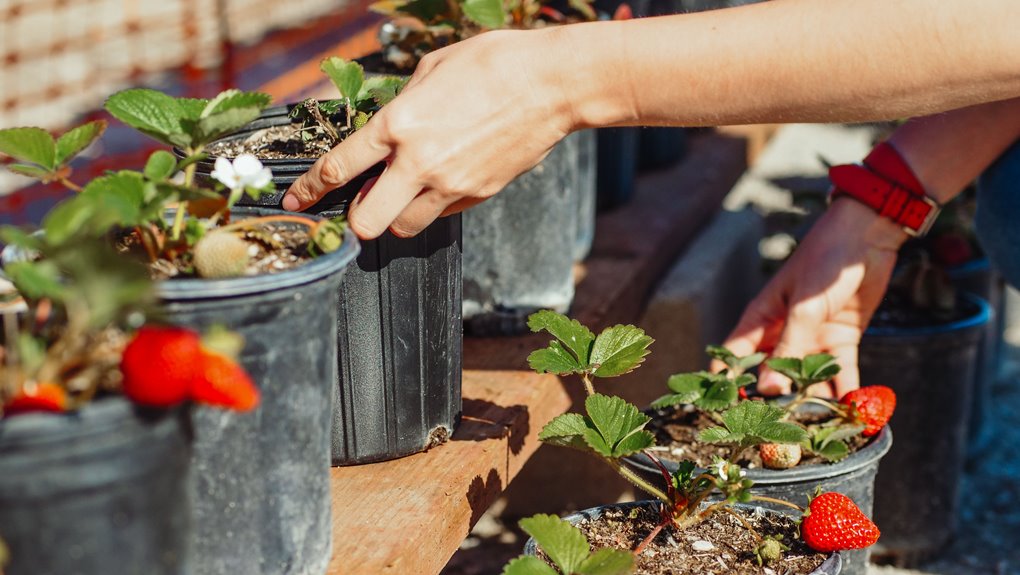
I protect my strawberries by first spotting who’s stealing. Birds leave neat beak scars, squirrels haul off whole berries, and rodents dig near the crown. Then I match my defense: drape bird netting with two feet of slack over hoops (keep it off the fruit or they’ll peck through), build 1×2 cedar-framed cages with chicken wire for rodents, or bury half-inch hardware cloth six inches deep for burrowers. I lift 18-by-24-inch wire lids one-handed for daily harvests, and when pressure peaks, I hit plants with a pepper spray mix: half gallon water, two to three tablespoons hot sauce, plus a squirt of dish soap. The trick is timing. Scout at dawn, identify your enemy, then build before they wipe you out. Each method requires specific attention to detail for effective results.
Spot the Pests Eating Your Strawberries Before You Build
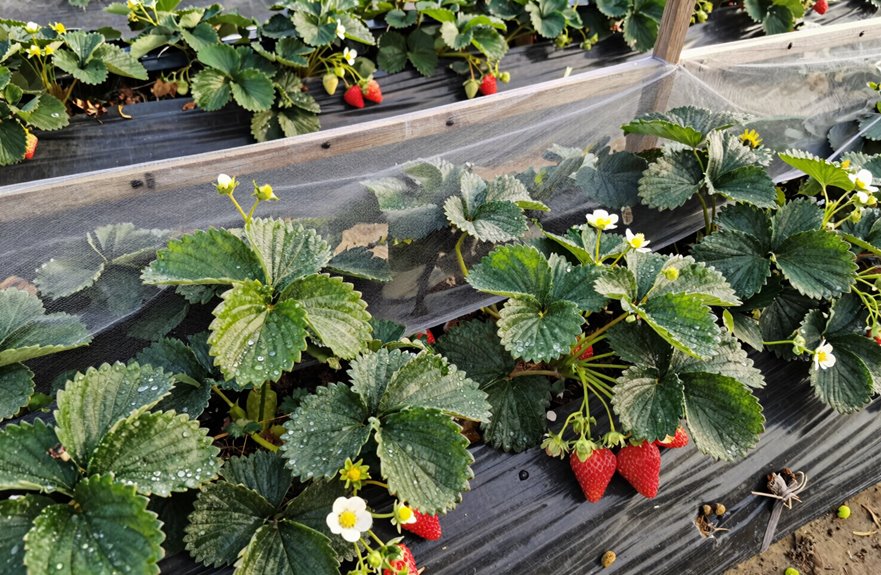
Why guess who’s raiding your patch when a little detective work saves you from building the wrong defense. I watch my strawberries carefully, because every pest leaves a signature. Birds peck neat holes and leave beak-shaped scars. Squirrels haul off whole berries, vanishing like tiny thieves. Ground rodents leave telltale dug beds and seedling bites near the crown, that’s the base where leaves meet roots.
I don’t install any protective barrier until I know my enemy. Early protection means scouting at dawn when ripening begins and checking for fresh damage daily. I’ve learned the hard way. Delay even three days, and you’ll harvest nothing but stubs. Know your pest first, then build smart defenses based on what you’ve actually observed.
Match the Barrier to Your Pest: Cages, Netting, or Frames
So how do I actually stop these thieves once I know who they are? I match my barrier to the culprit.
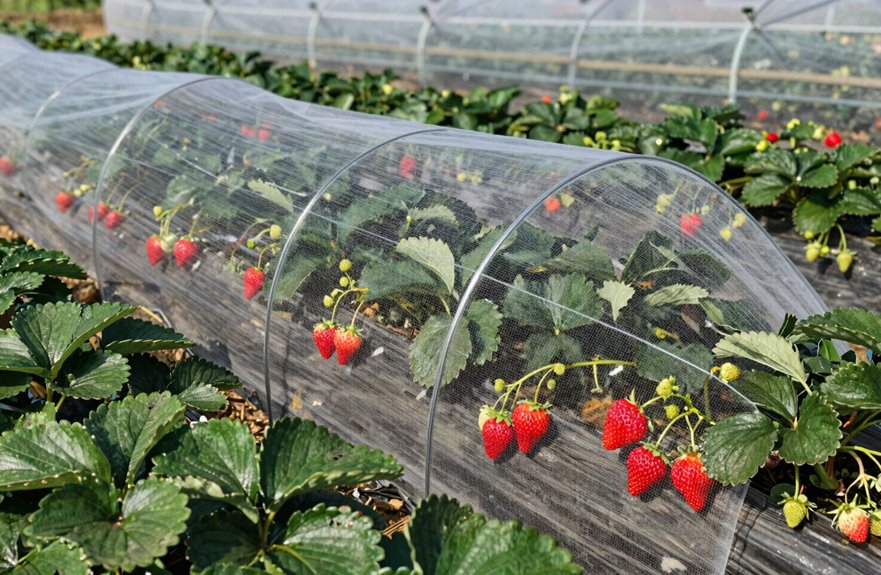
For birds, I drape bird netting over my strawberry bed with at least two feet of slack on all sides. No gaps, or they’ll find them. I support it with frames or hoops so the mesh never touches fruit, since birds peck through contact points. Frames, about fifteen inches high with wooden crossbars, keep everything elevated and tidy.
Bird netting with two feet of slack, supported by frames—no gaps, no contact points, no pecking damage.
For rodents or rabbits, I build cages using chicken wire, surrounding the bed completely. I make mine movable with wooden frames that connect with pegs and cotter pins, so I can dismantle and store them off-season.
Layering works best: frames plus netting plus occasional fencing. This combination prevents most pest damage.
Build a Lift-Off Wire Cage for Daily Harvest Access
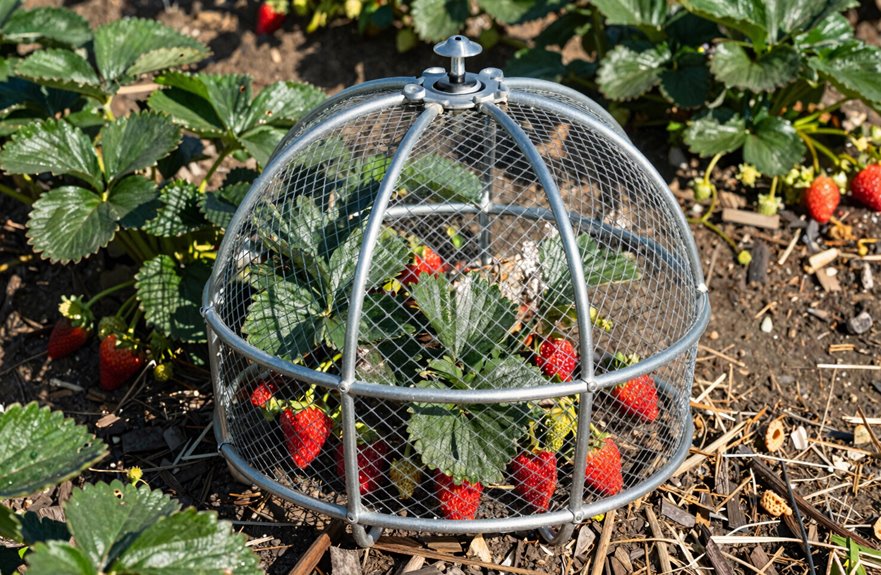
A lift-off cage is an effective compromise between fortress-level security and practical daily access. Build yours with 1×2 cedar frames (cheap, rot-resistant), chicken wire stapled tight, and a peg-and-pin system that breaks down flat for winter storage.
Here’s how this wire cage comes together:
- Frame the perimeter with four connected sides, joined by wooden pegs and cotter pins. No tools or stripped screws required.
- Drop in the central spine, a support beam with short arms that cradle your lift-off lids.
- Rest the lids on top; they’re light frames (18″x24″ each) you lift one-handed for quick picking.
- Step inside the strawberry cage when you want deeper harvest access, then replace lids for instant animal protection.
Assembly takes fifteen minutes. The result eliminates squirrel damage while keeping your morning routine intact.
Elevate Beds With Buried Hardware Cloth for Burrowers
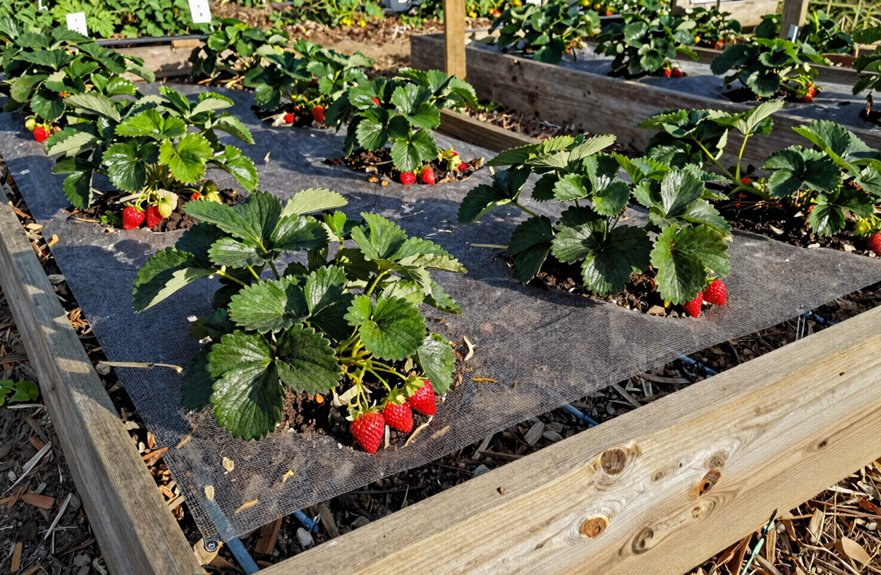
Where do burrowers strike first? Right at the base, where tender crowns meet soil. Raised beds alone won’t stop determined diggers, so burying hardware cloth provides complete strawberry protection.
Setup details:
| Component | Specification | Purpose |
|---|---|---|
| Hardware cloth | 1/2 inch mesh, 6+ inches deep | Blocks burrowers underground |
| Gap size | Under 2 inches | Excludes pests, drains water |
| Attachment | Stapled to bed frame | Secures barrier as plants grow |
| Bed height | 12-18 inches minimum | Adds root health bonus layer |
Dig a trench around your raised beds’ perimeter and drop in the hardware cloth as an underground fence. Backfill the trench and connect the vertical barrier to your bed’s frame so nothing can tunnel beneath. Elevation combined with buried defense creates an effective barrier against burrowing pests.
Add Companion Plants and Pepper Sprays at Peak Risk Times
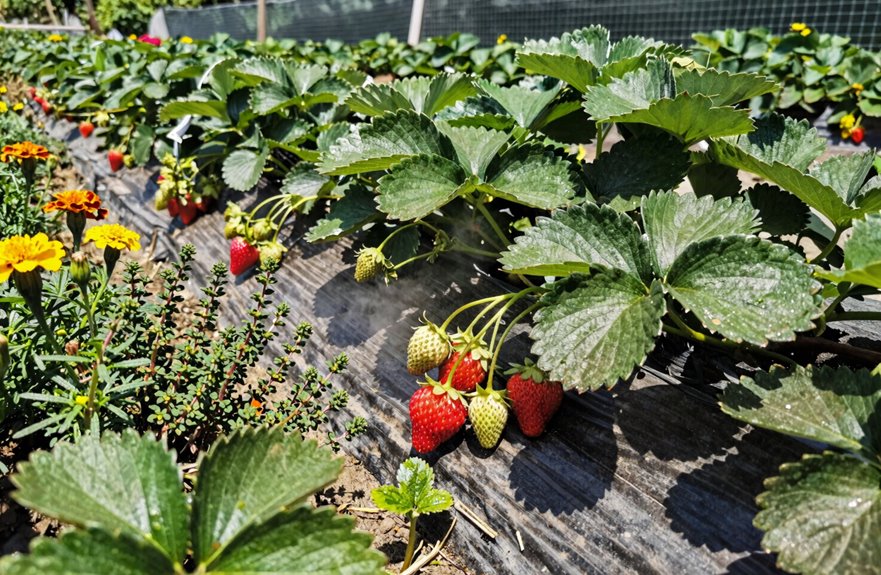
How do you stop hungry visitors when your berries start turning that irresistible shade of red? Layering protective measures by combining companion planting with targeted pepper spray applications keeps harvests safe when rodents get desperate.
Peak-season protection follows this rhythm:
- Ring beds with alliums (garlic, onions, leeks) for rodent deterrence, keeping thyme between rows rather than interplanted to avoid crowding strawberries while adding mulch benefits.
- Position potted mint, basil, and catnip nearby as mobile companion planting options that can be relocated as needed.
- Tuck echinacea at bed edges, which deters rodents and pulls pollinators into the action.
- Mix pepper spray using half a gallon water, 2 to 3 tablespoons hot sauce, plus a squirt of dish soap. Reapply after rain during peak activity periods.