
The standard wheelbarrow tire you’ll run into is the 4.50/4.00-8 (that’s 4.50 inches wide, 4.00 inches inner width, 8-inch rim), giving you about a 16-inch overall diameter once it’s inflated.
You’ll also spot nearly identical sizes like 4.80/4.00-8 or 50/4.00-8, which are the same tire with different branding, so don’t panic if the numbers don’t match exactly.
Grab your tape measure and check the sidewall markings (those raised numbers near the rim), then double-check your hub length and bearing size before buying, because the tire itself won’t tell you if it’ll actually fit your axle.
Taking these measurements will prevent a second trip to the store.
The Wheelbarrow Tire Size You’ll See Most Often
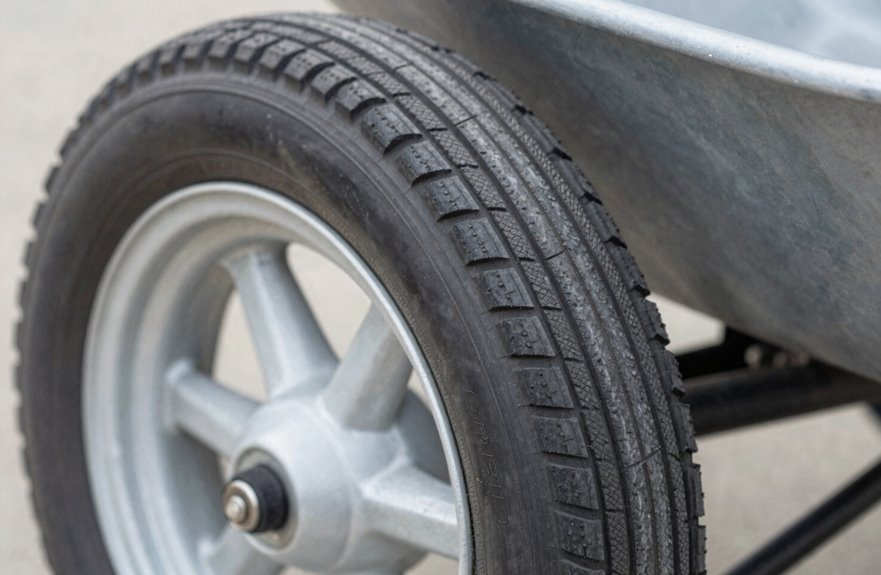
So you’re staring at a flat wheelbarrow tire, wondering what to buy. The tire size you’ll bump into most often is 4.50/4.00-8 (four point five inches wide, four inch inner width, eight inch rim, like shoe sizing but for rubber). Some folks call it 4.80/4.00-8, and that’s basically the same thing for most wheelbarrows. Both give you that sweet 15–16 inch overall diameter. You’ll also see 50/4.00-8 thrown around; same deal, different branding.
However, tire size alone won’t save you. Check your hub length and bearing size too, or you’ll be cursing at your axle. Getting these measurements wrong will cause fitting problems and premature wear.
Measuring Your Existing Wheelbarrow Tire for Replacement
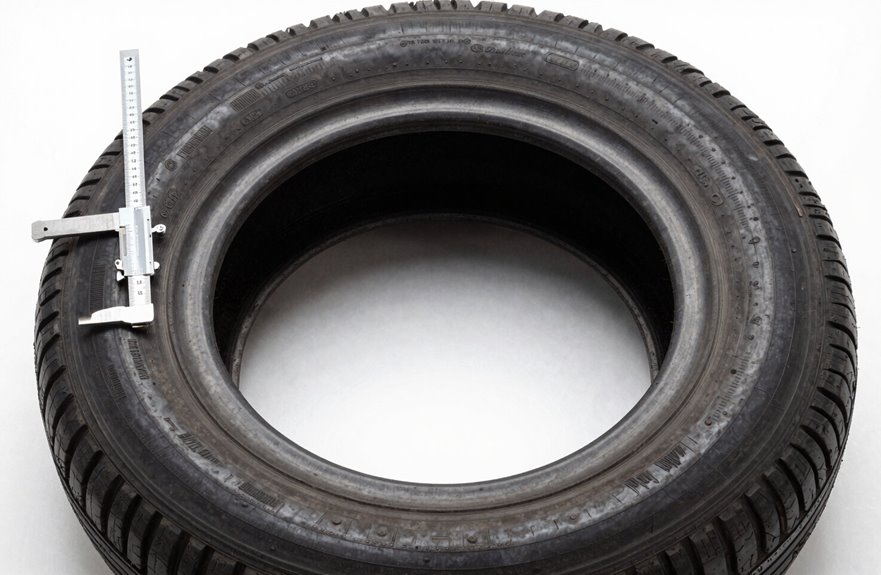
How do you know what tire to buy if you don’t know what you’ve got? Start by measuring what you have.
First, grab a tape measure and check the diameter by measuring straight across the tire’s outer edge, not just the tread. That’s your starting point. Next, verify the hub length by measuring end-to-end through the center. This tells you how much space your rim needs on the axle.
Check these additional specifications:
- Bearing size (inside diameter of that hole; use calipers if available, or a ruler if not)
- Whether you’ve got pneumatic or flat-free tires (this affects ride feel significantly)
- Axle diameter for compatibility (measure twice to avoid errors)
Five minutes of measuring prevents a return trip to the store.
Reading Wheelbarrow Tire Size Numbers on the Sidewall
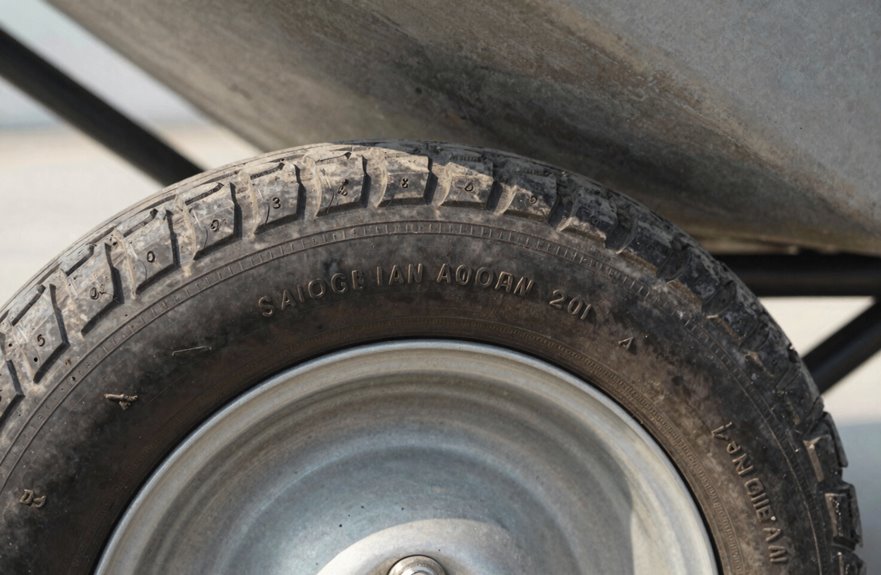
Where exactly do those mysterious tire numbers hide? They’re stamped right on the sidewall, and once you know what you’re looking at, you’ll feel like part of the inner circle. Let me walk you through the common formats I’ve encountered.
| Format | What It Means |
|---|---|
| 4.50/4.00-8 | Section height / tire width – rim diameter (inches) |
| 13 4.00-6 | Tire diameter / width – rim diameter (inches) |
| 9×1.85 | Tire diameter x width (rim size not shown) |
These sidewall measurements tell you the tire size. Some numbers show “tire only” dimensions, while others include the wheel. You need to double-check, because the sidewall won’t warn you about hub or bearing mismatches (we’ll tackle that next). Building this knowledge requires attention to each number you encounter.
Wheelbarrow Tire Hub Length and Bearing Size Essentials
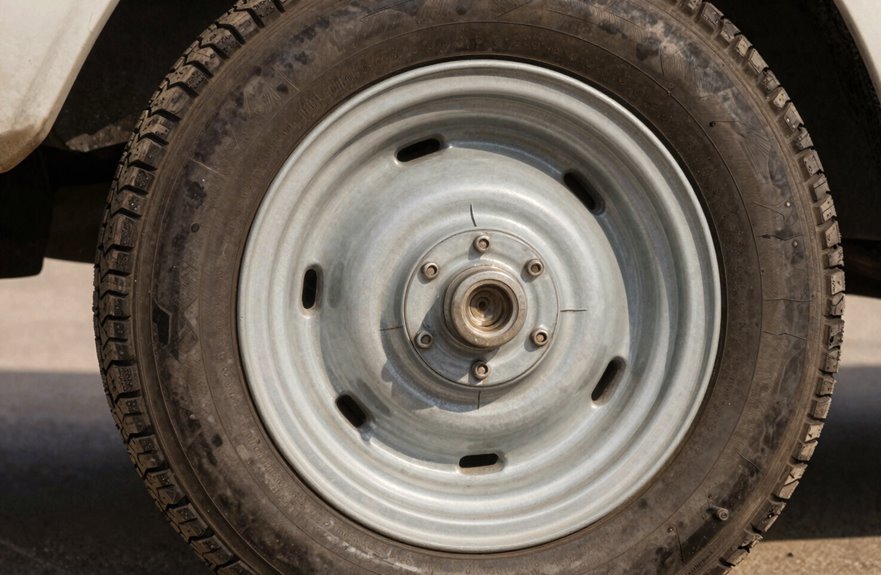
Why does hub length matter so much? Guessing gets you nowhere fast. Hub length, measured end-to-end through the wheel’s center from bearing to bearing, determines exactly how much space your rim needs on the axle. Get it wrong, and you’ll deal with annoying wobble or worse, the whole wheel hanging off the edge.
What to check:
- Measure across the entire central hub area, not just the tire’s outer edge (rookie mistake)
- Match your bearing size precisely to your axle diameter with no forcing and no sloppy fits
- Double-check that nothing overhangs, since stability depends on proper seating
Mis-measuring hub length means instability, improper seating, and a wheelbarrow that fights you. Take your time, measure twice, and complete your weekend projects with confidence.
Will a 16-Inch Tire Fit Your Wheelbarrow?
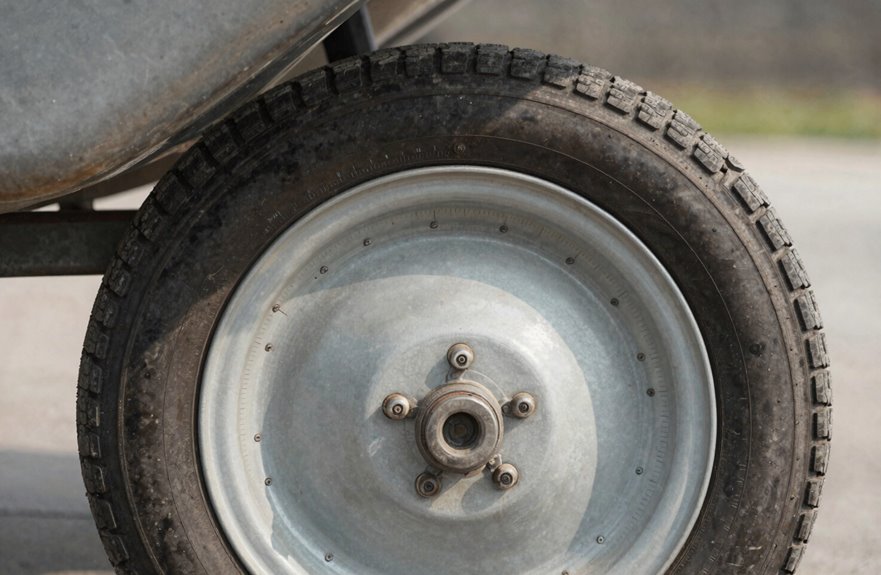
I’ll grab my tape measure and walk you through this, because figuring out if a 16-inch tire fits your wheelbarrow requires checking three things: your rim size (usually 8 inches for these), your hub length, and your axle diameter. Most 16-inch tires pair with 8-inch rims, so look for markings like 4.80/4.00-8 or 16×6.5-8 on your current sidewall. Measure your hub from end to end (typically 3 to 6 inches) and confirm whether you’ve got a 5/8-inch axle or something else. Get these numbers right, and you’ll know before you buy. No returns, no headaches; just a wheelbarrow that rolls smooth.
Measuring Your Wheelbarrow
A 16-inch tire looks straightforward on paper, but “close enough” doesn’t cut it when you’re mid-project and your wheelbarrow’s sitting lopsided. When measuring the tire, grab your tape measure and check the outside diameter from tread edge to tread edge. That’s your true tire size, not the metal rim hiding inside. Don’t eyeball it. Use calipers if you have them, a ruler if you don’t.
Your measurement checklist:
- Measure the hub length (end-to-end through the center bolt hole)
- Check your bearing hole size (usually 5/8 inch for standard 16-inch replacements)
- Match the sidewall markings (like 4.80/4.00-8) to your old tire’s specs
Accurate measurements ensure proper wheel alignment and performance.
16-Inch Compatibility Check
So you’ve got your measurements in hand, but now you’re wondering if that shiny 16-inch tire will actually work with your wheelbarrow.
That “16-inch” diameter refers to the tire’s outside measurement, not some universal standard. (I learned this the hard way; don’t skip the homework.) Check your sidewall markings first; you’re hunting for rim sizes like 4.80/4.00-8 or 3.50/2.50-8. Then grab your tape measure for the critical measurement: hub length. That axle-to-axle distance determines whether your wheel slides on smoothly or sits crooked like my first attempt. Verify your bearing size too, typically 5/8-inch ID ball bearings. Measure twice, buy once. A perfect match ensures proper wheel installation and eliminates costly return trips to the hardware store.
Wheelbarrow Tire Types: How Flat-Free and Pneumatic Sizes Differ
When you’re picking out a replacement tire, it really comes down to two main camps: flat-free (solid polyurethane) and pneumatic (air-filled).
Here’s what you need to know:
- Flat-free tires, usually 16-inch diameters (4.80/4.00-8 or 4.00-6), never go flat but ride rougher on bumpy ground
- Pneumatic tires cushion loads beautifully on uneven terrain, though you’ll be patching flats eventually
- Both use size formats like 4.50/4.00-8 or 13 44.00-6, where that last number always means rim diameter
To avoid confusion at the hardware store, check your sidewall markings or measure outside diameter and hub length. Flat-free options often handle 600 lbs and fit multiple models. Match your hub/axle specs to ensure proper fit.
Matching Wheelbarrow Tire Load Capacity to Your Typical Hauls
How do you know if your tire will fail under your heaviest loads? The National Standard 16-inch solid polyurethane tire (600 lb load capacity) handles most jobs, but your typical hauls matter. Tire size directly affects load distribution. A 4.80/4.00-8 (15–16″ diameter) spreads weight better than a 4.00-6 (13″) when you’re moving wet concrete or rock.
For two-wheel setups, split your total load in half. Each tire must cover its share. Most flat-free and PU variants handle 500–600 lb, so don’t cut corners. If you’re hauling heavy regularly, prioritize that 600 lb rating. A blowout mid-yard will stop your work and create safety risks.
Selecting the correct capacity prevents equipment failure and project delays.
When Universal Wheelbarrow Tires Actually Fit (and When They Don’t)
- Hub length must match your axle spacing exactly (use calipers, not a ruler)
- The hub bore (usually 5/8 inch) needs proper bearing contact, or you’ll get wobble
- Sidewall codes like 4.80/4.00-8 tell you rim size, not just the 16-inch outer diameter we all notice first
I’ve seen folks order flat-free polyurethane tires only to discover their axle’s too thick. Check your hub-to-hub spacing, verify that bore, and you’ll avoid installation problems on the first attempt.
Final Wheelbarrow Tire Size Verification Steps
Why guess when you can know for sure? Verifying your tire size takes just a few minutes and prevents the frustration of purchasing a tire that doesn’t fit.
Start by reading the sidewall. A designation like 4.50/4.00-8 tells you height, width, and rim diameter. Sidewall numbers don’t show hub length, and that’s the critical measurement where your wheel meets the axle.
Grab a tape measure and check the outside tire diameter (should be 15–16 inches for standard 16-inch versions). Then measure hub length through the wheel’s center, bearing to bearing. This ensures your rim sits flush without wobbling or overhanging. Finally, measure your bearing’s inside diameter against your axle. When these three measurements match, your installation will be correct with no returns needed.