
These 12 side house landscaping ideas run from a weekend gravel path and a few bollard lights to a full outdoor kitchen with gas lines and stone pavers.
What picks one over another is whether your side yard is passage or destination: a corridor you cut through to reach the backyard, or a space that can hold a bench, a fire pit, or a water feature worth stopping for.
The paver walkway on river rock needs no gravel sub-base and still handles drainage, which is the kind of detail that matters when you are working with a tight budget and a single weekend.
1. Paver Walkway

A paver walkway turns a narrow side yard into usable passage instead of forgotten storage space.
Concrete pavers on river rock handle drainage without needing a full gravel sub-base. I would check slope first: water needs to run away from the house, and any drop at all beats a flat path that pools.
The tropical planting along the edges also hides the fence line, which matters when your side yard faces a neighbor’s wall.
2. Tranquil Seating Area

Glass overhead makes this narrow space feel like a room rather than a corridor. The gravel path costs less than pavers and drains well, though it shifts underfoot and needs raking back into place every few months.
I like the vertical basket planters against wood siding because they add height without eating floor space that a bench or chair already claims.
A metal bench at the far end gives you a destination; without one, the path just leads to your own gate.
3. Pathway Lights

Bollard lights along a side walkway do 2 jobs: they keep you from tripping, and they signal that this route is intentional, not leftover.
Spacing that is tight enough to read by but not so dense that installation cost balloons is the balance I aim for.
I would hardwire if the house has an exterior junction box; solar bollards work but dim out well before midnight in winter. The raised planter alongside gives you something to light, not just a path to follow.
4. Vertical Planter

Vertical planters suit side yards where ground space is already claimed by a gate swing, HVAC unit, or the simple need to walk through.
Individual pots on shelves mounted to wood fencing are what I prefer over pocket systems because you can swap a fried plant without dismantling the whole display.
Pressure-treated fence boards will rot if shelves are bolted through without spacers; a small standoff lets air circulate. Artificial grass underneath means no mud splashing up, though real turf would want a border to keep mowers clear.
5. Outdoor Storage Shed

A small shed on a stone patio keeps garden tools out of the garage and close to where you use them.
Matching the house trim matters more than most people realize; a shed that clashes reads as clutter even when tidy. Check your setback rules before ordering: many municipalities want 3 ft from property lines, and HOA covenants often add color restrictions.
The glass-paneled door looks good but means everything inside stays visible; I would add a curtain or choose solid panel if storage gets messy.
6. Trash Enclosure
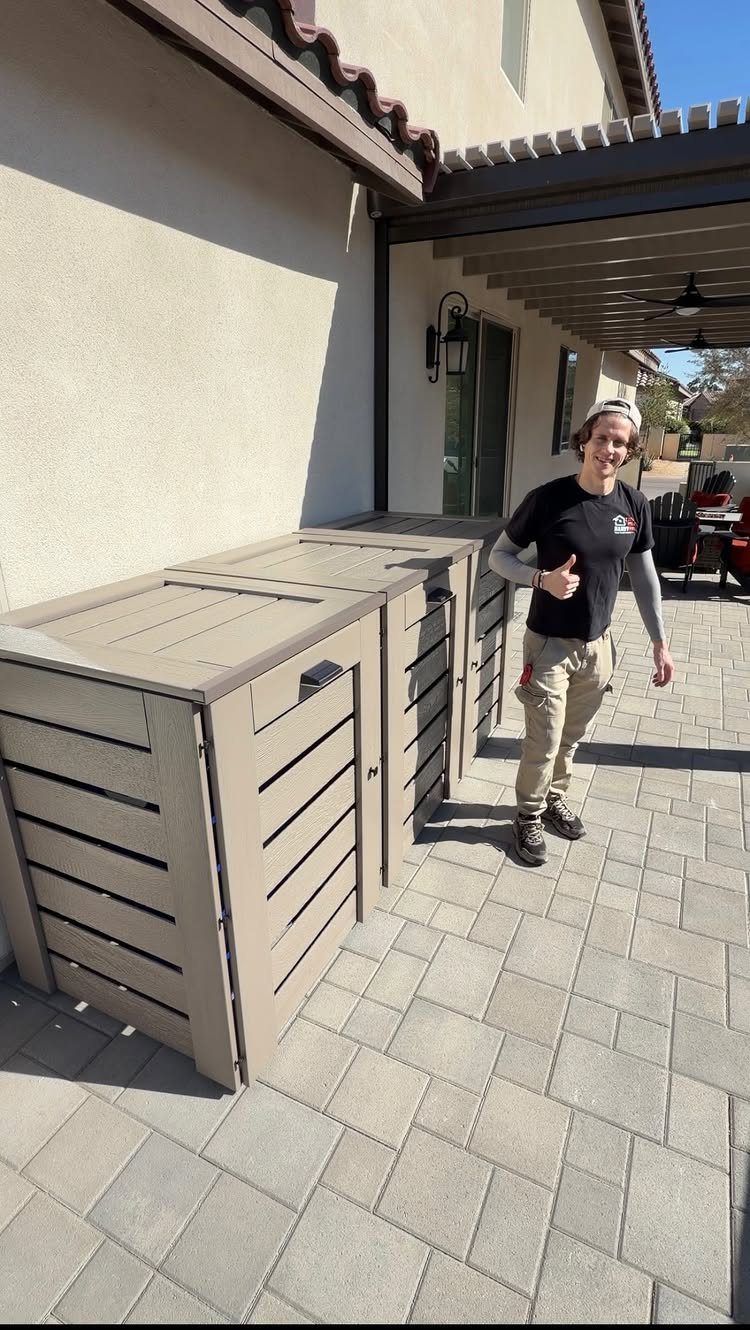
Trash enclosures solve a problem most side yards inherit: bins that have to live somewhere, and nowhere good. Composite slat construction resists rot better than wood but costs more; for a two-bin unit, that difference is usually enough to notice.
I would build the roof with slight pitch so rainwater runs off, not pools on top. Stone pavers underneath keep wheels out of mud and, more importantly, stop the ground from rutting where you drag heavy bins twice a week.
7. Fire Pit Sitting Area
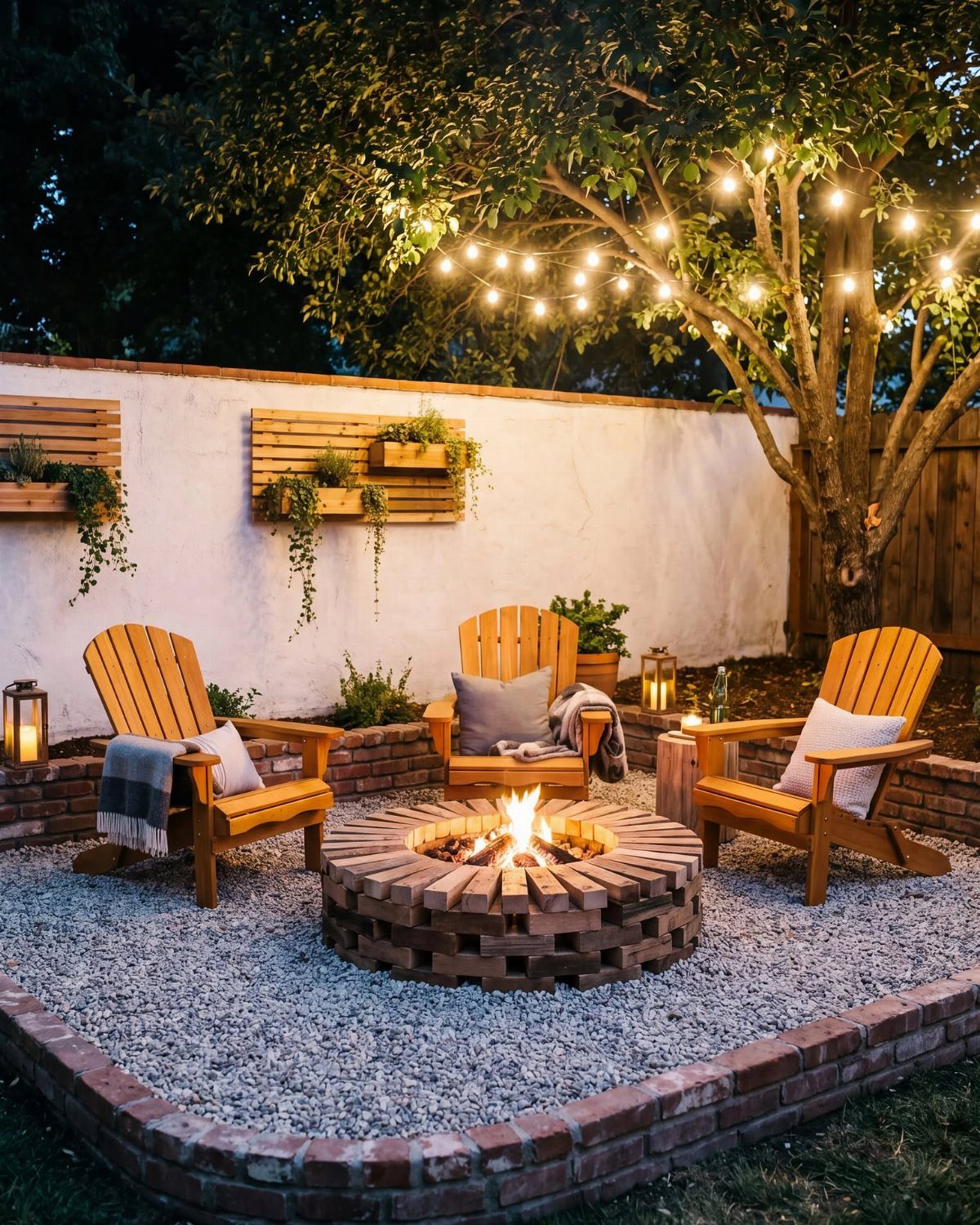
A fire pit sitting area gives you a reason to stay in the side yard instead of just passing through.
Brick edging around the gravel patio keeps the loose stone from migrating into planting beds or lawn. I would check local burn ordinances before laying the first brick; many counties restrict open flames near structures or impose seasonal bans.
String lights hung from an existing tree save the cost of posts, though the tree needs to be healthy enough to carry the load without risk.
8. Wood Pathway

Wood plank walkways suit side yards where drainage is slow and you want solid footing without pouring concrete.
The boardwalk sits slightly above grade, so water runs underneath rather than pooling on the surface. I would use pressure-treated lumber rated for ground contact or a rot-resistant species; standard framing lumber softens in 2 wet seasons.
A bench placed midway turns a purely functional path into a stopping point, which matters when the side yard is your only outdoor space.
9. Built-In Bench with Water Feature

Built-in bench seating against a fence turns a narrow side yard into a destination rather than a corridor.
The integrated water feature needs a GFCI outlet and a recirculating pump small enough to hide in the basin; without a reservoir, you are topping off daily in summer heat.
I would run the lighting on a separate transformer from the pump so a tripped breaker does not kill both. Cushions in outdoor fabric complete the setup, though they need storage or they will mildew in a damp week.
10. Decorative Pebble Garden Bed

Decorative pebble garden beds suit side yards where soil against the foundation is already compacted or poorly drained. The black and white stone pattern is set on landscape fabric; without it, the pebbles sink into mud within a season.
I would leave planting islands large enough for root balls to reach actual soil, or the shrubs will starve. Small succulents in those islands handle the reflected heat off stone better than leafy perennials, which crisp at the edges.
11. Side Yard Outdoor Kitchen

A side yard outdoor kitchen works when the narrow strip gets afternoon shade and the house wall blocks wind that would blow out a burner flame.
Stone pavers set into white pebble give you a stable surface for the grill without pouring a full slab. I would run gas lines or power before building the counter; retrofitting means tearing up what you just finished.
Raised planters alongside put herbs within arm’s reach, though splatter from the cook surface will coat leaves with grease that attracts dust.
12. Side Lawn with Topiary Border

A side lawn with topiary border gives you green space where a full yard does not exist.
The spherical shapes need shearing two or three times a season to stay crisp; skip this if you do not own clippers or patience.
I would set the white gravel edging deep enough that mower wheels do not kick stones onto the grass, where they become projectiles.
Low voltage lights along the border are enough to navigate by after dark without the cost and code work of line-voltage fixtures.
Choosing Plants for Side Yards
A limited plant palette matters more in a side yard than anywhere else. Three or four species repeated beats a dozen crowded in; the eye reads it as intentional, not cramped.
Sunlight is the first filter. Most side yards sit between 2 walls and get partial shade at best, so low-light plantings are usually the starting point rather than the exception.
Check your hardiness zone and soil type before buying; a plant fighting both shade and wrong-zone heat is work you will do every weekend.
Climbing plants on fencing add height without stealing the narrow floor space a walkway or gate swing needs. Always check eventual size; a shrub sold in a small pot can spread wide enough to block passage before you know it.
Maintaining Side Yard Spaces
Gravel is the lowest-maintenance ground cover for a side yard.
It drains, it does not need mowing, and it crunches underfoot in a way that signals someone is there. Combine it with drought-tolerant plantings and you cut watering to match.
Mulch keeps beds looking finished and suppresses weeds that narrow spaces make hard to reach. I would refresh it once a season; thin mulch lets light through and defeats the purpose.
Pruning matters more in tight quarters because overgrowth intrudes on paths and gates faster. Shear topiary twice a season if you have it; skip the style entirely if you will not keep up.
Water features need checking: a recirculating pump can clog, and a reservoir in summer heat drops daily without rain.
Maximizing Small Spaces
Raised beds suit side yards because they define planting space without spreading into the walking lane. Set them high enough and you gain seating edge as well as soil depth.
A putting green is one use for a narrow strip that gets sun, though it is a specialty choice most renters will skip.
An outdoor shower needs drainage to a dry well or sewer connection, not just a hose run to the lawn; check code before building.
It is practical where the side yard is your only outdoor space and the beach or garden leaves you filthy.
Keep utilitarian items behind screening. Trash bins, hoses, and storage read as clutter when visible; a slatted enclosure or planted hedge in front buys you peace without moving the function.
But with a little planning and creativity, you can make your side yard both useful and appealing, whether it shows to passersby or just from your window.
— Bob Vila
Frequently Asked Questions
What is the 3-5-7 rule in landscaping?
The 3-5-7 rule means planting in odd-numbered groupings, like three, five, or seven of the same plant together, which creates a more natural visual balance than even pairs.
I would not apply it rigidly to a side yard, where a limited palette of three or four species repeated reads as intentional rather than cramped.
The eye picks up variety fast in narrow spaces, so restraint matters more than abundance.
What to plant on the corners of a house?
Corners need plants that will not obstruct views or access, so low-growing choices or climbing varieties on fencing work best.
Vines trained up a fence or trellis give you vertical green without eating into the 24 inches a gate needs to swing open.
How to decorate the side of a house?
Vertical planters, pathway lighting, and climbing plants on fencing all suit the narrow footprint of a side yard.
Mounted shelves on a wood fence let me pull one dead plant and slot in a replacement; pocket systems make that same swap a project.