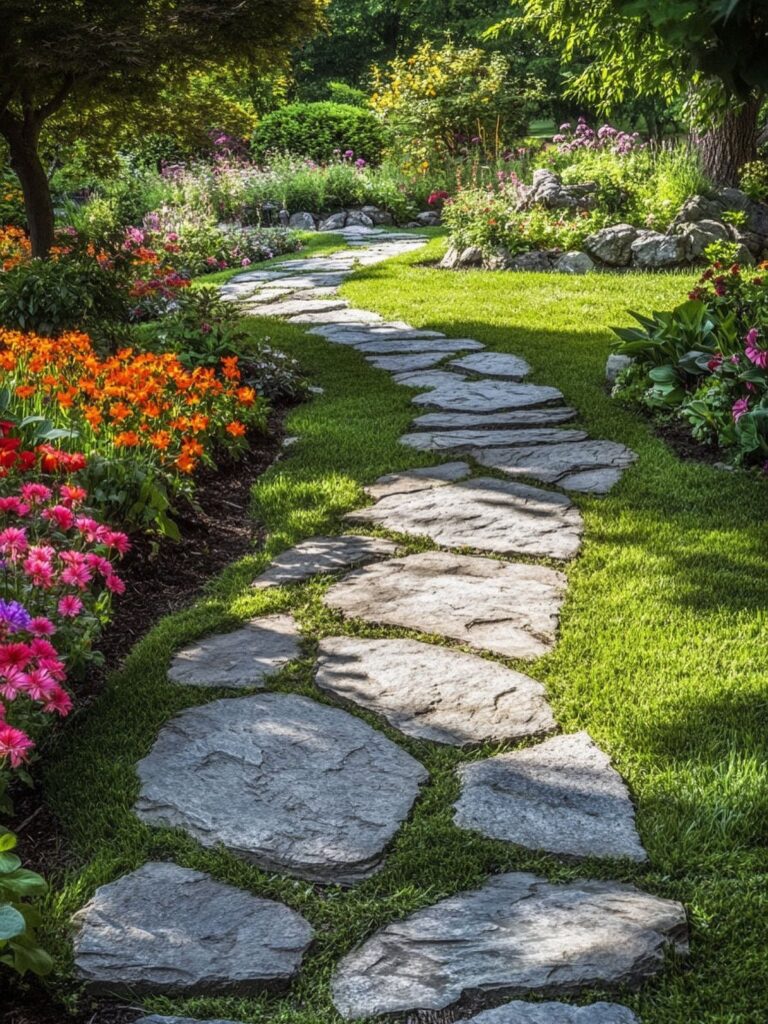
The ideas ahead run from a weekend wildflower seed scatter to a multi-year hollyhock border build, so the deciding factor is how much ongoing tending your own schedule allows.
1. Curved Pathways
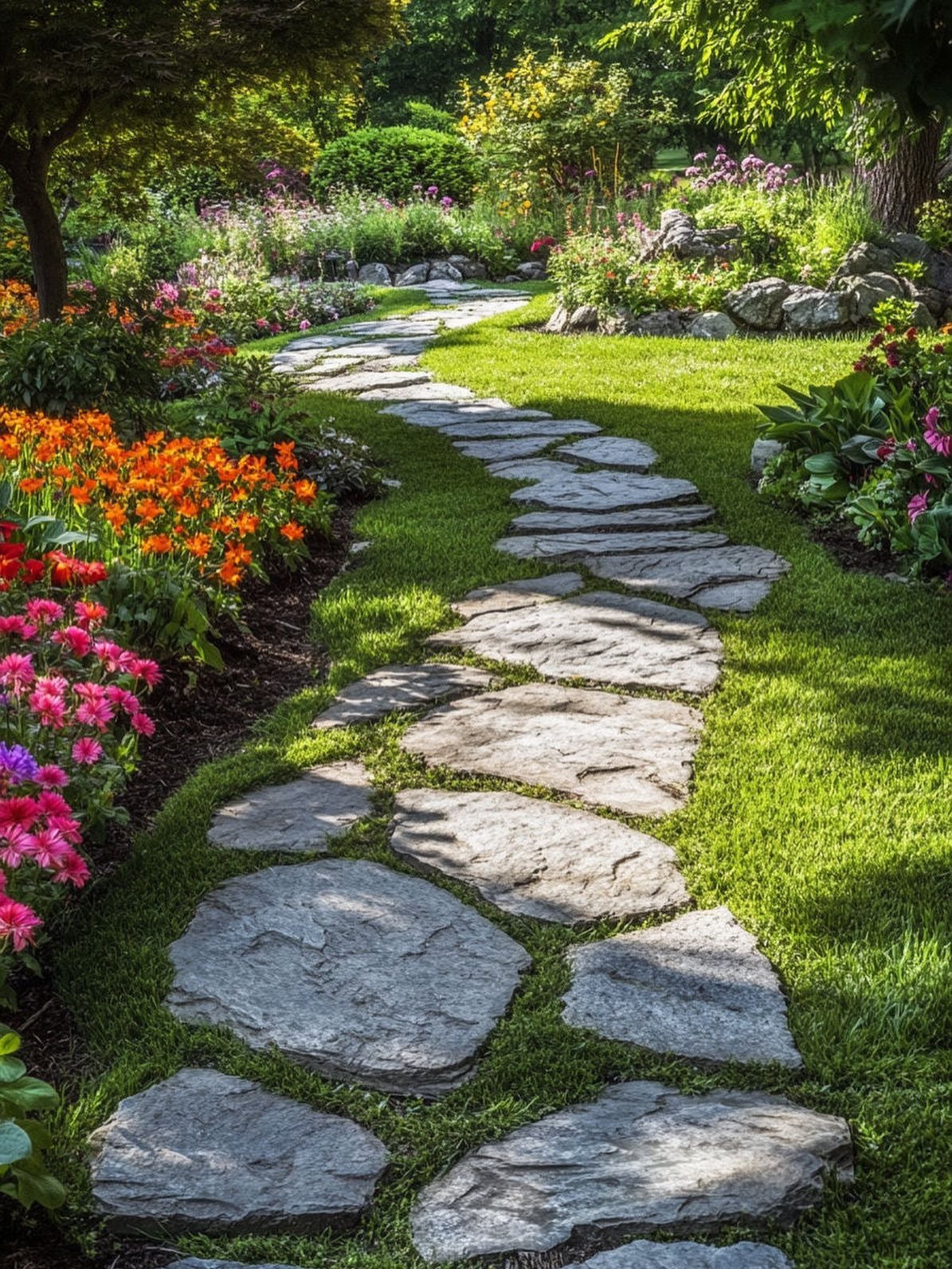
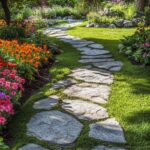
A curved flagstone path does what a straight concrete walk cannot: it slows the eye and makes a small front yard feel larger than its square footage.
I would check the grade before laying any stone, since water pooling on a low spot turns winter into an ice rink and summer into a mosquito hatchery.
The curve itself needs a destination worth the turn, a bench or a birdbath, or the path reads as a detour to nowhere.
2. Climbing Roses on Arbors
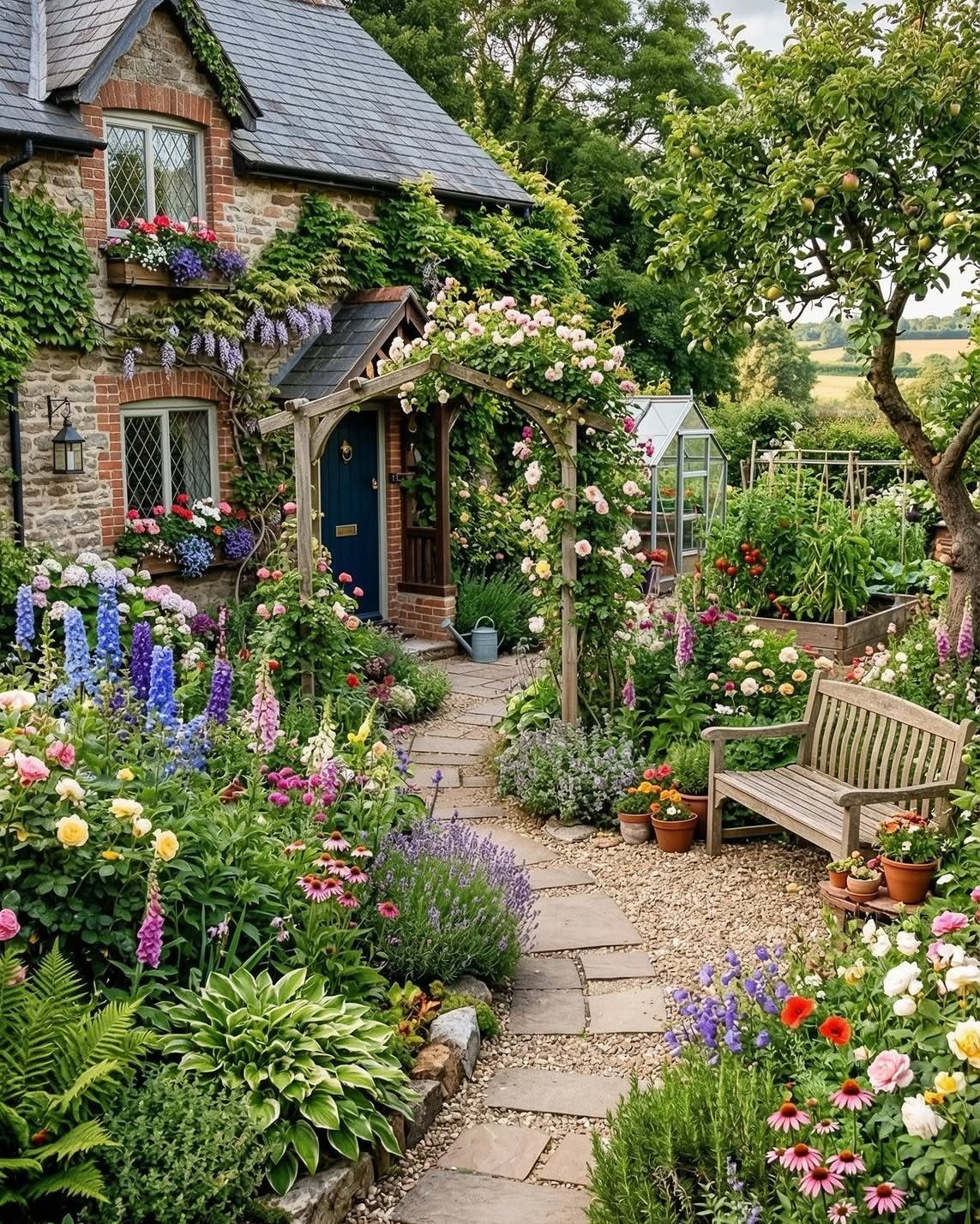
An arbor loaded with climbing roses turns a plain entry into a threshold.
The wood needs to be cedar or a rot-resistant equivalent; pressure-treated posts will hold, but I would not trust pine to survive wet stems against dry grain for long.
Plant the rose well back from the post so the crown does not sit where runoff collects, and choose a repeat bloomer rather than a once-a-year showpiece.
You get color from early summer straight through fall, not a single week in June.
3. Tall Hollyhocks with Low-Growing Flowers
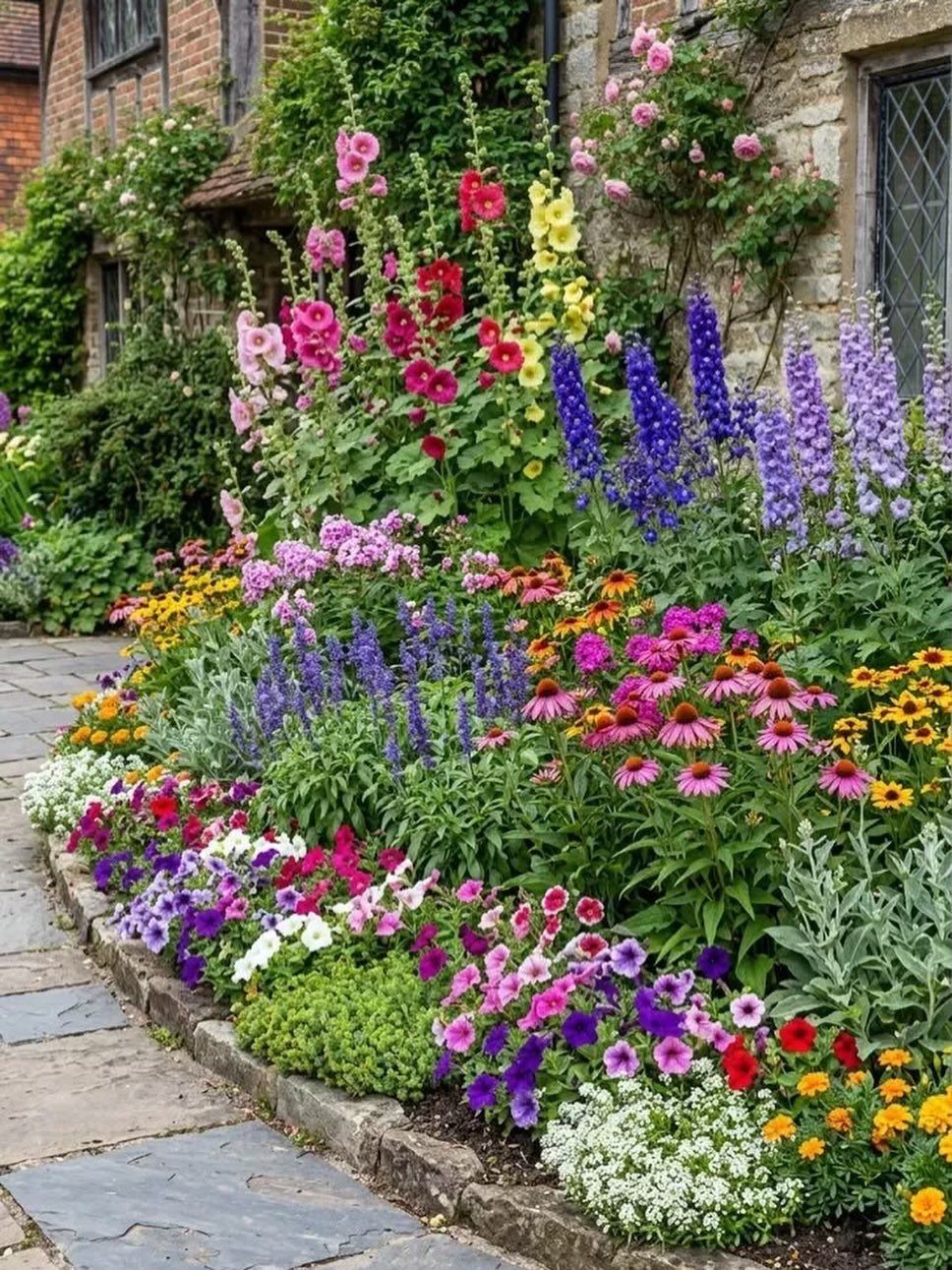
Hollyhocks give a cottage border its vertical rhythm, but the lower layer does the actual ground coverage that keeps weeds down.
I would plant the tall stuff toward the back of a bed against a wall, or center it in an island where the eye can circle around; in a narrow strip beside a walk, hollyhocks read as a barrier, not an invitation.
The low growers need matching water needs, since hollyhocks want steady moisture and alyssum that dries out will crisp while the hollyhock thrives.
4. Bee Balm
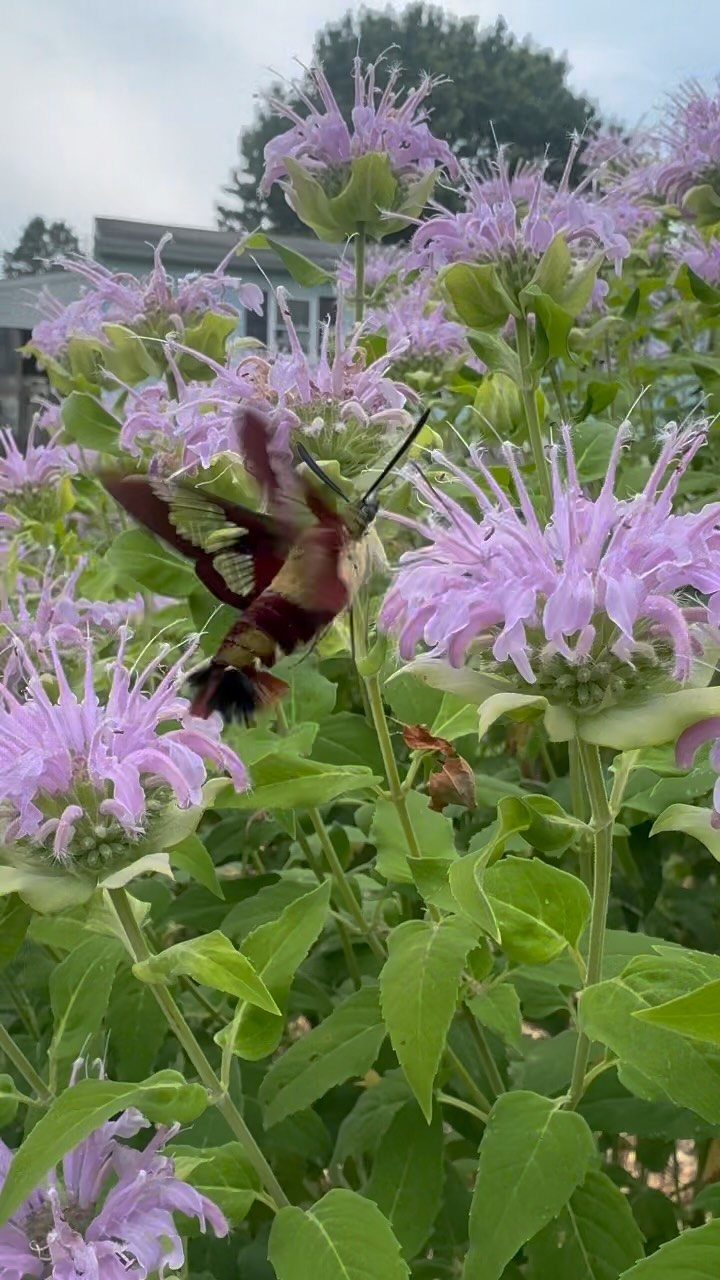
Bee balm at 14 to 18 inches tall sits low enough that you catch the scent when you bend to pull a weed or set down a watering can.
The spread runs 22 inches to nearly 2 and a half feet, so one plant covers more ground than most perennials its height.
I would give it afternoon shade in the southern half of its range; the mildew resistance varies by cultivar, and full sun in Georgia humidity is a gamble I do not take.
5. Creeping and Trailing Ground Cover Plants
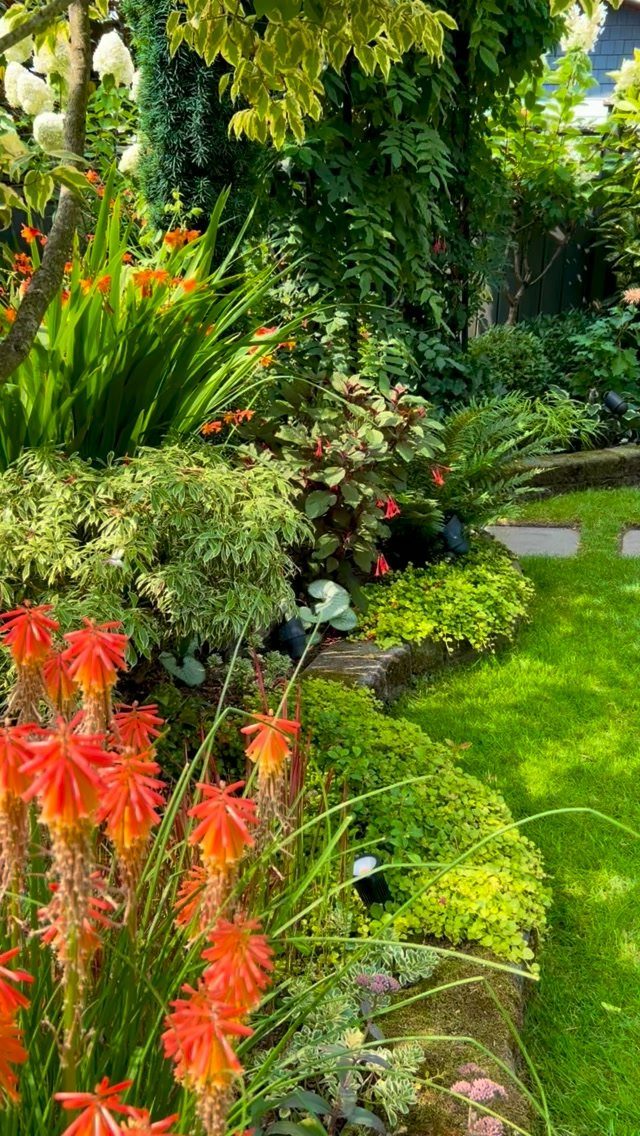
Chartreuse ground cover spilling over a stone edge does 2 jobs: it softens the hard line and hides the awkward gap where soil meets lawn.
The creeping jenny or equivalent needs containment, or in 2 seasons it will be the lawn.
I would sink a solid barrier at planting, not fight the spread later with a knife and regret. The orange poker flowers behind it give the contrast that makes the lime color read as intentional, not weedy.
6. Flower-Filled Picket Fence
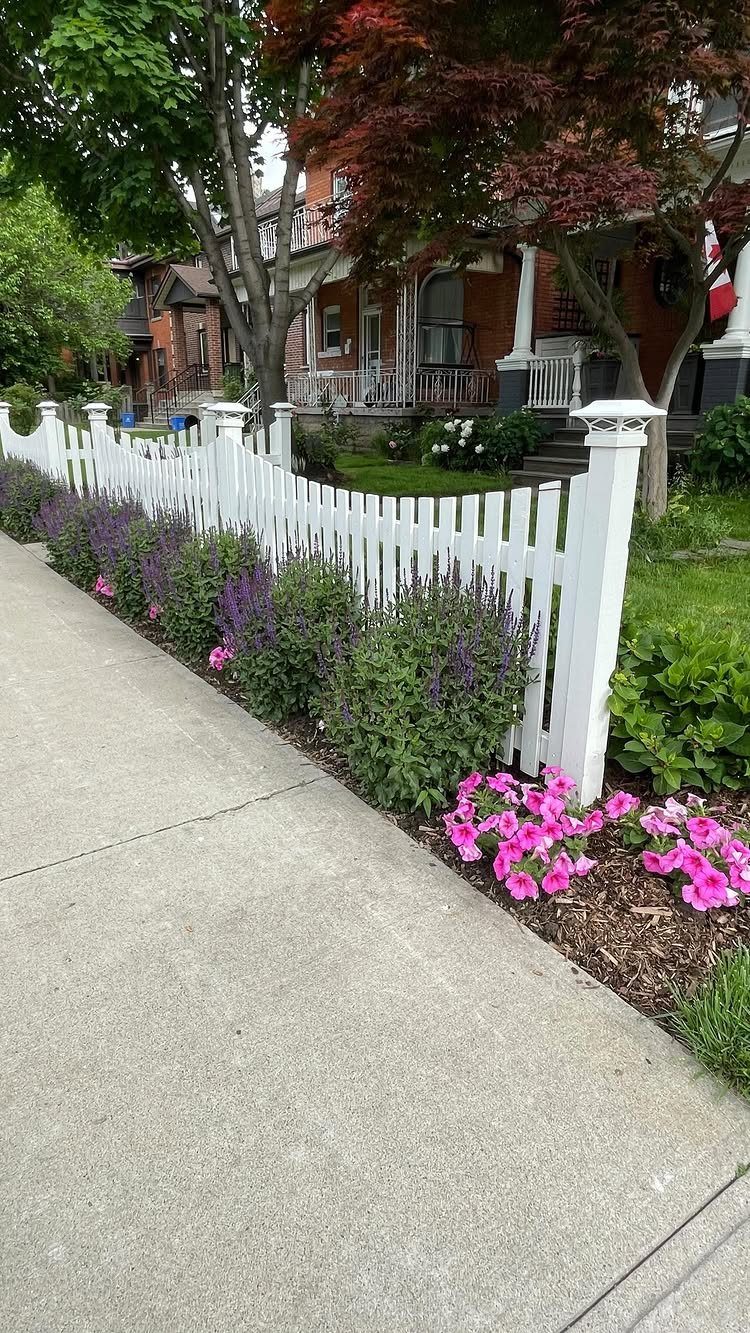
A picket fence with flowers at its feet turns a property line into a garden feature. Flat-top pickets read more farmhouse than scalloped, and I would choose based on the house roofline, not the fence alone.
Planting depth matters more than plant choice here, since a foundation bed against wood needs air circulation or the pickets rot from the soil side.
I would keep soil well below the bottom rail and let the plants cascade, not climb.
7. Wildflower Meadow Patch
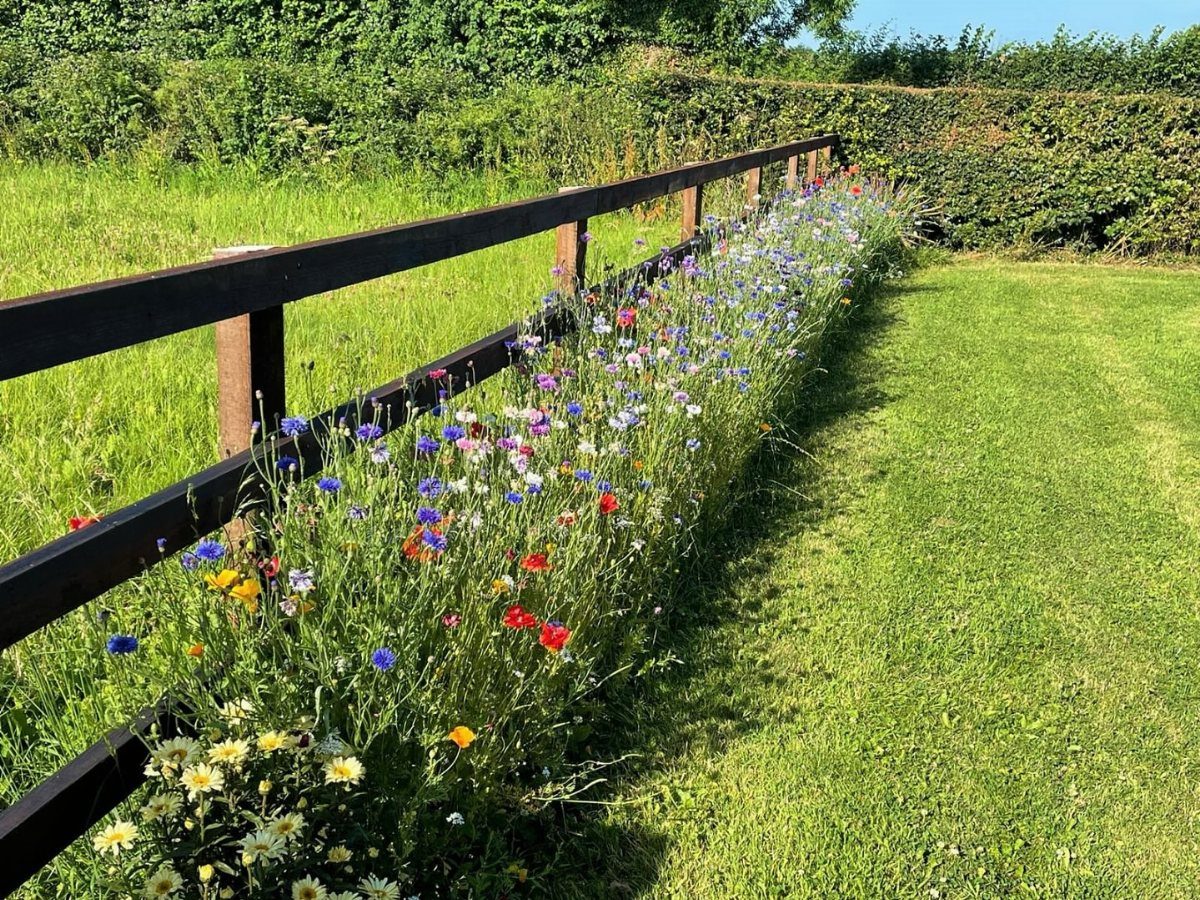
A meadow strip along a fence line asks less of you than a perennial border and gives more to pollinators.
I would mow the existing grass as short as possible in late fall, then scratch the soil surface rather than till; tilling brings weed seeds up to light.
Most wildflower mixes need full sun to germinate well, so a strip under a mature tree canopy will thin out fast.
The first season looks weedy to most eyes; I would not plant this where a homeowners association patrols.
Year two is when the self-seeders establish their rhythm, and by year three you are mainly editing out what took over too well.
8. Lavender
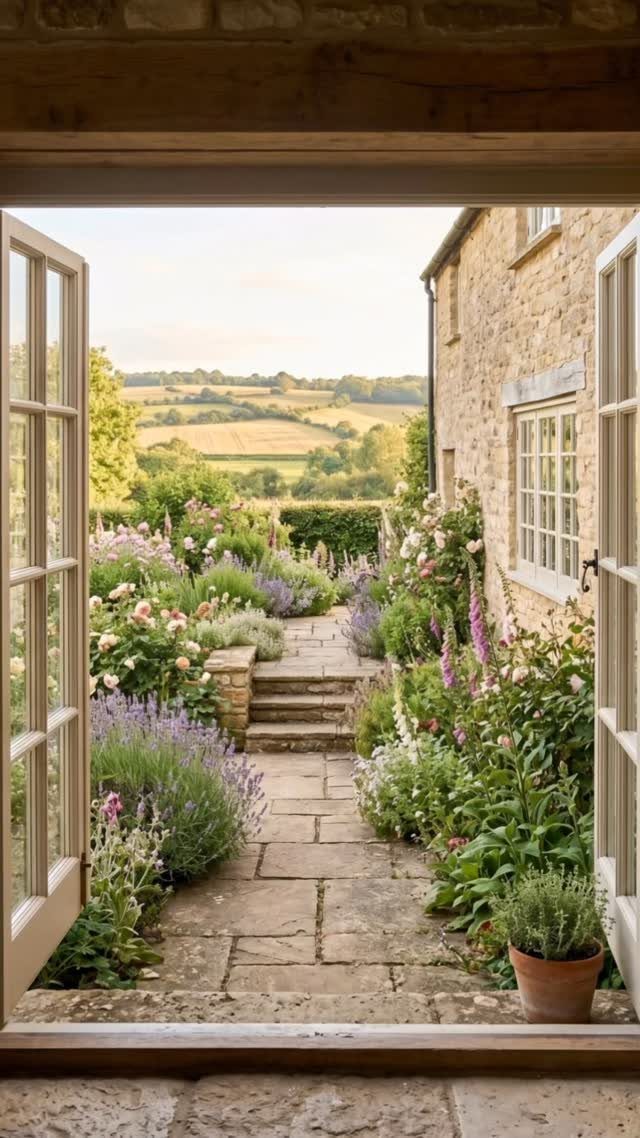
Lavender at 12 to 18 inches tall and wide fits a path edge without swallowing it, and the silvery foliage reads as color even when bloom is sparse.
I would set lavender plants 18 inches back from the stone, not right at its edge, so the stems do not flop onto wet path after rain and the scent can still drift inside on warm days.
Spring through fall bloom requires the right cultivar for your zone; English lavender survives colder winters, Spanish types flower longer where frost is rare. Drainage matters more than soil richness; I would add grit rather than compost at planting.
9. Foxgloves and Alliums Entryway Border
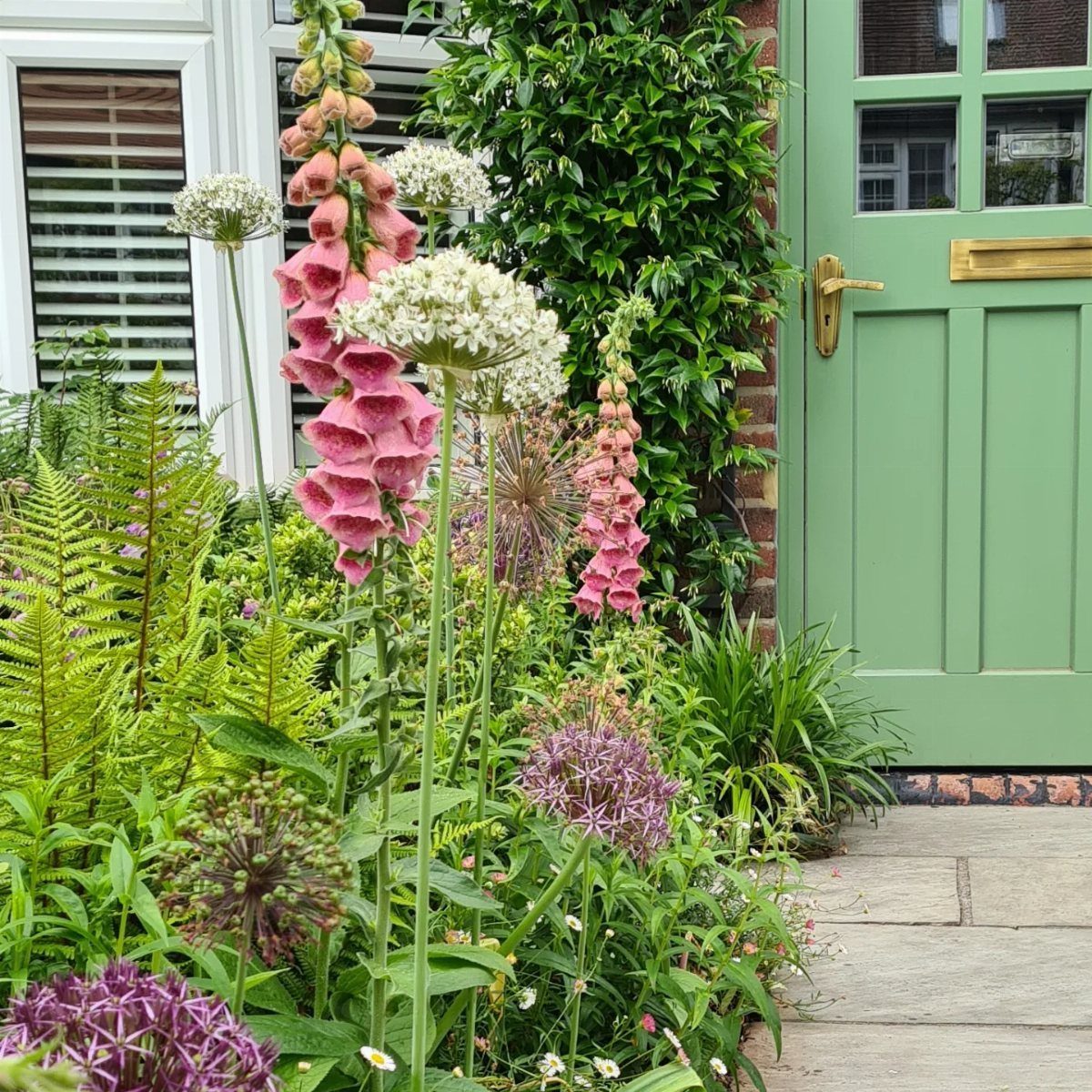
A border pressed right against the entry path puts bloom at hand height where guests pass; foxgloves at their peak tower above eye level and force the gaze upward toward the door.
The allium globes hold for weeks after the foxglove bells fade, so the bed does not collapse into a green slump.
I would plant the allium bulbs in fall and set foxglove seedlings out in early spring, since biennial foxgloves bloom their second year and then die; letting them self-seed keeps the patch going without annual replanting.
The stone path edge needs to sit 4 to 6 inches above soil level, or mulch and soil wash onto it every rain.
10. Layered Coneflowers and Black-Eyed Susans

Coneflowers and black-eyed Susans share the same cultural demands, which is why they layer without one bullying the other.
Both want full sun and tolerate drought once established; I would not try this pairing against a north-facing foundation where neither will bloom well.
The pink and orange-yellow combination reads as intentional cottage planting rather than meadow chaos because the heights are staged, with taller spires at the back.
Deadheading extends bloom but I would leave the last seedheads standing for winter structure and bird feed. Cutting everything to the ground in late winter, not fall, gives the stems time to hollow out as beneficial insect housing.
11. Floral Front Porch Seating
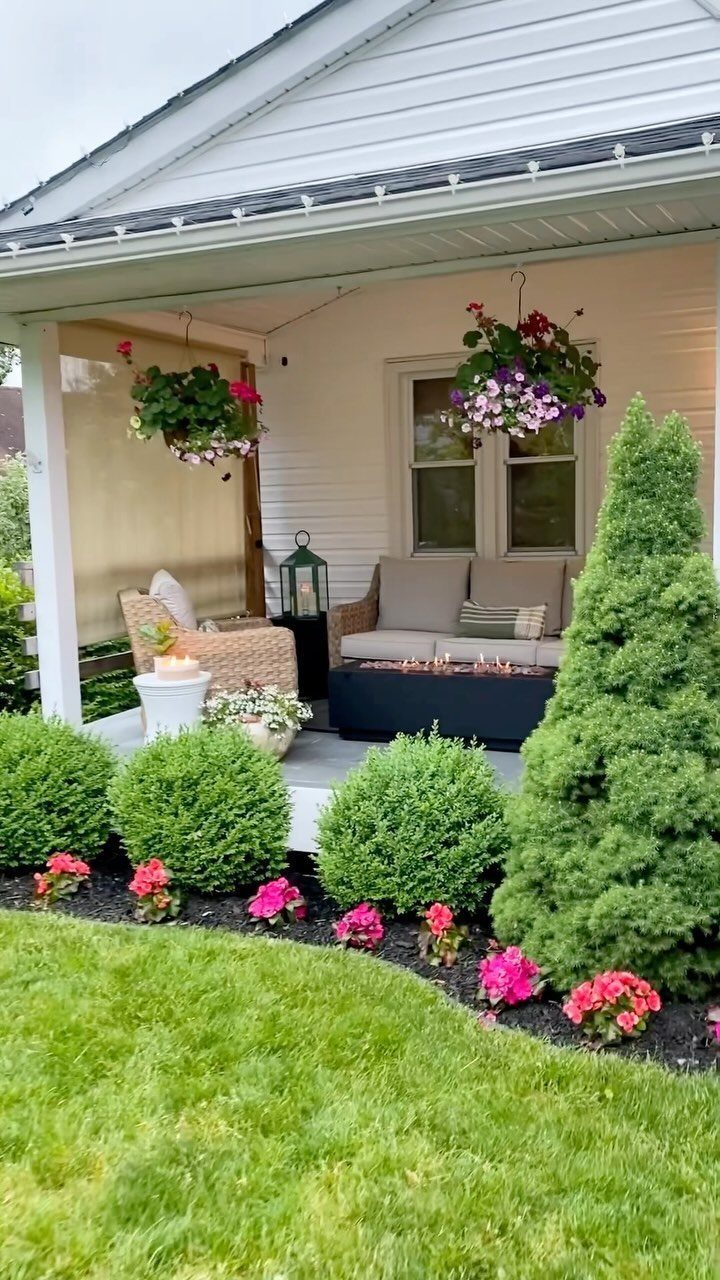
A porch deep enough for a fire table and 2 chairs is a room that happens to be outside; the hanging baskets and bedded shrubs frame it as deliberate living space, not a concrete slab with furniture shoved on it.
I would check the span rating on any fire table for a wood porch; resin wicker holds up to weather but ember holes do not repair.
The hanging baskets need daily water in July, or they become a brown reproach every time you walk past.
I would choose self-watering baskets or commit to the hose routine before installing them; a dead basket is worse than no basket.
12. Forget-Me-Nots Under Shade Trees

Forget-me-nots as a living mulch under mature trees solves the problem of bare dirt where grass will not grow and nothing else is planted yet.
They are biennials, so the carpet thickens in year two and then thins unless you let them seed; I would not expect the same density every spring without some self-sowing management.
The blue reads as sky fallen to ground level, but the effect is brief and worth planning around.
I would interplant with hostas or ferns that fill the same space later, or the patch goes from charming to weedy-looking bare soil by midsummer.
The trees must be mature; young tree roots compete poorly with dense ground cover for water.
13. Naturalized Daffodils in the Lawn
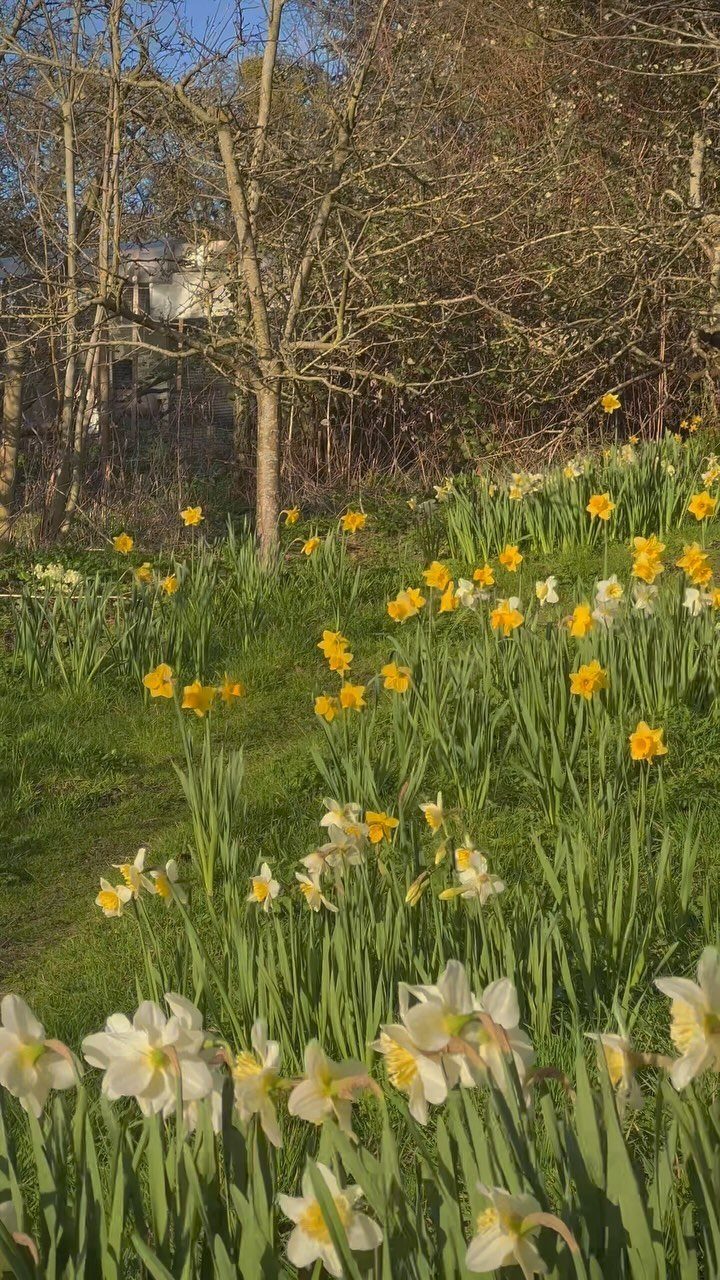
A slope of daffodils under bare trees reads as meadow, not lawn with flowers stuck in it, because the bulbs cluster in drifts rather than rows.
I would plant in fall while the soil is still workable, dropping bulbs in loose groups rather than spacing evenly; random looks natural only when it is staged.
The grass must stay unmowed until the foliage yellows and dies back, or the bulbs weaken and vanish by year three. That means shaggy turf through May in most zones, a look some neighbors will not understand.
I would not attempt this on a postage-stamp lot where the mower habit runs strong; it needs enough slope or depth that the eye reads the flowers first and the ragged grass second.
Deciduous canopy overhead matters. The bulbs need sun while they grow, and bare branches do that job well; under evergreen shade, daffodils stretch and lean toward light.
Choosing the Right Plants
I would start any cottage plant list with perennials, since they handle the backbone work of year-round structure.
Phlox spilling over a bed edge gives that soft overflow the style demands, and boxwoods transplanted to a middle tier keep green showing through winter when flowers are memory.
A larger evergreen at the back hides foundation lines and gives the eye something solid to rest on.
For long bloom without heavy maintenance, reblooming iris and Alstroemeria carry color for weeks with only deadheading and a hard winter prune. Yarrow and wallflower fill the same low-effort slot.
I grow Aeonium less for its seasonal flowers than for the rosette shape that reads as floral even when nothing is blooming. Kangaroo paw and Santa Barbara daisy round out a palette that looks like work but is not.
Maintaining a Cottage Garden
A cottage garden does not maintain itself, but the workload shifts if you choose right.
Hardy plants native to your area need less intervention than imports, and the difference shows up in July when you are carrying a hose or not.
Catmint, daylily, and stonecrop are the carefree backbone I would lean on. Foxglove, iris, lilac, hydrangea, and yarrow fill the mid-layer without demanding weekly attention.
The schedule that remains is real: regular watering while plants establish, pruning to keep shape, and seasonal cleanup before spring growth starts. Letting hardy plants carry the structure means those tasks stay occasional rather than constant.
Creating a Color Palette
Two or three hues do more work than a dozen. I would pick a backbone pair, pink and blue or cream and mauve, and let green handle the rest.
Lavender drifts and old pink roses give that soft start; Verbena bonariensis in purple and magenta carries the same thread through summer height.
Silver foliage cools a warm bed down.
Dark green behind pastels gives them something to pop against, the way a mat does for a photograph. As confidence builds, pale gray and washed blue add depth without breaking the cohesion.
I would not chase fall color separately; spindle trees with pink and orange seed pods handle that season if you want year-round logic rather than a summer-only scheme.
Frequently Asked Questions
What is the best layout for cottage gardens?
Curved pathways and densely planted beds give the relaxed, informal feel that defines the style.
I would lay a curved flagstone path to slow the eye and make a small front yard feel larger, then plant tall material like hollyhocks toward the back or center of beds with low growers in front for ground coverage.
A curved path only works if it ends somewhere worth reaching; a bench, birdbath, or a dense cluster of delphiniums gives the eye a reason to follow it.
What is the rule of three in cottage gardening?
This rule suggests grouping plants in threes for a more natural, abundant look than singles or pairs allow.
I would extend the idea into layers: tall verticals at the back or center, mid-height fillers, and low spillers or ground cover at the edge.
Layered plantings, like coneflowers set behind black-eyed Susans, read better in odd-numbered clusters; three or five of the same plant grouped together looks settled, two looks like a mistake.