

I grow strawberries. Those runners (stolons, technically) shoot out like octopus arms, rooting every 8 to 12 inches to clone themselves while still sucking nutrients from mom. One plant launches six to ten stolons by midsummer, each tipping off a baby that roots in two to three weeks. It’s free plants with zero effort from us, though untamed they’ll turn your tidy bed into a dense, matted carpet creeping two feet outward yearly. June-bearers especially love filling gaps fast, which sounds great until you’re choking your lettuce neighbors and fighting through a thicket just to harvest. The trick is knowing when to snip, when to redirect, and how to turn that aggressive energy into something useful. You can create pop-up strawberry plants for friends or repair bare patches by managing their growth strategically instead of letting it work against you.
How Strawberry Runners Spread (and Why Plants Make Them)
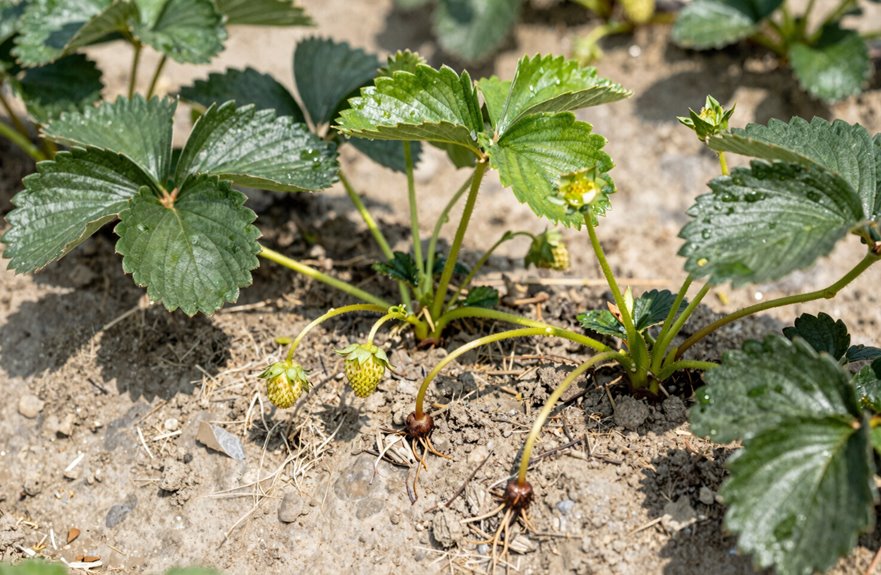
Why do strawberry plants seem to colonize every spare inch of garden real estate? I’ve watched it happen, and it’s all about runners: those horizontal stems that shoot out from mother plants like garden highways. Each runner stretches outward, then produces a baby plant at its tip that roots while still connected, creating instant real estate expansion. June-bearing varieties especially employ this strategy, sometimes filling gaps from 16 inches down to 2 inches apart over a season. You’re basically getting free plants without lifting a finger. Some gardeners clip runners to boost individual yields, which means more berries per plant, while others propagate extras to share with neighbors. Either way, that spread happens fast, and suddenly you’ve got a community patch whether you planned one or not.
How Fast Strawberry Patches Expand in One Season
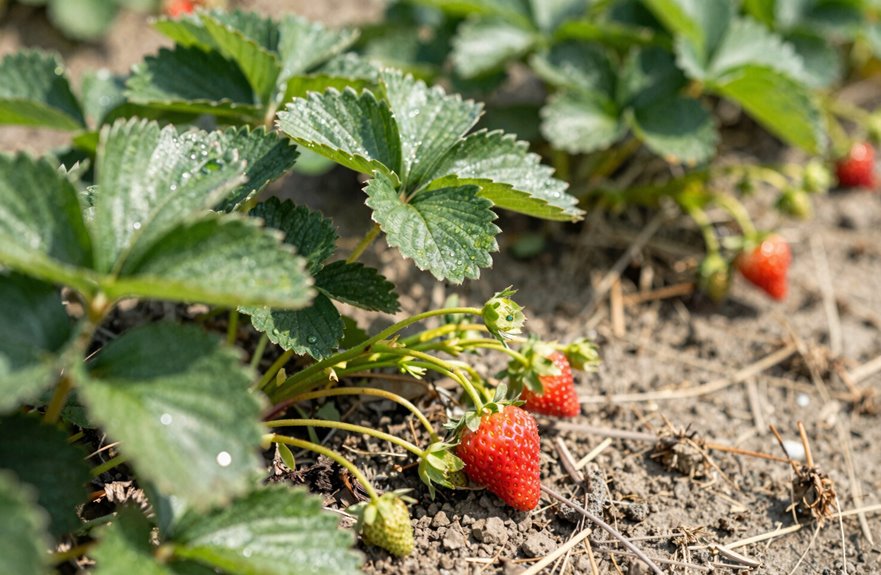
I want to walk you through exactly how quickly your strawberry bed transforms from tidy rows to an overflowing carpet of green. Runner production rates vary by variety, but a single mother plant typically launches six to ten stolons (those horizontal stems, not the root kind) by midsummer. Each one can root a new daughter plant within two to three weeks. Your bed coverage timeline accelerates fast. What starts as 16-inch spacing in April can collapse to shoulder-to-shoulder density by August. Aggressive June-bearing varieties can fill 4-inch gaps completely in one season if you let every runner root.
Runner Production Rates
Just how fast can a handful of strawberry plants take over your garden bed? I’ve watched runners transform a quarter-bed patch into a dense mat in one season, with each stem shooting out like a garden hose and baby plants (daughter plants, technically) forming at every node. They’ll root while still sucking nutrients from the mother plant, which lets the spread happen fast, sometimes too fast.
Variety matters significantly. June-bearing types produce runners prolifically, while everbearing sorts keep their focus on fruit. I learned this difference the hard way when comparing ‘Earliglow’ versus my ‘Seascape’ row.
To prevent your garden from becoming an invasive strawberry jungle, pinch runners weekly using scissors or fingernails, or redirect them into pots for sharing. Community gardeners swap these extras, converting overgrowth into opportunities for connection.
Bed Coverage Timeline
How quickly does a tidy row turn into a strawberry carpet? Faster than you’d think, friend. I’ve watched runners transform sparse plantings into dense patches within a single season, and it’s magical yet slightly overwhelming.
Here’s what bed coverage actually looks like:
- Spring planting – You space plants 16 inches apart, feeling proud of your neat rows
- Midsummer explosion – Runners shoot out, root at the tips, and daughter plants fill every gap
- August reality – That 16-inch spacing? Now 2 inches. Your bed coverage is complete
The dense look has its appeal. There’s something to the interconnected network of plants, like they’ve built their own little community. When neighbors start eyeing my surplus, I happily share runners to reclaim breathing room.
Spacing Collapse Speed
When exactly does your orderly strawberry patch turn into a botanical takeover? I’ve watched it happen quickly. Those runners don’t waste time. You plant with careful spacing, maybe 16 inches apart in spring, and by August you’re looking at 2-inch gaps. It moves fast.
Here’s what I’ve tracked in my own beds:
| Month | Typical Spacing | What’s Happening |
|---|---|---|
| May | 16 inches | Runners just starting |
| June | 12 inches | First daughters rooting |
| July | 6 inches | Dense patches forming |
| August | 2 inches | Full spacing collapse |
| September | Overlapping | Time to share or thin |
Some of us fight it, pinching runners to keep that breathing room. Others let them run, trading extras with neighbors when beds explode. Either way, you’re gardening with the reality of rapid expansion.
When to Clip Runners and When to Let Them Root
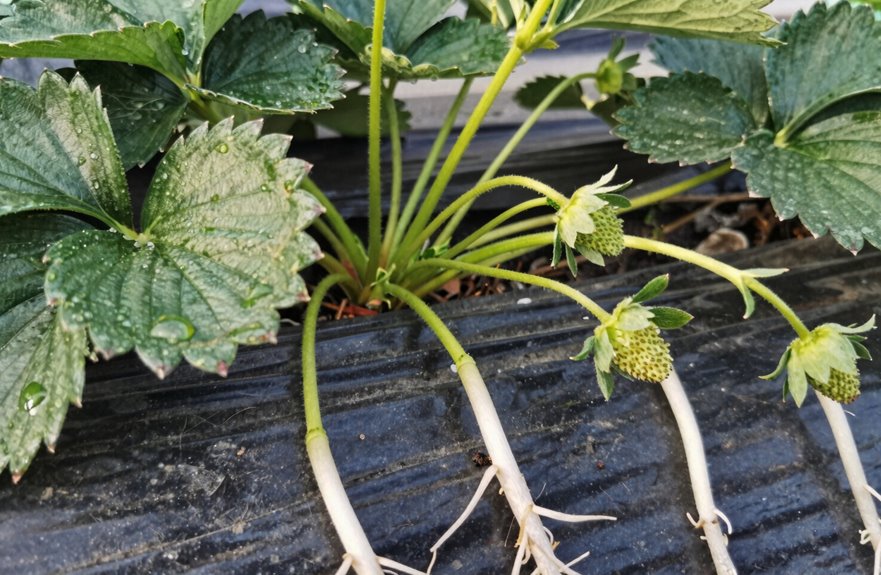
Because strawberry runners keep reaching out like enthusiastic little ambassadors, I’ve learned to treat each one as a decision rather than an accident. I clip most runners to preserve my original spacing, but I let a few root when I’m ready to expand or replace aging plants.
Here’s how I decide:
- Clip when my bed feels crowded already
- Root when I’ve got bare patches begging for daughter plants
- Share with neighbors when I’ve got more runners than room, our little community tradition
I typically allow just three daughters per summer. That’s my sweet spot for managing density without losing propagation entirely. Rooting happens gradually as the season warms, so I check weekly, snipping the overachievers and tucking the keepers into loose soil.
How to Manage Runner Spread in Small Gardens
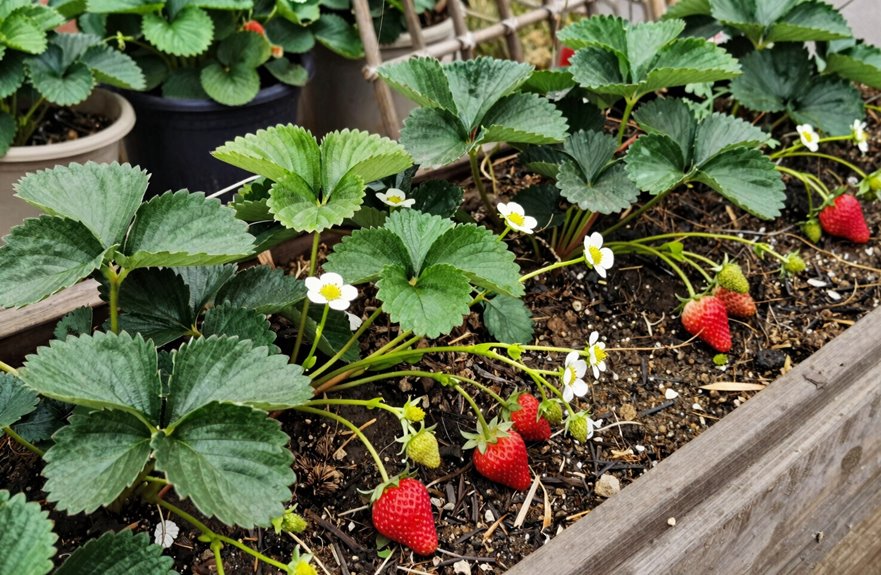
I’ve found that timing your runner removal makes all the difference in a cramped garden bed. Snipping them early, when they’re just a few inches long and before those tiny root nubs grab hold, keeps things tidy. You can let one or two anchor if you need a patch repair. For absolute control, I’ve switched some plants to containers. Those 14-inch terracotta pots with built-in saucers work beautifully, and the physical barrier stops runners from colonizing my lettuce bed six feet away. It’s not completely effective, because a determined stolon can drape over the rim like a green waterfall, so I still check weekly with my Felco snips, or any sharp bypass pruner you’ve got, to catch strays before they touch soil.
Runner Removal Timing
Although strawberry runners will cheerfully carpet your entire yard if you let them, clipping them at the right moment keeps my small garden beds manageable without turning me into a full-time plant bouncer.
I snip runners early, before they root, to preserve my original spacing and prevent that dense, tangled mess that makes harvesting a wrestling match. This approach works consistently in our growing community:
- Clip early runners in late spring to redirect energy into fruit production, not bed expansion.
- Root 2-3 daughters per plant by mid-summer for replacement stock, then stop.
- Remove late runners entirely. Those October rooters won’t survive winter anyway.
I propagate extras in pots, creating free plants for neighbors while keeping my bed breathable and productive without unchecked spread.
Container Barriers
Runner removal keeps things tidy in open beds, but containers bring their own headaches. I’ve watched my strawberries stage a full-blown escape from a 12-inch terracotta pot, runners cascading over the rim like they’re fleeing something. Container barriers sound foolproof, right. They’re not. Those stolons (runners, to us regular folks) root wherever they touch soil, even three feet from the mother plant. I’ve seen upside-down planters fail spectacularly. Gravity doesn’t stop ambition.
What works: check weekly, snip runners with sharp pruners (bypass, not anvil), or redirect them to neighbor’s gardens. We’re all in this together, after all. Small spaces demand vigilance, but sharing excess builds community. Your container’s edge is merely a suggestion to determined strawberries.
Matted Row or Hills: Which Layout Controls Spread Better?
How exactly do you keep strawberry plants from taking over your entire garden? I’ve wrestled with this myself, and your layout choice makes all the difference.
Here’s what I’ve learned about managing that runner-fueled spread:
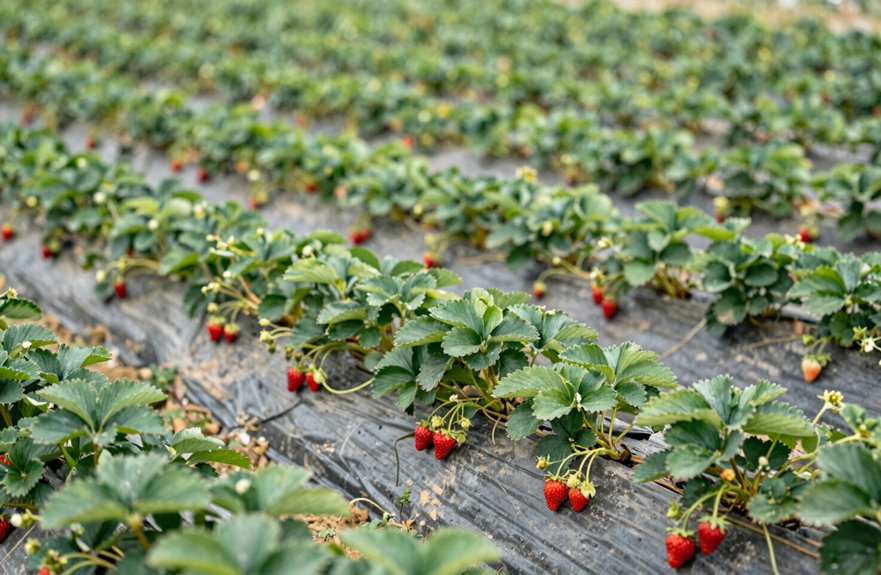
- Matted rows let runners fill a 2-foot gap between rows, creating dense patches that spread fast. This works well for quick coverage, but you’ll need discipline.
- Hills (double rows, 12 inches apart) look tidier, yet those paired rows still let runners zip between plants if you’re not vigilant.
- Spaced systems intentionally limit daughter plants, slowing immediate spread but demanding patience or active pruning for full beds.
No layout truly controls spread without your involvement. Pick your system, then stay on top of those runners. Success depends on consistent maintenance, not the layout alone.
What Happens When You Don’t Control Runners?
What happens when you let strawberry runners run wild? I learned the hard way that those sneaky stems (called stolons, if we’re being technical) stretch out like octopus arms, rooting daughter plants every 8 to 12 inches. Before I knew it, my tidy 4-by-6-foot bed turned into a dense, matted carpet. That overgrowth choked my lettuce neighbors, reduced airflow, and made harvesting a frustrating treasure hunt. Without control, runners expand the bed by 2 feet annually, leaving zero space for next season’s crops. You’ll face tough choices: grab sharp pruning shears (I use Felco #2s) for ruthless cutting, or awkwardly offer bagged plants to friends. Unchecked runners don’t just spread; they conquer both your garden plans and your precious free time.
How to Turn Excess Runners Into New Strawberry Plants
Those bagged plants I foisted on my neighbors started as runners I’d rooted myself. To turn excess into abundance:
- Select your healthiest runners (the ones with plump, white nubs forming at the nodes)
- Pin them down with a U-shaped wire or bent paperclip, keeping soil moist but not soggy
- Wait 2-3 weeks until roots grab firmly, then snip the connecting stem
I used to let runners overrun my quarter-bed until it tripled in size. Now I root six to eight each spring, potting them in 4-inch containers; yogurt cups work too. Some I keep for filling gaps, others become gifts. You build a network of fellow growers this way, spreading plants to others who will use them.
Propagation Mistakes That Waste Your Runners
Though I’ve rooted hundreds of runners over the years, I’ve probably wasted twice as many through sloppy technique and bad timing. The worst propagation mistakes happen when I let runners root wherever they land instead of guiding them to prepared pots. Four-inch nursery containers work best. I used to snip too early, before roots developed, or too late, when the mother plant had already exhausted herself supporting the connection. Now I pin runners to moist potting mix with a bent wire (a bobby pin works in a pinch), wait 2–3 weeks until I see white roots, then sever the connection. Another rookie error involves ignoring variety differences. My June-bearers pump out runners prolifically, while my everbearing ‘Seascape’ barely produces any. Match your expectations accordingly based on your specific varieties.
Runner Control Errors That Ruin Your Harvest
Why do I keep finding strawberry plants in my lettuce patch? Runner control failures turn tidy beds into chaos. That 16-inch spacing I planned? By August, I’m staring at 2-inch crowding, and my harvest suffers.
Where I messed up:
- I let every runner root, creating dense mats that compete for nutrients
- I ignored early spread signs, thinking I’d “deal with it later” (I didn’t)
- I forgot to share excess with neighbors, missing my chance to slow the takeover
Now I propagate intentionally; I snap off runners for friends, sales, or new beds while keeping mother plants productive. Managing spread isn’t about stopping it. It’s about directing that energy where it actually helps your harvest instead of hurting it.