
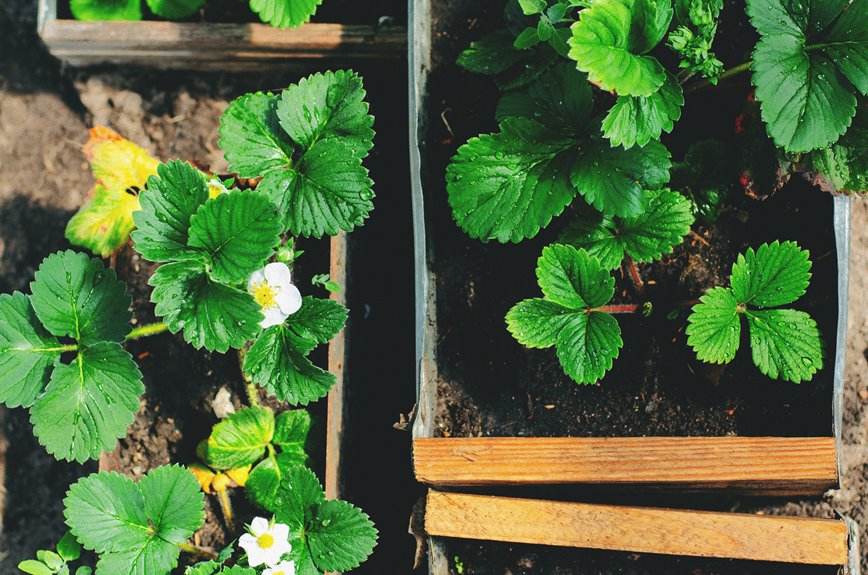
I water my established strawberry plants about one to two inches per week, but I check the soil moisture rather than relying on a calendar. I stick my finger two inches down to verify the soil feels like a wrung-out sponge. If it’s moist, not muddy, and holds shape when squeezed, I can wait longer before watering again. New plantings need that same inch spread across four weekly sessions while roots take hold.
Containers dry fast, so I check daily in heat. Morning is the best time to water, as leaves dry before evening and prevent fungus issues. Mulch cuts my watering nearly in half by retaining moisture close to shallow roots. Clay soils need patience between drinks, while sandy soils need more frequent watering. Soil type directly affects how often you need to water your plants.
How Much Water Do Strawberry Plants Need?
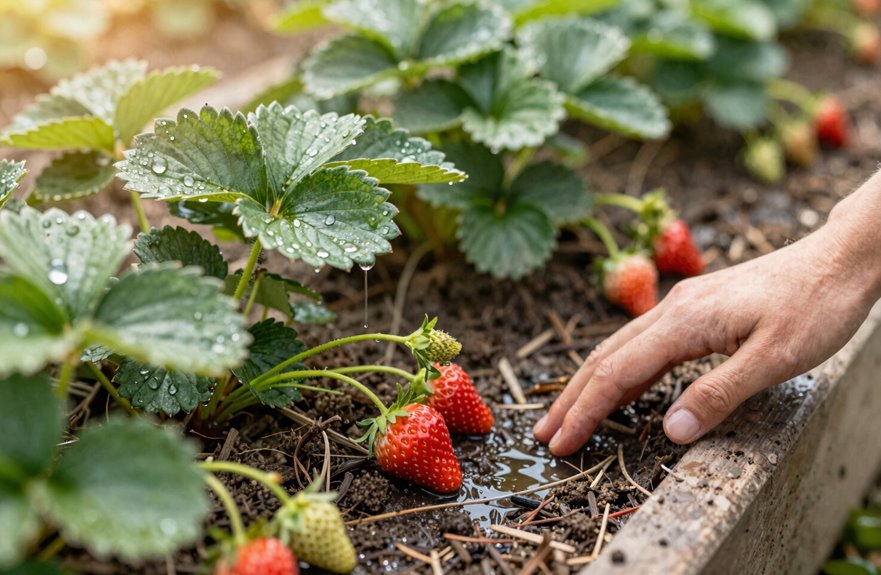
So, how much water do my strawberry plants actually need? I’ve found established ones drink about 1–2 inches weekly, which translates to roughly a gallon per square foot (think of it like a light, steady rain). Newer plantings need different attention, but we’ll circle back to that rhythm later.
I stick my finger two inches into the soil near the base to check moisture. If it feels like a wrung-out sponge, the soil moisture is adequate. Soggy soil indicates overwatering, which causes serious problems. Waterlogged roots can’t breathe, inviting rot and nasty fungi.
For containers, I’m extra vigilant. Limited soil means they dry out faster, so I check daily. Drip lines or soaker hoses (kept two inches from fruits) deliver water right where roots live, avoiding splash-back that spoils berries.
How Often to Water Newly Planted Strawberries
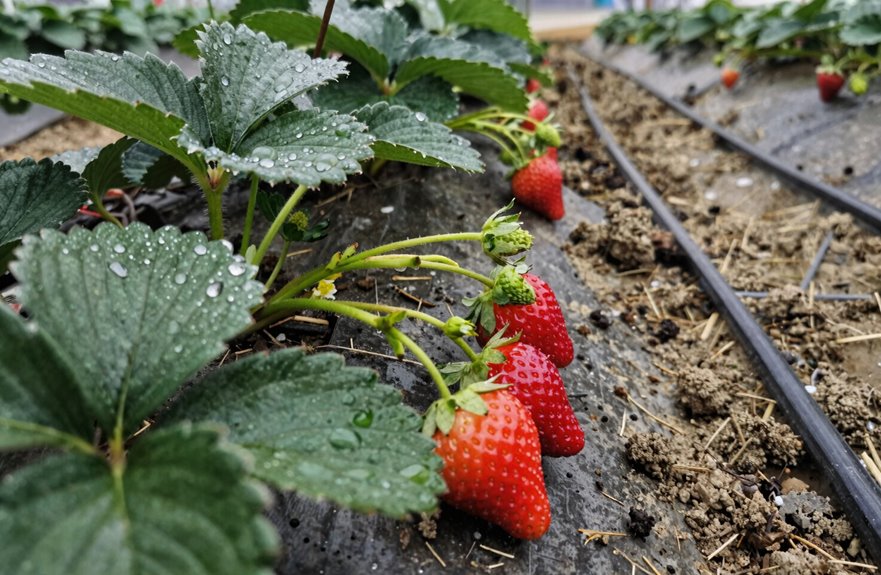
I want to walk you through exactly how often you’ll water those new strawberry plants, because getting this right in the first few weeks (what growers call the establishment period) makes the difference between struggling seedlings and vigorous, fruit-heavy plants. You’ll aim for about one inch of water per session, roughly four times monthly. Keep that top inch of soil consistently moist, not swampy and not dusty. I check by sticking my finger two inches down. When it feels dry at that depth, I grab my drip line or soaker hose. Soaker hoses are effective since they wet the soil without splashing leaves and inviting rot.
Watering Frequency Guidelines
How much water do newly planted strawberries actually need to get going? I give mine about one inch of water, four times monthly, to jump-start that growth. It’s a steady drink, not a flood.
For watering frequency, check soil moisture first by sticking your finger down about two inches. If it’s dry up top, it’s time to water. I prefer drip irrigation or soaker hoses instead of overhead sprinklers because they deliver even moisture without soaking the leaves.
Use this quick test: moist soil two inches deep indicates proper watering. Avoid soggy conditions, as root rot thrives in waterlogged strawberry beds. Keep soil consistently moist, not swampy, and your new plants will develop vigorous growth.
Establishment Period Importance
Getting those watering basics down sets you up for the real make-or-break window: the establishment period. Your newly planted strawberries need about one inch of water, roughly four times monthly, to really take off. This is moisture establishment in action.
My go-to method: drip irrigation, which provides slow, steady soaking right at the roots, or soaker hoses work well here. They deliver even moisture without splashing leaves, which keeps disease away. I check soil by feeling two inches down. Moist, not soggy, is your sweet spot. Soggy means rot. Dry topsoil causes stress for new transplants.
Don’t let that surface crust over completely. Your plants are building root systems now, and consistent moisture makes the difference between thriving plants and garden failure. Established root systems depend on maintaining even soil moisture throughout this critical phase.
How Often to Water Established Strawberry Plants
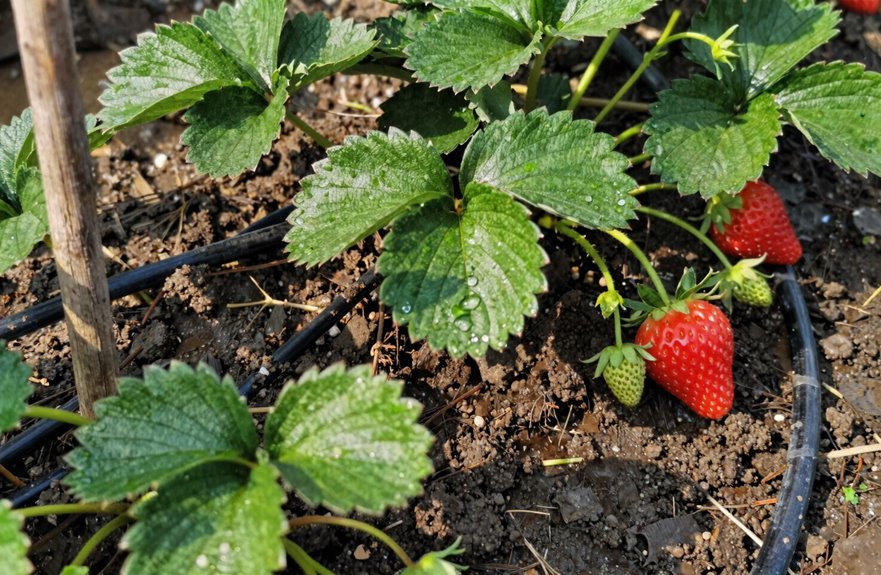
So you’ve got your strawberry patch settled in, and now you’re wondering exactly how much water these established plants actually need? I water mine about 1–2 inches every 7 days, and it’s been a game-changer for keeping that moisture consistent without drowning the roots.
Here’s my routine: I check soil moisture by sticking my finger down about 2 inches, roughly to my second knuckle. If it feels damp, we’re good. If dry, it’s time to water. I prefer drip irrigation or soaker hoses because they deliver moisture right where roots need it, keeping leaves dry to prevent rot.
In clay-heavy soil, I let things dry a bit longer between waterings; waterlogging kills roots fast. Keep that topsoil moist, never soggy. Your berries will produce sweeter fruit with consistent moisture management.
How to Water Strawberries in Containers
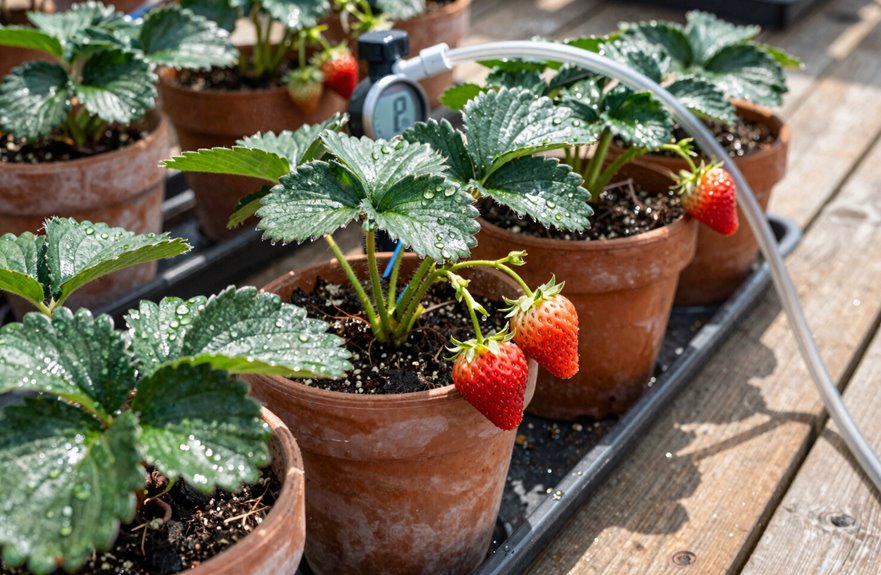
Watering strawberries in containers requires careful attention since pots dry out faster than garden beds. Check the soil about two inches down to ensure it’s barely moist, not soggy, to keep roots healthy. Aim for roughly one to two inches of water weekly. Drainage holes are essential; without them, you risk root rot. Proper moisture testing and container selection significantly affect your strawberry success.
Water Frequency Guidelines
Container strawberries need water more often than their garden-bed cousins, simply because pots dry out faster. In summer heat, this can mean daily watering. Check your plants by feeling the soil about two inches down; if it’s dry at that depth, it’s watering time. You’re aiming for consistent moisture, not soggy roots, which causes root rot.
For newer plants, give about one inch of water four times monthly to jump-start growth. Established plants want one to two inches weekly. Drip irrigation or soaker hoses with tubes placed two inches from growing fruits provide more even coverage than overhead watering.
Water during daylight hours, and never let that topsoil turn to dust. Clay soils need extra attention since they hold water differently. Adjust based on weather conditions to keep your berries healthy.
Container Drainage Needs
Why do container strawberries demand so much more attention than their garden-bed cousins? It’s all about container drainage and moisture management. Our potted plants have limited soil volume, so they dry out fast and need consistent monitoring.
What keeps container strawberries healthy:
- Check daily because containers dry out quickly. One hot afternoon and they’re parched.
- Let soil dry slightly between waterings, but never let the surface stay bone-dry for long.
- Avoid soggy soil at all costs. Those air pockets disappear, and root rot follows.
- Use drip irrigation or soaker hoses, keeping tubes 2 inches from fruits for even moisture without rot.
Proper drainage and moisture management directly prevent root rot and plant loss.
Moisture Testing Methods
Knowing your container drains well is only half the battle; you’ve still got to figure out when to actually water. I stick my finger down about two inches. This is my primary moisture indicator. If it comes up dry, I grab the hose. For newer plants, I’m aiming for roughly one inch of water about four times monthly to get those roots established. Established plants need one to two inches weekly. I use drip irrigation or soaker hoses because overhead sprinkling causes rot. When using additional methods, I’ll break out actual soil testing tools or just lift the container to check weight. Water should hit the root zone without pooling on top. Use your hands as a starting point, and verify with tools when available.
What Time of Day to Water Strawberries
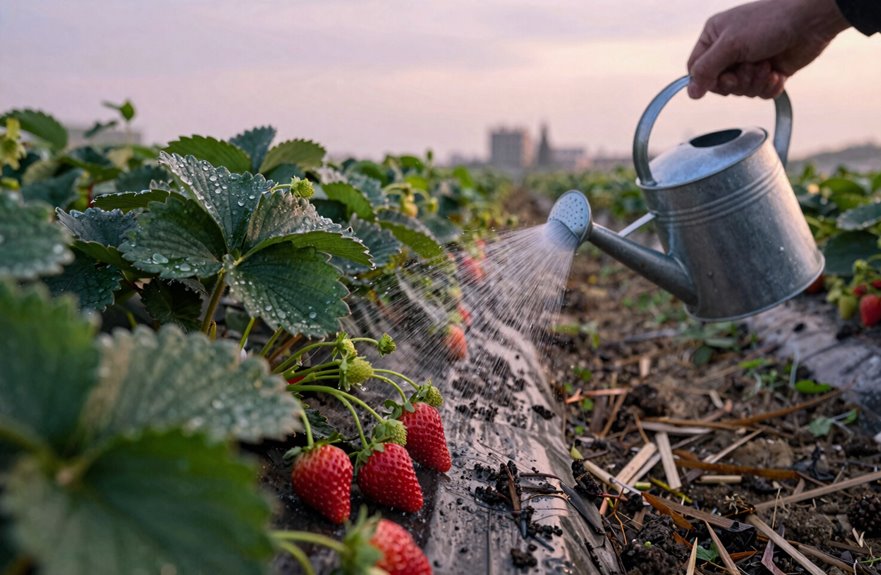
When exactly should I drag out the hose for my strawberries? I’ve learned that watering timing matters just as much as how much I pour, and getting the time of day right keeps my plants thriving alongside fellow growers like you.
Here’s what I’ve discovered works:
- Morning magic – I water early, letting leaves dry before evening dampness invites trouble.
- Midday flexibility – Outdoor crops handle daytime watering fine; the sun helps evaporation work in our favor.
- Indoor consistency – My potted friends enjoy steady, warm conditions without outdoor drama.
- Evening caution – I skip late sessions; wet foliage overnight creates conditions for fungal disease.
I check soil moisture two inches deep first. If it’s soggy, I wait. Clay soil requires longer intervals between watering. We’re in this together, learning as we grow.
Drip Irrigation or Soaker Hoses: Which Should You Use?
I’ve found that choosing between drip irrigation and soaker hoses depends on your setup and what you’re hoping to achieve. Drip systems let me place emitters (those little water spouts) exactly where I need them, about two inches from my strawberries, which keeps fruits dry and roots happy without hovering with a hose. Soaker hoses are simple to install: I snake them through the bed, and they sweat moisture evenly along the whole line, though I’ve learned to watch clay soils more closely since they hold water longer.
Drip Irrigation Benefits
Why fight with a watering can when you can let gravity and a little plastic tubing do the work. Drip irrigation transforms strawberry growing from constant vigilance into a manageable system. You’re joining a community of growers who’ve discovered the more efficient approach.
Here’s what drip irrigation gives us:
- Rot prevention — water hits roots, not leaves, so you dodge fungal heartbreak.
- Precision placement — keeping lines 2 inches from fruits means even moisture without soggy berries.
- Deep, consistent watering — soaking that top 2 inches properly instead of shallow surface watering.
- Container salvation — maintaining steady moisture when pots dry out fast.
Check soil moisture by feeling 2 inches down. Squeeze the soil and assess the moisture level. This direct feedback teaches you how your plants respond to water availability.
Soaker Hose Advantages
The soaker hose sits somewhere between old-school simplicity and modern efficiency. Unlike drip irrigation with its emitters and pressure regulators, you simply snake this porous tube through your strawberry bed, turn the tap, and watch water weep gently into the soil. It keeps foliage dry, preventing rot, delivers moisture straight to shallow roots, and requires no maintenance of clogged drippers. Position the hose about two inches from developing fruits for even coverage while preventing soggy berries. Check your top inch or two of soil; when it feels moist but not muddy, you have achieved proper hydration. For established beds, run the hose longer and less often, providing deep watering once weekly rather than frequent shallow watering.
How to Check Soil Moisture for Strawberries
Checking soil moisture for strawberries requires a simple hands-on approach. Stick your finger straight into the dirt about two inches deep, roughly to your second knuckle, and feel what’s happening down there.
Here’s what to look for when reading soil moisture:
- Moist, not muddy means conditions are ideal. Squeeze lightly, and it should hold together without dripping.
- Dry and crumbly signals your water needs aren’t met; those roots are thirsty.
- Soggy and cold spells trouble. Back off before rot sets in.
- Perfect dampness feels like a wrung-out sponge, cool but not wet.
Check every few days, adjusting your 1–2 inch weekly watering schedule based on what your finger tells you. This direct method will help your strawberries thrive.
Why Strawberry Roots Make Watering Tricky
I’ve learned the hard way that strawberry roots stay shallow, usually just 6 to 8 inches deep, so they can’t tap into moisture reserves like deeper-rooted plants can. This shallow root system means the soil surface dries fast in heat, leaving your plants wilting even when the dirt below feels damp. You’ll need to check moisture about 2 inches down with your finger or a simple soil probe, and mulch heavily. Straw or pine needles work great to keep that top layer from baking.
Shallow Root Systems
Because strawberry roots stay surprisingly shallow, usually just 6 to 8 inches deep, barely past the length of your hand, you’ll need to rethink how you approach watering compared to deeper-rooted plants like tomatoes or peppers. Those shallow roots mean strawberries can’t reach deep water reserves, so they depend entirely on what you provide at the surface. This affects your plants in several ways:
- You’ll watch leaves droop within hours on hot days, feeling that pang of worry.
- You’ll feel soil like a worried parent checking a fever. Just a finger’s depth tells the story.
- You’ll find mulch (straw, pine needles, or shredded leaves) essential for retaining moisture in your berries.
- You’ll connect with fellow growers who’ve lost plants to surprise heat, sharing their experiences.
I check daily, water gently, and never skip the mulch layer.
Moisture Retention Challenges
Why does something so simple—getting water to a plant—turn into such a balancing act with strawberries? Shallow roots require consistent soil moisture, but they’re particular about how they receive it.
Watering depth matters more than you’d think. I aim for about two inches down (roughly to your second knuckle if you’re poking around), which hits the root zone without drowning anything. Too shallow, and they dry out fast. Too deep, and you’re wasting water they can’t reach.
Clay soils hold moisture longer, so I let them dry between waterings. Sandy types need more frequent attention. I mulch heavily with straw, wood chips, or similar materials to keep that soil moisture steady. This requires attention to detail, but the results are worth the effort.
Heat Vulnerability Risks
Shallow roots turn summer into a high-stakes game of catch-up for strawberry plants. I’ve watched my berries wilt faster than I can grab the hose, and it’s all because those roots sit so close to the surface. When heat spikes hit, shallow roots can’t chase water downward; they just bake. Moisture management becomes essential.
What I’ve learned the hard way:
- That 2-inch sweet spot dries out before lunch some days
- Mulch isn’t optional, it’s survival gear for your root zone
- One skipped morning watering can mean weeks of stunted fruit
- Overwatering feels helpful but you’re literally drowning them
Check soil with your finger, about knuckle-deep, rather than relying on visual assessment. Surface dampness is unreliable. Consistent moisture management, not heroic soaking, produces successful berry crops.
Signs You’re Overwatering Strawberry Plants
I’ve definitely killed a few strawberry plants with kindness by watering them way too often, and it’s one of the easiest mistakes to make when you’re trying to keep them happy. Overwatering sneaks up on you, but your plants will tell you what’s wrong if you know what to watch for.
Soggy soil (the kind that stays wet for days) kills air pockets and literally suffocates roots, which sounds dramatic but happens fast. You’ll spot wilting leaves that look thirsty, but they’re drowning, not dry. Check for yellowing or browning at leaf edges, sometimes with crispy brown tips, and premature leaf drop that mimics underwatering. This confusion is common. Stunted crowns and fewer runners mean your plant’s stressed and shutting down.
Before grabbing that watering can, check soil moisture with your finger by going 1–2 inches deep. If it’s still damp, wait. Your strawberries will respond positively to proper watering practices.
Signs Your Strawberries Need More Water
Underwatering strawberries is just as easy to mess up as drowning them, and I’ve done both more times than I’d like to admit. When your plants are thirsty, they’ll let you know by showing specific signs of drought.
Watch for these indicators when checking soil moisture and plant health:
- Dry topsoil that crumbles between your fingers, especially when you dig about two inches down (use your pinky knuckle as a rough guide).
- Browning leaf edges that look crispy, not soggy. This happens when roots can’t pull up enough water.
- Wilting that improves after watering, unlike the persistent droop from root problems.
- Slowed fruit production even when everything else looks fine.
Recognizing these signs early allows you to adjust watering before significant damage occurs.
How to Save Overwatered Strawberry Plants
Sometimes I get a little too enthusiastic with the watering can, and my strawberries pay the price. Overwatering sneaks up on me: soggy soil, brown-tipped leaves, wilting despite wet dirt. I’ve learned to check soil moisture about two inches down with my finger; if it’s still damp, I wait. Clay-heavy beds need extra patience between drinks. To fix my mistakes, I ease off immediately, let the area dry, and switch to drip irrigation or soaker hoses kept two inches from the fruits. These tools water evenly without drowning roots. If root rot’s already set in, with mushy, dark roots, I carefully unearth the plant, trim damaged parts, and replant in fresh, well-draining soil. Strawberries can recover from overwatering with prompt intervention.
How Mulch Reduces Strawberry Watering Needs
Since I’m always looking for ways to cut down on my garden chores without sacrificing my strawberry harvest, mulch has become my most effective tool against constant watering. I used to drag my hose out every single day until I discovered how significantly mulch changes the game for gardeners who prefer spending time eating berries rather than maintaining them.
Why I never skip the mulch layer:
- It hugs moisture close to shallow roots, so I don’t need to water as frequently.
- It keeps soil cool and damp, protecting my plants from midday wilting.
- It stops crusty topsoil, letting water soak in instead of running off and eliminating the need for repeated watering.
- It sustains fruit development, allowing plants to thrive during busy periods.
With mulch, I’ve cut my watering schedule nearly in half.
How to Water Strawberries During Heat and Drought
When summer heat peaks, strawberry growers need reliable watering strategies. During hot, dry periods, drip irrigation (those snaky tubes that ooze water right where roots need it) or soaker hoses positioned about two inches from developing fruits work best. This approach prevents rot and conserves water compared to overhead sprinkling, which wastes precious drops.
Check soil moisture by plunging your finger two inches deep. It should feel damp, not sopping. Soggy roots rot quickly. Established plants require 1–2 inches of water weekly, while newly planted strawberries need about an inch spread across four monthly sessions to establish growth.
Potted strawberries demand more frequent monitoring than in-ground beds. Their shallow roots dry rapidly and require consistent attention to maintain adequate moisture.
How Soil Type Affects Strawberry Watering
Why does your neighbor’s strawberry patch thrive on weekly watering while yours turns mushy? It’s all about soil type, and I learned this through early mistakes.
Your watering frequency depends entirely on what you’re working with. Clay-heavy soils hold water like a sponge for too long, while sandy mixes drain faster than expected on a hot day.
What I’ve discovered through trial, error, and one very sad season:
- Clay soils need patience. Let them dry between watering, or you’ll drown those roots.
- Sandy soils forgive more frequent, lighter watering. They’re needy, but manageable.
- Loamy soil means balanced moisture with less guesswork.
- Any soil benefits from mulch. This protects against summer moisture fluctuations.
Test the top inch with your finger. Adjust your watering schedule based on soil moisture, and you’ll see better results.
Best Tools for Knowing When to Water Strawberries
How do you know if your strawberry patch is actually thirsty or just being dramatic? Guessing leads to heartbreak and mushy berries, so rely on simple water monitoring tools instead.
My go-to is a soil moisture meter. Stick it two inches down, and you’ll know instantly if you’re in the sweet spot. No meter? Try the finger test, or grab a small trowel to check that top inch. For drip setups, keep tubes two inches from fruits to prevent rot while ensuring even saturation.
What works in my garden:
| Tool | Best For | My Take |
|---|---|---|
| Soil moisture meter | Precision seekers | Worth every penny |
| Finger test | Quick daily checks | Free, but dirt under nails |
| Trowel method | Deep verification | Old school, totally reliable |
| Bucket method | Measuring output | Great for tracking inches |