I always start by counting my usual crowd. Two to four people means a 24–36 inch pit, but bump up to 48 inches for six or more guests who want to talk to each other.
I measure my patio first (length times width, jot it down), since the fire zone needs roughly one-third of that footprint plus six to seven feet of clearance from anything combustible.
I pick my fuel. Gas lets you cozy up closer, maybe 18–24 inches, while wood demands a full three-foot buffer and significantly more distance from structures.
I space seating about seven feet from the pit’s edge (that’s your conversation sweet spot), and I leave three extra feet beyond for pathways so nobody trips with a s’more in hand.
Style matters too. Modern patios love a 56-inch table or crisp 42-inch square, while rustic setups call for that classic 42-inch round.
Finally, I decide between portable flexibility (24–30 inches, easy to drag around) and built-in permanence with stone benches that feel like they’ve always belonged there.
These seven moves will eliminate the awkward huddle-and-shuffle dance entirely, and the measurements will make your setup actually work.
Match Fire Pit Size to Your Typical Guest Count
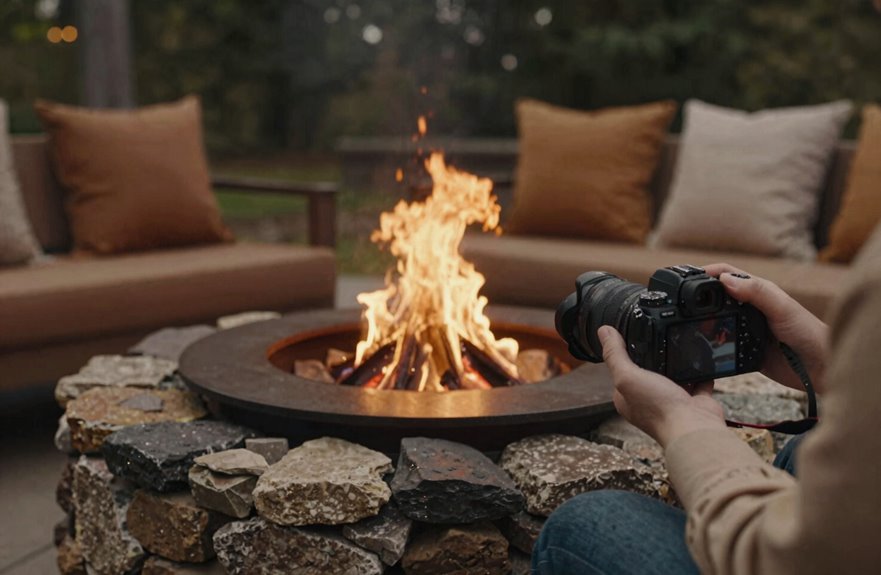
So, how do I figure out what size fire pit I actually need? Start with your typical guest count. For intimate gatherings of 2–4 people, choose a 24–36 inch pit diameter, keeping it cozy without cramping. When hosting 4–6 friends, bump up to 36–44 inches; the flame reach feels generous without anyone roasting. For larger groups of 6 or more, go 48 inches or larger. Round fire pits work best for conversation. Plan for 18–24 square feet of seating space per person, which shapes your seating arrangement and clearance needs. Leave 3–4 feet around everything for traffic flow. Measure your patio area to keep sizing grounded in reality.
Measure Your Patio Before Choosing a Fire Pit
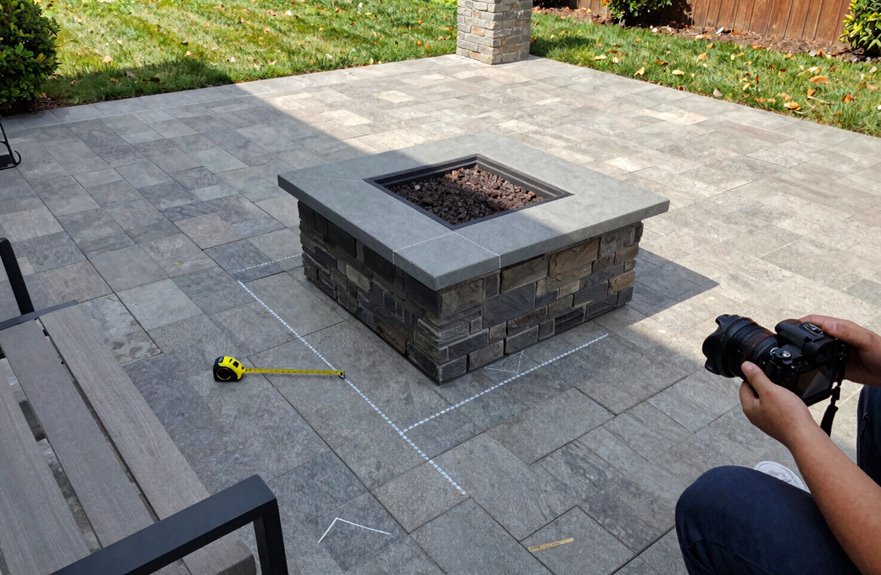
Where do you even start when your patio’s staring back at you, empty and full of possibility? Grab your tape measure and jot down your patio dimensions, length times width, to see what you’re actually working with. Your fire pit zone should take up roughly one-third of your total patio footprint, leaving breathing room for everything else.
Before selecting any pit diameter, subtract your safety clearances. Plan for three feet around each seating area for comfortable chairs, plus six to seven feet from flames to structures, which is non-negotiable. That walkway space keeps your layout flow smooth, so nobody’s squeezing past hot coals with a drink in hand.
For your seating arrangement, check accessibility. Can guests reach the pit without obstacle courses? A 36-44 inch model suits four to six friends; go 48-plus for bigger crowds. Measure twice, gather once.
Pick Fuel Type to Determine Size and Clearance
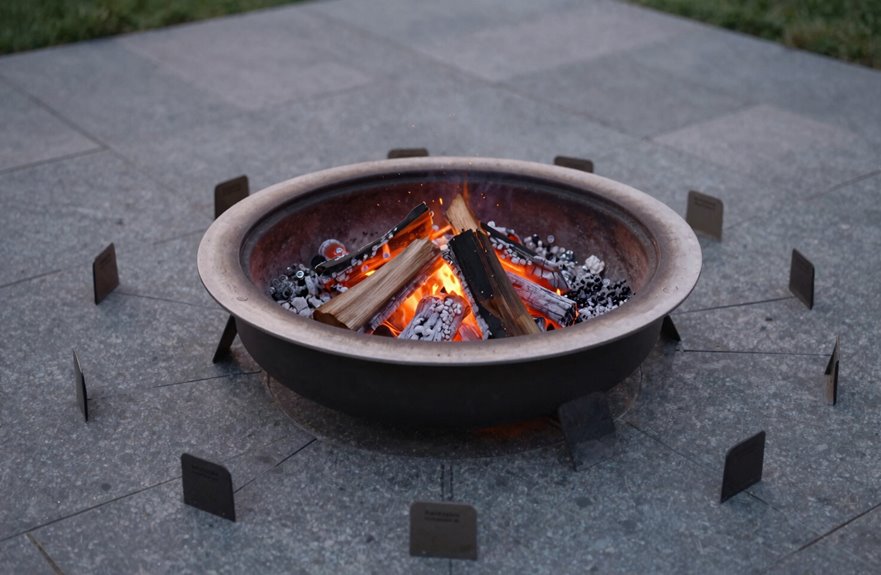
I’ve learned that choosing between wood and gas involves practical considerations that reshape your entire layout. Wood-burning pits demand roughly 3 feet of clearance on all sides due to heat radiation and flying embers, while gas allows placement within 18–24 inches. This clearance difference significantly affects how many people can gather around the flame. Your fuel choice also dictates the pit’s footprint; gas burners achieve substantial visual impact in tighter circles, whereas wood requires more space to perform safely without creating a spark hazard on your patio.
Wood vs. Gas Trade-offs
Your fuel choice isn’t just about ambiance. It’s the decision that locks in your clearance requirements, seating layout, and ultimately how big a pit you can actually fit. Wood demands more breathing room, think 3 feet minimum for heat and rogue embers, while gas lets you cozy up, roughly 18–24 inches from edge to seat. That clearance difference directly impacts your fire pit size options.
Gas installations, typically 24–30 inches for portable units, offer instant ambiance with BTU-controlled flames and built-in storage, though you’re tethered to supply capacity. Wood brings rustic charm but needs serious fuel storage space and ash management. Your fuel type doesn’t just affect smoke; it’s the foundation every other decision builds on.
Clearance Requirements Differ
How much breathing room does your fire pit actually need? Fire pit clearance requirements vary based on fuel type, and this difference significantly affects safety planning. Gas versus wood burning creates different safety parameters.
Wood-burning pits require serious safety considerations. You need 10–25 feet of distance from structures to anything combustible, plus at least 3 feet around the pit itself for ember safety, since sparks travel considerable distances. Gas fire pits have less stringent requirements: 5–10 foot setback distances from structures, and seating can be positioned 18–24 inches away. Built-in protection matters here; proper ventilation keeps gas flowing safely, while concealed pipe routing follows NFPA guidelines.
Portable fire pits can work in tighter spaces proportionally, but safety margins should not be compromised. Check your specific model’s requirements, as following clearance guidelines prevents fire hazards and protects surrounding structures.
Size Impacts Feasibility
The right fire pit size isn’t just about what looks good. It’s about what’ll actually work in your space, and that decision starts with picking your fuel type first. Wood-burning setups demand serious clearance, about three feet of buffer for embers and heat, while gas fire pits let you cozy up closer, just 18 to 24 inches away. That choice shapes your whole seating area, your pit diameter, everything.
Match burner size to table size for proper heat distribution: think 60–84K BTU for 36-inch tables, scaling up to 180–300K for 56–60 inch tables. Your flame footprint, that’s 50–65% of the burner opening, should drive sizing so nobody’s sweating or freezing. Built versus portable pits require different considerations. In-ground pits need different ventilation than above-ground ones. Getting this right ensures your outdoor space functions as intended.
Allow 6–7 Feet of Total Clearance Around the Pit
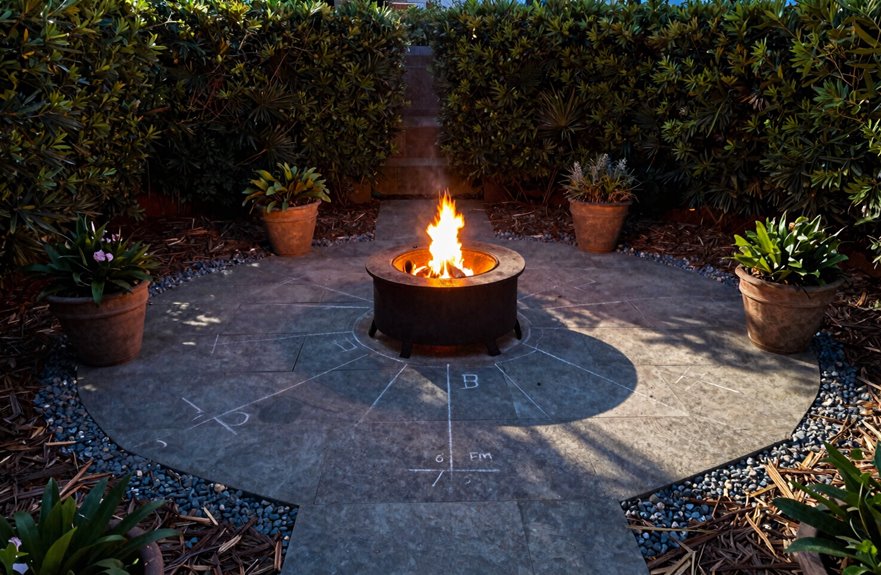
Why does a few feet of empty space matter so much? 6–7 feet of total clearance around your pit is essential for keeping your outdoor layout functional and safe.
Your fire pit clearance creates a safety zone that protects everyone. Smaller pit sizes crammed into tight spaces result in guests awkwardly hovering instead of relaxing. That surrounding seating needs breathing room, not just for heat protection but for comfortable traffic flow around your gathering.
When planning pathways around fire pit areas, account for people carrying s’mores plates and cooler drinks, no one wants a collision mid-laugh. Wood-burning pits especially demand this buffer for ember control, though gas models benefit too. Center the pit first, then build seating around pit zones outward, keeping walkways clear.
Space Seating 7 Feet From the Fire Pit Edge
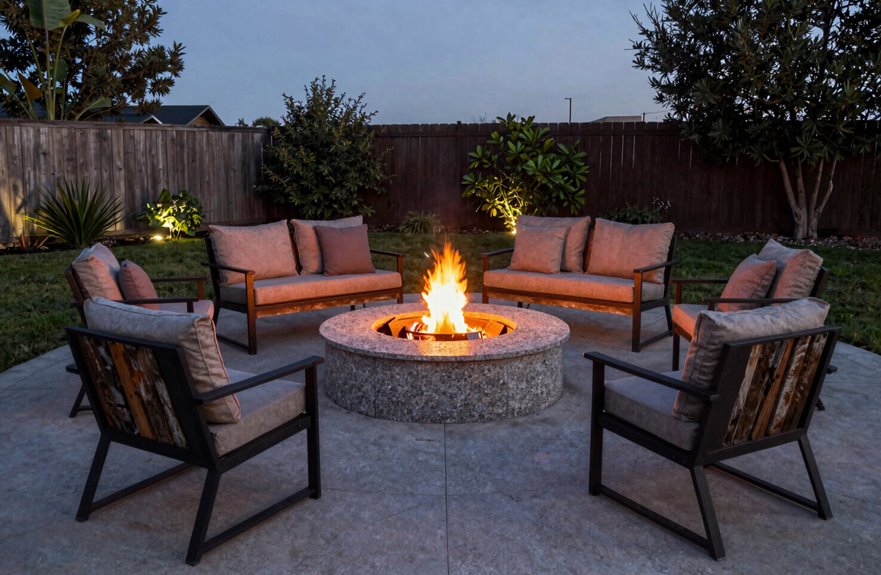
From the edge of your fire pit, provide guests with seven feet of clearance. That seating radius isn’t arbitrary; it’s the distance where warmth meets comfort, where folks can sit, rise, and mingle without bumping knees or singeing sleeves.
Your fire pit size directly shapes this layout. Round pits work well with a circular seating arrangement, positioning chairs like petals around a flower, each roughly 7 feet from the center. Square layouts demand the same 7-foot clearance on all four sides.
For space planning: a modest 4-foot pit plus 7 feet of seating radius requires roughly 14 by 14 feet of outdoor space. Add a 3-foot pathway beyond that seating area for foot traffic and circulation. This spacing eliminates cramped conditions and ensures all guests have adequate room.
Align Fire Pit Size With Your Patio Style
Perhaps you’re wondering how to make your fire pit look like it actually belongs in your backyard rather than a random campfire that wandered in from the woods. Matching fire pit size to patio style transforms the whole vibe.
Modern spaces call for a 56 inch fire table or 42 inch square fire pit for those crisp, contemporary edges. Rustic landscapes work best with a round fire pit around 42 inches, something organic that echoes the surroundings.
Center the fire pit in formal layouts to anchor the seating area properly. Material choices matter as well: concrete for sleek modern looks, natural stone for traditional warmth. Balance proportions with patio space (one-third visual weight is ideal), maintain safety clearance, and your yard will feel intentional and welcoming.
Choose Between Portable and Built-In Options
I’m weighing whether I want the freedom to roll my fire pit (think 24–30 inch steel bowls on wheels, or those lightweight propane tank setups) around the patio when guests arrive, or if I’d rather commit to a fixed stone circle that anchors my whole seating layout. Portable units let me dodge permanent permits and ventilation headaches, but I’ll sacrifice that grounded, campfire-gathering feel you get from a mortared ring. Built-ins demand I plan for 36–48 inch diameters plus clearance codes, yet they reward me with stable bench seating and zero wobble when I’m roasting marshmallows.
Weight and Mobility
The first thing I’m weighing—literally—is whether I want a fire pit that follows me around or one that commits to a spot like a stubborn old tree. Portable models, typically 24–30 inches in diameter, give me flexibility; I can drag them where the party goes (think cozy backyard corners, or that one spot where everyone actually gathers). That portability comes with a trade-off: lighter materials limit both size and heat output.
Built-in options anchor my outdoor space, creating a natural hub where seating arrangement feels intentional and permanent. I lose mobility, but I gain a fire pit type that integrates with integrated benches or surrounding stone. For tight spaces or fickle hosts, portable wins. For belonging somewhere specific, built-in’s your bet.
Permanent Installation Benefits
Why commit to one spot when that spot becomes the reason everyone shows up? A permanent installation transforms your yard into the neighborhood’s living room.
An in-ground pit, 6–12 inches deep, anchors your space with intention. These depth options balance airflow and containment, which directly affects heat output and fuel consumption during weekend gatherings.
Built-in seating from stone benches, placed 3–4 feet out, creates natural gathering zones. No dragging chairs around. No awkward spacing.
The diameter impact matters. Wider pits produce more warmth but require more fuel. Your integrated centerpiece becomes tradition, not furniture.
You’re locked into the layout. Belonging means putting down roots.
Space Requirements Compared
So how much room do you really need for a fire pit that won’t turn your patio into an obstacle course? Let’s break it down.
When space planning, start with the clear radius: six to seven feet around any pit, minimum. That’s your safety clearance for walkways.
Built-in vs portable changes everything. Portable fire pits, 24–30 inches in diameter, let you rearrange seating distances on a whim. This works well when friends drop by unexpectedly. Built-ins demand commitment; they lock in your seating arrangement with fixed dimensions, usually 3–4 feet from the flame.
Gas vs wood fuel matters too. Gas setups allow tighter seating (18–24 inches), while wood needs that full 3-foot buffer for sparks.
Small patio space? Stay under 36 inches. With room to stretch, 42–60 inches creates that gathering spot everyone gravitates toward.