I built my first kitchen garden on a postage-stamp apartment counter, wedged between a microwave and a half-empty party-size tortilla chip bag, because I wanted fresh basil for midnight snacks without sacrificing square footage to bulky plastic pots. Non-plastic grow bags (3-gallon minimum, fabric breathes better than terracotta) work for balconies, while glass avocado vases turn scraps into root-watching theater. Clear borosilicate shows that taproot emerging in 4–6 weeks. Terra-cotta pots with visible water reservoirs save forgetful waterers from root rot, ceramic bottle spikes keep soil steady during weekend trips, and brass misters patina into counter décor. Waterproof repotting mats (17.7″ or 26.8″ squares) snap into basins for tidy transplants, Lego succulents demand zero water between appliances, and grouping herbs by sun needs keeps small surfaces functional. Basil wants 8–12″ depth, mint spreads 12″ wide. Match container width to root spread and prioritize drainage holes (three ¼-inch openings) to prevent root rot and maximize your growing capacity in compact spaces. Container selection directly impacts plant survival during vacation periods and determines whether your snack zone produces ingredients or becomes cluttered with failed experiments.
Non-Plastic Grow Bags for Balcony and Patio Herbs
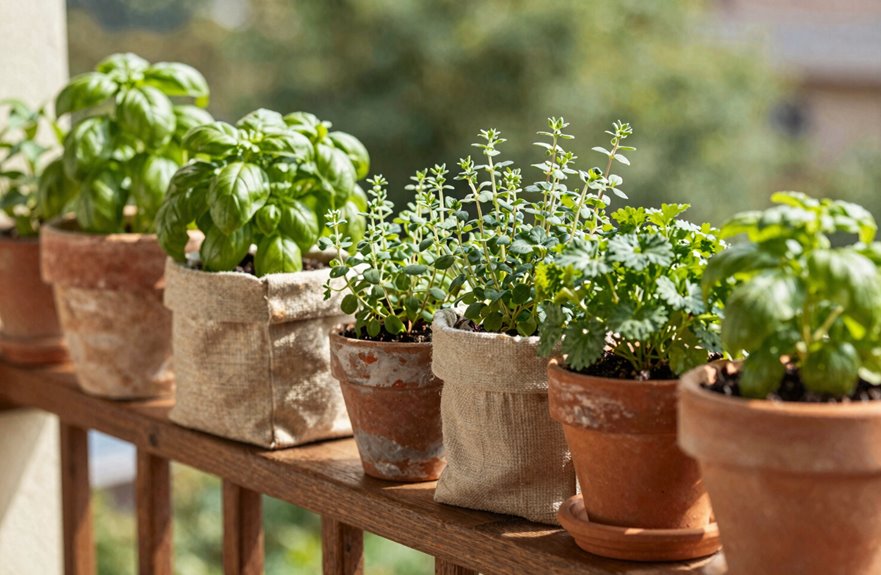
Why settle for boring plastic when you’re looking at your cramped balcony and wondering how you’ll fit a proper herb garden up there? Grow bags are an effective solution for tight spaces like yours. These non-plastic containers are usually made from breathable fabric blends and come in colors that complement shared building aesthetics.
Moisture retention is critical with herbs, so skip the cute small sizes and grab 3-gallon bags minimum. Anything smaller dries out too quickly. The fabric prevents root rot while keeping soil cooler than hard containers. Plus, when summer ends, you can fold them flat for storage.
Terra-Cotta Pots With Glass Reservoirs for Forgetful Waterers
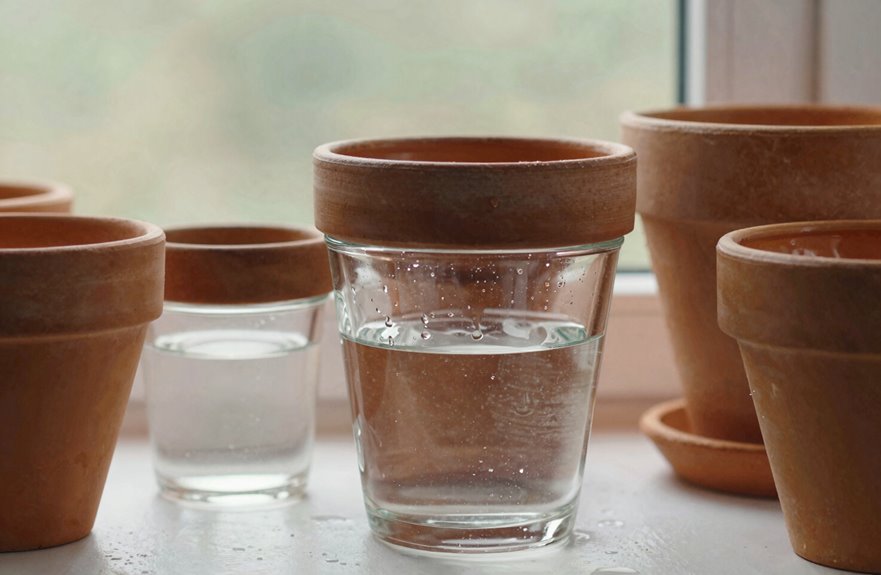
How often have I killed a plant by simply forgetting it exists? Too many times, friend, too many times. Terra-cotta pots with glass reservoirs changed everything for me. The porous ceramic breathes (roots need air, who knew?), while that see-through glass reservoir lets me check water levels at a glance. No more guesswork, no more guilt. A simple wick draws water upward, wicking moisture steadily into the soil exactly when your plant needs it. I fill mine, forget it for a week, and my basil survives. The rustic look fits my snack-strewn kitchen perfectly as functional décor for fellow distracted souls. Sizes range from 4-inch windowsill versions to hefty 10-inch statement pieces. Root rot becomes nearly impossible since you literally watch excess water sit in the glass.
Ceramic Self-Watering Spikes That Fit Standard Bottles
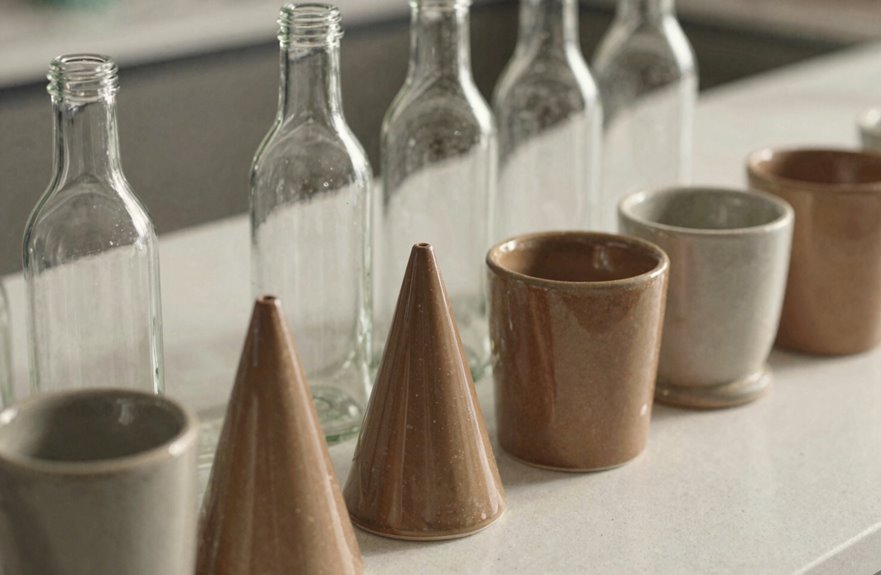
Where do you stash all those empty wine bottles? I’ve found my answer, and it’s changed how I keep plants alive.
These ceramic self-watering spikes from Modern Innovations are hollow terracotta units that let water seep gradually into soil. Standard bottle compatibility means any large bottle (wine, sparkling water, that fancy olive oil you saved) screws right in, creating a simple bottle-to-spike setup.
I stick them in my larger pots, and they handle moisture management without me hovering with a watering can. The terracotta’s porous nature releases water slowly, so soil stays consistently damp; not soggy, not crispy. This consistency works especially well during vacation weeks or when watering gets skipped.
They come in multi-packs too, so I’ve got six plants covered. Finally, a practical reason to finish that bottle.
Metal Misters and Watering Cans as Functional Kitchen Décor
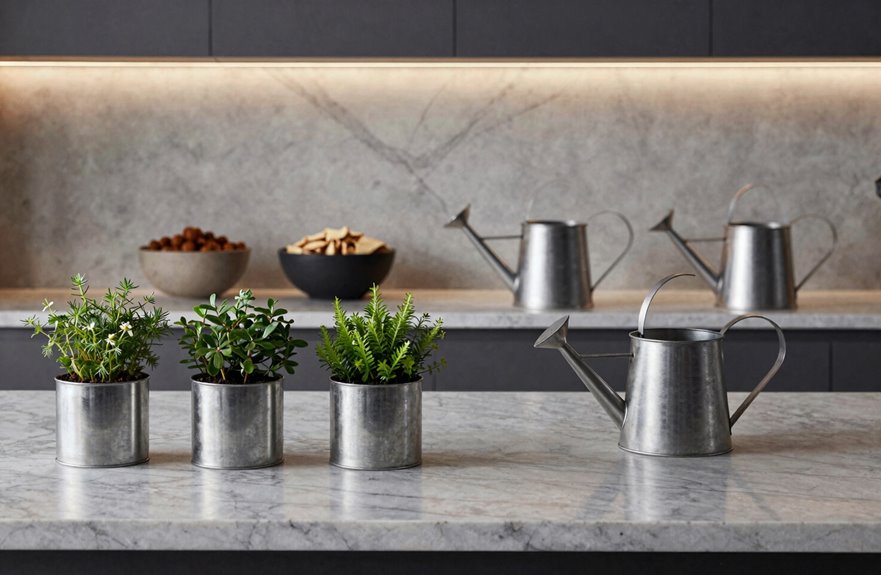
I’ve moved on from hiding my plant care tools in cabinets to putting them right out on the counter because these brass misters work as functional kitchen décor.
Metal misters serve double duty as kitchen décor while keeping herbs healthy. The brass-plated finish from Sustainable Village starts shiny, then develops gorgeous patina over months of use (each one ages differently, like a fingerprint). Misting basil gently provides light humidity without streaming water, and the piece displays beautifully by the window.
Brass misters age like fingerprints—functional art that turns plant care into kitchen décor.
- Brass-plated finish that develops unique patina over time
- Gentle misting action prevents over-watering delicate herbs
- Sustainable Village Brass Plant Mister measures 6.5 inches tall
- Zero plastic aligns with eco-conscious kitchen goals
- Display-worthy design earns permanent counter space
Brass misters replace plastic sprayers with a functional object that looks intentional on your kitchen counter.
Waterproof Repotting Mats for Quick Countertop Transplants
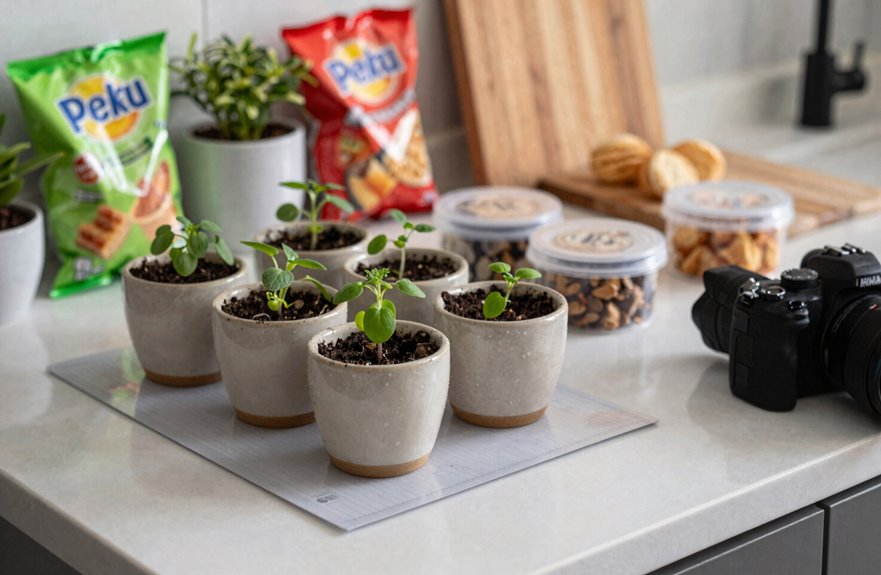
Why let soil scatter everywhere when you’re just trying to give your pothos a roomier home? Waterproof repotting mats, specifically the Ellazyy set that comes with two sizes (17.7″ and 26.8″ squares), solve this problem. These mats snap at the corners, creating a tidy basin that catches every stray peat particle.
My routine involves laying the smaller mat on my kitchen counter (no dedicated potting station needed), unfolding it, and creating an instant workspace. The waterproof fabric keeps moisture from seeping through, so my butcher block stays pristine. When I’m done with my quick countertop transplants, I brush debris into the center, unsnap, and funnel straight into the trash. The mats fold flat and stash in a drawer.
You’ll maintain clean hands, keep your plants healthy, and avoid dirt accumulating in places your roommate would rather it wasn’t.
Color-Changing Moisture Sensors for Busy Schedules
Color-changing moisture sensors work well for managing plants on a busy schedule, since they turn blue (around pF 2.0, indicating adequate hydration) or white (indicating wilting risk) without guesswork. The Sustee Aquameter Medium comes in a five-pack, lasts about a year, and fits into various pot sizes for indoor or outdoor growing. Think of them as soil-dwelling indicators: blue means adequate moisture, white means you need to water soon.
Visual Indicators
How often have you stared at a planter, wondering if it’s thirsty or if you’re about to drown the poor thing? Moisture indicators eliminate this uncertainty for your snack-growing setup.
These tools show you exactly when your herbs need attention. The Sustee Aquameter (Medium) turns blue when soil hits pF 2.0 (nicely moist) and white when wilting risk appears. Each set includes five sensors, and they last about a year before needing replacement.
Why fellow busy growers use them:
- Instant color changes eliminate soil-touching guesswork
- One-year lifespan means less frequent shopping trips
- Replaceable cores keep costs down long-term
- Starter set integration streamlines your whole routine
- Compatibility with self-watering systems prevents overwatering disasters
For snack lovers juggling schedules, these sensors make plant parenting feel achievable rather than overwhelming.
Watering Alerts
Visual indicators give you a snapshot of soil conditions, but watering alerts from color-changing moisture sensors provide timely notifications when you’ve neglected your plants. These sensors turn blue when soil reaches ideal moisture tension (around pF 2.0), then fade to white when your plant needs water urgently. The Sustee Aquameter Medium set includes five sensors for use in standard indoor and outdoor setups without disrupting existing plant care routines. They last about a year, are replaceable, and allow you to make watering decisions at a glance without manual soil checks.
Glass Avocado Vases That Sprout Kitchen Scraps
I love how glass avocado vases turn my post-guacamole scraps into a living kitchen project, letting me watch roots unfurl in real-time through crystal-clear borosilicate, the tough, heat-proof glass that lab beakers use. The minimalist design usually features a rounded base with a slender neck that cradles the pit just above the waterline, which means I get a sculptural object even before anything sprouts. The iridescent ones catch morning light beautifully on my windowsill. It’s the ultimate low-stakes experiment: if my pit rots, I’ve lost nothing but a scrap I’d have tossed anyway. When that first crack appears and a pale root snakes downward, the visible growth cycle makes the sprouting process rewarding to observe.
Kitchen Scrap Revival
Where else but the kitchen window can you turn yesterday’s avocado pit into tomorrow’s houseplant? This kitchen scrap revival works like joining a club where your trash becomes treasure. These sprouting setups feature borosilicate glassware that’s shatter-resistant, with narrow necks cradling the pit and wider bases showing off emerging roots. The glassware comes packed with growing tips and little lore books, a detail that adds genuine value. You’re not just propagating; you’re curating a visible ritual that makes your kitchen feel alive and intentional. The whole movement turns food waste into low-maintenance decor while reducing what goes to the landfill.
- Borosilicate construction withstands daily kitchen chaos
- Narrow-to-wide silhouette cradles pits, displays root drama
- Bundled growing guides transform beginners into insiders
- Wider bases spotlight the transformation from scrap to sprout
- Lore books add storytelling depth to your windowsill display
Root Watching Appeal
Because I can’t resist a good transformation story, I’ve become slightly obsessed with glass avocado vases that turn my breakfast scraps into living theater. There’s something deeply satisfying about root watching; witnessing those white tendrils unfurl in real-time through crystal-clear borosilicate glass. My kitchen counter has become a sprouting display laboratory, with each pit suspended in its narrow-necked vessel like a science fair project I actually care about.
| Stage | What You’ll See | Timeline |
|---|---|---|
| Split pit | The seed cracks open, revealing inner cream | 2-4 weeks |
| Root emergence | A single white taproot reaches downward | 4-6 weeks |
| Stem shoot | Green growth pushes upward, seeking light | 6-8 weeks |
These avocado vases come in clear, green, or iridescent finishes. I’ve got two clear ones lined up like tiny aquariums. The included growing tips and lore book make me feel part of a community, all of us nurturing breakfast debris into houseplants together.
Minimalist Glass Design
Moving past the root-watching obsession, I’ve landed on a design that satisfies both my clutter-phobia and my need to nurture things. These glass planters hit that sweet spot where function meets quiet beauty, and they’re the plant decor upgrade my kitchen counter needed.
The borosilicate build, which is lab-grade glass and essentially unbreakable, cradles avocado pits in water while the narrow neck holds everything steady. I grabbed the Ilex Studio version in iridescent, but clear and green work if you’re matching your vibe.
- Shatter-resistant borosilicate glass handles daily bumps
- Neck design suspends pits at perfect water depth
- Included growing guide saves you from Google spirals
- Multiple tints let you curate your shelf aesthetic
- Doubles as sculpture when roots get dramatic
This minimalist glass design proves you don’t need clutter to feel connected to growing things.
Lego Succulents for Zero-Water Greenery Near Food Prep
Why settle for a drooping herb garden when your “cooking fuel” station deserves something reliable? Lego Succulents 10309 delivers practical benefits for kitchen spaces.
These aren’t traditional indoor planters. You get nine buildable succulents, aloe, hens and chicks, red echeveria, each nested in its own 2.5-inch square planter. Zero-water greenery. Dust yours monthly (takes four minutes), and that covers the maintenance.
The Botanical Collection delivers that “I have plants but I also eat chips” aesthetic. Assembly is straightforward. Mix up the stem lengths as you prefer. The compact footprint (roughly 6 by 4 inches assembled) slides between your cutting board and that air fryer you use regularly.
Snack lovers will appreciate low-effort, high-reward decor that won’t judge your midnight mozzarella stick habit.
Sizing Your Containers for Basil, Cilantro, and Mint Roots
I’ve learned the hard way that basil, cilantro, and mint need at least 6 to 8 inches of depth, such as a standard 3-gallon grow bag rather than those small 4-inch nursery pots that require watering twice daily. Width matters just as much, since cilantro and mint spread horizontally, so containers should be at least 12 inches across to prevent stunted growth. Drainage holes are essential; three or four quarter-inch openings at the bottom (I use a heated screwdriver to melt clean holes in fabric bags) keep roots from drowning while retaining enough moisture to sustain plants through a weekend away.
Root Depth Requirements
Most gardeners I know (myself included, once upon a time) have killed at least one promising herb by stuffing it into a pot that’s way too small. Root depth isn’t negotiable if you want lush, snack-worthy basil and cilantro.
Here’s what works for giving your herbs the vertical space they need:
- Aim for 8–12 inches of depth minimum (this accommodates taproots and those sneaky lateral spreaders)
- Skip the cute shallow bowls, no matter how Pinterest-worthy they look
- Grab 3-gallon containers or larger for serious moisture retention
- Try fabric grow bags; they breathe beautifully and keep roots happy
- Cramped roots lead to stressed plants, which produce bitter leaves nobody wants to eat
Your herbs will perform better with adequate root space, and your caprese salad will taste noticeably better as a result.
Container Width Matters
How wide should your containers actually be? Container width changes everything for thriving herb pots.
Basil wants 8–12 inches for fuller foliage, while cilantro settles happily at 6–10 inches (any narrower and it’ll bolt on you). Mint requires 12 inches minimum to prevent it from spreading into surrounding areas.
Wider surfaces let roots spread horizontally, and that shallow root growth keeps moisture even. This prevents dry pockets and soggy disasters. I switched to 3-gallon grow bags last season, and my basil produced significantly more leaves.
Forget tall skinny vases. These herbs want room to stretch sideways, not deep diving. Proper container width ensures consistent moisture distribution and stronger plant development.
Drainage Hole Essentials
Why do so many herb pots drown their roots when the fix costs practically nothing? I’ve watched too many snack lovers lose their basil to soggy soil. Drainage holes aren’t optional. They’re survival gear for your herbs.
- Punch or drill at least one ¼-inch hole in any container lacking escape routes for water
- Stick with 6–8 inch pots for shallow-rooted herbs (basil, cilantro, mint). These sizes work best
- Upgrade to 3-gallon grow bags if you’re forgetful about watering; they buy you time
- Pick uniform, clean-looking containers to keep neighbors happy in shared spaces
- Choose non-plastic grow bags (fabric blends, not vinyl) for drainage that breathes without looking cheap
Your herbs want to thrive, not swim. Give them containers that respect their roots.
Grouping Herbs by Sun and Water Needs on Small Surfaces
A cramped windowsill doesn’t mean you’re stuck with wilted herbs or a one-size-fits-all watering disaster. Grouping herbs by sun exposure and moisture control solves most small-space growing problems.
Use compact planters with labeled zones. Basil and cilantro, which need frequent watering, go in easily accessible spots, while thyme and oregano occupy drier areas. Most culinary herbs require 6–8 hours of direct light, though mint tolerates less, so position it toward the back.
Stagger your layout to take advantage of microclimates. Place sun-loving herbs at sunny edges and more tolerant varieties in slightly shaded nooks. Individual planters per herb type prevent overwatering drought-tolerant plants while keeping moisture-loving basil in optimal conditions for regular harvesting.