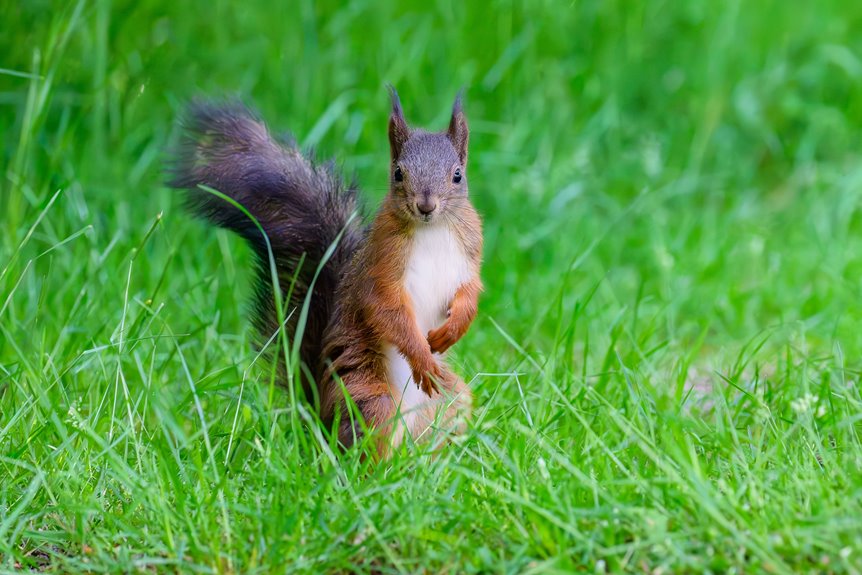
I’ve tested enough ultrasonic squirrel repellents in attics, garages, and garden sheds to confirm they rarely live up to the packaging promises. These devices emit high-frequency noise (roughly 20–50 kHz, which is above human hearing but audible to squirrels), yet scientific backing remains thin and results are consistently weak. Squirrels hear up to 40–50 kHz, so many devices barely register, and animals habituate quickly; typically ignoring them after about two weeks. Background noise, walls, and insulation further attenuate signals, creating coverage gaps that squirrels exploit. At $30–$60 per unit (or $150–$300 for whole-home coverage), you’re buying temporary annoyance, not a solution. What follows is a breakdown of what actually works.
Do Ultrasonic Squirrel Repellents Work? The Honest Answer
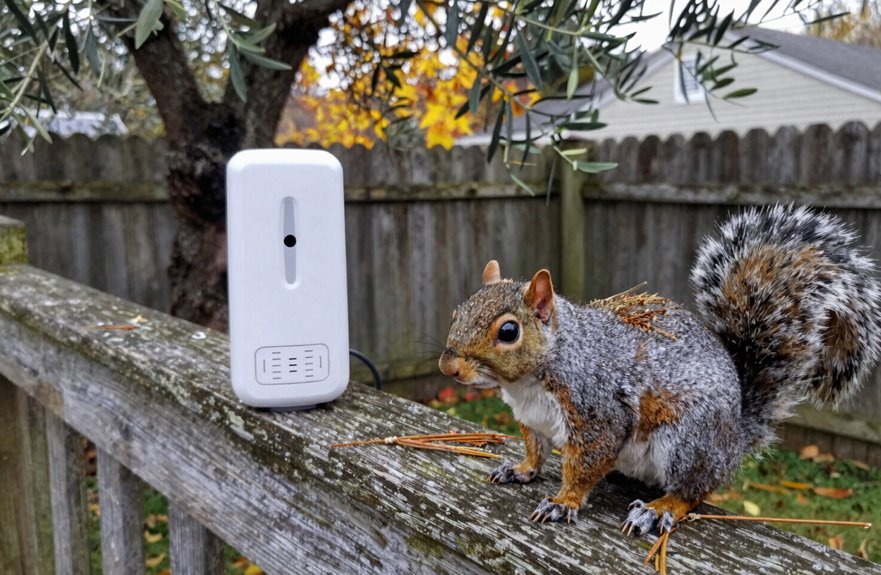
So, you’re staring at that ultrasonic squirrel repellent on Amazon, wondering if it’ll finally stop those fluffy-tailed acrobats from raiding your bird feeder. I’ve been there, and I wish I could hand you a simple yes or no. The truth about ultrasonic repellents and their effectiveness is messier than we’d like. These gadgets blast high-frequency noise, typically 20–50 kHz, right at the edge of squirrel hearing. The science backing them is thin. I’ve read studies and talked to neighbors, and results swing wildly. Some folks swear their yard’s squirrel-free. Others watch rodents party right beside the device. Your specific setup matters enormously. Yard size, walls, competing noise, and whether you’ve got a buffet of birdseed calling them back all factor into whether these devices will be effective in your situation.
Why Ultrasonic Squirrel Repellents Fail: The Science Explained
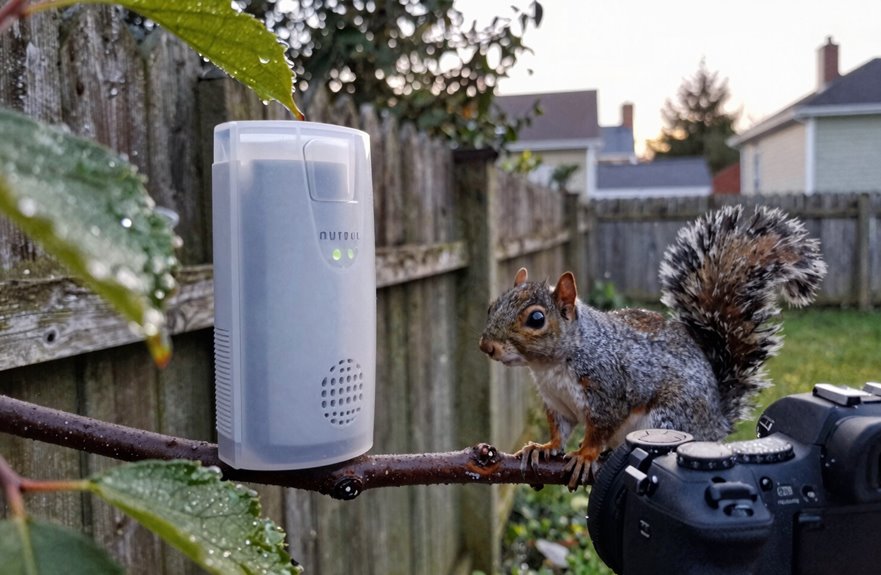
Why do these gadgets fizzle out so fast? I’ve looked into this, and the science doesn’t support their effectiveness. Ultrasonic devices blast sounds above 20 kHz, but many squirrels hear up to 40–50 kHz, so they’re not even that bothered. Studies show weak, inconsistent results, and these clever critters habituate fast. They basically learn to ignore the noise. Your attic’s insulation, walls, and background racket all muffle the signal. Plus, a hungry squirrel motivated by food or shelter won’t be deterred by some beeping.
| What Ultrasonic Devices Promise | What Actually Happens |
|---|---|
| Full coverage of your space | Obstacles block or absorb the sound waves |
| Immediate pest panic | Squirrels adapt within days, sometimes hours |
| Consistent long-term results | Effectiveness drops as animals habituate |
| Works regardless of conditions | Food motivation and barriers override the noise |
Can Ultrasonic Squirrel Repellents Harm Your Pets?
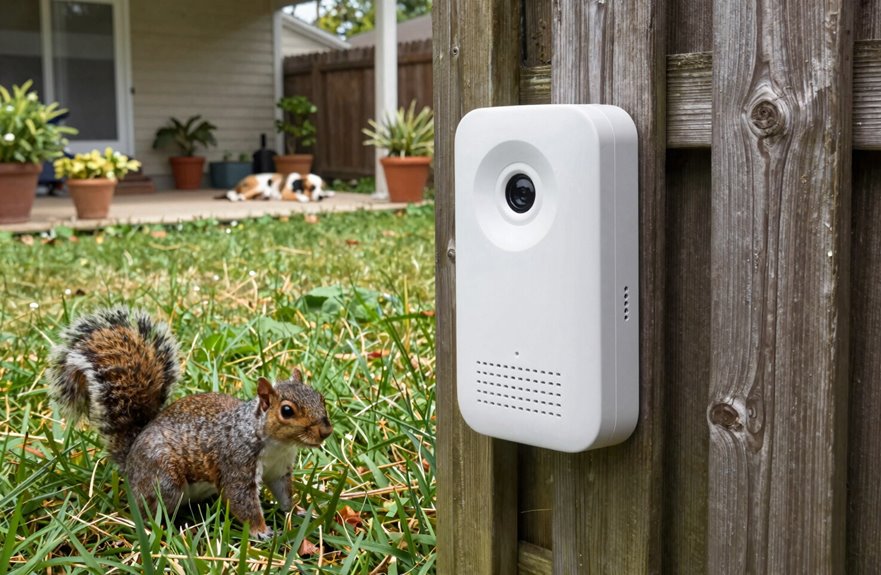
I’m guessing you’re wondering whether that high-pitched gadget meant for squirrels might stress out your dog or freak out your cat, and it’s a fair question since our pets hear significantly better than we do. Dogs pick up sounds up to about 45–65 kHz, well beyond our 20 kHz ceiling, while cats hit an impressive 64 kHz, so they’re definitely catching frequencies we miss entirely. Most commercial ultrasonic repellents sit in that 20–50 kHz range, which means your pets aren’t just hearing these devices; they’re experiencing them at full volume. This raises real concerns about prolonged exposure causing anxiety, disorientation, or even hearing damage in smaller animals like hamsters or guinea pigs. Those animals hear up to 100 kHz, making ultrasonic devices essentially an inescapable sensory assault.
Hearing Range Differences
How exactly do our pets experience these devices we hope will drive squirrels away? Ultrasonic repellents emit sounds above 20 kHz, which sits beyond human hearing but squarely within certain animals’ hearing range. Squirrels detect frequencies up to 40–50 kHz, so many devices target this upper threshold. Cats hear up to 64 kHz, while dogs reach 45–65 kHz depending on breed (Labs tend to skew lower). We’re essentially broadcasting into their world without realizing it. The overlap isn’t total; squirrels sit mid-range between us and our pets, but it’s substantial enough that pet owners should consider it. Distance, walls, and insulation matter too; that signal weakens fast.
Device Safety Concerns
So here’s what keeps me up at night, well, that and my cat’s 3 AM zoomies: I’ve got this little plastic disc blaring 45 kHz into my backyard, and I’m wondering what it’s actually doing to the animals I like.
The uncomfortable truth about ultrasonic repellents and safety concerns is that nobody’s really sure. These gadgets pump out frequencies up to 50 kHz, which squirrels hear (bummer for effectiveness), but your dog and cat catch some of that too. The FCC and FTC aren’t exactly rushing to certify these things as pet-safe. The motion-activated surprise party gets old fast for animals who can’t escape it.
Consider potential stress, behavior changes, and disrupted sleep, especially if you’ve parked one near Fluffy’s favorite napping spot. Use these as backup singers, not the main act, and keep your furry family in mind.
Squirrel Repellent Alternatives That Actually Work
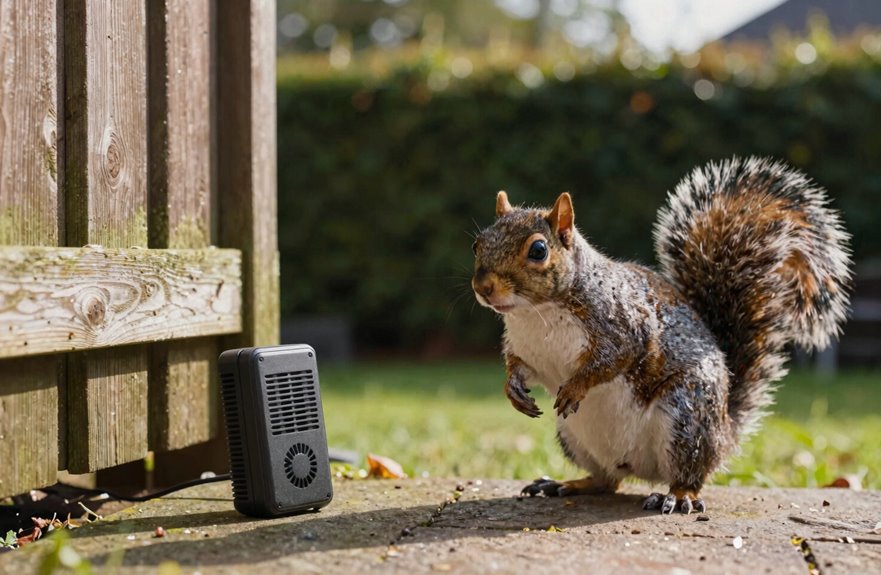
Where do we turn when those high-frequency gadgets fizzle out? Ultrasonic repellents simply aren’t reliable, so exclusion methods that physically seal entry points are the solution. Start with a quarter-inch hardware cloth (metal mesh, not fabric) over vents and gaps, because squirrels squeeze through holes as small as two inches. One-way exclusion doors work effectively: install them over active entry points, let the squirrels exit at dusk (their natural foraging time), then seal permanently once you’re sure they’re out. Combine this with trimming branches six to eight feet from your roofline, and you’ll create a squirrel-free zone that lasts. It requires more effort than plugging in a device, but the results are permanent and effective.
When to Skip Ultrasonic Devices and Call a Professional
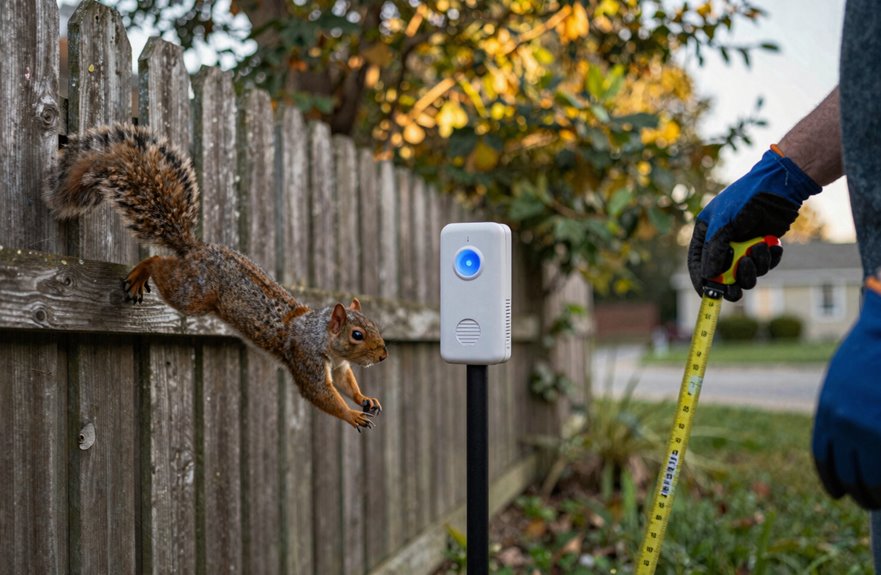
I know you’re probably hoping that little plug-in gadget will save the day, but ultrasonic devices have significant limitations. When you’re hearing scratching at 3 AM for the third week running, or you’ve spotted chew marks around your soffit vents (those rectangular openings under your roof overhang, typically 2–4 inches wide), it’s time to put down the ultrasonic remote and pick up the phone. These devices can’t seal a quarter-sized gap that a determined gray squirrel will gnaw into a golf ball-sized entry, and they won’t evict a mother who’s already nested in your insulation with pups.
A professional will handle the problem differently. They’ll arrive with a proper inspection ladder, a headlamp, and exclusion materials like 1/2-inch hardware cloth that actually keep them out.
Persistent Infestation Signs
Why keep hoping that little box will finally win when the squirrels are vividly running the show. Ultrasonic repellent persistence only gets you so far when the real problem runs deeper than sound waves can reach. When you’re hearing scratching at 3 AM for weeks, seeing chewed wires, or finding fresh nesting material daily, it’s time to face facts.
Here’s what tells you we’ve hit the limit:
- Hearing scampering overhead every single night (habituation’s already happened)
- Finding new droppings near your attic hatch despite the device running
- Noticing damage spreading to new areas of your home
- Smelling that unmistakable urine odor that lingers after rain
These signs mean exclusion beats emission every time. Physical barriers and sealing entry points will eliminate the infestation where sound-based deterrents cannot.
Structural Entry Points
Squirrels don’t need an engraved invitation, just a gap the width of a business card (about 1.5 inches) to turn your attic into their studio apartment. I’ve learned that structural entry points, such as damaged soffits, loose vents, or gnawed fascia boards, create highways that let pests bypass whatever ultrasonic gizmos you’ve plugged in. Repellents work best in open spaces, not when squirrels can hug walls and squeeze through gaps you can’t even see.
When you’re dealing with recurring attic traffic, it’s time to call a pro. They’ll install one-way doors (humane eviction tools), seal every entry with steel mesh or hardware cloth, and clean contaminated insulation. Without blocking those access routes, you’re just hosting an endless squirrel house party nobody asked for.
What Professional Squirrel Removal Actually Involves
The real deal with professional squirrel removal isn’t what most folks picture. It’s not some guy with a net chasing critters around your attic (though that would be quite a sight). It’s methodical, humane, and built on Exclusion, not gimmicks like Ultrasonic repellents, which we’ll get to later.
When you call the pros, here’s what actually happens:
- They install one-way doors (think of them as revolving exits, not entrances) so squirrels leave but can’t return
- They seal every gap, crack, and chew hole with steel mesh, caulk, or hardware cloth, usually ¼-inch or smaller
- They remove nests, babies included, and check for hidden damage to wiring or insulation
- They build you a custom prevention plan, because nobody wants round two
This approach is thorough, it’s lasting, and it actually solves the problem.
DIY vs. Pro Removal: Costs and Results Compared
So you’re standing in the hardware aisle, staring at that $30 ultrasonic gadget, and wondering if it’ll save you a call to the pros. The math isn’t as straightforward as the box claims.
| Approach | Upfront Cost | Long-Term Value |
|---|---|---|
| Single ultrasonic repellent | $30–$60 | Low—squirrels adapt, coverage gaps persist |
| Multiple units for whole-home | $150–$300 | Moderate—still no guarantee, batteries die |
| Professional exclusion | $300–$800 | High—entry points sealed, nests removed, warranty included |
Ultrasonic repellents promise easy fixes, but squirrels typically ignore them after two weeks. They’re resourceful enough to work around these devices. Professional exclusion costs more initially, yet you’re buying permanence; technicians find holes you’d miss, install one-way doors, and guarantee their work. Combining both approaches eliminates the guesswork and delivers measurable results: sealed entry points, removed nests, and a documented warranty.
How to Build a Squirrel Defense System That Lasts
Because I’ve tried the quick fixes and watched squirrels laugh at them, building a real defense means thinking like a rodent engineer with a grudge. Your defense system starts with exclusion: sealing every gap larger than 1.5 inches (3.8 cm) with galvanized steel mesh (not chicken wire; they’ll chew through that in an afternoon), copper flashing, or concrete patch. What actually works:
- Seal the perimeter: Check soffits, vents, and rooflines with a headlamp at dusk when they’re moving
- Install one-way doors: Let escapees out, but block re-entry. Check daily and remove after 48 hours
- Trim branches: Keep everything 6–8 feet (1.8–2.4 m) from your roof. Squirrels jump 10 feet horizontally
- Add physical barriers: Ridge guards, chimney caps, and chew-proof vent covers
For complex roofs or persistent invaders, hire professionals. They spot entry points you’d miss, and their work carries warranties. Exclusion beats gadgets.