
I’ve tackled enough attic invasions to know squirrels chew through standard repairs in about 48 hours. Their incisors grow 6 inches yearly, making them essentially nature’s chainsaws. Start by finding their entry points; gaps as small as 2.5 inches around soffits, siding joints, or pipe openings need attention. Confirm they’re out by stuffing paper strips and waiting 48 hours. Install a one-way door (similar to a doggy door that only swings outward) over the main hole. Seal everything with ¼-inch galvanized steel mesh once they’re gone. Trim branches 6–8 feet back and check your work each spring and fall.
Find Squirrel Entry Points in Your Attic
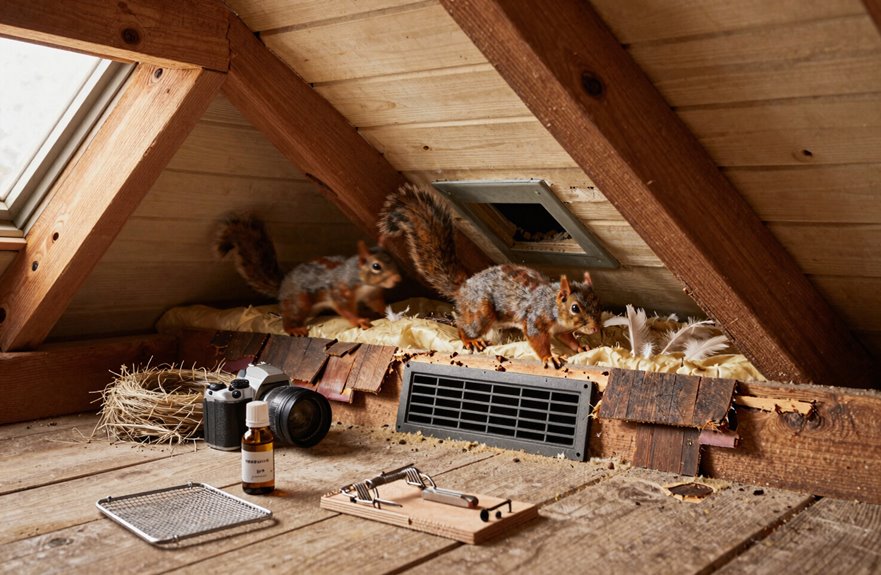
Before I can kick squirrels out for good, I’ve got to figure out how they’re getting in. They’re craftier than you’d think.
I start by inspecting my attic during daylight, turning off all lights and scanning for beams sneaking through. Those glowing streaks mark attic gaps I can’t ignore. Squirrels squeeze through holes as small as a fist (about 2.5 inches, if you’re measuring). I check where siding meets my house, gaps around pipes and cables, spots under eaves, and any wonky windows or doors. These entry points are basically welcome mats for wildlife.
For sealing, I’m grabbing fiber cement or sheet metal flashing. Squirrels can’t chew through this material. I also cap my chimney; it’s a highway I didn’t know I had open. Finally, I trim branches 6–8 feet from my roof and wrap nearby trunks with metal sheets. This prevents squirrels from jumping onto the roof.
Check If Squirrels Are Still Inside Before You Seal
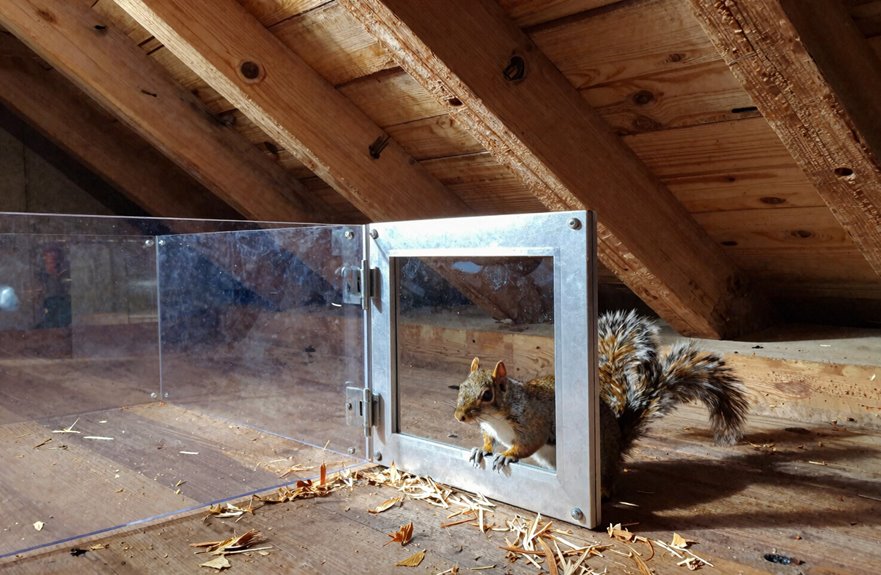
Sealing up my attic only to trap a frantic squirrel inside requires an occupancy check before any sealing confirmation. I inspect entry points from ten a.m. to two p.m., since squirrels prefer midday warmth. I plug gaps with loose paper (two-inch strips work great) and wait forty-eight hours. Displaced paper means they’re active. I shine a flashlight, checking corners for fresh debris or nesting material. If I spot babies (tiny, pink, helpless), I stop and call a wildlife center immediately. Never seal all exits until the attic is completely empty. This procedure prevents trapping animals inside.
| Test Method | Best Window | Sign |
|---|---|---|
| Paper plug | 10am-2pm | Stays put |
| Light sweep | Midday | No shadows |
| Debris scan | Morning | No new bits |
Use One-Way Doors to Evict Squirrels Safely
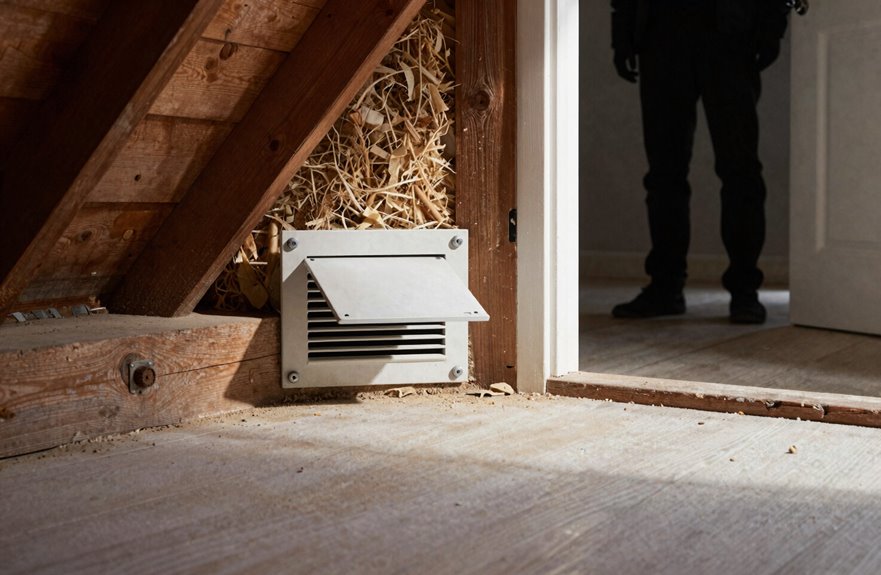
I’ve found one-way doors to be my go-to eviction tool, since they let squirrels push their way out through a hinged flap or wire mesh tunnel (think of it like a doggy door that only swings outward) but won’t budge when they try to return. You’ll want to install this right over their main entry hole, usually about 6×6 inches, though I’ve seen them as small as 3×3, during mid-morning when most squirrels are out foraging, not at dusk when they’re heading home to nest. Once it’s up, spend two to three days watching for chewing sounds or fresh droppings inside, then swap the door for ¼-inch galvanized steel mesh (hardware cloth, not chicken wire, which they’ll shred in an hour) screwed directly into the fascia board with 1-inch fender washers.
One-Way Door Function
How exactly do you get squirrels to leave without turning your attic into a wrestling ring? I use a one-way door, and it’s the gentlest eviction method I’ve found for attic remediation.
Here’s how it works: I install the device over a known entry point, usually a gap of 2–3 inches along soffits or roof vents, creating an exit-only passage. Squirrels push through mesh flaps or bristle-style doors to get out, but can’t pull them inward to return. Think of it as a revolving door that only spins one direction.
I always time this for late morning, when they’re typically foraging. The heavy-duty metal mesh (16-gauge, half-inch weave) withstands their gnawing. Once I’m certain everyone’s exited, usually 24–48 hours, I remove the door and seal permanently. No trapping, no harm, just a clean breakup with your furry tenants.
Installation Best Practices
Getting that one-way door mounted right makes the difference between a smooth eviction and a squirrel circus in your soffits.
Confirm no nests or pups remain before starting. Trapping babies inside turns attic eviction into a nightmare nobody wants. Pick metal flaps (16-gauge steel, ideally) since squirrels chew through plastic like it’s butter. Mount at known exits only, using ¼-inch mesh hardware cloth for backup reinforcement.
Follow this sequence: install during morning activity (around 10 AM works), wait for exit confirmation, then immediately move to sealing gaps with copper mesh and exterior-grade caulk. Sweep out droppings and nesting debris before final seal. Old scent invites new tenants. One-way doors work when you’re methodical about the process.
Timing and Monitoring
When exactly should you flip the switch on your eviction plan? Timing is critical. Before installing one-way doors, run occupancy testing first. Stuff openings with crumpled paper (printer paper works fine), then wait 1–2 days. If the paper’s disturbed, you’ve got active tenants.
Schedule one-way door installation for late morning, around 10 AM to 2 PM, when squirrels feel safest venturing out. The warmth draws them out naturally. Once installed, monitor the exit hole for 24–48 hours to confirm everyone’s departed.
Pair one-way doors with exterior deterrents for best results. Bright work lights (LED, 1500+ lumens) and a portable radio tuned to talk radio create an unwelcoming atmosphere. The combination of these elements causes squirrels to leave and prevents them from returning.
Seal Squirrel Holes With Metal Mesh
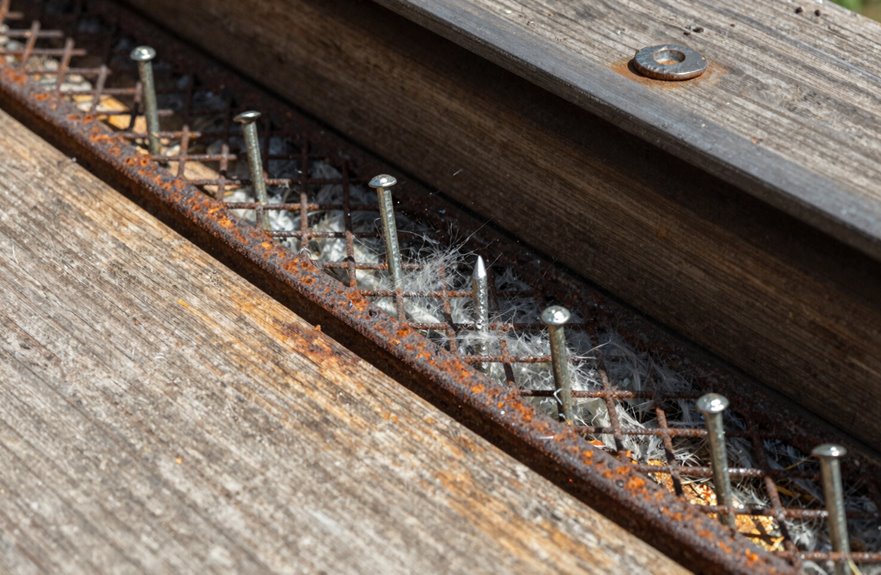
I’ve found that nothing beats heavy-duty metal mesh when you’re ready to shut squirrels out for good. Among attic deterrents, this approach creates a barrier they simply can’t chew through.
Here’s what works in my experience:
- Cut metal mesh pieces two inches larger than each hole (I use 19-gauge hardware cloth), then secure with screws and washers
- Layer metal flashing or fiber cement around pipes, cables, and siding gaps before adding mesh backing
- Confirm zero squirrels remain inside by listening for scratching at dawn and dusk, then seal immediately
- Reinspect every three months, tightening seams and patching new damage from weather or settling
Metal mesh lets you seal holes permanently without trapping anyone inside. The installation process is straightforward and effective.
Trim Branches to Block Squirrel Roof Access
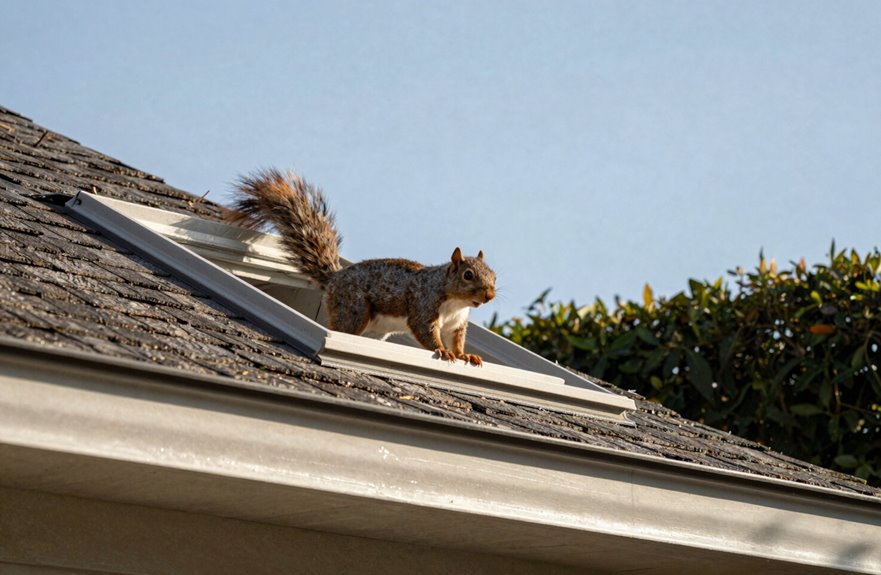
The most overlooked entry point for squirrels isn’t a hole at all. It’s the highway of branches stretching right to your roof. Effective branch trimming means cutting limbs back six to eight feet from your house, eliminating any overhang that touches eaves or shingles. This removes the on-ramp to your attic.
After trimming, wrap tree trunks with two-foot metal sheets (called baffles) to block jumping squirrels from climbing back up. Schedule this pruning before winter, when squirrels hunt for shelter, and pair it with sealing holes for layered attic deterrents. Regular inspections catch new growth fast. The combination of eliminating squirrel roof access and installing physical barriers provides your strongest defense against repeat invasions.
Remove Squirrel Nests With Babies Carefully
Blocking roof access is only half the battle, because I still need to deal with what’s already living up there. When I find squirrel nests with babies, I’m dealing with lives, not just a nuisance. Humane removal requires waiting, watching, and sometimes calling for backup.
Blocking roof access is only half the battle—humane removal means waiting, watching, and sometimes calling for backup when babies are involved.
Here’s what I’ve figured out through trial and error:
- I never seal entry points until I’m 100% sure no babies remain inside, since trapping dependent young creates a serious problem.
- When I spot babies in a nest, I contact my local wildlife center rather than attempting DIY extraction.
- I wait several days of minimal activity to confirm the maternity group has actually left before disturbing anything.
- I avoid handling the mother directly, since she’ll get aggressive and try breaking back in.
Once everyone’s safely out, I seal everything tight.
Inspect Attic Seals Seasonally to Stop Reinvasion
Squirrel-proofing my attic requires ongoing maintenance that saves money and prevents repeated infestations. I inspect my attic seals seasonally in spring and fall to stop reinvasion before it starts. Weather shifts crack wood, trees grow closer, and new gaps appear where light seeps through siding joints, pipe openings, or under eaves.
I check chimneys since caps are essential, trim branches to six feet from my house, and wrap trunks with two-foot metal guards. Before sealing anything, I stuff paper plugs in holes and wait 48 hours. No movement means I’m clear to proceed. For repairs, I use heavy-duty metal mesh or fiber cement, cutting pieces larger than openings so they can’t chew through.
These squirrel deterrents prevent costly damage and repeated invasions when applied consistently.