I keep rabbits out by combining physical barriers with smart deterrent rotation. My go-to fence uses 1-inch mesh chicken wire, 18-24 inches tall, with the bottom 6 inches buried in an L-shaped trench to stop digging. Hardware cloth works too, but costs more.
For raised beds, I staple an 8-inch skirt to the ground and add cages, 12 inches wide and 12-18 inches tall, over vulnerable plants. I layer scent deterrents like fox urine granules (¼ cup per plant, refreshed weekly) and edge plantings of lavender, rosemary, and marigolds to create a smell barrier rabbits won’t cross. Motion sprinklers and visual scares help, but I move them every 7-10 days because rabbits habituate fast. I also clear debris and tall weeds bi-weekly; nesting sites make rabbits stick around. Skip ultrasonic devices and mothballs; they’re useless or illegal. The specifics on digging trenches, cage construction, and deterrent timing follow.
Build a Rabbit-Proof Fence: Height, Mesh, and Materials
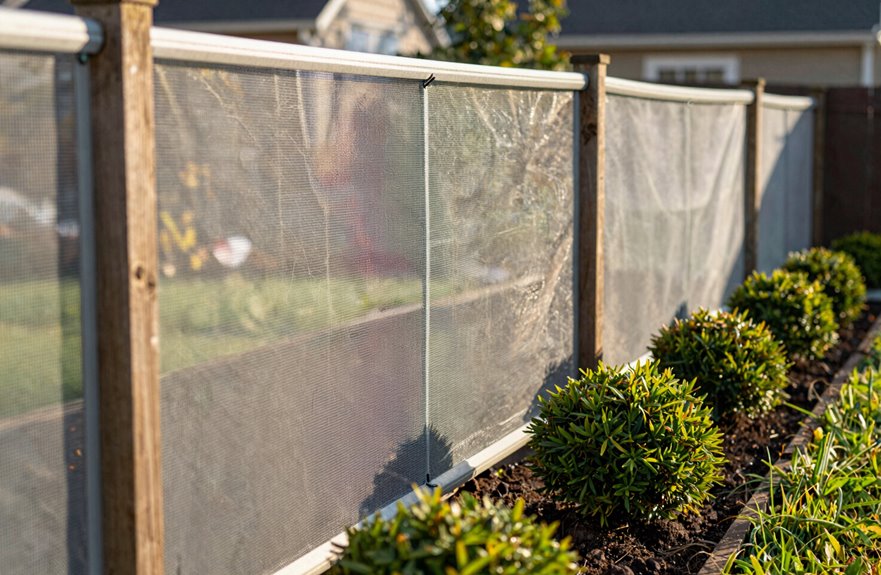
When I first realized rabbits had turned my lettuce into an all-you-can-eat buffet, fencing became essential. I’m building a rabbit-proof fence right alongside you, and construction is straightforward.
Start with 1-inch mesh chicken wire (or smaller, since rabbits squeeze through larger openings). Aim for 18 to 24 inches high, double-layering if desired. Skip the burying technique for now; that’s covered in the next section.
For raised beds, staple an 8-inch skirt directly to the ground surface and pair it with hardware cloth cages around prized plants. Use dimensions of 12 inches wide by 12 to 18 inches tall. These fortresses block diggers and climbers simultaneously.
Inspect weekly. Rabbits test fencing persistently. Patch holes immediately and upgrade materials where they’ve chewed through.
Bury the Wire 6 Inches Deep to Stop Digging
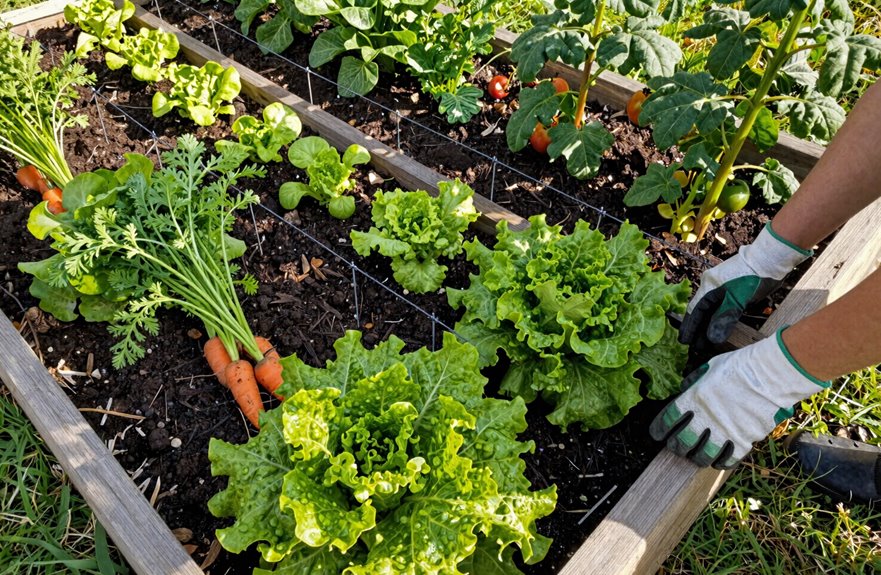
Why stop at keeping rabbits out above ground when they’re basically furry excavators with a lettuce addiction? I’ve learned the hard way that a rabbit barrier needs to go deep, or you’ll find tunnels where your carrots used to be.
Here’s how I tackle digging prevention:
- Dig a trench six inches deep along your fence line, measuring precisely because rabbits are patient.
- Lay 1-inch mesh chicken wire into that trench, bending it outward in an L-shape for extra security.
- Backfill with soil, pack it firm, and patrol monthly for gaps or chew marks.
That buried wire creates a physical roadblock they can’t breach. I pair this underground defense with my above-ground fencing for total coverage. Once you block their digging routes, rabbits will no longer be able to access your garden beds.
Cage Individual Plants When Fencing Isn’t Possible
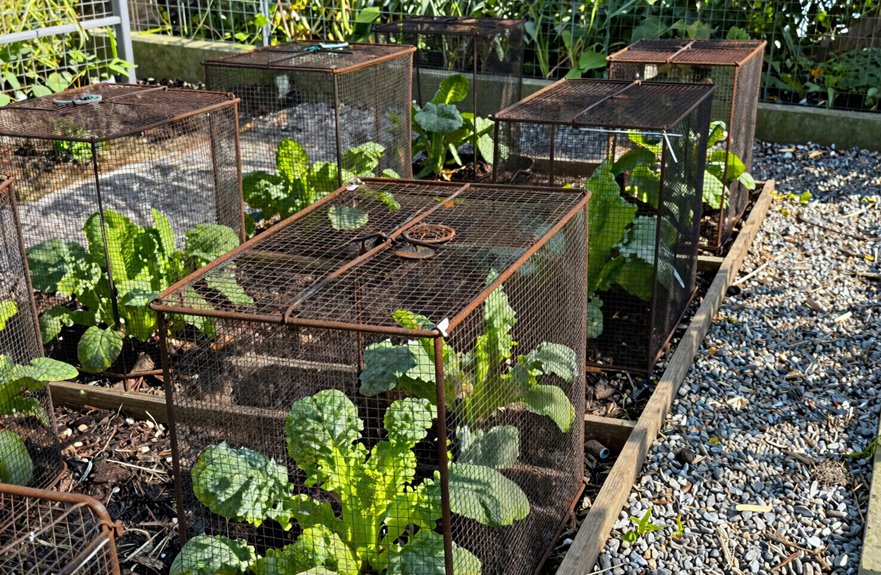
Sometimes you’ve got a garden spot where full fencing just isn’t practical. Maybe it’s a rental, a shared bed, or you’re working around existing hardscaping. I build cages from hardware cloth with 1/2-inch squares (nothing larger, or those clever rabbits squeeze through), cutting cylinders about 12-18 inches wide and 12 inches tall. I top them with jagged wire to block overhead entry while keeping airflow and sun. For extra insurance, I’ll bury a perimeter barrier of the same hardware cloth six inches down around each cage, stopping diggers cold. I leave cages on vulnerable perennials through spring, protecting fresh growth when rabbits are hungriest. Check regularly for damage, patch holes fast, and you’ll stop rabbit damage without the commitment of full fencing.
Layer Defenses for Heavy Rabbit Pressure
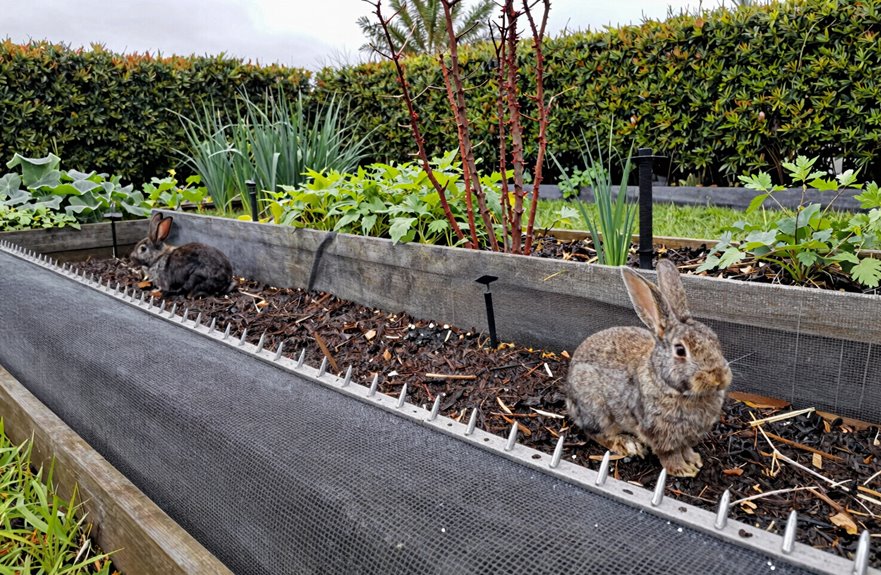
What do you do when one fence just isn’t cutting it? You layer up, because multiple barriers create real protection against determined rabbits.
Here’s my three-tier approach:
- Start with a solid fence at least 2 feet high (hardware cloth with 1-inch mesh works best), and bury that bottom 8 inches to stop burrowing in its tracks.
- Add physical cages over vulnerable plants, especially for raised beds where you’ll want 3-foot barriers plus buried skirts.
- Rotate your deterrents using motion sprinklers, visual scares, and predator urine so rabbits never get comfortable.
Don’t forget rabbit-resistant perimeter plantings (lavender, rosemary, marigolds) and regular barrier checks. Multiple defense layers significantly reduce rabbit damage to your garden.
Apply Smell Repellents That Rabbits Actually Avoid
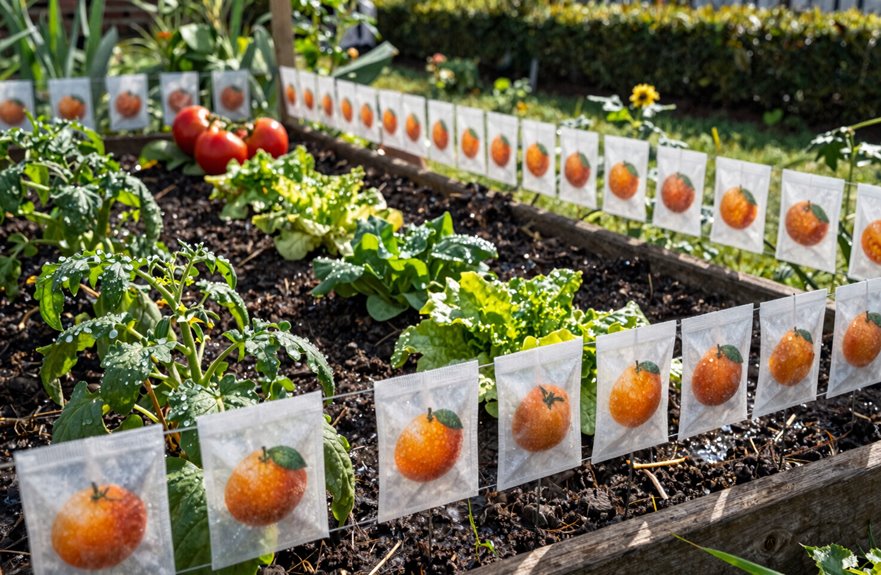
I’ve found that rabbits won’t touch plants that smell like danger, so I’ll start with predator scents (fox urine granules, about 1/4 cup per plant, or liquid sprays applied every 7–10 days) and sharp-tasting deterrents like blood meal (nitrogen-rich, so don’t overdo it) or a homemade garlic-vinegar mix (two tablespoons hot sauce, one cup water, shaken hard). These aren’t foolproof. Rain washes them off, and some rabbits are stubborn. However, they’re cheap, easy to reapply, and worth trying before you build a fortress of fencing.
Predator Scent Options
- Fox urine – I sprinkle this around my beds (about 1 tablespoon per 10 square feet), refreshing after heavy rain.
- Dog or cat hair – I stuff it into mesh bags, hanging them 2-3 feet apart along fence lines.
- Blood meal – I dust this nitrogen-rich powder directly on soil, about 1 cup per plant, which rabbits associate with death.
These deterrents need reapplication every 2-3 weeks, or immediately after rain. Rotating scents prevents habituation, keeping your garden rabbit-free without harsh chemicals.
Strong-Taste Deterrents
Why stop at predator smells when you can make your plants taste absolutely foul? Strong-taste deterrents work effectively to protect gardens from rabbit damage.
Mix hot peppers, such as cayenne or Tabasco, with water and a squirt of Castile soap. The soap helps the mixture adhere to leaves. Spray directly on foliage. Rabbits dislike the burn and will seek food elsewhere. Blood meal, sprinkled around beds, also deters rabbits, though it produces a strong odor.
These repellents require reapplication after rain, so keep a spray bottle handy. Rotate your deterrents every few weeks. Rabbits become accustomed to repeated smells, so varying your approach prevents habituation. Garlic powder and chile mixtures are effective alternatives; anything that creates an unpleasant taste or smell will discourage grazing.
Your plants remain protected through consistent application and rotation of these taste-based deterrents.
Edge Your Garden With Rabbit-Resistant Plants
I like to think of my garden’s edge as a bouncer at a club, and I’m about to show you which plants get the job done. You’ll want strong-scent options like lavender (Lavandula angustifolia, for you Latin lovers) and marigolds ringing your beds at roughly 12-inch spacing, plus tough herbs such as rosemary and sage that rabbits genuinely despise. Parsley defies logic as a sacrifice planting, and mint spreads aggressively, so you’ll want it in containers rather than loose soil.
Strong-Scent Options
Where should you start when you want rabbits to think twice about munching your lettuce? Strong-scent deterrents placed strategically through perimeter planting create an invisible fence those fuzzy burglars won’t cross.
Plant these around your garden edges:
- Mint and lemon balm – These spread aggressively, so contain them in pots. Their punchy aroma confuses rabbit noses completely.
- Lavender and Russian sage – Lavender is proven effective as a rabbit deterrent, and the purple haze offers visual appeal as well.
- Marigolds and spicy globe basil – Hot peppers join this crew too, because capsaicin irritates bunny whiskers.
Parsley works surprisingly well as edging despite being edible. Plant it thick, like a green moat. Your vegetable beds stay pristine while you benefit from the aroma during garden work.
Border Plant Choices
I plant lavender, sage, and rosemary along my borders because the woody stems provide structural support. Marigolds go around the perimeter to reduce pest visits. Basil, mint, and lemon balm create an aromatic buffer zone. For vegetable beds, I edge with parsley, which shields tender crops effectively. My most effective combination uses onions, garlic, and catmint together. This layered approach produces consistent results across multiple growing seasons.
Edging Effectiveness Notes
Why does edging with the right plants actually work better than you’d expect? Perimeter protection isn’t just about blocking rabbits; it’s about confusing their noses. Rabbits rely heavily on scent to find dinner, so when you layer strong smells, they can’t sniff out your tomatoes.
Here’s what I’ve learned about effective edging plants:
- Marigolds – Plant these 6-12 inches apart around borders; their pungent roots and blooms create a scent barrier rabbits avoid. They also provide visual appeal.
- Onions and garlic – Interplant these with vegetables; the sulfur compounds mask the smell of tender greens you’re protecting.
- Lavender and catmint – These drought-tough perennials form dense, fragrant hedges that rabbits detest. You’ll also enjoy the blooms.
Mix these rabbit deterrents strategically, and you’ll successfully outsmart bunnies without fences.
Clear Debris and Tall Weeds to Remove Nesting Sites
Because rabbits seek overgrown corners to raise their families, I strip them of that luxury entirely. I keep my garden free of overgrown grasses and dense vegetation, since these spots are prime nesting sites for female rabbits in the neighborhood. Regular debris removal, including leaf piles, brush heaps, and forgotten wood stacks behind the shed, eliminates suitable real estate for raising baby bunnies.
| Task | Frequency | Tools Needed |
|---|---|---|
| Mow grassy patches | Weekly | Lawn mower or string trimmer |
| Clear perimeter weeds | Bi-weekly | Loppers, rake, wheelbarrow |
| Monitor dense areas | Daily visual check | Flashlight (for dusk spotting) |
I tackle tall weeds around my perimeter with loppers, dragging cuttings straight to compost. Long grass patches do not persist here. If I spot an active nest, I back off immediately and call animal control. Relocation is preferable to disruption. This approach protects both the garden and local rabbit populations.
Rotate Scare Tactics Before Rabbits Catch On
How quickly do rabbits catch on to a trick? Faster than you’d think. I’ve watched them saunter past my motion-activated sprinkler like it’s lawn furniture after just three days. That’s habituation at work. Your brainy bunnies adapt, and suddenly your clever deterrents become garden decorations.
Keep them guessing with these tactics:
- Move devices weekly. Shift that sprinkler from the tomatoes to the beans, or hang fresh wind chimes (the clanky aluminum kind) where last week’s foil strips fluttered.
- Swap visual scare types. Alternate between mylar balloons, predator decoys, and old CDs spinning on fishing line every 10–14 days.
- Refresh after rain. Wet ground kills the surprise factor, so reposition everything post-storm.
Pair these rotating tactics with solid fencing at 18 inches minimum, and you’ll outsmart their pattern-seeking brains. No single trick wins. Adaptability does.
Skip These Methods That Waste Your Time
I’ve tried enough rabbit “solutions” to fill a compost bin twice over. Some of them barely worked better than wishful thinking. Skip the ultrasonic noise makers (rabbits don’t care), mothballs (illegal and toxic), and human hair (they’ll nest in it). I’ve watched rabbits hop right over low fences that weren’t buried underground. If you’re building a fence, go 2 feet minimum with 6 inches buried, or you’re just installing a hurdle. Repellents like pepper sprays and fox urine require reapplication after every rain until your hands smell permanently spicy. Deterrents like pinwheels work for maybe a week before rabbits habituate. Save your money and energy for what actually works: proper barriers, strategic plant protection, and rotating scare tactics before they catch on.