

I learned that rabbit care starts with an eight- to ten-year commitment (they’re not starter pets, despite the Easter hype), so you’ll need a 4-by-2-foot indoor enclosure with solid flooring. Wire mesh causes sore hocks, which is vet-speak for painful foot sores.
Unlimited timothy hay keeps their digestive systems moving, plus about one cup of greens per two pounds of body weight. Skip the sugary treats; your rabbit’s sweet tooth will betray them.
Book a vet visit within two weeks for spay or neuter planning. Additional care information is available if you want to learn more.
Decide If a Pet Rabbit Fits Your Lifestyle
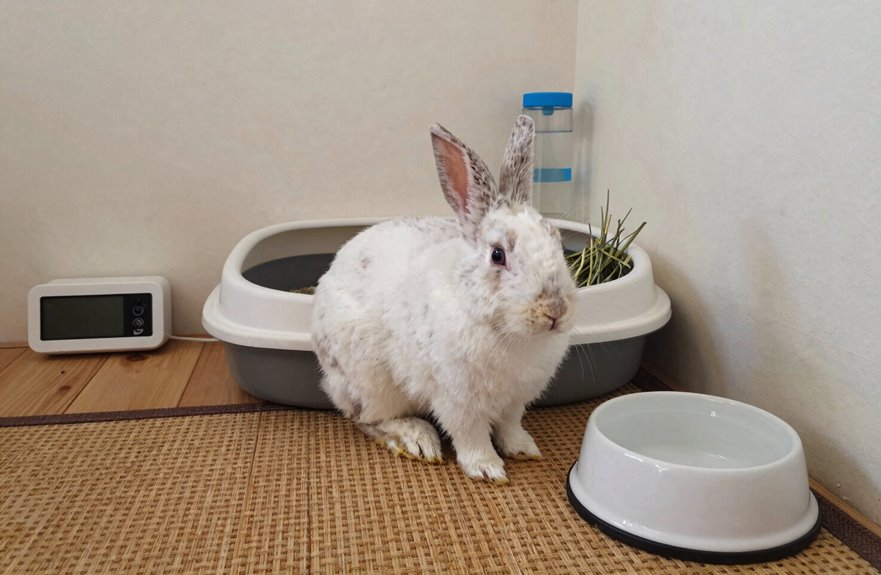
Why do so many of us fall for those twitching noses and oversized ears without thinking it through? A long-term commitment means eight to ten years, minimum, of indoor housing within a completely predator-free environment. You’ll need an enclosure size of at least four by two feet, soft flooring (never wire mesh), plus daily exercise outside the cage under your direct supervision. Their crepuscular activity peaks at dawn and dusk, so mental stimulation during those hours keeps them happy. Consider bonding or housing in pairs, but always use neutral territory with slow, supervised introductions. If this daily rhythm matches your lifestyle, you can confidently move forward as a rabbit owner.
Handle Your New Rabbit Gently (First Week Rules)
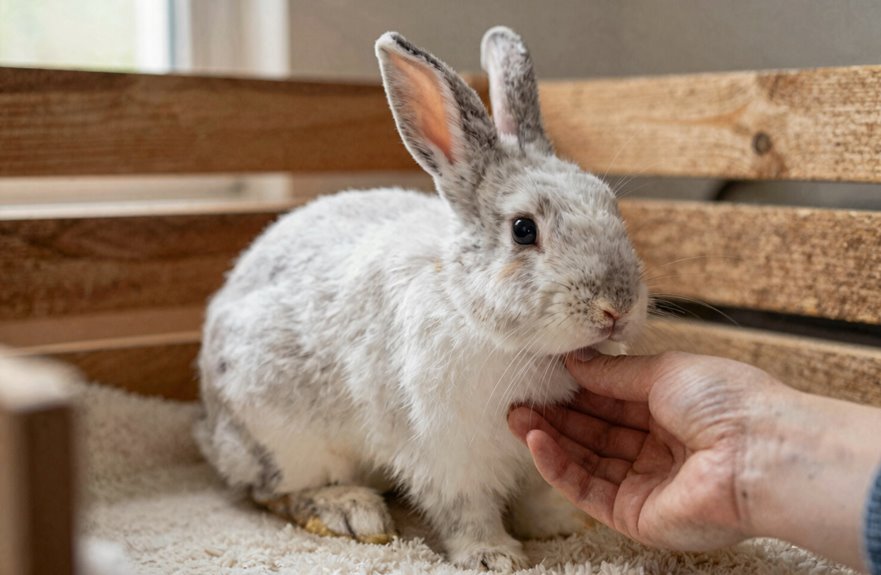
Since you’ve already made the big decision and set up that predator-free enclosure, you’re likely enthusiastic to scoop up your new bunny and shower them with affection. During the first week, you’ll need to acclimate your rabbit slowly, and that means you avoid picking them up entirely.
Instead, supervise closely while they explore, and keep interactions at ground level. Sit on the floor, speak softly, and let them come to you. When you’re ready for gentle handling later, usually week two, always support hindquarters with one hand under the chest and the other cradling the rear to protect their delicate spine. Avoid lifting by ears or flipping them on their back, as this is terrifying for prey animals.
Build trust through calm sessions lasting five to ten minutes daily. Bonding gradually with safe interaction allows your rabbit to develop comfort with your presence and reduces stress-related health issues.
Set Up Your Pet Rabbit’s Indoor Housing
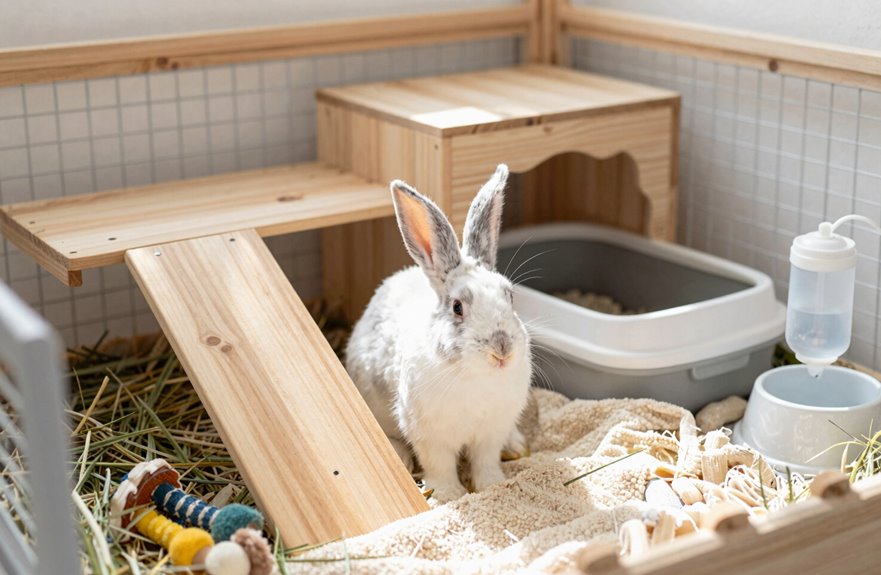
Now that your rabbit’s getting used to you (and you’re getting used to not scooping them up like a stuffed animal), it’s time to build them a proper home base. Indoor housing is safer, healthier, and lets you bond properly.
For your rabbit enclosure, aim for at least 4 feet by 2 feet by 4 feet (12 square feet minimum, though bigger is always better). Solid flooring protects those delicate hocks; wire bottoms cause sores, so skip them. Exercise pens (x-pens) or large dog crates with the door removed work well when placed in quiet corners with good ventilation.
Keep temperature between 60–70°F. Rabbits overheat fast above 75°F, so watch for heatstroke signs. Add a litter box in one corner and commit to daily cleaning of soiled spots. Weekly, scrub everything with diluted bleach (1:10) and rinse thoroughly.
Rabbit-proofing is essential when they roam. Cover cords and block tight spaces. Your bunny needs exercise space outside their enclosure too; think of it as their living room plus bedroom setup.
Feed 80% Hay and Fresh Greens Daily
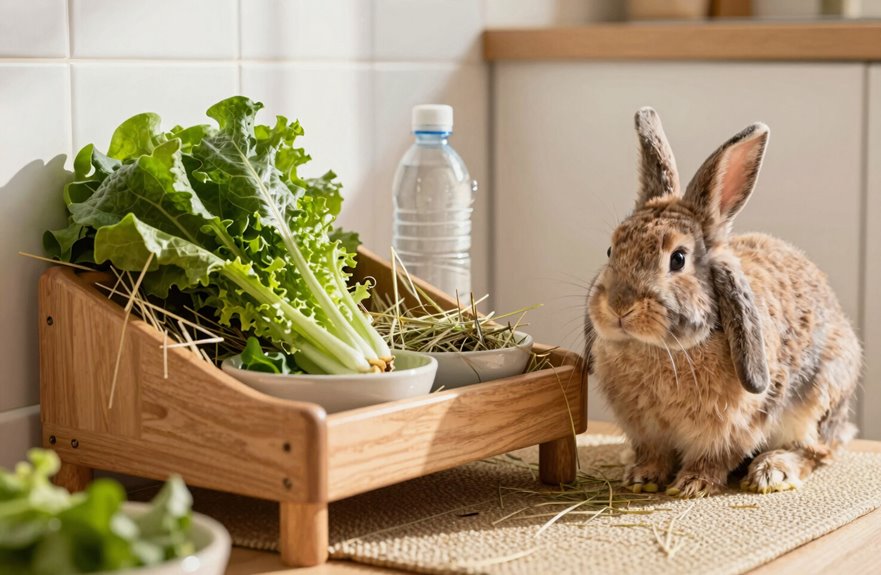
I’ll start with hay, lots of it, since that’s the backbone of what your rabbit needs every single day. Provide unlimited timothy or orchard grass, never alfalfa for adults due to excessive calcium content. Fresh greens come next, roughly a cup per two pounds of bunny weight with leafy stuff like romaine or cilantro making up three-quarters of that veggie mix. Introduce greens slowly to prevent digestive upset. Pellets should be treated as a side dish with small, measured amounts based on weight. Skip sugary treats as they damage both teeth and digestive health.
Hay as Foundation
Why does something as simple as dried grass matter so much? Because hay isn’t just filler; it’s the foundation of your rabbit diet. I learned this the hard way with my first bunny, Bean, who developed serious digestive issues when I skimped on quality grass hay.
Timothy hay (or meadow, oat, orchard, basically any grass hay except alfalfa for adults) provides essential fiber for digestive health and creates natural dental wear from all that chewing. Free-choice hay functions as an all-day buffet; your rabbit needs constant access, not just morning and evening portions.
I keep my hay rack stuffed, supplement with measured leafy greens, and limit pellets to prevent obesity. Fresh water completes the picture. No fancy vitamin drops are needed unless your vet recommends otherwise. When the hay component of the diet is correct, the other nutritional elements become easier to manage properly.
Greens and Portions
So how do you round out that hay-heavy diet without turning your rabbit into a chunky treat monster? Greens fill that gap beautifully, and getting the portion right keeps your adult rabbit thriving alongside their free-choice hay.
Here’s my daily intake formula that works:
- Weigh your rabbit — you’ll need roughly 1 cup of greens per 2 pounds of body weight
- Go heavy on leafy greens — about 75% of that portion should be romaine, cilantro, or parsley
- Introduce new greens slowly — this prevents digestive upset, which occurs when rabbits consume unfamiliar vegetation too quickly
Pellets and Treats
Hay and greens are doing the hard work in your rabbit’s diet, but let’s talk about where pellets fit in without letting them steal the show. I think of pellets as a vitamin supplement, not the main course. About ¼ cup per 5 pounds of body weight daily keeps things balanced. You’ll want high-quality pellets, specifically hay-based pellets (look for timothy hay as the first ingredient), since those support digestion without the sugar crash of junky brands. Obesity prevention starts with portion control, so measure carefully rather than free-pouring. Unlimited hay stays the foundation, daily greens fill the gaps, and limited pellets round things out. Skip alfalfa for adults (too rich), and keep treats tiny. Think raisin-sized fruit bits. Your bunny’s waistline and veterinary costs depend on these portions.
Litter Train Before You Let Them Roam
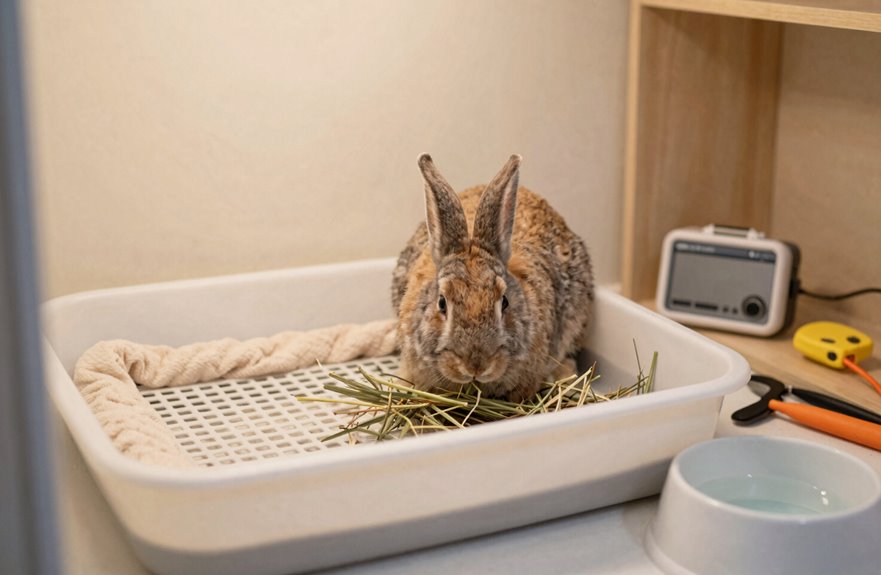
Before letting your rabbit explore the living room, ensure she knows where the bathroom is. Rabbits are clean animals, but they don’t come pre-programmed with your floor plan in mind. Start her litter training inside her enclosure using paper-based litter in a corner litter box to match her natural elimination habits.
Build her confidence with these steps:
- Start small: One litter box in her enclosure, then add boxes as training progression allows more space.
- Watch and adapt: Track where she goes and place litter boxes there. Rabbits pick corners, so work with this instinct.
- Keep it clean: Daily spot-cleaning and weekly deep cleans reinforce the habit.
Once she’s reliable in her enclosure, grant out-of-enclosure time with portable litter boxes placed in her preferred areas. This approach requires patience but produces consistent results.
Brush Weekly, Trim Nails, and Find a Vet Within Two Weeks
Now that your rabbit’s got the bathroom situation figured out, it’s time to tackle the grooming and healthcare stuff that keeps her feeling good. Brush long-haired rabbits daily (short-haired weekly, more when molting), using a slicker brush to stop mats and fur block. For nails, trim monthly with cat clippers, just the sharp tip (avoid the pink quick), and stop if she flinches. Your new rabbit needs acclimation first; allow 3–4 days of quiet time without picking up before positive handling builds trust. Book that veterinary visit within two weeks. This health check covers prevention, spay/neuter planning, and establishes your vet contact. Rabbit care means watching for lethargy or appetite changes between exams.