These 14 flower bed ideas for front of house run from a freehand hose-and-spade curve to a tiered retaining wall that needs drainage pipe and gravel backfill.
Flat lawn with a Saturday to spare favors shaped beds and cottage layering, while a grade change or formal facade pushes you toward stone walls and symmetrical geometry.
A crisp edge between lawn and bed shows up in both the modest and the ambitious versions on this list, and it is worth getting right before you plant anything.
1. Mixed Color Beds Lining a Walkway
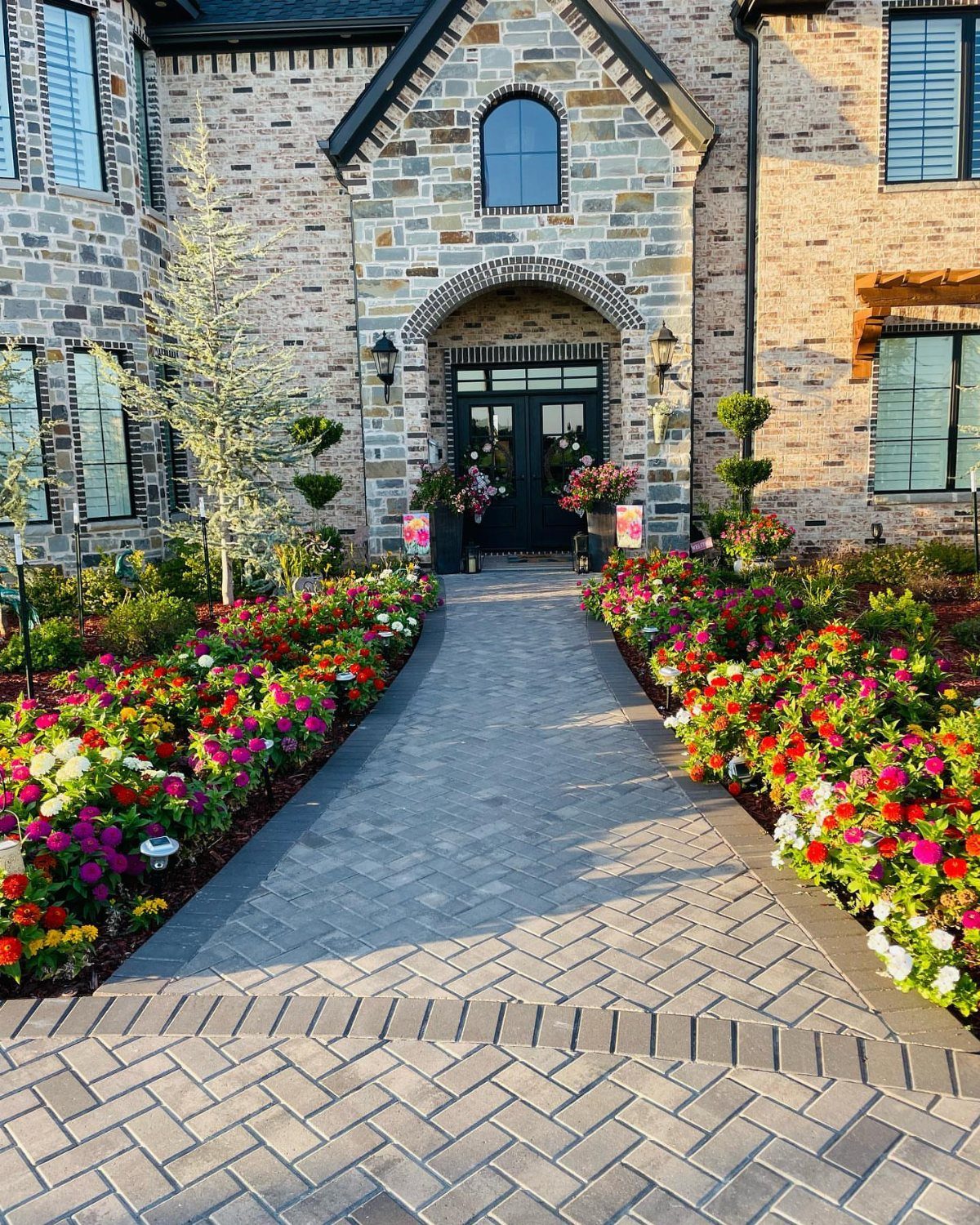
A herringbone stone walkway flanked by dense mixed-color beds turns the approach to your door into the main event.
I like this best when the bed width stays generous, so the color reads from the curb rather than looking like a thin ribbon.
Check your sun pattern before buying plants.
Full exposure limits you to heat-tolerant annuals such as zinnias, marigolds, or purple fountain grass. If your walkway faces north or sits under mature trees, swap to impatiens, coleus, or hostas.
The edge matters here.
A crisp line between lawn and bed, cut clean with a half-moon edger, keeps the informal planting from looking messy. I skip plastic edging; it heaves in freeze-thaw cycles and shows within 2 seasons.
2. Layered Cottage Garden

The look works on any scale, even a narrow strip along a porch.
Layering is what separates this from a standard flower bed. Tall climbers or shrub roses at the back, mounding perennials such as geraniums at mid-height, and something low at the front, maybe catmint or creeping thyme.
Pink roses threading through fence pickets take a climber such as ‘New Dawn’ or ‘Zephirine Drouhin’ on a fence with horizontal wires or a trellis cap.
I would not attempt this without checking the rose’s disease resistance for my area.
Blackspot turns a lush wall into bare canes by August in humid zones. Knock Out series roses trade some romance for vastly less spraying.
Deadheading through summer keeps the repeat bloomers going, and a hard cutback in late winter resets the shape.
3. Evergreen Shrubs with Seasonal Flowers

Evergreen shrubs anchor a bed through the months when annuals are just mud and memory. Compact junipers or arborvitae work as the backbone, with white salvia, impatiens, and coleus rotating through the foreground by season.
The black mulch in the bed is a choice I understand and mostly avoid.
It looks sharp for a few weeks, then fades to gray and shows every leaf. Shredded hardwood bark breaks down slower and needs less frequent topping up.
Check mature sizes before planting those evergreens.
A dwarf Alberta spruce labeled "slow growing" still gets tall in a decade and will swallow your annual display. I leave breathing room between a shrub’s center and the bed edge, or the maintenance access disappears.
For the seasonal layer, I buy small annuals rather than gallon pots. They establish fast, cost far less, and let me change the palette every spring without guilt.
4. Curved Lawn Bed

A curved bed edge breaks a rectangular lawn into softer geometry. Stone edging, white river rock mulch in places, and rounded shrubs echo the curve rhythm.
Cutting the curve freehand with a garden hose as your guide works for modest beds.
For anything longer than a short run, I rent a bed edger or the line wanders. The radius should stay consistent; a curve that tightens and loosens reads as hesitant.
White river rock shows every leaf and weed seed.
I use it only where I want zero maintenance, such as around a specimen shrub, and even then I lay landscape fabric underneath. Mixed into a planted bed, it becomes a chore.
The round green shrubs appear to be boxwood or Korean lilac. Both take shearing, though I prefer the lilac for its brief bloom and fewer pest problems.
5. Color-Blocked Flower Beds

Color-blocking means planting distinct zones of a single hue rather than mixing colors throughout. Curved stripes of pink impatiens, orange flowers, and green coleus run like contour lines across the bed.
This takes more planning than it looks. I sketch the bed to scale and assign each block a measured width, so the color reads as a band rather than a spotty drift.
The blocks need enough mass to register from a distance; a wide strip of one color is about the minimum.
Terracotta planters repeat the warm tones and give vertical punctuation.
If your house siding is brick or warm stone, that resonance helps. Against gray or blue siding, I would switch to glazed ceramic in cobalt or white.
Buy extra plants. A color block with gaps looks like failure, and garden centers sell out of popular shades by Memorial Day.
6. Symmetrical Flower Beds
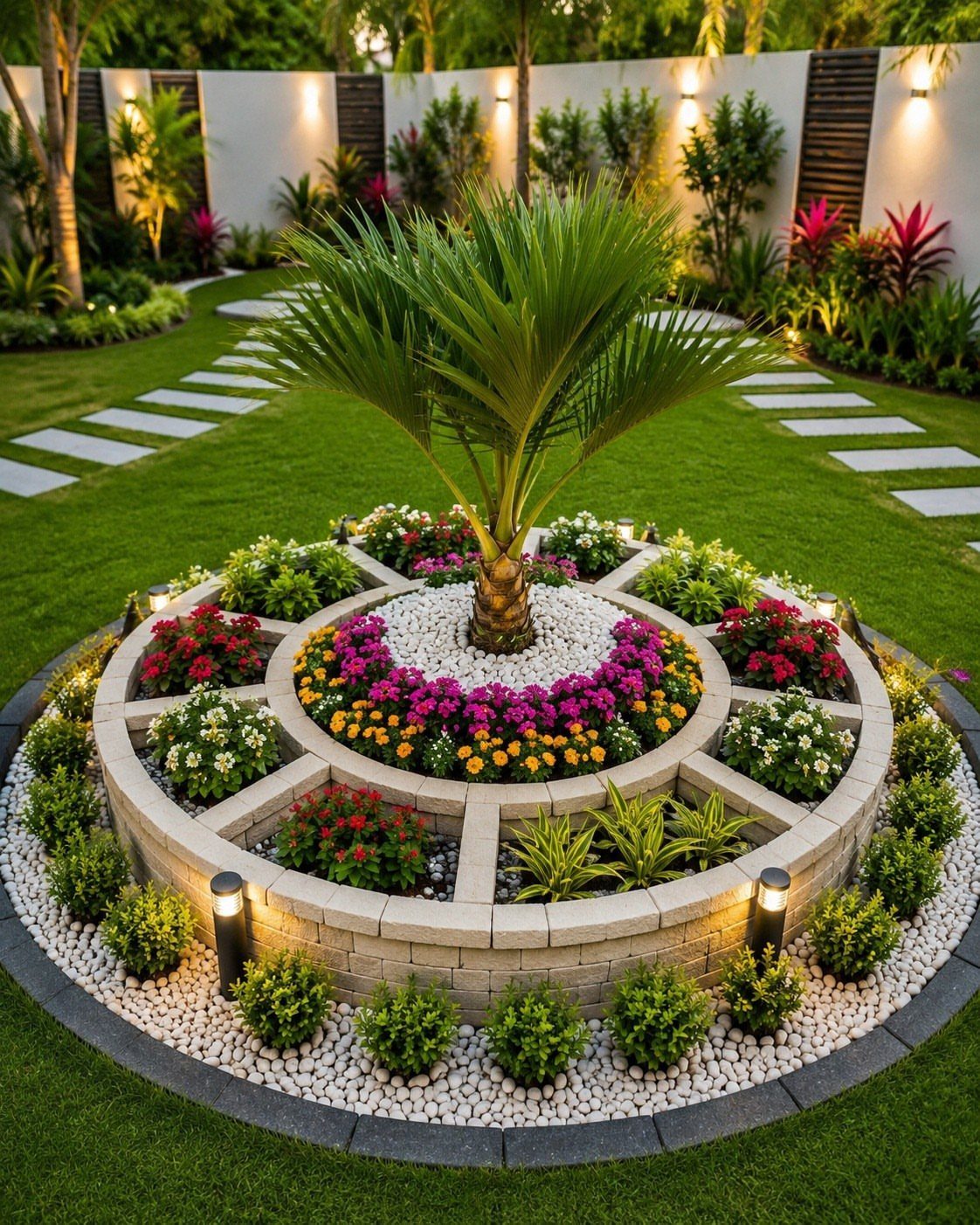
Symmetrical beds frame an entry or anchor a lawn with mirrored planting. A circular tiered planter carries the idea to its most formal extreme, with radial compartments repeating around a central palm.
I would build this only where the architecture supports it. A ranch or Craftsman house looks absurd with this level of geometry; it wants a center-hall Colonial, a modern facade, or a courtyard space where the planter sits as sculpture.
Stone tiers need drainage at every level or the lower compartments stay sodden. I specify coarse gravel laid deep, with a fabric liner between soil and stone, and a weep hole drilled through the retaining wall at intervals.
The central palm suggests a zone 9 or warmer climate, or a seasonal swap. In my area I would use a hardy banana or a tall grass such as miscanthus for the same vertical thrust without the winter kill.
Small fixtures extend the effect past dusk. Low-voltage LED spots at the base, aimed up through the tiers, run cheap for a basic kit and install in an afternoon.
7. Tiered Beds with Retaining Walls
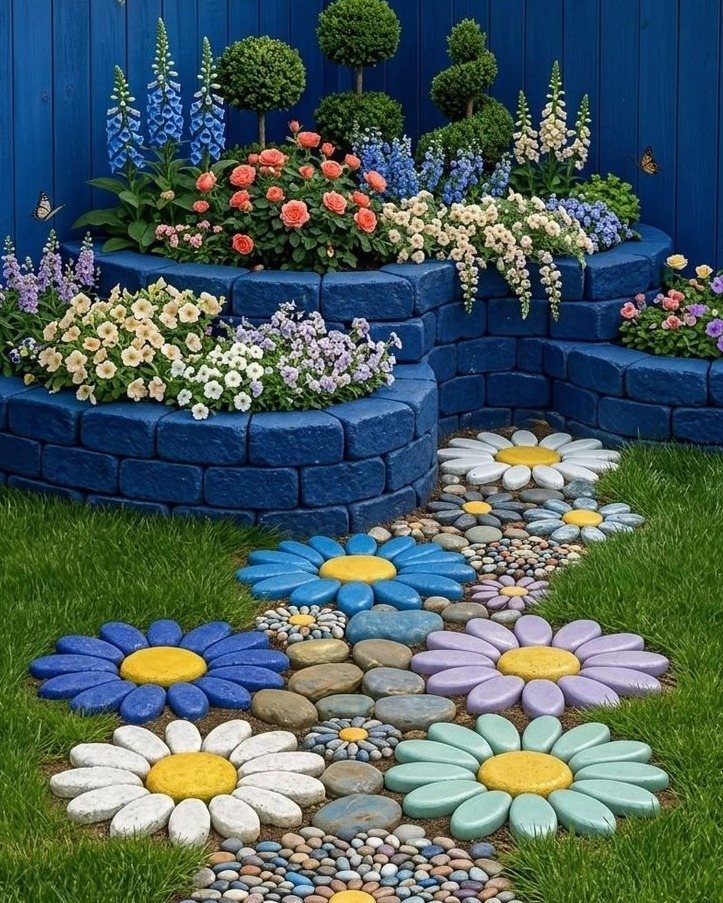
Tiered beds with retaining walls turn a slope into usable planting space and give each level its own microclimate. Blue-painted stone reads as architecture more than garden; I would test a sample panel against my house paint before committing.
Drainage behind the wall is the make-or-break detail. A gravel backfill and a perforated drain pipe at the base keep hydrostatic pressure from pushing the wall over in wet seasons.
The painted daisy walkway between tiers is charming but high-maintenance; acrylic concrete paint needs resealing regularly in full sun. Unpainted stone or pavers would trade some whimsy for less upkeep.
8. Stone-Bordered Foundation Beds
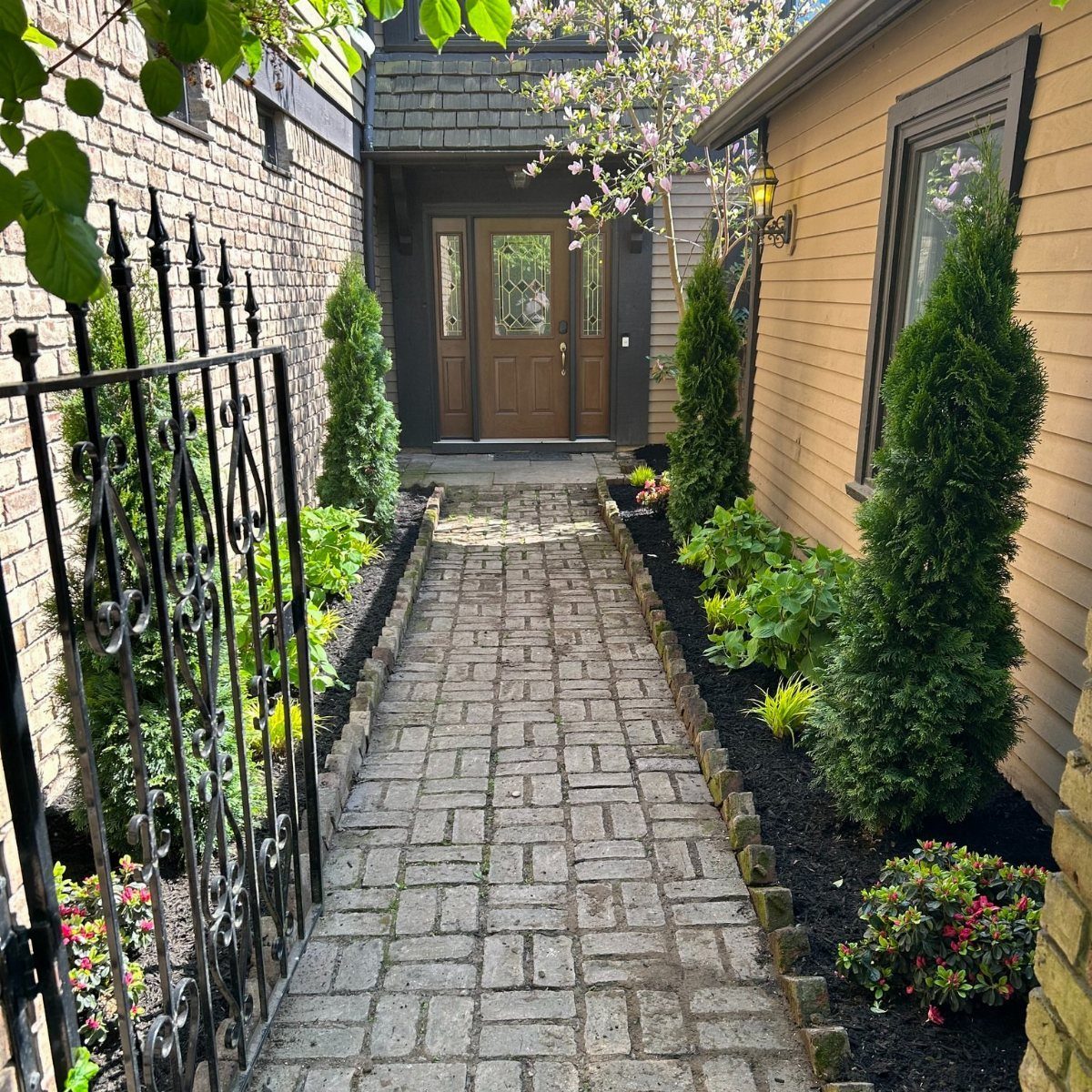
Stone-bordered foundation beds do the practical work of hiding the house base while softening the transition from wall to lawn. A wide brick paver walkway matters more than it sounds when you’re carrying groceries in the rain.
I set the bed edge well back from the foundation, farther still if the siding is wood. That gap stops mulch from touching the house and gives air circulation that discourages termites and rot.
The iron gate on the left is a detail I’d borrow: it breaks the bed length visually and gives a reason to pause. A gate needs posts set in concrete below frost line, so it’s not a weekend add-on.
9. Tropical Foliage Border
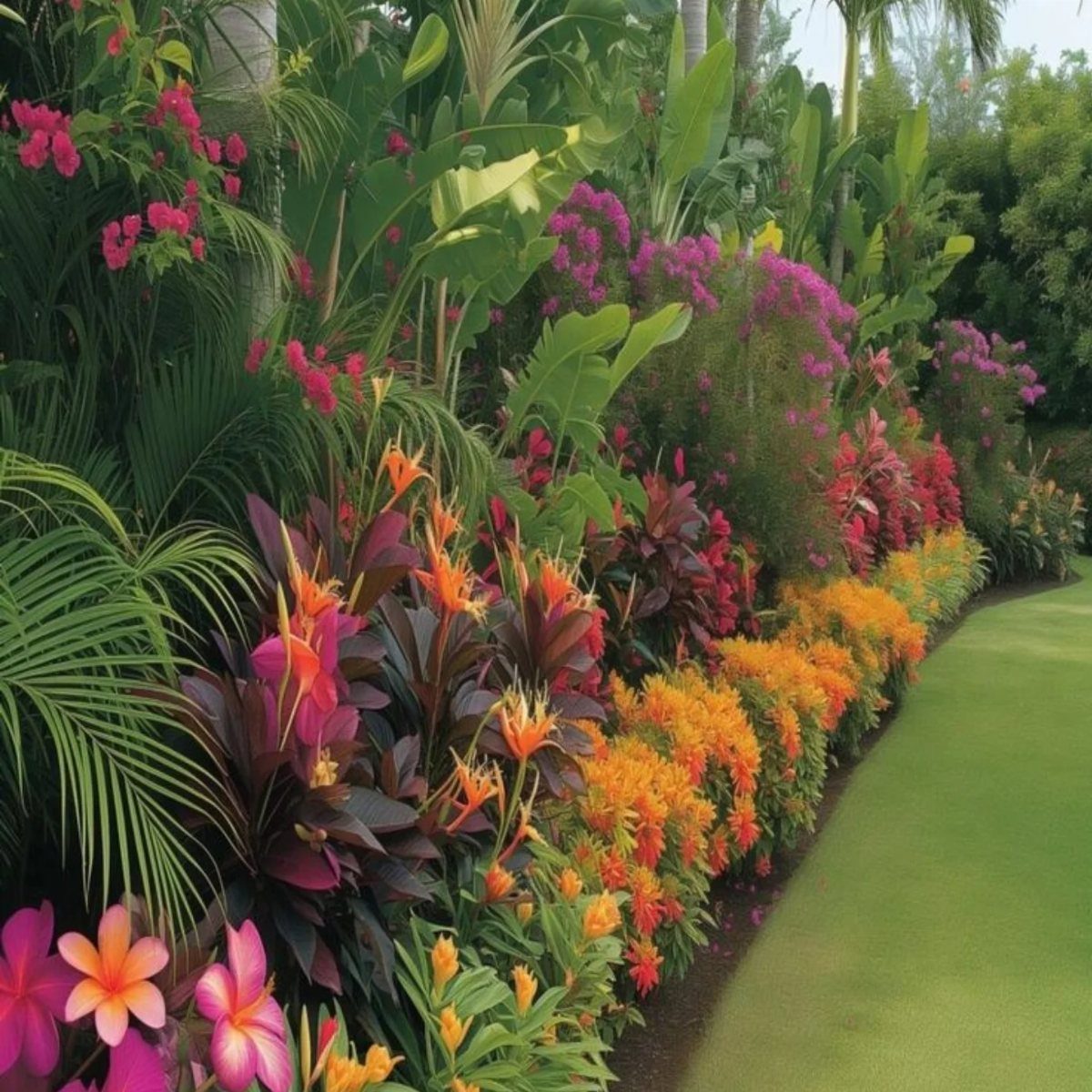
A tropical foliage border delivers the density and scale that makes a small front yard read as intentional rather than cramped. Broad leaves catch light differently than fine foliage; they show up from the street even in shade.
This only works where winter lows stay mild or where you’re willing to treat plants as annuals.
Bird of paradise and plumeria are warm-climate plants; in my cooler garden I would use hardy ginger, elephant ear, and cannas for a similar silhouette with a fraction of the replacement cost.
The manicured lawn edge against all that lush growth needs a physical barrier. I use steel edging strip set deep; root runners from cannas will cross anything less.
10. Shade Garden with Caladiums

Caladiums solve the problem every shade gardener faces: how to get color without sun. The pink and white leaves here carry the bed entirely; no flowers needed.
Tuber prices add up fast, and you need more than you think to fill a modest bed.
I buy them by mail early, before garden centers stock them, and start indoors in shallow trays with warm soil. Cold soil stalls them out.
The brick house and lamppost give this setting a formal backbone that keeps the caladiums from looking too playful. Against vinyl siding I would add a structural shrub, maybe a clipped boxwood ball, to echo that grounding.
Mature tree roots compete hard. I dig planting holes twice the tuber width and replace the soil with bagged mix rather than fighting the root mat.
11. Modern Built-In Planter Bed
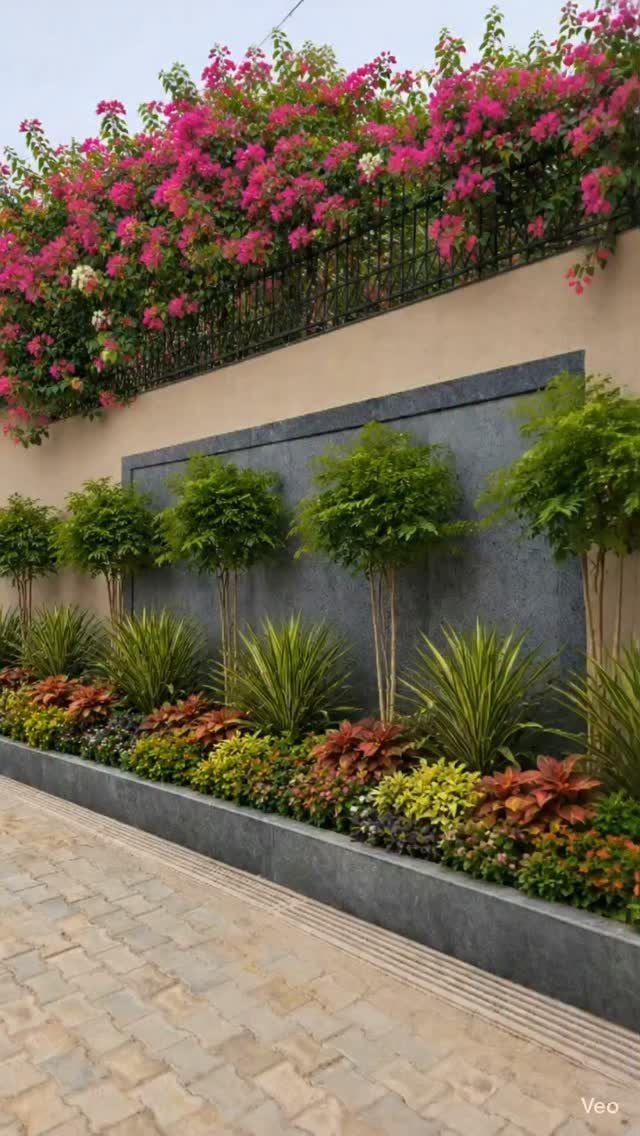
A modern built-in planter bed functions as outdoor furniture: it defines space and screens what you don’t want to see. The dark gray finish here reads as shadow, which helps the planting inside it become the focus.
Raised construction means custom drainage. Without them, winter saturation warps the walls.
Bougainvillea spilling from above suggests a warm climate or a greenhouse overwinter. In my area I would train a hardy clematis or let a self-seeding morning glory take the same role for one season.
Stone pavers set in sand make the maintenance path beside it; mortar would crack with the planter’s slight seasonal movement.
12. Picket Fence Perennial Bed

A picket fence perennial bed gives structure to loose planting and makes the garden feel tended even in March when nothing blooms.
The birdbath is the center of gravity here; I would place it where I can see it from a window, not just from the street.
Coneflowers, daisies, and daylilies are all sun lovers, so this needs a half-day minimum. In less light the daylilies bloom thin and the coneflowers flop.
Perennial beds look sparse the first year. I plant at 2/3 final spacing and fill gaps with annual seed, cosmos or zinnia, pulling them as the perennials expand.
A birdbath on a pedestal stays cleaner than one at ground level and protects from cats. Concrete holds temperature better than resin; in summer that means cooler water and more visits.
13. Circular Island Rose Beds

Circular beds floating in lawn give roses the air circulation that keeps blackspot in check and let you tend from every side.
The light stone edging here is structural; it holds the soil and gives a clean cut against the mower.
I would not plant these without measuring the turning radius of my mower against the bed diameter.
Too tight and the grass between becomes a string-trimmer chore forever. The dark mulch is fine for roses, though I refresh it yearly so it stays deep enough to hold moisture and block weeds without piling against the canes.
A cluster of three circles reads as deliberate; one alone can look like a leftover. If your lawn is small, 2 beds of differing size carry the same idea without claiming the whole yard.
14. Whimsical Butterfly-Shaped Bed

A shaped bed is garden theater, best for a flat lawn where the silhouette reads from the street and from upper windows.
The tulip fill here means this is spring-only color; by June the shape is green on green unless you plan a summer overlay.
I would mark the outline with a rope or hose first, then walk every sightline that matters. A butterfly that looks right from the sidewalk may read as a blob from the porch.
Scale matters too; a bed this wide takes a lot of bulbs spaced close together, so I would map out the wing shapes with string before committing to the dig.
The stone house behind it gives the neutral backdrop that keeps the shape legible. Against busy siding or a sloped lot, I would skip the figurative approach and stay geometric.
Low Maintenance Tips
Perennials are the starting point for a lower-maintenance front bed. Coneflowers, black-eyed Susans, and daylilies return each year without replanting, and self-cleaning varieties such as salvia and Knock Out roses drop spent blooms on their own.
Mulch cuts the work further by suppressing weeds and holding moisture. I refresh it yearly rather than letting it thin out, which is when weeds slip through.
Ground cover fills the gaps perennials leave early on. Creeping thyme or sedum spreads to choke out weeds naturally.
Grouping plants by water need means one soaker hose run handles a whole zone. I map this before buying anything; a thirsty annual mixed among drought-tolerant perennials dooms both to extra work.
Fall planting gives roots months to establish in cool, damp soil before summer heat arrives. Divide mature perennials every few years and one plant becomes three.
Soil Preparation
Soil prep determines whether a bed thrives or struggles through its first season. I work it damp, never bone dry or sodden; dry soil resists breaking up, and wet soil compacts into clods that root balls can’t penetrate.
Compost gets mixed in before any plant goes in.
How much depends on what I’m starting with, but a layer of compost turned into the native soil is the usual range for a new bed; I aim for a couple inches worked into the top few inches of what is already there.
Heavy clay needs more organic matter; sandy soil holds it less and needs replenishing sooner.
I finish by raking the surface level and watering lightly to settle everything before planting. Skipping this step and amending only each hole leaves roots trapped in pockets of good soil, reluctant to spread into the surrounding ground.
Bloom Time Considerations
Year-round color means planning for three bloom windows, not one.
I slot early bulbs such as tulips or daffodils, mid-season perennials like coneflowers and daylilies, and late performers such as sedum or asters into the same bed so something always carries the show.
Annuals bridge the gaps. Geraniums, petunias, impatiens, and marigolds bloom continuously from planting until frost, and their color range lets me shift the palette each year without reworking the whole bed.
I avoid planting every slot at once.
A bed full of May-only color is green wallpaper by August. Instead, I mark where each wave rises and fades, then tuck annuals into the lulls.
Replacing spent annuals seasonally keeps the design from going stale. Early annuals that have peaked by late summer can be pulled and replaced with fresh ones for fall, especially where winter-hardy perennials haven’t filled their allotted space yet.
Frequently Asked Questions
What flowers bloom all summer?
Annuals are the reliable workhorses for continuous summer color.
Geraniums, petunias, impatiens, and marigolds keep pumping out color from the day you set them in soil straight through to the first hard frost, so they fill those awkward stretches when perennials are between acts.
For perennials, coneflowers and daylilies give a good run, though their show rises and falls rather than staying steady.
How do I keep weeds out of flower beds?
A thick layer of mulch is the first defense; it suppresses weeds and holds moisture so you water less often. I top mine off every spring before it breaks down enough for weeds to muscle their way in.
Landscape fabric underneath helps in areas where you want zero maintenance, such as around specimen shrubs or in stone-mulched zones, though I skip it in planted beds where roots need room to spread.
Why do people put bushes in front of their house?
Evergreen shrubs hold the line through winter, when annuals have collapsed into brown stalks and empty dirt. Low junipers or narrow arborvitae give the bed its permanent architecture; annuals and perennials cycle through in front like a rotating cast.
They also hide the house foundation and soften the transition from wall to lawn, which reads as intentional design from the street.
What are good flowers to plant in front of your house?
The right choice depends on your sun pattern. North-facing walls or ground under established trees stay too cool and dim for sun lovers; impatiens, coleus, or hostas handle it without complaint.
For a structural perennial look, coneflowers, black-eyed Susans, and daylilies return yearly, while Knock Out roses trade some romance for far less spraying.