
These 9 floral landscaping ideas for your front yard run from a weekend container project to a full season of bed-building and brick-laying, and the deciding factor is how much time you have and how permanent you want the change to be.
Raised beds, dense plantings, and stone edges each solve a different problem for your front yard; I would start by checking your light conditions and thinking through maintenance before picking up a shovel, because a plan that ignores either one turns into replanting by fall.
The red brick that warms up roses in one idea needs sand or limestone screenings underneath, not concrete, if you want the curve to stay true through freeze-thaw.
1. Raised Flower Beds

Weathered wood frames filled with ranunculus sit well against gravel, keeping blooms clean and feet dry. I like that the structure warms early in spring, giving you a head start on color.
Before building, check your soil. Raised beds drain faster than ground soil, so I plan to water more often in July and August.
Cedar or redwood lasts longer untreated than pine, which is why I use it for beds I don’t want to rebuild soon. Line the inside with landscape fabric if you want the wood to stay cleaner longer.
Height matters for what you plant.
Shallow-rooted annuals don’t need much depth; a modest bed suits them fine. Deeper beds let you grow perennials that would struggle in your native dirt.
2. Predominantly Green Yard with Pops of Color

A green base asks less of you than full-sun flower beds, and the pink notes read louder for the restraint. Ornamental grasses give movement without deadheading.
I would put money into the hardscape first. Floating steps and clean gravel beds cost more up front than plants, but they carry the design when flowers fade in late August.
The pink shrubs look best sited where morning light hits them; too much afternoon sun burns the color to white in photos.
This approach suits renters or anyone who resodds in sections. Grass recovers from neglect faster than a bed full of thirsty annuals.
3. Dense Floral Arrangements

Dahlias, coneflowers and liatris packed tight make a border that reads as one mass of color from the sidewalk. I plant closer than the tag suggests to get that full effect sooner rather than later.
Air circulation suffers when you pack plants tight. Dense plantings need morning sun to dry leaves fast; otherwise mildew moves through the bed by late July.
I also accept that some plants will die out as stronger neighbors crowd them. That is the trade for the look.
4. Plantings of Varying Heights

Layering short, medium and tall plants against a lawn gives each one its own light and your eye a clear path to follow. Dark mulch recedes visually, so the green shapes read as the point.
I start with the tallest layer at the back or center, depending on the bed’s shape. Trees or upright shrubs form the backbone.
Medium bushes sit in front, then low fillers at the edge. Pots let you move color around if one section fails.
Check mature height before you dig. A shrub tagged modest height will outgrow its label in good soil, and blocking a window is an expensive mistake to fix.
5. Add Structure with Shrubs
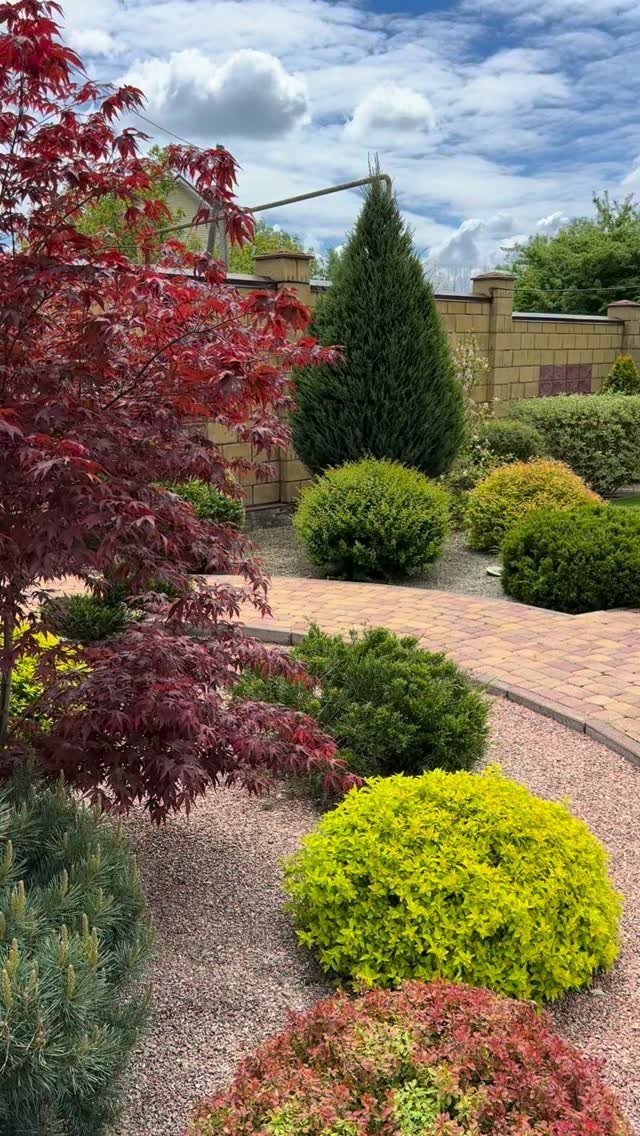
Evergreens and shaped shrubs hold a yard together in March when perennials are still sticks. The gravel here stays neater than bark around formal shapes, and I like that contrast of loose texture with tight pruning.
Conical evergreens work as punctuation marks; use them singly or in odd groups.
The red Japanese maple needs afternoon shade in hot climates or the leaf edges crisp by June. I would place it where the low sun backlights it in fall.
Formal pruning takes shears twice a year, spring and late summer. Skip it and the shapes soften into something else entirely within 2 seasons.
6. Curved Brick Garden Border

A gentle curve edged in brick separates lawn from bed without the rigid geometry of a straight line. Red brick warms up the roses and picks up the marigold yellow in a way gray stone would not.
I lay bricks on edge, buried halfway, for the cleanest line.
Sand or limestone screenings underneath keep them from tilting; skip the concrete, which heaves and cracks in freeze-thaw cycles. A hose laid on the ground marks the curve before you cut sod.
The curve works best when it is subtle.
Too tight and the mower cannot follow; too wide and it reads as a wobble. I aim for a radius no tighter than 6 feet for a bed this size.
7. Flower-lined Picket Fence Walkway

A picket fence with flowers at its feet turns a plain path into a destination. The white boards reflect string light after dark, and the blooms fill the gap between ground and rail without blocking the view beyond.
I would keep the fence line straight; curves fight the geometry of pickets.
Brick set in sand lets you lift and reset sections that settle, which concrete won’t allow. The arch needs footings below frost line or it leans within 2 winters.
Daisies and black-eyed Susans handle the reflected heat off pale paint better than delphiniums would. Plant so the tallest flowers stay below the mid-rail; anything higher reads as overgrown from the street.
8. Stone-edged Flower Bed

Stone blocks set against lawn give a bed the look of having always been there. The pink and white blooms read softer against gray than they would against red brick, and the edge keeps mower wheels out of the soil.
I use limestone or sandstone for this; they weather to the same tones as Midwest dirt.
Set them half-buried with the flattest face out, tilted slightly back so freeze cycles push them in rather than out. A bed this wide needs access from the back or you end up stepping on plants to deadhead.
The swing and arbor are separate projects, but the stone edge is the foundation that makes them look rooted. Start with the bed shape; add vertical pieces once you know how the flowers fill.
9. Decorative Container Planting

A decorative planter lets you place color where soil is thin or root systems won’t allow it. The swan shape reads as garden ornament even when blooms are sparse in early June.
Weight matters more than looks when you choose one. Empty resin or fiberglass weighs little; full of wet soil, it still lifts.
Fired ceramic and concrete stay put in wind but need a hand truck to move. I would place any planter this size on pavers, not directly on lawn; the grass dies underneath and the pot tilts as soil settles.
Annuals suit containers best. Perennials cook their roots above ground in a hard winter, and the drainage that keeps them alive in summer lets cold penetrate deeper.
Pink daisies and poppies give you May through July; swap in mums in August if you want fall.
Evaluate Light Conditions
Watch your front yard for a full day before you buy a single plant. Check every 2 hours and note when sun hits the ground and when it moves away.
Direct sun for most of the day opens up shrubs, perennials and annuals that handle midday heat without wilting. Less than that, and your choices narrow fast.
Many front yards carry decades of turf grass, which leaves soil packed tight and starved of nutrients.
I would dig in compost or aged manure before planting anything; roots need pore space and something to eat. Where drainage stays poor after amending, raised beds sit above the problem instead of fighting it.
Some cities and HOAs restrict lawn removal or mandate minimum grass coverage. Check local rules before you strip sod, especially in arid regions where turf bans or rebate programs for removal already exist.
Consider Maintenance Levels
A traditional lawn costs more time and water than most first-home owners expect.
If your front yard needs to stay playable or you want green space between beds, keep some turf. Otherwise, gravel, permeable pavers or low-water plantings cut the workload sharply.
Xeriscape and native gardens run on rainfall once established; I would lean that way if weekends already feel short.
Ornamental grasses, succulents and waterwise shrubs need less intervention than thirsty annuals or a vegetable plot. Evergreen shrubs give structure through winter without asking for deadheading or replanting.
Mulch bare soil. A 2-inch layer suppresses weeds, slows evaporation and saves the hours you would spend pulling or watering.
Plan for Functionality
Decide early whether your front yard is for looking at or for using.
A walkway to the door, a sitting spot or a play area each pulls the layout in a different direction. I would draw the paths first and plant around them, not the other way around.
Permeable pavers and gravel handle foot traffic without the runoff of solid concrete. They also let you change your mind later; a gravel bed lifts and shifts, while poured stone does not.
Plants fill in, shrubs outgrow their labels and the view from the street matures.
Local extension offices or independent nurseries know what survives your specific winters and summer humidity. A half-hour conversation there beats replacing dead plants in October.