
A garden bed around a tree is a planted ring built over the tree’s existing root zone, and the cost of getting it wrong is the tree itself.
The hard limit is two inches of added soil; anything deeper blocks oxygen and moisture to the roots and can kill an otherwise healthy oak or maple.
I work with that constraint from the first shovel of dirt, because the bed is only worth building if the tree survives it.
Assess the Tree’s Health First

A tree with rot, significant lean, or root damage is not a candidate for under-planting, full stop. Adding soil more than 2 inches deep around the trunk reduces moisture and oxygen to existing roots and can kill the tree.
I would skip any bed project entirely if the bark is soft or dark at the base, if the trunk leans more than 10 degrees from vertical, or if I see mushrooms clustered at the roots: those three signs point to decay that soil and moisture will accelerate, not hide.
Some species simply will not tolerate the disturbance. Oaks are sensitive to any major soil change, and maples or elms already fight you with surface roots that make digging nearly impossible.
Conifers, Norway maples, and lindens add another problem entirely: dense canopies block sun and deflect rainfall, so whatever you plant underneath faces drought and shade before you even start.
Adding a layer of soil that is more than 2 inches deep, for example, can reduce moisture and oxygen availabilities and hinder gas exchange to existing roots, causing trees to suffer or even die.
That 2-inch limit is the hard ceiling for any soil you add, not a suggestion.
If I see surface roots everywhere or suspect internal rot, I call an arborist before buying a single plant or paver. The bed can wait.
Prepare the Soil Without Smothering Roots

Tree roots need oxygen the same way the leaves do, and burying them under a pile of new soil slowly suffocates the whole system.
Add only 2–3 inches of soil and work it lightly into what is already there rather than dumping it on top.
I would never pile soil directly against the trunk either; leave a gap of about 3–6 inches so the bark stays dry and the root flare stays exposed.
Exposed roots make this trickier. You might want to cover them for a cleaner look or easier mowing, but piling soil over them cuts off their air supply and can rot the bark above.
If the roots are too prominent to work around, a raised bed built like a donut with at least 1–3 feet of clearance from the trunk keeps your planting zone separate from the tree’s living tissue.
That gap is what lets both survive.
Choose Shade-Tolerant Plants With Shallow Roots

Dry shade under a mature tree is one of the harder spots to plant, and the wrong choice will leave you fighting the tree instead of working with it.
I go for plants with shallow roots that accept less water and light than they’d prefer, because anything greedy for nutrients or sun will struggle and look thin all season.
Hostas are the workhorse here. They spread slowly enough to stay manageable, fill space with solid foliage, and handle root competition better than most perennials.
Impatiens give reliable color through summer but stay annual in most zones, so I treat them as a seasonal fill rather than a permanent solution.
Astilbe needs more moisture than the others, which means extra watering in the first weeks; skip it if you are not around to keep soil damp through dry spells.
Spring bulbs solve the light problem by timing: daffodils finish their show before the canopy fills in, then go dormant and demand nothing.
Creeping liriope is the one I watch, because it will wander beyond where you set it. Useful for quick ground cover, but I only plant it where a boundary keeps it in check.
Water Deeply, Especially at the Start
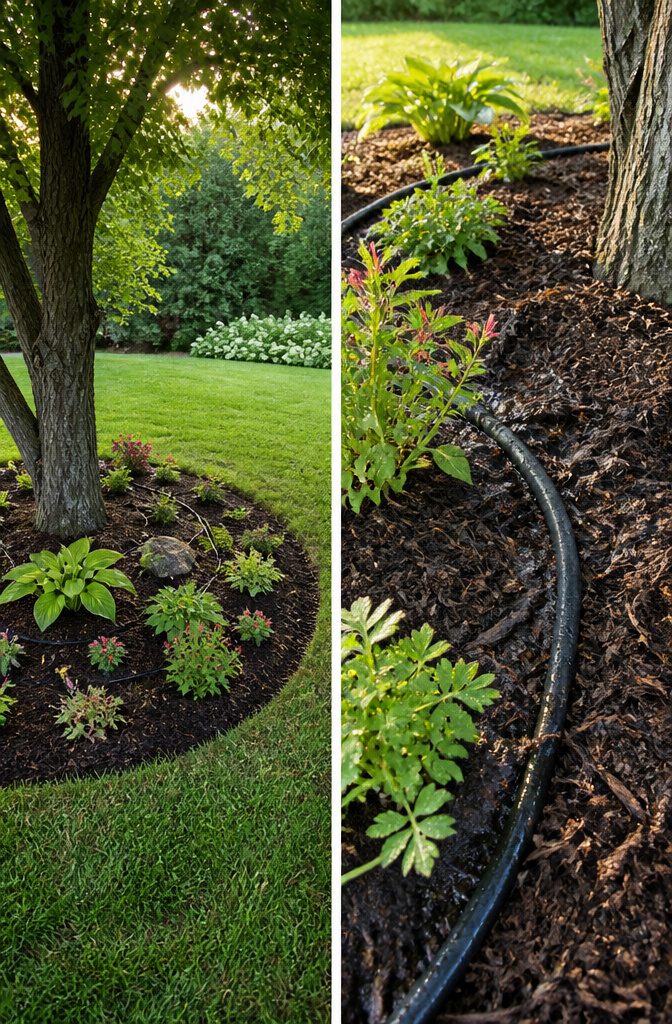
New plantings under a tree need deep watering every day or every other day for the first few months, then weekly once established.
The shift matters: daily sprinkles encourage shallow roots that dry out fast, while a slower, heavier soak trains roots downward where moisture lingers.
A soaker hose laid in the bed saves time and does the job better than a sprinkler. Tree roots are already occupying the top 12 inches of soil, so the new plants are competing for the same water you are adding.
I run the hose long enough to saturate that full depth, then check with a finger or a simple soil probe a few inches from the new plantings.
Dry at four inches down means the tree got there first; damp means you are in good shape.
Morning or evening timing cuts evaporation loss.
Skip fertilizer the first year; it pushes top growth when the plant needs to put energy into roots instead. An annual top dressing of compost in spring will feed everything later without forcing the issue now.
Mulch 2-3 Inches, 6 Inches From the Trunk

Organic mulch spread 2 to 3 inches deep across the bed keeps moisture in and weeds out without smothering what matters. Keep that layer 6 inches clear of the trunk, no exceptions.
Pile it closer and you have built what arborists call a mulch volcano, a mound of material packed against bark that traps moisture and invites rot, disease, insects, and rodents straight to the tree’s base.
The bark stays wet, breaks down, and the problems that follow are slow to spot until the damage is done. Two to 3 inches is the functional depth; more than that risks the same root suffocation you are trying to avoid.
I would rather refresh a thin layer every season than dig out a soggy collar of decomposing wood chips once the ants have moved in.
The space around the trunk stays open, air moves through, and the tree handles the rest.
Maintain Without Damaging Tree Roots
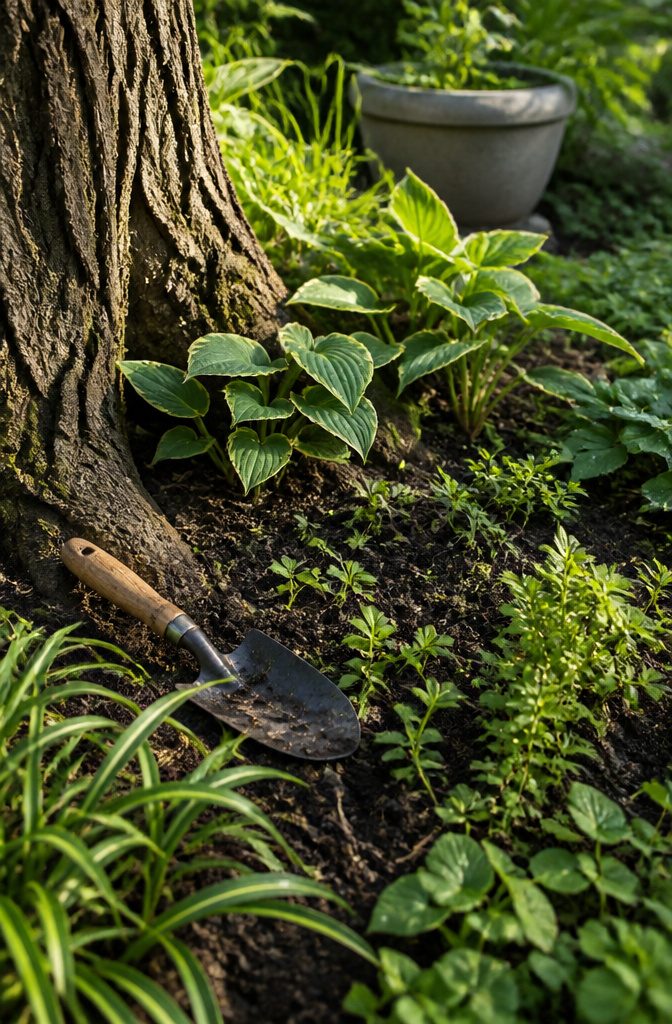
Hand-weeding is the only way to keep a garden bed around a tree without tearing through roots that sit surprisingly close to the surface.
A trowel pushed more than an inch or two down risks slicing a structural root the tree still needs, so I pull weeds by hand after rain softens the soil, or cut them at ground line if the ground is dry and packed.
Never add soil over the existing grade near the trunk, even to smother weeds; even an inch or two of extra soil holds moisture against bark and starts rot, and it blocks the oxygen roots need to breathe.
The same goes for letting grass thatch build up, which starves both tree and understory plants of water and air.
I watch for plants that start running where I did not plant them. A groundcover that hops the bed edge becomes a maintenance problem fast, and digging it out is exactly the root disturbance I am trying to avoid.
Thinning comes down to judgment: when a plant crowds its neighbor enough that stems lean for light, I remove the weaker one by cutting at soil level rather than pulling, leaving any roots intertwined with the tree’s alone.
Replacing a failed plant means scouting a new spot first, feeling for roots with my fingers before I make any opening wider than the nursery pot.
A 2- to 3-inch top dressing of compost or shredded leaves each spring replaces the leaf litter we usually rake away, and it feeds both the tree and the bed without requiring any digging in.
I skip fertilizer entirely the first year after any new planting; it pushes leafy growth before roots have anchored, and in a bed competing with a mature tree for water, new plants need roots more than they need height.
Raised Beds as an Alternative

Some trees simply cannot handle any soil piled around their base, and that is where a raised bed with an open bottom becomes the safer path.
The construction is straightforward: build a ring like a donut around the trunk, leaving at least 1–3 feet of clear space between the trunk and the inside wall so nothing smothers the bark or the surface roots.
For a young tree, the bed should span at least 6 feet in diameter or it will look cramped and out of proportion; mature specimens need even more room.
Keep the height modest, no more than 16 inches above the original grade, and never let soil or mulch touch the trunk itself.
The plants you set inside will root downward through the open bottom into the native soil below, but they will need regular watering, especially while the tree is in leaf and competition for moisture is at its peak.
I would reserve this approach for trees where the root flare is sensitive or where the existing grade already sits too high.
For large, established deciduous or coniferous trees, I would skip the raised bed entirely and experiment with a few tough groundcovers first. Autumn planting gives those plants a winter window to establish before spring competition ramps up.
Shade-Loving Plants That Work
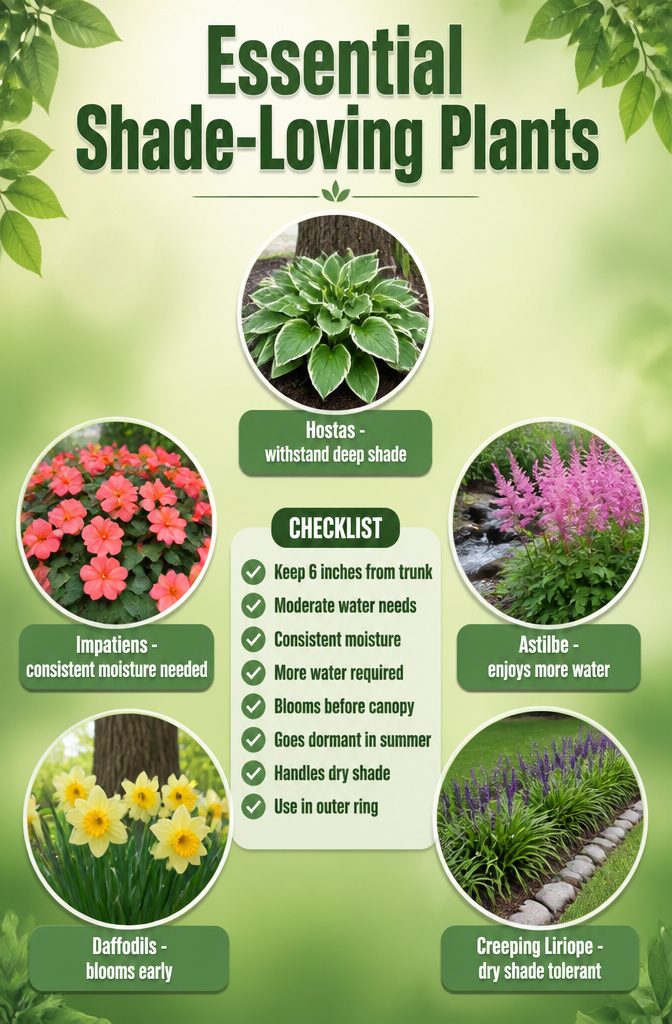
Hostas handle deep shade and compete well with tree roots, which is why I would plant them closest to the trunk where light is weakest. Their water needs are moderate, and their clumping spread stays predictable.
- Impatiens want consistent moisture and deliver color until frost, but they are annuals, so I would use them for a quick fill in the outer ring where light is brighter, not as a long-term investment.
- Astilbe needs more water than the others and gives feathery plumes in early summer; I would place it where runoff naturally collects or skip it if the bed stays dry.
- Daffodils are the exception to the shade rule: they finish blooming before the canopy fills in, then go dormant and vanish. I would tuck them in groups near the edge for early color that does not fight the tree for summer resources.
- Creeping liriope spreads by runners and handles dry shade once established, so I would use it as a ground-cover buffer between the bed and lawn, or to soften the bed’s outer border.
Keep every plant at least 6 inches from the trunk itself. Moisture against bark invites rot, and even shallow-rooted plants need that buffer for airflow.
Decorative Rocks and When to Use Them
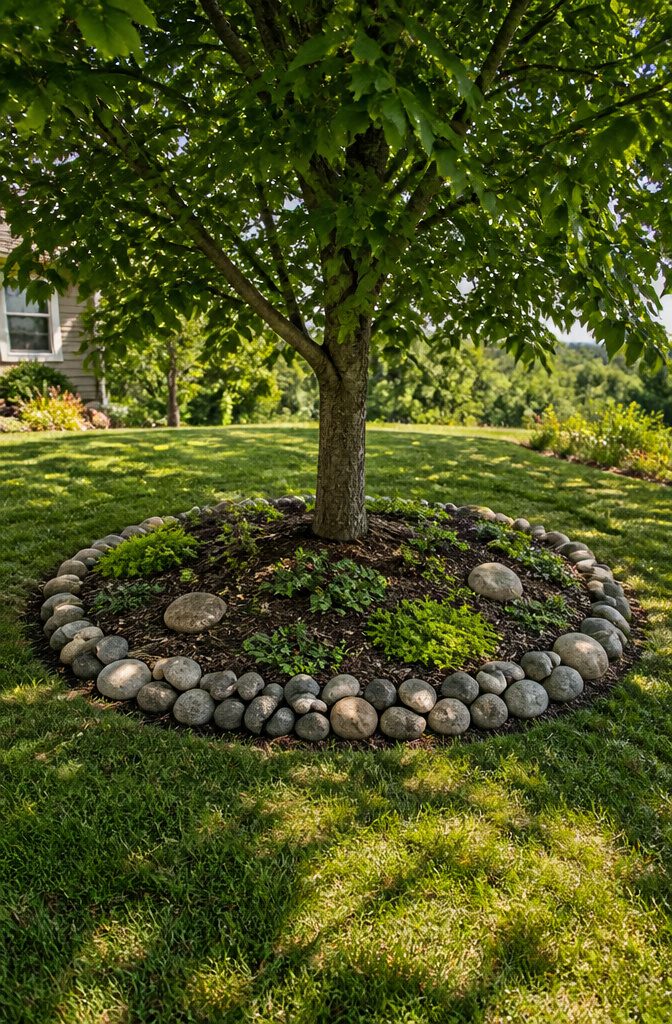
Exposed roots make planting around a tree nearly impossible, and that is where rocks earn their place.
A clean ring of stone covers the problem without the maintenance that plants demand, and it keeps foot traffic from compacting soil over shallow root zones.
I would reach for rocks in two situations specifically: a high-traffic yard where mulch gets kicked aside within a week, or a root zone so dense that even hostas struggle to find purchase.
The heat issue is real and worth planning for. Rock absorbs and holds more solar energy than mulch, which raises soil temperature and accelerates moisture loss.
In summer, that stress shows up as leaf scorch or early dormancy in sensitive species. I would keep rock beds to trees that tolerate drier conditions, and I would skip them entirely on south-facing exposures where heat already runs high.
Weed barrier choices matter more than most people expect. Landscaping fabric or plastic sheeting will suppress growth, but leave at least 8 to 10 inches around the trunk completely clear.
Any barrier that crosses that zone blocks oxygen and water from reaching surface roots, and over a season or two the tree pays for it in slowed growth or root rot.
I prefer a breathable landscape fabric held with steel staples to plastic sheeting, which tends to pool water and breed anaerobic pockets. The fabric lets some moisture through while still cutting the weeding load by half.
Rocks do not improve soil the way decomposing mulch does, so this is a long-term cosmetic fix rather than a soil-building strategy.
For a weekend project on a tight budget, though, a stone ring solves the exposed-root problem cleanly and stays tidy for years with nothing more than occasional leaf-blowing.
Spring Bulbs for Early Color

Spring bulbs are the only reliable way to get color into a garden bed around a tree before the canopy closes.
Daffodils, crocus, snowdrops, and grape hyacinths all finish their bloom cycle while the branches above are still bare, then die back just as the shade deepens. That timing matters more than the flower choice itself.
Plant bulbs 2-3 inches deep and stop the moment you hit a root thicker than your finger.
A shallow bulb is better than a damaged tree root, and most spring bulbs tolerate being closer to the surface than the package suggests. If you uncover a root, fill the hole and move over a foot.
This costs almost nothing to keep going year after year.
Once planted, bulbs multiply and return yearly without replanting. The foliage yellows and disappears underground by early summer, leaving the bed open for summer shade plants to fill in.
No digging, no swapping containers, no second round of planting. For a weekend project on a few hundred dollars, that sequence, early color to self-maintaining dormancy, extends the season without extending the work.
Frequently Asked Questions
How can I landscape around exposed roots?
Use a mulch ring 2 to 3 inches deep to cover exposed roots without smothering them. Never pile soil over exposed roots; it cuts off oxygen and can rot the bark above.
If roots are too prominent to work around, build a raised bed like a donut with at least 1 to 3 feet of clearance from the trunk.
What plants can I grow under a tree?
Choose shade-tolerant plants with shallow roots that handle competition well, such as hostas, impatiens, astilbe, spring bulbs, and creeping liriope.
Hostas tolerate deep shade and root competition best near the trunk where light is weakest. Avoid anything greedy for sun or nutrients, since dry shade under a mature tree is already a difficult growing environment.
How much mulch should I use around my tree?
Spread organic mulch 2 to 3 inches deep across the bed, and keep it 6 inches clear of the trunk.
More than 3 inches risks root suffocation, while mulch piled against the bark traps moisture and invites rot, disease, and pests. Refresh a thin layer each season rather than letting it build up.
What is the 3-5-7 rule in landscaping?
The key numbers to remember for this project are adding no more than 2 inches of soil, mulching 2 to 3 inches deep, and keeping all mulch or soil 6 inches from the trunk.
What to put around a tree in the front yard?
A garden bed with shade-tolerant plants like hostas and spring bulbs works well, or a clean ring of decorative rock if exposed roots make planting impossible.
Rock stays tidy with less maintenance but absorbs more heat, so it suits drier sites better than south-facing exposures. Either way, keep materials off the trunk itself.
What are the downsides of using raised beds?
Raised beds around trees can smother roots or trap moisture against bark if built too high or too close to the trunk.
Keep them no more than 16 inches above original grade and leave 1 to 3 feet of clear space around the trunk. For large, established trees, a raised bed may cause more problems than it solves; groundcovers are a safer first experiment.
How do I keep tree roots out of my raised garden bed?
Build the bed with an open bottom so your plants root downward into the native soil rather than creating a barrier.
The real issue is protecting the tree, not blocking its roots; the bed walls should sit 1 to 3 feet from the trunk so surface roots stay undisturbed. Water regularly, since tree roots in the surrounding soil will still compete for moisture.