
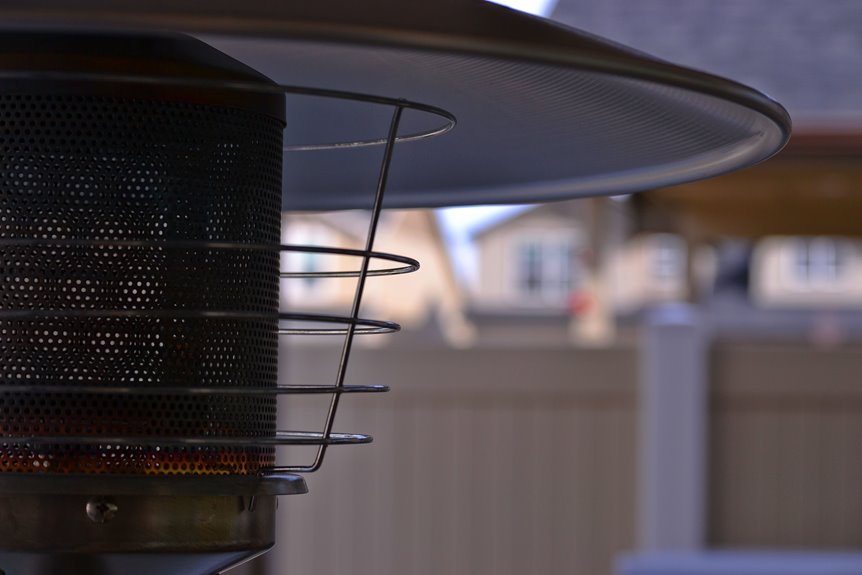
I’ve spent ten years helping homeowners choose between these options, and it comes down to seven key differences.
Gas fire pits deliver radiant, communal warmth in a 36-inch circle, perfect for storytelling and connection, while patio heaters blast directional heat across broader zones without the same ambiance.
Permanent fire pits need concrete pads, drainage, and certified gas fitters costing $500–$2,500, but portable propane heaters roll anywhere.
Natural gas saves money long-term; propane tanks add up.
Fire pits demand ash removal and burner checks, while heaters need only a quick wipe.
Electric models eliminate on-site emissions entirely.
Your space, habits, and whether you prioritize ambiance or flexibility will determine the right choice.
Heat Coverage: Central Warmth vs. Targeted Heat
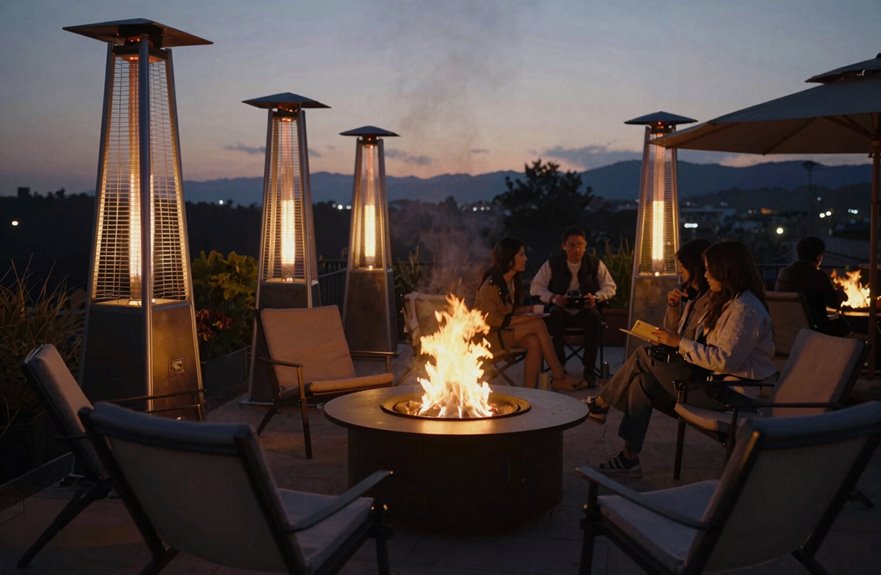
Most folks don’t realize how differently these two heaters actually warm you until they’ve shivered through a patio party or sweated beside a fire pit that was way too close. Gas fire pits deliver central warmth. You gather round, feel that radiant hug at arm’s length, and share the glow. It’s communal, concentrated, intimate. Patio heaters are built for targeted heat, blasting 30,000 to 50,000 BTUs across broader zones with directional warmth rather than huddle-up heat. For outdoor heating, heat distribution directly determines comfort and social dynamics. Fire pits anchor your seating circle; patio heaters move with you, wheeling where bodies land. Your heat coverage choice shapes how folks move, mingle, and interact. Mismatched heating leaves someone cold.
Ambiance and Social Experience: Which Creates Better Gatherings?
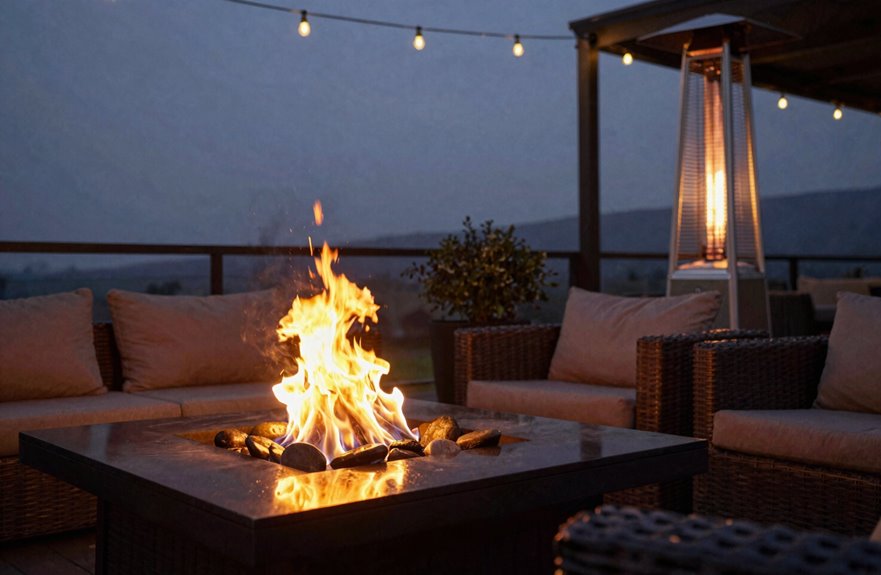
I’ve watched shy guests open up around a fire pit, with the social experience deepening as the night stretches on. It’s communal heat, shared stories, and belonging around a single centerpiece.
Patio heaters work fine for flexible seating. However, they lack that soul. No dancing flames, no rustic crackle (even gas mimics this beautifully), and no centerpiece that draws people together. For intimate outdoor gatherings where connection matters, a fire pit creates a stronger sense of community than a functional heater.
Installation: Permanent Gas Lines or Portable Setup?
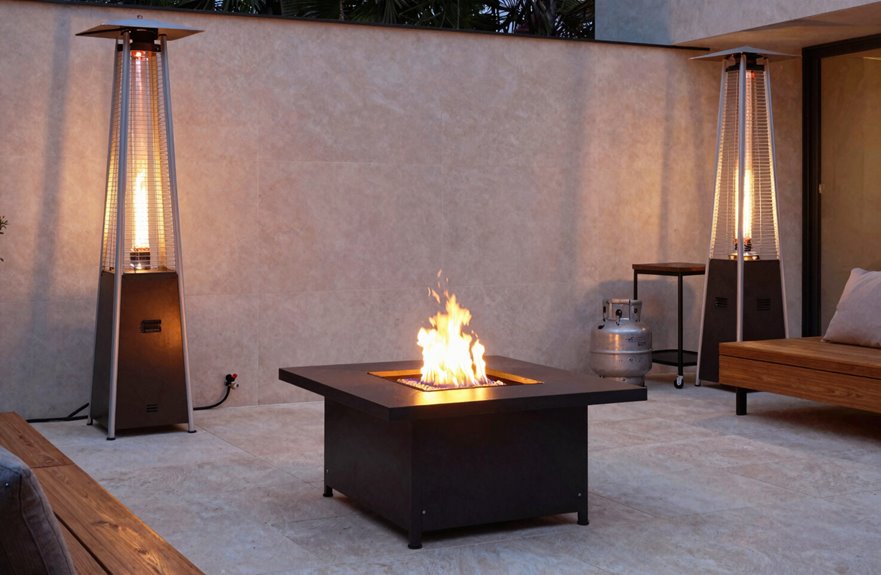
I need to weigh whether I’m committing to a permanent gas line setup or keeping my options open with portable propane, because that choice locks in my installation costs and future flexibility. Gas fire pits typically demand a fixed natural gas connection, such as a ½-inch flexible pipe, a shut-off valve, and possibly a $500–$2,000 professional hookup. Some models run on refillable 20-pound propane tanks you can swap at the hardware store. Patio heaters offer more flexibility. I can roll a freestanding propane model (about 18 inches of overhead clearance, no tools needed) anywhere the party moves, or anchor a natural gas version permanently if I’ve already got the line run.
Permanent Gas Line Setup
Where exactly do you want this thing to live? Once you’ve committed to a permanent gas line, you’re locked into that fixed location. You can’t move it around whenever you want. I learned this the hard way after trenching and permits consumed my weekend and drained my budget.
Here’s what you’re really signing up for:
- Professional installation runs $500–$2,500, depending on your gas service connections and yard complexity
- Trenching and permits add another layer of bureaucracy, but they’re non-negotiable for code compliance
- Safety inspections happen annually, checking lines for leaks and pressure drops
- Installation costs sting upfront, yet you’ll dodge refill headaches forever
- That fixed location becomes your gathering anchor. Plan your seating accordingly
No fuel logistics, no midnight propane runs. Just twist the knob and you’ve got fire.
Portable Propane Options
If you’re the type who rearranges furniture when the mood strikes, portable propane setups offer true mobility. You can wheel your patio heater from the deck to the lawn without installing permanent gas lines or hiring contractors. Just connect your fuel tanks and go.
| Feature | Portable Propane | Why It Matters |
|---|---|---|
| Ignition | Battery-powered piezo igniter | Push-button ease of use, no matches needed |
| Mobility | Wheels (typically 2-4 casters) | Roll anywhere, 20-30 lbs empty |
| Fuel tanks | 20 lb LP cylinders | Exchange at any hardware store |
| Outdoor heating range | 10-20 foot radius | Move it closer when guests cluster |
| Setup time | Under 5 minutes | Connect tank, check fittings, ignite |
Portable outdoor heating requires you to trade continuous heat for flexibility. You can move the system whenever your needs change rather than being locked into a single location.
Installation Cost Comparison
That portability comes with a price tag I actually like, but let’s talk about what happens when you’re ready to commit to something more permanent. Upfront costs swing wildly between these two paths, and your wallet feels it immediately.
- Gas line installation for natural gas fire pits runs $500–$2,500 (permits, labor, trenching), while propane tanks keep you portable with zero hookup fees
- Electrical outlet heaters plug in and operate within minutes versus weeks of contractor scheduling
- Installation costs for built-in fire pits demand concrete pads, drainage, and certified gas fitters. A neighbor’s project stretched three months
- Portability saves you relocation headaches. A propane heater can be wheeled to three different patio layouts
- Long-term, natural gas wins on fuel price, but that initial investment is significantly higher compared to grab-and-go alternatives
Operating Costs and Efficiency: What You’ll Spend Over Time
How much will your backyard warmth actually cost you over the years? I’ve analyzed the numbers, and here’s what operating costs and efficiency reveal.
Gas fire pits (whether propane or natural gas) typically win on fuel consumption efficiency. They create centralized warmth, so you’re not burning fuel endlessly to heat empty corners. Patio heaters, meanwhile, consume more fuel continuously, especially when trying to warm wide-open spaces. This difference shows up directly in your utility bills.
Efficiency depends entirely on how you actually use your space. If you’re hosting circle-up gatherings, gas fire pits keep everyone cozy with less total burn time. If you’re chasing flexible, spot-heating across a sprawling patio, those portable heaters rack up surprising fuel costs. Your heating choice should match your actual usage patterns.
Maintenance and Safety: Which Demands Less Attention?
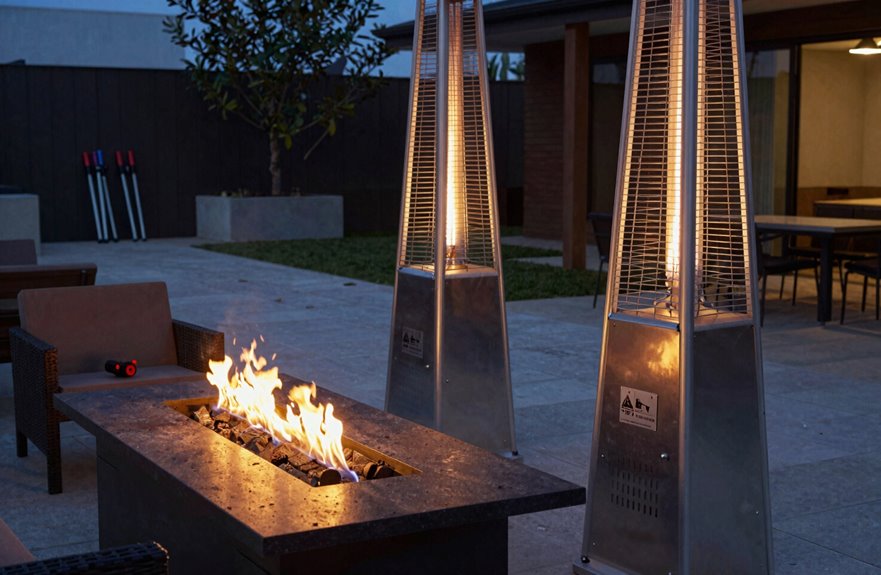
Cleaning requirements and safety features really separate these two options when weighing what fits your lifestyle. Gas fire pits demand regular ash removal (even the gas ones collect debris), burner inspection, and flame clearance checks. This typically requires 15–20 minutes of upkeep per week. Patio heaters mostly need a quick wipe-down and occasional fuel tank swaps.
Safety-wise, a fire pit requires constant supervision until it’s fully extinguished with no shortcuts. A patio heater shuts off with a twist of a knob or automatically if it tips over, which is a significant advantage when you’re ready to head inside.
Cleaning Requirements
Few things disrupt a cozy evening faster than discovering your fire pit’s burner ports are clogged with last week’s burnt marshmallow residue, or that your patio heater’s tank valve has been slowly leaking propane since Tuesday. Gas fire pits demand serious upkeep to stay safe and functional.
- Debris cleaning keeps burner ports clear (I use a 3/16-inch drill bit to gently ream clogged holes)
- Burner checks ensure even flame distribution across the 18-24 inch ring
- Gas connections need soapy water tests monthly; bubbles indicate leaks
- Gas line inspections are essential for built-in units but not portable heaters
- Ash cleanup is unnecessary with gas, though wood-burning models require constant shoveling
Portable heaters offer a practical advantage. You can simply swap tanks or wipe reflectors without needing gas line inspections.
Safety Features
Because I’ve already spent twenty minutes hunting for my grill lighter in the junk drawer, I’m acutely aware that safety features can make or break your evening plans. Gas fire pits demand your full attention. Flame containment and venting safety are non-negotiable, and you’ll need to stick around for complete extinguishment (no ducking inside for another drink). Patio heaters, though, are built for unattended use with tip-over protection that shuts everything down if someone bumps the base.
Both need solid gas connections checked seasonally; think soapy water test, 15 minutes, done. Fire pits want clear space (36 inches minimum) and debris-free burners. Heaters prioritize stability and placement flexibility. If you’re the forgetful type, that automatic shut-off can prevent safety incidents and property damage.
Environmental Impact: Gas Fire Pits vs. Patio Heaters
Heat output patterns make a real difference when weighing backyard carbon footprint. Gas fire pits keep things intimate, with flames licking upward in a tight circle, while patio heaters cast a wider net of warmth. Fuel type matters deeply for air quality.
- Gas emissions from both options release greenhouse gases, though fire pits burn cleaner than wood
- Electric vs gas presents a significant choice for environmental impact
- On-site emissions vanish with electric models; the pollution occurs at the power plant instead
- Renewables tip the scales dramatically. Solar-powered electric heaters reduce environmental burden
- Environmental impact shrinks when choosing efficiency over ambiance
Selecting heating options that welcome people without burdening the planet requires weighing these specific tradeoffs.
Which Option Fits Your Space and Lifestyle?
Consider your fuel type too. Propane offers portability, natural gas requires a fixed location, and electric units can plug in anywhere. Fire pits require higher upfront investment due to their permanent nature, while patio heaters cost less initially, though refill expenses accumulate over time. Match the tool to your gathering style.