
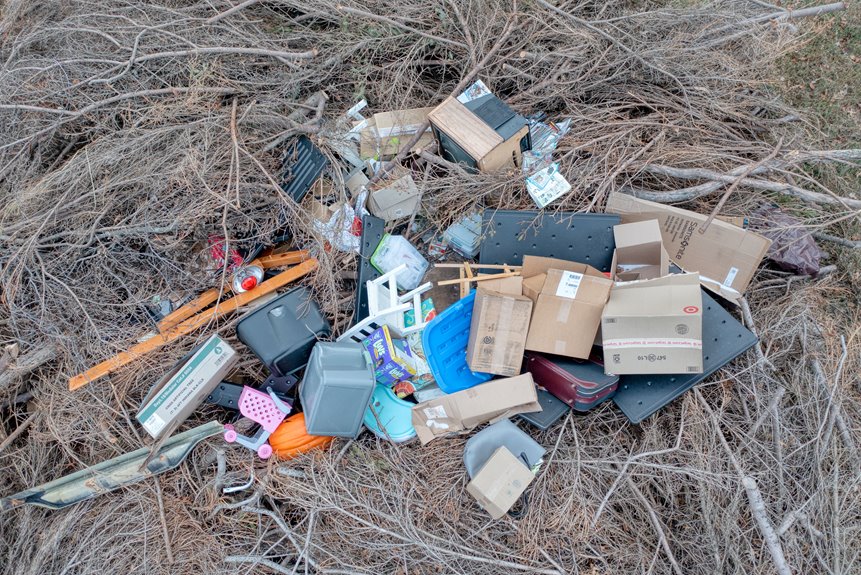
I’ve cleared out enough overgrown beds and post-storm brush piles to know that getting rid of garden waste isn’t glamorous work, but it’s absolutely manageable once you match your debris volume to the right disposal method. Your options include rolling bins to the curb, renting a 10-yard dumpster for a weekend blitz, hiring a junk crew when your back says no thanks, chipping branches into free mulch (share that $75/day chipper rental with a neighbor), or hauling bundled loads to the municipal drop-off before they close at 4 p.m.
Start With Curbside Yard Waste Pickup (If You Have It)
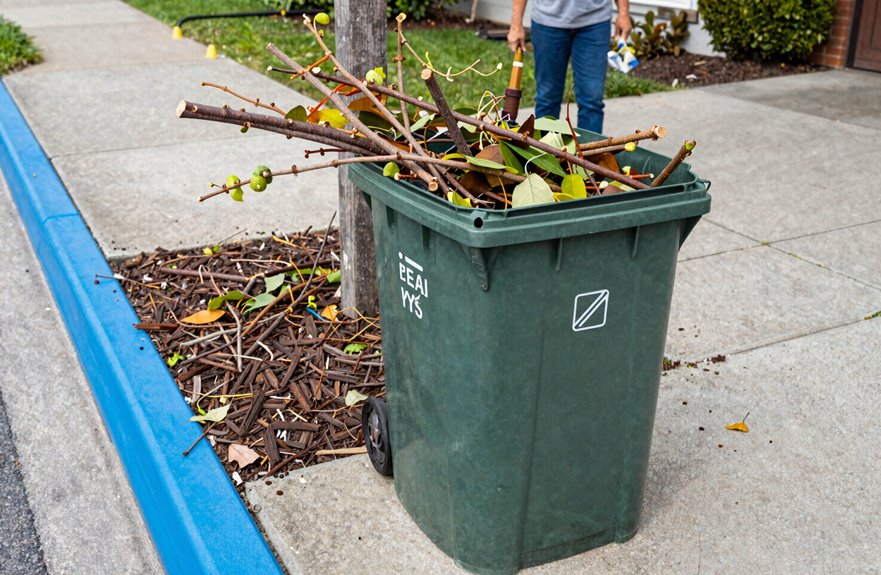
The easiest place to start is right outside your front door. Curbside yard waste pickup, when available, is the most straightforward path for most people.
First, contact your local sanitation department to confirm your seasonal schedule, which usually peaks in spring and fall, and to understand the curbside guidelines. Some towns require yard debris bags, others prefer designated bins, and many accept bundled or bagged branches tied with natural twine (no plastic, or they’ll leave it).
Costs are often included in your municipal yard waste service, though watch for per-bag or per-ton fees if you’re generating significant volume. If curbside compost isn’t available, ask about drop-off locations, which provide an alternative when your pile exceeds bin capacity.
Rent a Dumpster for Large Piles and Storm Debris
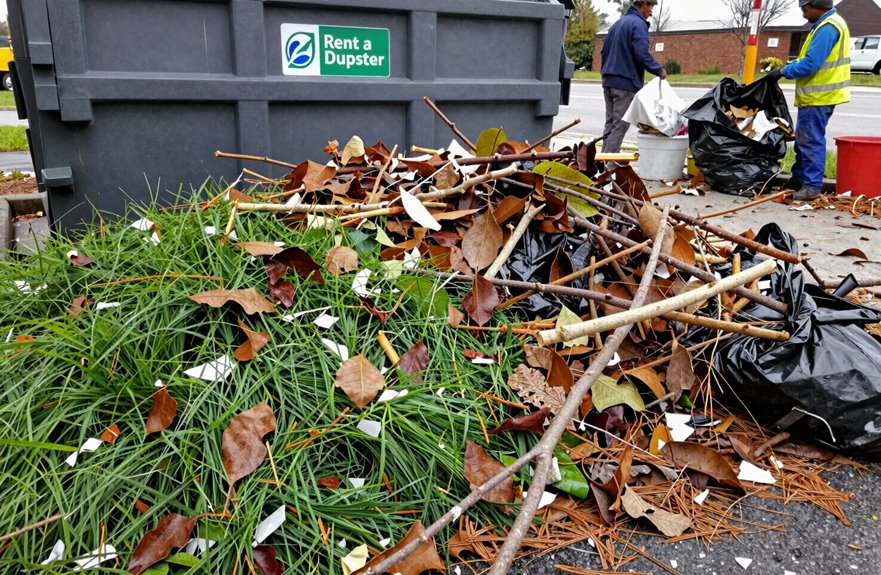
When curbside pickup won’t cut it, such as clearing a half-acre of overgrowth or hauling debris from a downed oak after a storm, renting a roll-off dumpster becomes your best option. For yard waste disposal at this scale, dumpster rental provides the space you need. I typically grab a 10-yard unit (holds 1–2 tons, roughly 30–45 garbage cans) for moderate jobs, though heavy storm debris might push me toward 20 or 30 yards depending on waste volume.
The on-site dumpster sits there waiting without time pressure. You fill it at your own pace over days or weeks. Prices stay upfront, covering delivery and pickup. You can separate recyclables from junk, making debris removal more responsible and reducing waste sent to landfills.
Hire Junk Removal to Skip the Heavy Lifting
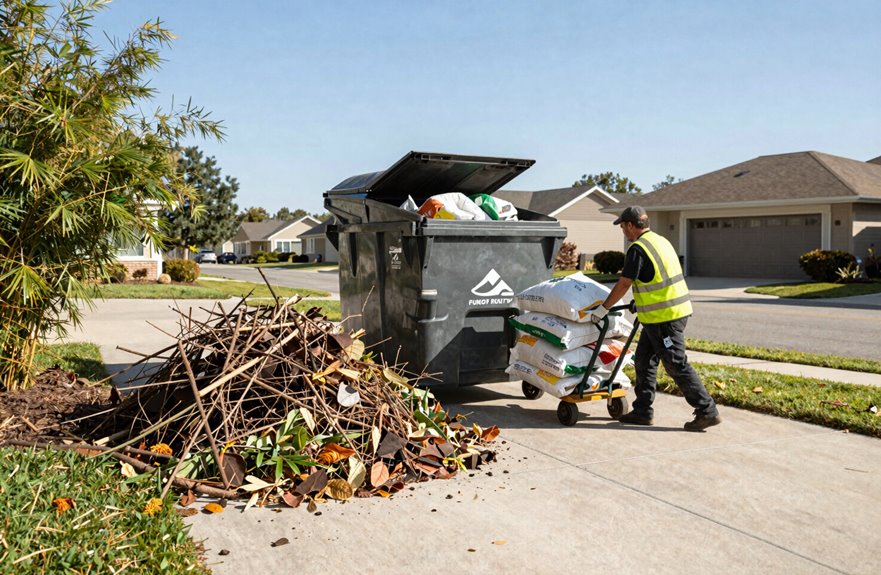
Why break your back hauling branches when someone else will do it for cash? I’ve hired junk removal teams for yard waste removal when my shoulders begged for mercy, and it’s liberating. They handle the strenuous work, load everything, and haul it away without a roll-off dumpster blocking your driveway for days.
Most local waste services start around $450 per truckload, though you’ll need an on-site evaluation for exact pricing since volume and accessibility matter. For large yard projects, costs stack up fast because capacity is limited compared to other waste disposal options.
The upside is that these pros manage yard debris disposal and transport, and many prioritize eco-friendly disposal through recycling. Some bundle yard waste removal with general junk removal, making it semi-convenient. You’ll need to be present for pickup, and it’s rarely the cheapest route.
Compost or Chip Your Yard Waste for Free
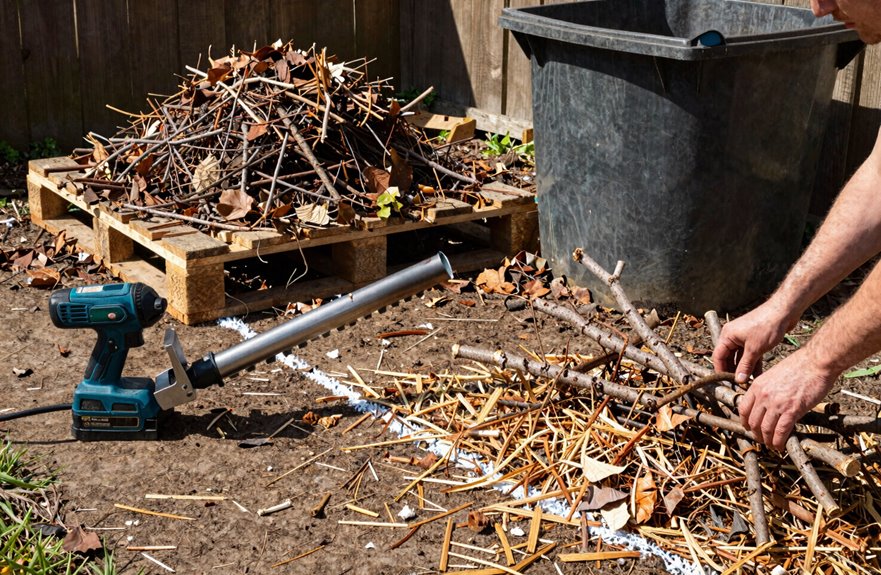
Most weekends, I have two solid options for making my yard waste disappear without opening my wallet: chipping or composting.
Two free ways to make yard waste vanish: chip it or compost it.
I rent a wood chipper (about $75/day) and invite neighbors to share the cost. We turn branches into mulch for paths and tree rings. My debris recycling routine follows these steps:
- Sort green waste into piles by thickness (under 3 inches chips best)
- Layer chipped organic debris with leaves for faster breakdown
- Spread fresh mulch 2–4 inches deep, keeping it 6 inches from trunks
- Mix remaining fines into my DIY composting bins
For compost, I alternate green nitrogen sources (grass clippings, coffee grounds) with brown carbon materials (dried leaves, shredded paper), turn weekly, and keep it damp like a wrung sponge. No local waste collection needed. My yard waste disposal becomes usable garden material.
Haul It to a Municipal Drop-Off Site
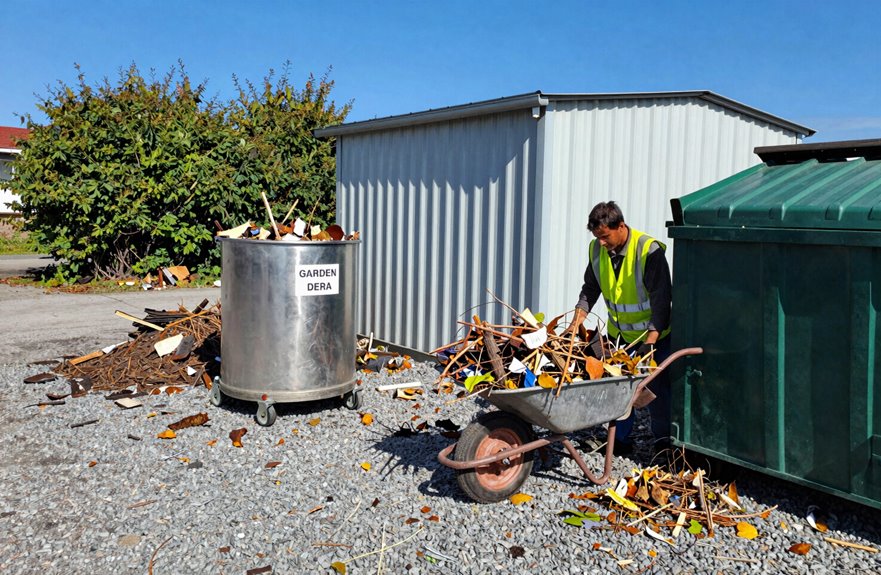
Where do you turn when your chipper’s on the fritz, or you’ve got way more debris than your compost bins can handle? Municipal drop-off sites are a reliable option for garden waste disposal when you’re hauling yard waste solo.
First, check local guidelines, as every town has different requirements. Some require residency proof (your driver’s license works), while others accept anyone. Hours vary, so call ahead. Most sites take bundled yard waste (twine-bound branches, 4-foot lengths, 18-inch diameter max) or loose organic debris in open containers, never plastic bags.
Watch for tipping fees on heavy loads; the last load cost $12 for 500 pounds. If there’s a composting facility nearby, that’s the better option. It keeps waste out of landfills and sometimes costs less. Separate non-organic stuff beforehand; mixed loads get rejected quickly.