
I’ve found five proven ways to keep deer out of your garden.
Start with foul-taste perimeter sprays (Liquid Fence or Deer Off) applied weekly, never on edible parts.
Add physical barriers like eight-foot black mesh netting or two parallel four-foot fences spaced five feet apart; they can’t judge that gap.
Position motion sprinklers every fifteen feet at entry points, rotating them every few days so deer don’t catch on.
Layer these tactics consistently, not just when you remember, and rotate repellent types weekly (mint, then putrescent egg, then garlic clips) before they habituate.
Deer give up when your defenses keep changing.
Building a rotation system prevents habituation and maximizes your garden protection.
Repel Deer Fast: Sprays and Barriers for Immediate Relief
How do you stop deer from turning your garden into an all-you-can-eat buffet tonight? Deer repellents deliver immediate relief.
Deer turning your garden into tonight’s buffet? Repellents stop the feast—fast.
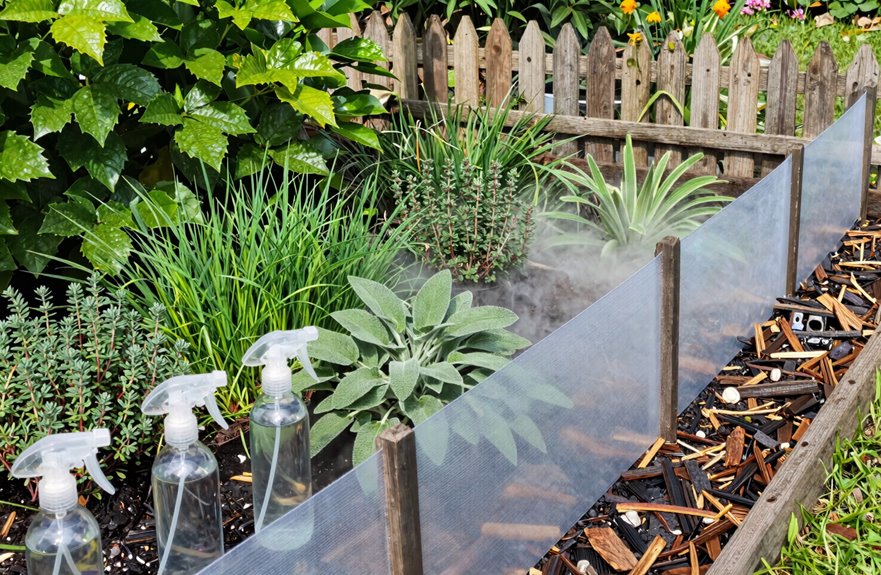
Start with foul-taste spray (think Liquid Fence or Deer Off) as perimeter sprays around your garden beds. Never apply to edibles you’ll eat. Reapply weekly, and definitely after heavy rain, because water washes away your protection fast.
Want better sticking power? Add a spreader-sticker to your mix, especially on trees and shrubs during winter browsing season. It helps the spray cling to leaves longer.
Pair your sprays with a physical barrier for the most effective results. Deer netting works great for small areas, while motion-activated sprinklers startle deer before they commit. Combine tactics, rotate repellents, and you’ll keep them guessing while protecting your garden.
Install Deer Fencing or Netting That Actually Stops Them
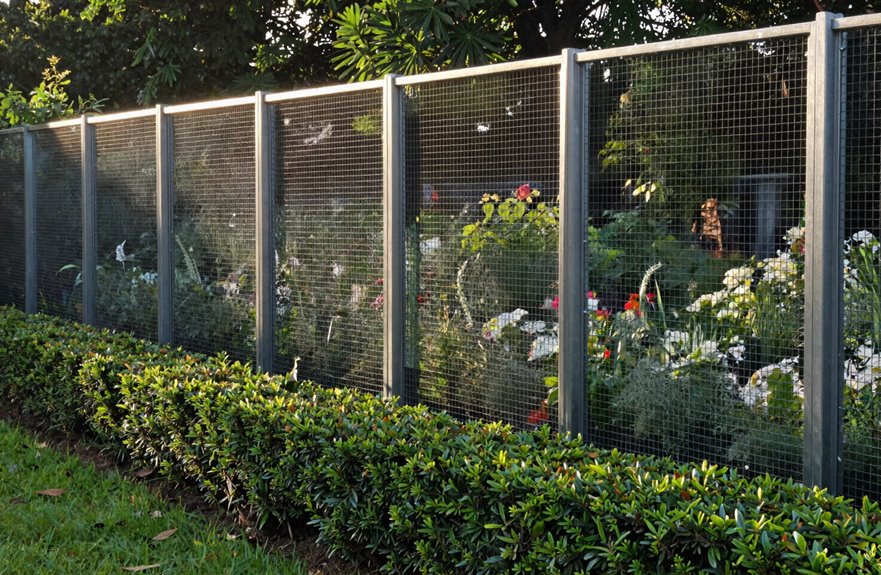
Why settle for half-measures when you can build a fence that actually works? Smart deer fencing exploits a quirk in deer vision: their poor depth perception. Install two parallel fences, each 4–5 feet tall, spaced five feet apart. Deer see the gap, freeze, and move on.
For high-value plants, use eight-foot black mesh netting (nearly invisible). Netting lets you exclude deer from specific beds without walling off everything, perfect for layered defense strategies.
When you need large-area protection, combine outer perimeters with inner plant cages for prized specimens. If considering electric options, keep those disease-free lines weed-free and check local codes. Solar or plug-in models are both viable options.
Apply Deer Repellent on a Schedule (Not Just When You Remember)
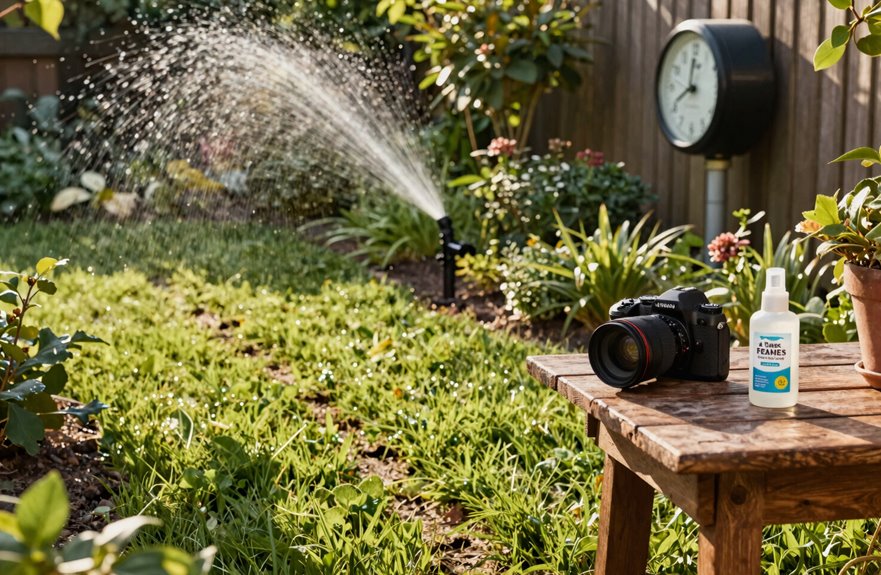
When exactly did you last spray your deer repellent? If you’re like me, you’ve probably forgotten once or twice, or maybe more, and the deer noticed before you did.
Consistency beats intensity every time. Weekly applications of deer repellents create a reliable defense that sporadic spraying cannot match. I mark my calendar now, same day every week, because perimeter protection only works when it’s maintained.
I focus my spray on wooden raised beds and garden edges, not leaves you’ll eat later. For evergreen trees in winter, I add a spreader-sticker, which acts as glue for your spray so active ingredients like rotten eggs and garlic actually stick.
Rain impact is real. One heavy downpour washes protection away. My reapplication timing is immediate after storms, with no exceptions.
Position Motion Sprinklers Where Deer Enter Most
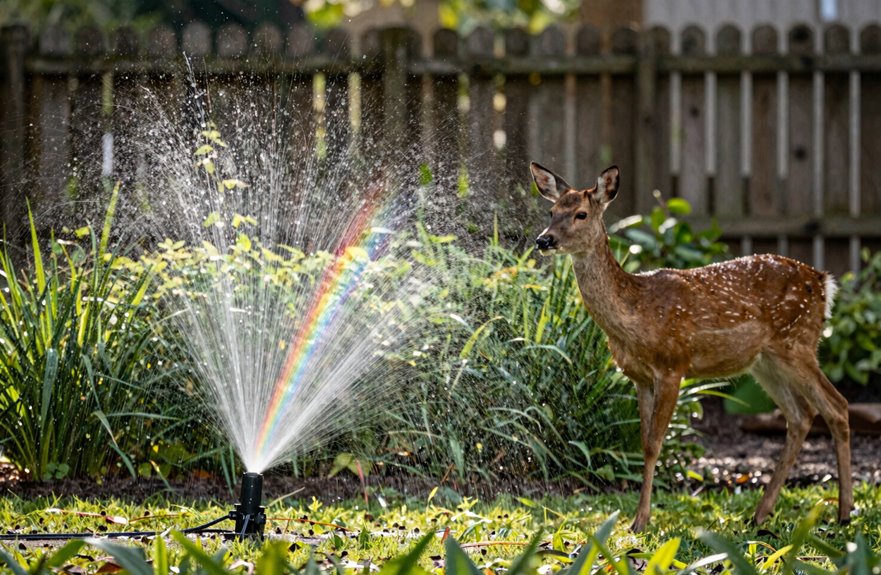
Spraying repellent works, but it shouldn’t be my only line of defense. Motion sprinklers at deer entry points create an immediate surprise that sends them running before they browse my hostas.
I position units along my garden perimeter, especially where trails meet fence gaps, ensuring deterrent coverage hits their subsurface line of sight. For larger spaces, I use multiple sprinklers with coverage overlap. About 15 feet between units works well, so there’s nowhere to sneak through. I choose infrared sensors or day/night sensors for round-the-clock protection, since deer feed at dawn and dusk.
I reposition sprinklers every few days, keeping wildlife deterrents unpredictable. Come fall, I don’t forget seasonal maintenance. Draining lines prevents freeze damage that’ll ruin next spring’s defense.
Rotate Deterrents Before Deer Get Used to Them
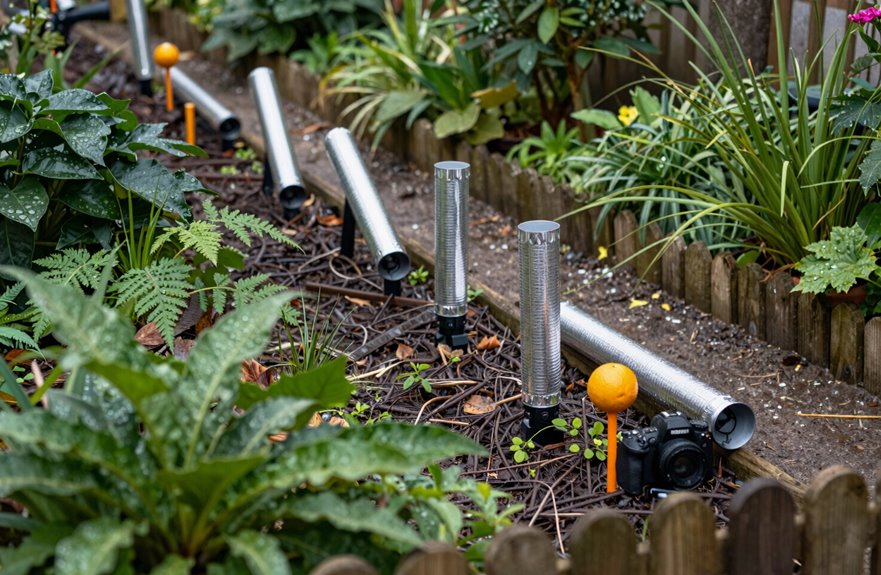
How quickly do deer catch on? They adapt faster than most gardeners expect. Deer habituation is real, and rotating deterrents every few weeks keeps them from becoming desensitized.
Here’s my damage prevention routine: I pair repellents (liquid sprays, 32 oz bottle covers ~500 sq ft) with barrier methods like netting or fishing line strung at 24-inch heights. Timed applications matter too. I spray at dusk when deer pressure peaks, not mid-morning when they’re bedded down.
Deterrent rotation isn’t complicated. Week 1: mint-based repellent. Week 3: switch to putrescent egg formulas, maybe add a motion sprinkler. Week 5: garlic clips on stakes. I monitor tracks and browse patterns (half-eaten hostas indicate they’re testing defenses), then adjust. Consistency beats intensity; weekly applications outperform monthly blitzes.
Garden protection stays strong when you mix up your methods.