
These 13 front yard flower beds run from a few bags of mulch and an afternoon of digging to stone walls and picket fences that cost more up front but last decades.
What settles the choice is how much of the work you want to repeat each spring, and whether your yard drains well or fights you with clay and a slope that needs leveling.
1. Raised Beds

A raised bed lifts your planting soil above the grade of your yard, which buys you better drainage and warms up faster in spring.
A gravel base under a wood frame buys you years before rot sets in; it is the detail that makes raised beds last in a front yard.
I would check how level your site is before building; a slight slope needs one side dug in or shimmed to keep the box from tilting.
Cedar or redwood lasts longer than pine, though the up-front cost runs higher. For a weekend build with basic tools, a raised bed gives you control over soil quality without fighting whatever clay or sand you inherited.
2. Mulching

Dark wood mulch spread thick across a bed does 2 jobs at once: it chokes out weeds that need light to sprout, and it slows evaporation from the soil surface.
A dry creek bed of river rock run alongside mulch gives rainwater somewhere to go instead of washing your work downhill.
I would lay down landscape fabric or a thick layer of cardboard first if your weed pressure is heavy; skip it if you want plants to self-seed.
Replenish every spring since the top inch breaks down. Mulching is the cheapest curb appeal move I know, and a few bags cover more ground than most people expect.
3. Wildflower Explosion
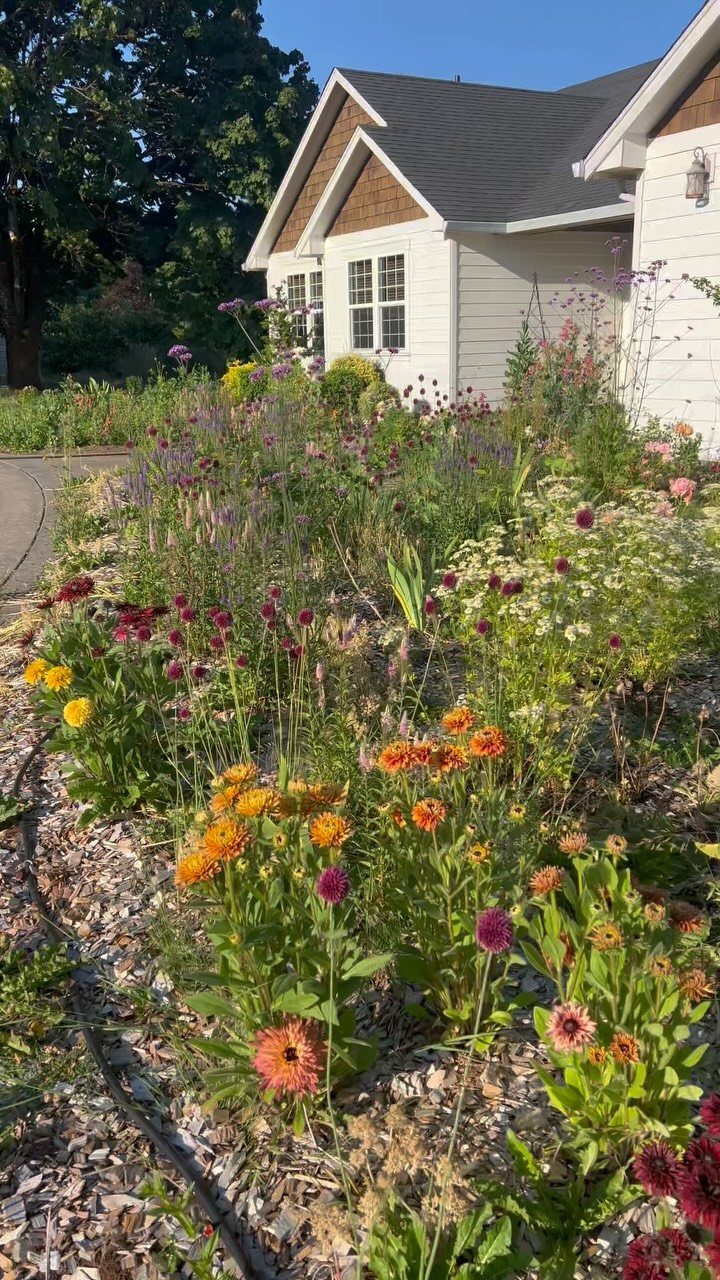
A wildflower bed sown from seed asks less of you than most plantings once it gets going, though the first season demands patience.
Shrubs and perennials need time to hit full stride, so the early look will be thinner than the finished cottage garden you are aiming at.
I would order a regional seed mix matched to your USDA zone rather than a generic bag; what self-seows in Maine reverts to mud in Texas.
Mow once in late fall after seed drop, and resist the urge to fertilize; rich soil actually favors grasses over blooms.
4. Crisp Edging

Brick edging turns the line between lawn and bed into a deliberate statement. Curved brick edging that follows a house wall was almost certainly laid dry without mortar, so the line could bend and shift with frost.
I would dig a shallow trench to set them half-buried; flush with the soil they strim clean, and above grade they trip the mower.
Salvaged brick costs nothing if you know a demo site, though matching sizes matter or the line wanders. The red against dark mulch and green foliage is a classic combination that reads as intention, not accident.
5. Classic Border Bed

A border bed runs along the edge of a walkway or driveway where lawn meets pavement, turning that transition into a ribbon of color.
A curved bed line softens hard geometry from sidewalks and hedges behind it, and I would mark out any curve with a hose before cutting sod; gentle bends read better than tight ones from the street.
Pink against green hedge is a reliable pairing, though I would add something with silver foliage or white bloom for contrast when the pink fades.
This is the entry-level bed: no retaining wall, no irrigation, just soil, plants, and an afternoon of digging.
6. Layered Planting
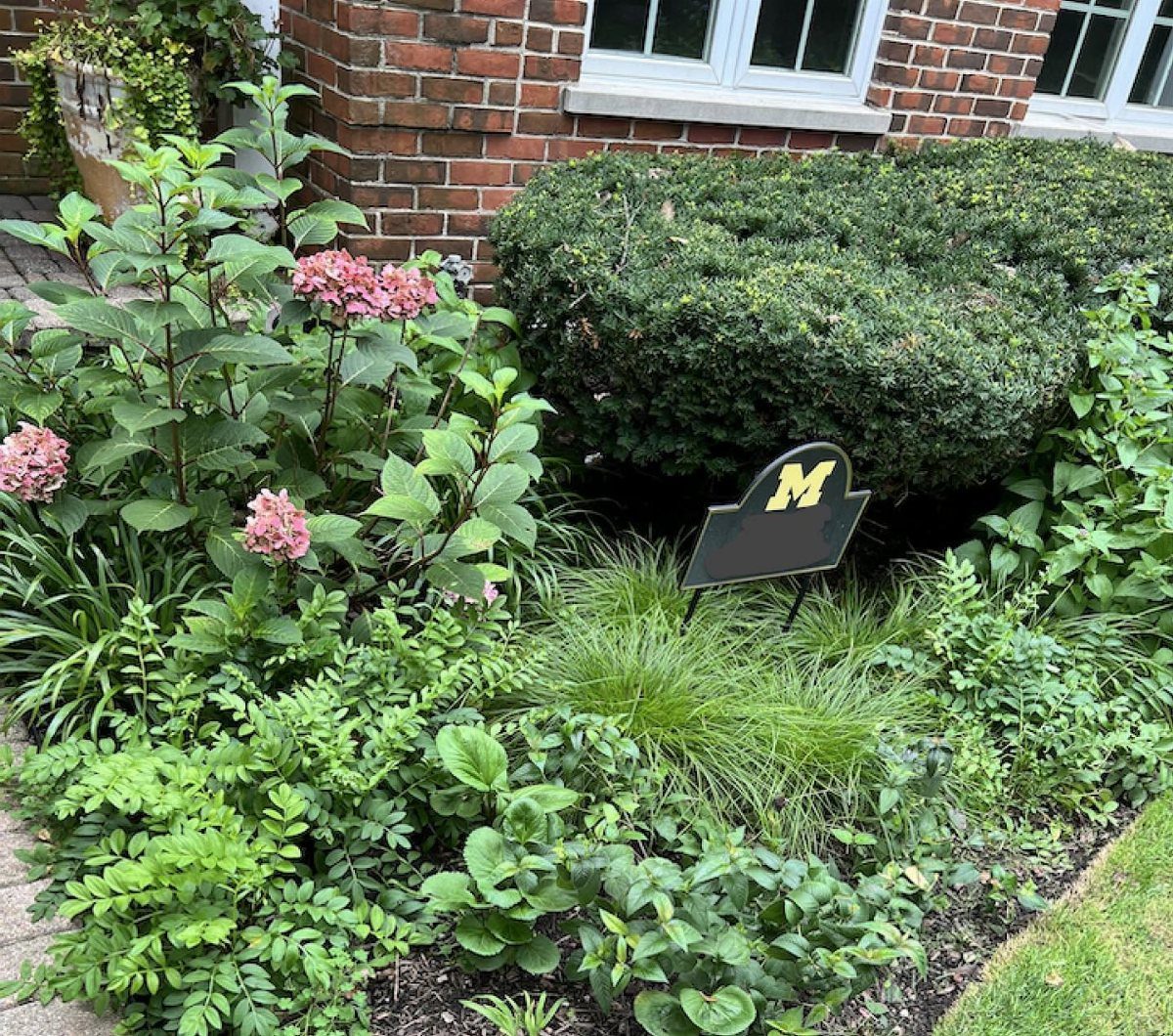
Layered planting builds a bed in vertical bands: knee-high ferns in front, mid-size hydrangeas, then a tall evergreen backing the whole thing against the house.
Each layer hides the leggy stems of what sits behind it, so the bed reads full from every angle.
I would place the tallest plants on the north or east side so they do not cast afternoon shade where you want sun lovers.
Give each layer room to reach mature width; the density you see in a finished photo is years of growth, not a planting-day look. For instant gratification on a budget, buy small and wait.
7. Circular Tree Ring Bed

A ring bed around a tree turns an awkward mowing zone into planted ground. The stone edge keeps mulch from washing into the lawn and protects roots from string trimmer damage.
I would measure the drip line of your tree before sizing the ring; a bed smaller than the canopy looks like a collar, not a base.
Leave some breathing room between mulch and trunk bark, or you invite rot. Flamingos optional, though I would skip plastic lawn ornaments in favor of a second plant layer.
8. River Rock Flower Bed

Stone walls and river rock together make a bed that needs no yearly mulch refresh.
The rock reflects heat, so I would stick with shrubs and perennials that tolerate drier roots; annuals cook here in July. Solar lights tucked between stones give the wall dimension at dusk without wiring.
Building the stone raised bed costs more up front than digging a flat bed, but the rock fill lasts decades. I would lay landscape fabric under the rock, or weedy soil will eventually colonize the gaps.
9. Potted Plants in Gravel
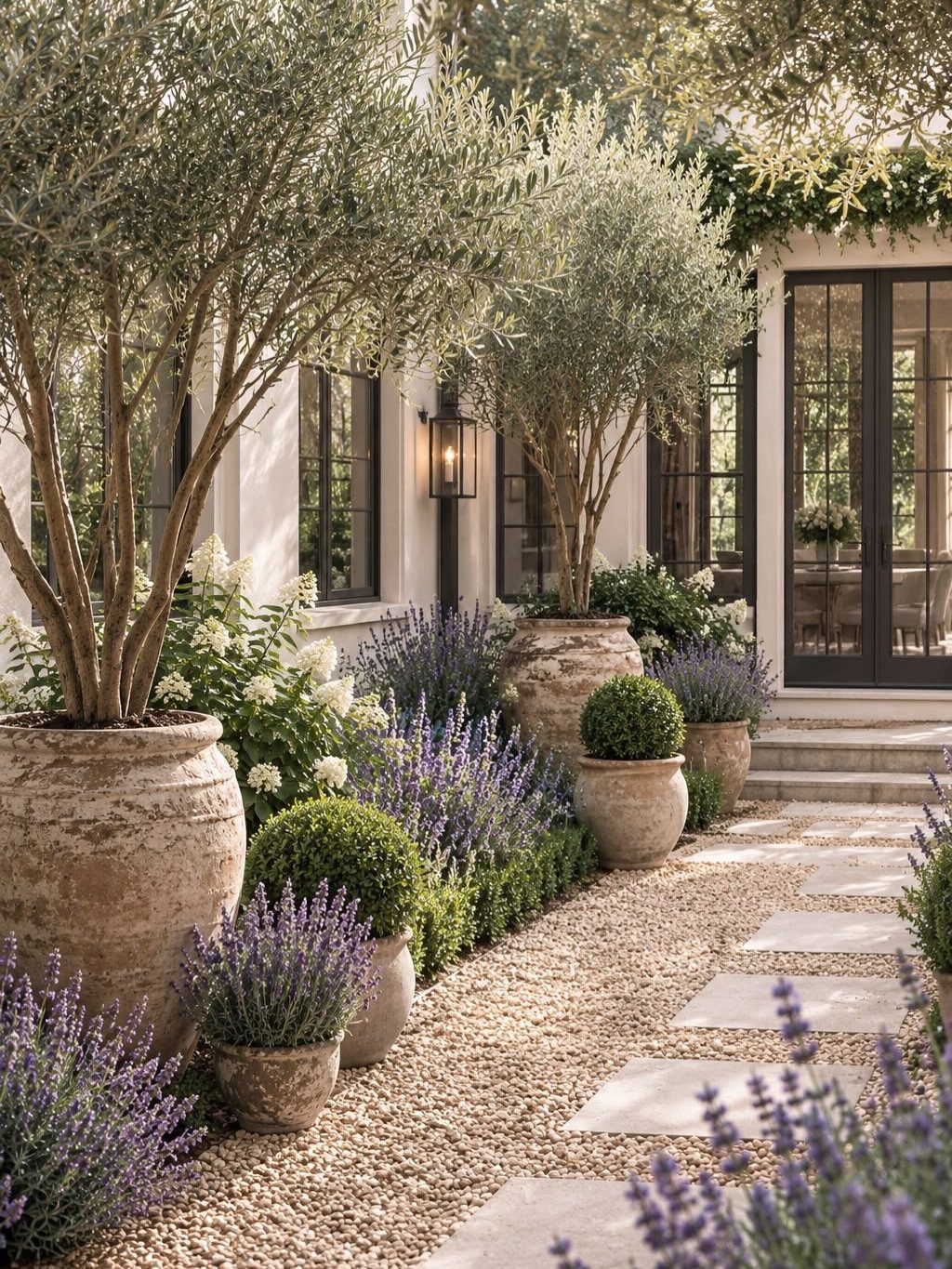
Pots let you build a garden on top of compacted gravel where roots cannot run free.
Large terracotta urns hold enough soil for olive trees to survive, though in cold zones they will need winter shelter. The aged finish on the pots matters; bright new terracotta clashes with lavender’s muted palette.
I would set pots on feet or shims so water drains rather than pooling to crack the clay. This is rental-friendly ground; take your garden with you when you leave.
10. White Stone Mulched Bed

White stone mulch reflects light upward, which reads clean against dark siding and makes hydrangea blooms pop from the street.
The stones do not break down, so the bright look lasts without spring replenishment. I would check that your water reaches the soil beneath; stone can shed rain to the edges and leave roots dry.
Dark-leaf evergreens behind the hydrangeas give the bed backbone once the flowers brown in August. Pavers as edging contain the scatter that white rock otherwise drifts into lawn.
11. Drought-Tolerant Gravel Bed

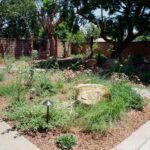
Crushed stone mulch and desert plants trade weekly watering for a hose-down twice a season.
Cacti and wildflowers together need sharp drainage; I would grade the bed slightly so rain runs through rather than pooling. The fine gravel here looks softer than chunky rock, though it tracks into the house more readily on shoes.
This suits the Southwest and any zone where summer water restrictions bite. At home I would skip any signage and let the plants speak.
12. Picket Fence Flower Bed

A fence gives a bed instant architecture and a backdrop that makes flower colors read from a distance.
I would plant tall yellow and orange at the back, pink and purple mid-height, with nothing in front that hides the fence’s lower rail; the white slats are half the design.
Perennials against wood need air circulation or mildew follows; space plants for mature spread, not nursery size.
The fence sits behind the flowers, so it hides the view of leggy stems from the yard side and gives the bed a little structure without the tightness foundation beds demand.
13. Foundation Flower Bed

A foundation bed runs the length of your house wall, softening the transition from siding to lawn and giving the front of your home its finished look.
Hostas handle the root competition and reflected heat that come with sitting close to walls, while hydrangeas give you summer structure without the height that blocks windows.
I would check your roofline before planting; wide eaves cast dry shade underneath, and gutters that overflow will beat anything you set directly beneath them.
Leave a gap of a few inches between mulch and siding so moisture does not wick into wood or stone. A window box above repeats the bed’s colors upward, which ties the whole facade together without extra digging.
This is the bed that faces the street every day; it rewards the steady work of dividing perennials and editing spreaders before they swallow the edging.
Maintenance Advice
Mulch is your first defense, but depth matters more than most people think. Water deeply and less often rather than sprinkling daily; shallow watering trains roots to stay near the surface where they dry out fast.
Drip lines or soaker hoses put water where roots actually live, and early morning timing cuts evaporation loss.
Perennials cost more at purchase than annuals, yet they return each year and ask less once their root systems establish. I would group plants by water need so you are not over-serving drought-tolerant natives while neighbors wilt.
Once their roots are established, plants that handle dry spells and suit your particular climate rarely need much from you in the way of pruning or feeding.
Good prep on the front end, spent on soil and layout, pays back in seasons where the bed mostly tends itself.
Plant Selection
Start with what you like, then check hardiness. A plant that cannot survive your winter is not low maintenance; it is temporary.
I would include natives not from obligation but because they have already solved your soil and pest problems. Black-Eyed Susans and Purple Coneflowers are reliable native picks that feed pollinators and need little beyond room to reach mature size.
Texture and color spread across the season matter more than any single bloom week. I would mix foliage shapes, flower forms, and plants that peak at different months so the bed never hits one note and fades.
Summer dry spells hit more places than just the desert, so I look for varieties that can handle a stretch without water wherever I plant.
Give each plant the spacing its mature spread demands; the nursery tag is not generous, it is honest. Crowded plants compete, mildew, and need more intervention than a loose planting ever does.
Frequently Asked Questions
How to build a flower bed without digging?
Cardboard laid flat over grass smothers it in a season; pile soil and compost on top and plant straight through once the sod underneath has died off.
The cardboard blocks light and smothers the turf underneath, then breaks down into the soil over a season.
Wet it well and weigh it down with mulch or soil so it does not dry out and blow away. By the time roots reach through, the grass below is dead and rotting.
What is the 3-5-7 rule in landscaping?
The rule means planting in odd-numbered groups of 3, 5, or 7 rather than even pairs. Odd groupings look more natural and less symmetrical than matched sets, which read as formal or rigid.
I would use 3 for a small bed where each plant needs room to show, and 5 or 7 where you want a mass of color or texture to read from the street.
What flowers look good in a flower bed?
Black-Eyed Susans and Purple Coneflowers are reliable native perennials that feed pollinators and need little beyond room to reach mature size.
Petunias, marigolds, and zinnias will bloom heavy from late spring straight through frost if you deadhead now and then; seed packs run a couple dollars and one flat fills a small bed.
I would mix heights with tall at the back and short up front, and pick varieties that handle dry spells so the bed does not collapse in a hot week.
What’s the cheapest way to edge a flower bed?
A sharp flat spade and 2 hours of slicing along your line costs nothing and leaves a crisp edge that lasts until the grass creeps back.
Dig a shallow trench along your marked line and slice the sod vertically; the raw cut alone reads as intention.
Basic plastic or metal edging runs a few dollars at hardware stores if you want a more finished look that holds its shape.
What is the best shape for a flower bed?
Wide, lazy curves look natural from the curb; tight wiggles or dead-straight lines tend to read as fussy or institutional.
Mark any curve with a garden hose before cutting sod; walk to the sidewalk and look back to see how it reads at speed.
Round beds around trees work well too, sized to match the drip line so they look like a base, not a collar.