
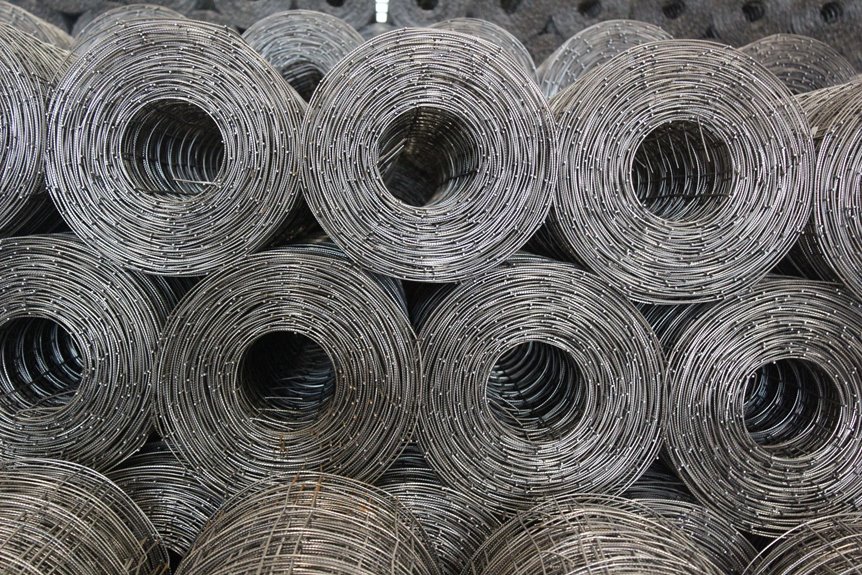
I’ve learned that “chicken wire” actually covers six distinct products, and picking wrong means losing birds. You’ve got budget galvanized hex mesh (1-inch openings, 19–20 gauge) that stops basically nothing determined, then PVC-coated black hex wire that buys you time against rust but still won’t stop raccoons. Real protection starts with 1/2-inch hardware cloth (welded, not twisted), available in galvanized or PVC-coated for damp climates. Stainless steel runs 3–4 times the cost but lasts decades. Welded wire mesh (heavier gauge, half-inch or one-inch squares) builds permanent runs that sag less. Finally, electric poultry netting handles pasture rotation but needs active power. Each serves a purpose, though only three actually protect against predators you’ll actually face, and the following sections walk you through exactly which those are.
When Chicken Wire Fails: Predators, Rust, and Escape Artists
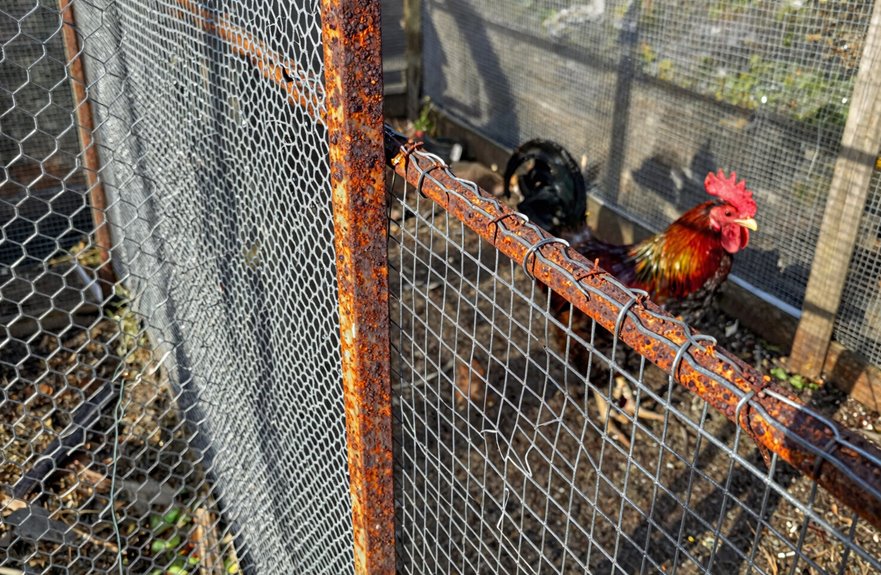
Why do I keep seeing chicken wire labeled as the go-to predator deterrent when it’s about as secure as a screen door on a submarine. This lightweight mesh, usually 20 gauge with 1-inch hexagonal openings, offers zero predator-proof protection against dogs, foxes, raccoons, and weasels who tear through it like wet paper. Even snakes and small predators slip through gaps, while baby chicks squeeze out and larger birds injure themselves poking through. The rust-durability issue hits hard too; galvanized coatings help but don’t last forever, especially where soil contact or wet climates accelerate corrosion. Pre-galvanized coatings applied before weaving last longer than post-galvanized options, yet neither matches hardware cloth or PVC-coated alternatives in longevity. For roofing, it might slow hawks, but determined predators easily overcome it.
Woven Chicken Wire Options: From Budget Galvanized to Rust-Proof Stainless
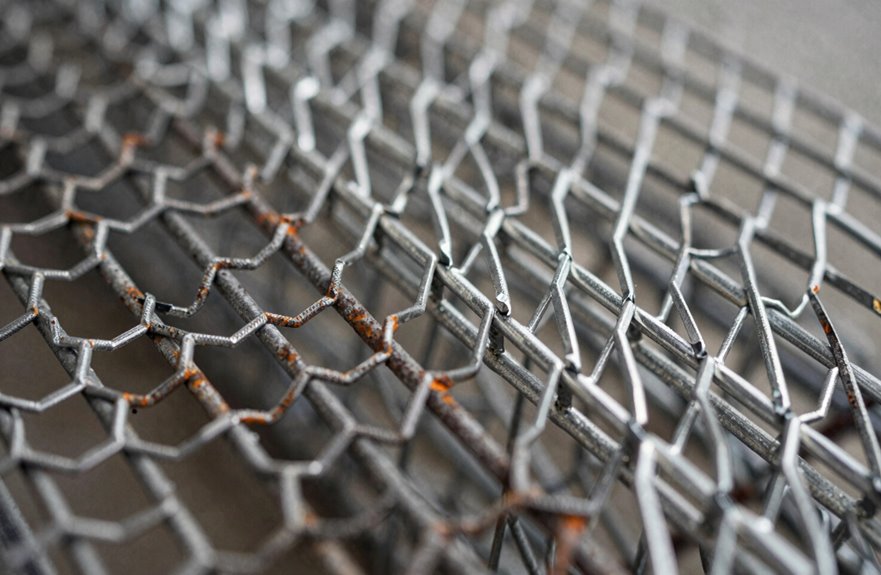
So how do we actually pick between all these woven options without breaking the bank or watching our fence dissolve into orange dust? Staring at hardware store shelves reveals these practical distinctions.
Galvanized wire is our budget-friendly starting point: mild steel dipped in molten zinc, giving us that familiar silver mesh. It’s light, flexible, and lets us see our birds clearly. The coating comes pre- or post-weave (post lasts longer, usually), so check the label. In dry climates, galvanized wire performs reliably for years. Coastal environments present a different challenge.
That’s where Stainless Steel steps up. Same flexibility, same weight, but it’ll outlast our grandchildren. Yes, it stings upfront; think 3-4x the price. You’re buying decades, not seasons.
For most of us, galvanized handles the job adequately. For permanence and rust resistance, stainless steel justifies the higher cost.
Black PVC Coated Chicken Wire: Safer Edges, Slower Corrosion
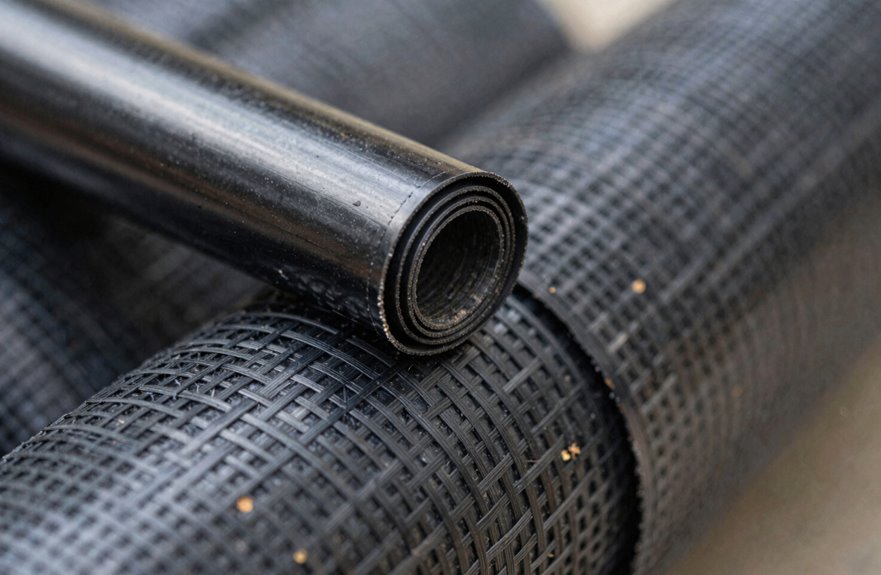
I’ve found that black PVC coated chicken wire solves two headaches at once. The plastic layer, usually 0.5mm thick, rounds off those nasty wire burrs that’ll slice your palms during installation, and it buys you years against rust in damp climates where standard galvanized stuff starts weeping orange stains within a season or two. You’re essentially getting the same lightweight, bendable skeleton as regular galvanized wire; it’s easy to form around corners and simple to staple with your standard fencing stapler. The tough plastic skin resists moisture effectively. When you need predator protection that outlasts your chickens without the cost of stainless steel, this option provides reliable durability and corrosion resistance at a reasonable price point.
Safer Handling Edges
What if you didn’t have to treat every roll of chicken wire like it was out to get you. I’ve been there, bleeding through my work gloves after wrestling standard galvanized steel. The PVC-coated version changes everything.
That black plastic layer, which functions like a thick, flexible sleeve, wraps each wire and blunts those sharp edges that slice knuckles. When I’m unrolling a 24-inch by 150-foot section, I don’t flinch anymore. The coating rounds off corners where raw metal would bite.
You still get the same galvanized steel core underneath, so strength isn’t compromised. I can twist, shape, and staple without bandages. For weekend projects with kids helping out or just protecting your hands, the reduced risk of cuts and puncture wounds means you’ll actually finish the job instead of hunting for first-aid supplies.
Enhanced Corrosion Resistance
Those safer edges are just the beginning of what this coating does for you. The corrosion resistance is what truly sets it apart and will make your fence outlast your neighbor’s complaints about your rooster.
Standard galvanized chicken wire, your basic zinc-coated steel, holds up fine in dry climates. Add moisture and rust creeps in like an unwelcome relative. The PVC coating on black chicken wire serves as a protective barrier. You’re looking at years, sometimes double the lifespan, in wet, humid, or coastal conditions where salt air corrodes metal.
I’ve installed this in Pacific Northwest drizzle and Florida downpours, and it performs consistently. The PVC coating creates a waterproof barrier over the galvanized base. Even if you nick the surface, you still have zinc protection underneath. The additional cost provides measurable longevity in harsh environments.
Durability Comparison Benefits
How does this stuff actually hold up against the regular galvanized option when you’re putting it through its paces? I’ve wrestled with both, and the PVC coating over galvanization makes a real difference you can feel.
That extra layer blunts those nasty wire ends, eliminating the sharp edges that cause cuts during handling. It also locks out moisture that corrodes plain galvanized wire. I’ve seen standard stuff rust through in two salty seasons near my buddy’s coastal coop, while my black PVC-coated run’s going strong at year five.
The combo of zinc galvanization plus PVC barrier handles weather better, grips easier during install, and resists wear from constant handling. Sure, it costs more upfront and flexes slightly less for heavy brute-force jobs, but for most of us building lasting enclosures, the durability wins justify the investment. The extended lifespan and reduced maintenance requirements offset the higher initial cost over time.
Hex Mesh vs. Hardware Cloth: Know the Structural Difference
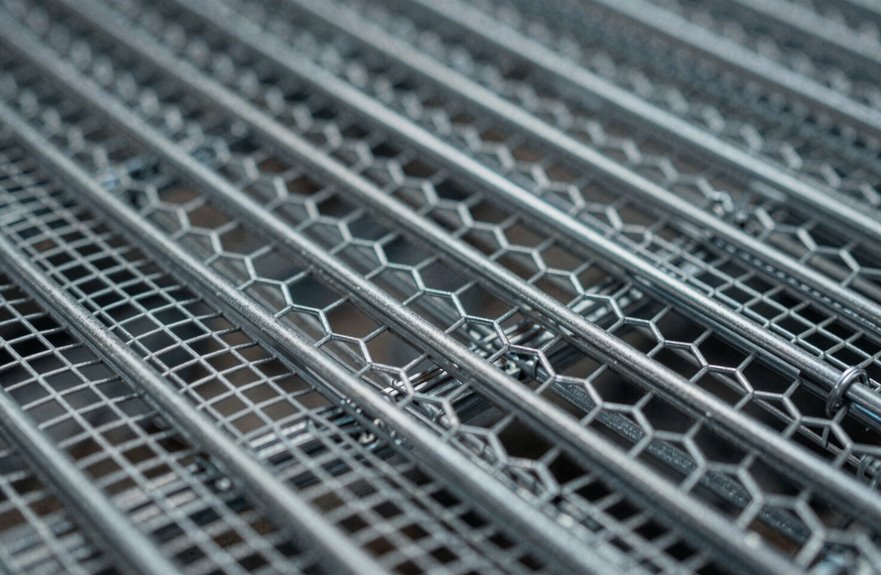
You’ll want to understand the structural divide between hex mesh and hardware cloth before you commit to either, since their mesh patterns, wire thicknesses, and predator-stopping abilities differ dramatically in practice. Hex mesh relies on thin, woven galvanized steel (about 19 or 20 gauge, roughly 0.04 inches thick) shaped into those signature 1-inch hexagons, which makes it wonderfully pliable for wrapping tree trunks or making lightweight pens but leaves it vulnerable to determined raccoons or digging dogs. Hardware cloth, by contrast, uses heavier welded wire (typically 19 gauge for 1/4″ mesh, or 16 gauge/0.06″ for serious jobs), formed into rigid square grids as small as 1/4-inch, and that combination of heft and tight spacing is what keeps weasels, snakes, and even mice from accessing your coop.
Mesh Pattern Variations
The mesh pattern you choose significantly impacts your coop’s security. I once lost three hens to a raccoon that tore through Hex mesh like it was paper. Consider these key differences:
- Hex mesh uses thin, woven wire with 1-inch hexagonal openings. It’s flexible and cheap, but provides minimal predator resistance.
- Hardware cloth features welded squares, typically 1/2 inch or smaller, and stops weasels and rats effectively.
- Hex mesh bends easily by hand; Hardware cloth requires tin snips and considerable effort to cut.
- The rigidity in Hardware cloth ensures lasting protection for vents, windows, and run lids.
I’ve upgraded every opening since. Your flock will be protected behind proper welded wire.
Material Thickness Comparison
Why does one roll feel like a flimsy fence and the other like a stubborn fortress? Hex mesh, that classic chicken wire, uses thin galvanized steel woven into 1-inch hexagons. It’s flexible, but I can bend it with my thumbs, and so can a determined raccoon. Hardware cloth tells a different story. We’re talking welded wire, often 1/2-inch openings or smaller, that resists my pliers. The real difference lies in performance. Hardware cloth holds its shape when stapled to coop frames, while hex mesh sags and twists. For ground barriers or vents, hardware cloth is the stronger choice. Hex mesh works for temporary garden fencing, but permanent installations require hardware cloth.
Predator Protection Levels
Because I’ve learned the hard way, I don’t trust hex mesh to stop anything hungrier than a confused squirrel. Those 1-inch hexagonal openings are basically a welcome mat for raccoons, weasels, and anything with teeth and determination. I’ve seen hex mesh torn like wet paper by a motivated predator.
Hardware cloth is where you’ll find effective protection. With welded 1/2-inch (or smaller) openings, it’s rigid enough to stop digging, chewing, and clawing. Key differences between these materials:
- Opening size: Hex mesh at 1 inch versus hardware cloth at 1/2 inch or less
- Construction: Twisted wire (hex mesh) versus welded joints (hardware cloth)
- Burrowing defense: Hardware cloth extends 12 inches underground; hex mesh fails here
- Longevity: Galvanized hardware cloth resists rust for years
PVC-coated options exist, but metal hardware cloth remains the most reliable choice.
Hardware Cloth: Stop Weasels, Snakes, and Digging Predators
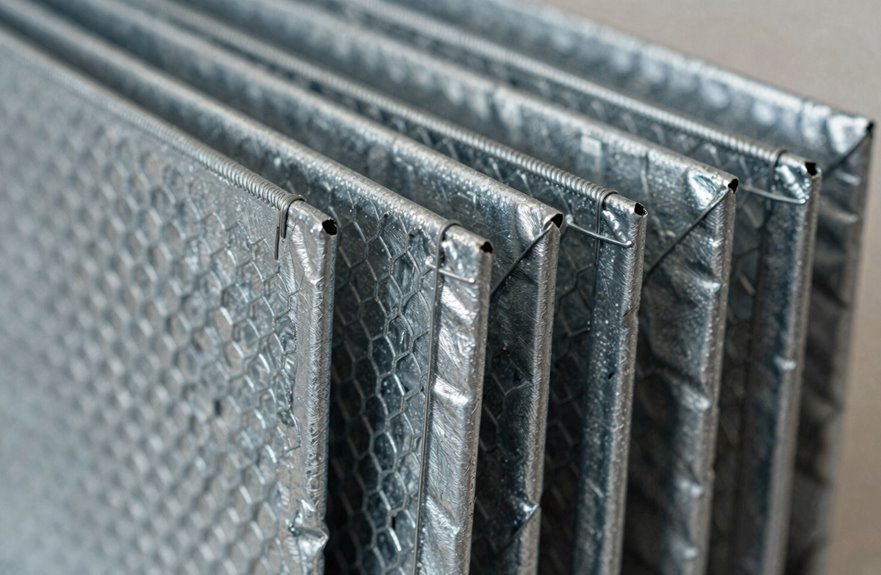
When I’m trying to keep my flock safe from every predator that thinks my coop looks like an all-you-can-eat buffet, I reach for hardware cloth every single time. This welded wire mesh features openings no larger than 1/2 inch (usually 1/4 or 1/2 inch), creating serious predator protection against weasels, snakes, and rodents that slip right through standard chicken wire. Hardware cloth stops determined diggers and persistent chewers because it resists bending, tearing, and brute force attacks.
I install galvanized hardware cloth on windows, vents, and run perimeters where durability matters most. The zinc coating fights rust for years outdoors. For extra longevity, I’ll grab PVC-coated hardware cloth (the green or black stuff), which adds another rust barrier without sacrificing strength. The galvanized or PVC-coated options both provide reliable protection against predators.
Welded Wire Mesh: Build Permanent Runs That Last Decades
Hardware cloth keeps the small stuff out, but sometimes you need something beefier for the bones of your setup. Welded wire mesh provides superior protection for predator-proof runs that’ll outlast your flock.
I switched to welded wire mesh for my main run three years back, and I should have done it sooner. The heavier gauge steel, welded into a rigid grid with half-inch or one-inch openings, resists raccoons who’d shred poultry netting like tissue paper. Here’s why fellow chicken keepers swear by it:
- Galvanized or PVC-coated options fight rust for 10+ years
- Rigid structure means no sagging or tearing under pressure
- Easier to cut and bend than hardware cloth (tin snips work fine)
- Perfect for run boundaries, coop vents, and ground-level barriers
This material forms the structural foundation your permanent setup requires.