I’ve wrestled with enough kinked rubber monsters to know hoses aren’t one-size-fits-all. For everyday watering, I grab the 3.9-pound Zero-G (crush-proof to 900 lbs, coils without tangling) or a stainless steel armored hose. The stainless steel option weighs under three pounds for 50 feet, and rose thorns won’t puncture it. Expandable hoses work for tight spaces (17.5 to 50+ feet), but they’re specialty tools, not daily workhorses. Coil hoses suit small patios, heavy rubber handles high-pressure arcs up to 40 feet, and soaker hoses gently soak raised beds at 10–25 PSI. Selecting the right hose for your specific yard work prevents equipment frustration and improves watering efficiency.
Best Lightweight Garden Hoses That Won’t Kink or Leak
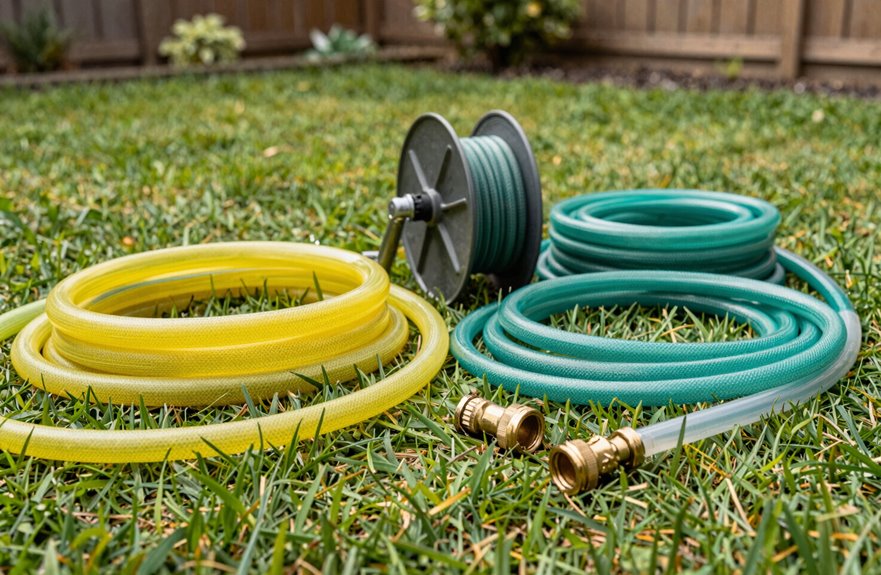
Why wrestle with a heavy, kink-prone hose when you can enjoy watering your garden. The lightweight hose community offers real advantages.
The Zero-G Ultra Flexible delivers significant performance: just 3.9 pounds for 100 feet (you can lift it with one finger), and it withstands 900 pounds of crushing force. It’s properly kink-resistant, so you won’t need to reposition it every ten feet.
For tighter spaces, the Orbit Coil with ABS threads offers a 3/8-inch diameter and stretches to 44 feet, making it ideal for patio containers. The Pocket Hose Silver Bullet expands from 17.5 to 50+ feet for true portability, though you should replace that nozzle.
Rubber or reinforced vinyl construction with brass fittings eliminates leaks and kinks. These materials are what separate reliable hoses from problematic ones.
Stainless Steel Garden Hoses: Lightweight and Puncture-Proof
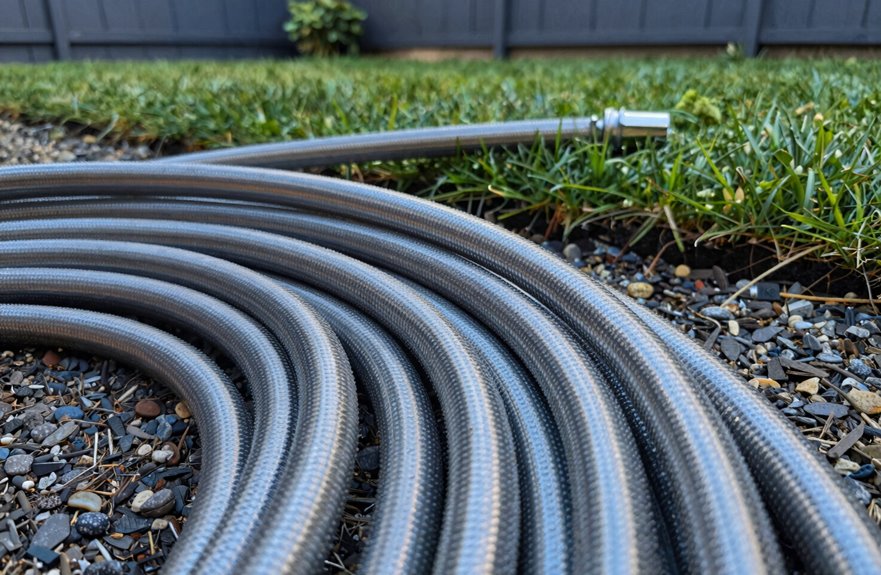
How often have you dragged a hose across sharp gravel or watched a puppy turn your vinyl line into a sprinkler. I’ve experienced both, which is why I switched to stainless steel hoses.
These metal hoses deliver puncture resistance that withstands thorns, nails, and enthusiastic teeth. I’ve dragged mine across my driveway, which is full of stray construction debris from last summer’s patio project, without a single pinhole. The lightweight durability stands out most; my 50-foot coil weighs under three pounds, so I’m not wrestling fatigue after watering the tomatoes.
The construction uses an interlocking steel shell (flexible armor) wrapped around a slim water channel. You get strength without the bulk and maneuverability without worry. For regular watering tasks, stainless steel hoses function as practical protection you can actually carry.
Hybrid Garden Hoses Like Zero G for Everyday Durability
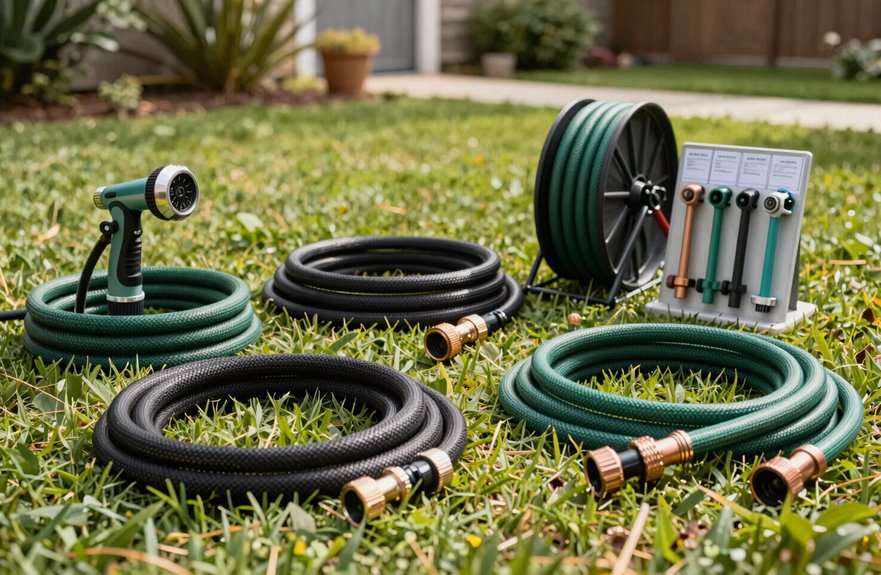
I’ve found that hybrid hoses like the Teknor Apex Zero-G strike a sweet spot for daily gardening, weighing just 3.9 pounds for 100 feet (that’s roughly the weight of a small bag of sugar) while resisting kinks that’ll drive you nuts mid-project. You’ll appreciate how it coils without tangling, and those crush-proof couplings rated to 900 lbs mean you won’t need to worry when you accidentally back the wheelbarrow over it. Sure, it might pick up some dirt or mulch along the way, but for lightweight maneuverability that won’t wear out your arms during long watering sessions, this style offers solid durability for everyday use.
Zero-G Performance Benefits
The Zero-G Ultra Flexible Garden Hose is the kind of tool that makes you wonder why you ever wrestled with those heavy, kinking monsters from the hardware store. The Zero-G weighs just 3.9 lbs for 100 feet, which is lighter than most toddler backpacks. The durability isn’t marketing fluff. Those crush-proof couplings handle 900 lbs of pressure, so you won’t need to panic when you accidentally drive over it with the wheelbarrow. The tangle-free coil eliminates the frustration of fighting spaghetti piles in the garage. For everyday watering, this lightweight hybrid delivers reliability without the arm workout. Gardeners who’ve switched to it benefit from a genuinely practical solution.
Lightweight Daily Use
While heavy rubber hoses can feel like you’re dragging a python through your petunias, hybrid designs like the Teknor Apex Zero-G hit a sweet spot you didn’t know you were missing. At just 3.9 pounds for 100 feet, this lightweight champion won’t wreck your shoulders during daily watering rounds.
The durability here is legitimate. Crush-proof couplings withstand 900 pounds, so you won’t panic when accidentally driving over it. Zero-G’s no-kink performance means you’re not fighting tangles mid-task, and it coils neatly without the memory issues that plague cheaper vinyl options.
For everyday yard chores, you want something that attaches easily, moves with you, and won’t leak at the first temperature swing. This hose delivers on all three fronts.
Expandable Garden Hoses: Why They Break and Who Should Buy Them
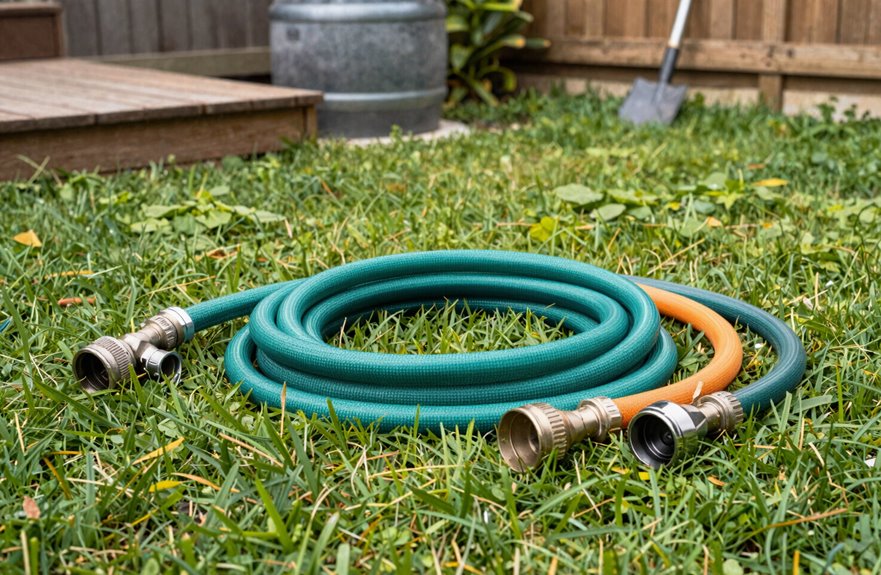
I’ve watched too many expandable hoses (like the Pocket Hose Silver Bullet) fail when needed most, usually because of cheap plastic couplings or missing shut-off valves rather than the fabric itself. These lightweight wonders, roughly half the weight of a traditional rubber hose, excel at quick watering jobs in tight spaces, but they’re not built for daily abuse or leaving under summer sun pressure. If you’re considering one, choose a model with brass fittings (not aluminum or plastic), treat it as a specialty tool for light chores, and you’ll avoid the premature ruptures that plague bargain-bin versions.
Common Failure Causes
Although expandable hoses seem like a dream come true, shrinking down to pocket size, weighing practically nothing, and promising to banish hose wrestling forever, they fail quickly and predictably.
What actually kills them:
- Weak couplings crack under stress. Brass fittings matter; plastic or aluminum ones corrode, leak, and snap when you’re halfway through watering your tomatoes.
- Pressure drop from cheap internal tubes causes the hose to shrink mid-use, leaving you ten feet short of your hydrangeas.
- Coupling durability fails where the fitting meets the fabric, creating that telltale spray-back that soaks your shoes.
- Nozzle valves jam open or closed, turning your gentle mist into a pressure-washer surprise.
- The outer fabric tears on deck edges, door frames, or that one rose bush you forgot about.
Ideal Use Cases
So where does this pocket-sized miracle actually shine? I’ve found expandable hoses, like the Pocket Hose Silver Bullet (it stretches from 17.5 feet to over 50 feet), absolutely excel at quick, light chores where you’re constantly moving around. If you’ve got a small balcony, patio garden, or compact yard, you’ll love how these weigh roughly half what traditional hoses do. I can literally carry one in one hand while holding my coffee in the other. Storage becomes almost embarrassingly easy too; just drain it, and it shrinks down to something that fits in a drawer. Regarding durability: these aren’t suitable for daily heavy-duty watering. Weaker plastic or aluminum couplings, which lack brass fittings, create potential breakpoints under pressure. Skip them if you need integrated valves or year-round reliability. Choose one for occasional reach tasks where convenience matters more than extended lifespan.
Coil Garden Hoses for Small Patios and Container Watering
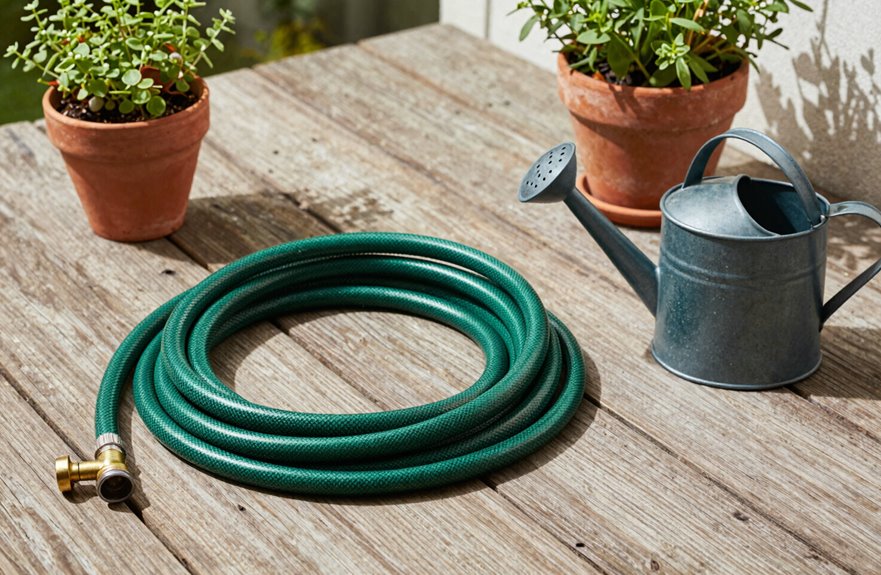
Where do you stash a full-size hose when your “yard” is basically a postage stamp and a few pots on the stairs? Coil hoses became my solution for small spaces. They shrink down to nothing when you’re done, springing back into neat loops you can tuck behind a planter or hang on a hook.
What makes them worth considering:
- Compact coiled construction eliminates kinks and tangles
- Lightweight builds (usually under 3 pounds) save your back
- Specialty connectors fit tight corners and narrow walkways
- Plastic fittings keep weight minimal (though brass lasts longer)
- Short reach (typically 15-50 feet) suits container watering perfectly
The trade-offs are real. They can snag on stair rails, and flow rates run lower than traditional hoses. For portable, space-conscious watering, they work well.
Heavy Rubber Garden Hoses for Maximum Pressure and Distance
You’ll find heavy rubber hoses excel when you need serious grunt behind your water flow. Because they expand far less than vinyl under pressure, they maintain full PSI to your nozzle, meaning you get 40-foot arcs instead of the sad 15-foot dribble from cheaper options. Sure, you’re lugging 15 pounds per 50 feet, but that’s the trade for blasting second-story gutters or running sprinklers 200 feet from the spigot without frustration.
Maximum Water Pressure Handling
Why does pressure matter so much when you’re trying to reach the far corners of your yard? Without adequate water pressure, you’re stuck dragging that heavy-duty hose around, frustrated and half-soaked.
To maximize pressure handling, focus on these key specifications:
- Choose a 3/4-inch hose (the wider diameter moves serious volume, about 23 gallons per minute)
- Prioritize rubber construction that resists kinking mid-stream
- Look for UV-resistant materials that won’t crack after one summer
- Select brass fittings over plastic (they won’t blow off under stress)
- Add quick-connect attachments for seamless pressure transfer
Cheap hoses require frequent replacement, while quality hoses last for years. A single investment in a durable hose eliminates equipment failures and frustration during regular watering.
Extended Spray Reach Coverage
What kind of watering distance are we really talking about here? With a heavy rubber hose, I’m getting serious pressure that pushes water 40, 50 feet or more, perfect when my flower beds sit way past the patio, or I’m reaching those stubborn foundation shrubs without dragging the sprinkler around.
Extended reach isn’t just length; it’s maintaining that oomph, measured in PSI (pounds per square inch), so the spray doesn’t turn into a sad dribble halfway there. Rubber handles high pressure beautifully, staying flexible enough that I’m not fighting kinks every ten minutes. Sure, these hoses weigh more. My 50-footer clocks in around 8 pounds dry, but the durability trade-off is worth it.
For true extended reach, UV-resistant, reinforced rubber won’t crack when winter hits, and that pressure stays steady season after season.
Retractable Hose Reels That Save Storage Space
A retractable hose reel is the difference between a tidy patio and a trip hazard waiting to happen. After wrestling a tangled 100-foot hose across my driveway too many times, I learned that retractable hose reels transform your storage space from chaos to calm. They’re worth the investment for the organization alone.
What matters most:
- Six-inch latching stops (like on the Ayleid 100-footer) let you pause exactly where you need
- All-metal construction, such as Liberty Garden’s seven-position locking pin, survives years of abuse
- Auto-retract mechanisms, found on Giraffe’s 130-foot model, whisk hoses away effortlessly
- Swivel mounts prevent kinking at the wall connection
- UV protection and debris brushes extend reel life in harsh sun
You’ll avoid the frustration of managing a sprawling hose across your yard.
Extra-Long Garden Hoses for Large Yards Without Splicing
Once you’ve got your reel mounted and your hose neatly stowed, you might notice something: 100 feet doesn’t always provide adequate coverage. Dragging two hoses across the yard means dealing with splices (those connection points that frequently leak). Extra-long hoses solve this problem, stretching 150 to 200+ feet without the need to couple multiple pieces together.
For large properties, a 5/8-inch diameter model works well. It moves about 17 gallons per minute, delivering solid pressure without the bulk of a fire hose. The trade-off is managing all that length. A quality hose reel becomes essential here, providing kink-free storage and keeping things organized. Look for UV-resistant materials, brass fittings, and quick-connect compatibility. This setup prevents the common Saturday morning task of untangling a tangled hose.
Soaker Hoses: When They Work and When They Fail
Why fight with sprinklers when you can let gravity do the work. Soaker hoses work well for raised beds and mulched borders, where slow, steady moisture mimics gentle rain rather than a forceful spray.
What makes them effective:
- Keep water pressure low (10–25 PSI), or you’ll blow out the perforations
- Lay them flat, no kinks, and don’t bury them too deep (2 inches max under mulch)
- Space rows 18 inches apart for even coverage in clay soils, 12 inches in sand
- Check durability before buying—rubber lasts 5–7 years, recycled vinyl often cracks by season three
- Flush them monthly to prevent mineral buildup from hard water
When they fail, it’s usually user error. Handle them with care, and they’ll deliver deep, happy roots.
Brass vs. Plastic Fittings: What Lasts
Your hose could last ten years, but its fittings might tap out in two if you pick wrong. I’ve learned this the hard way, standing in a puddle of my own making.
Let’s talk brass fittings versus plastic fittings. Durability matters more than you’d think. Brass fittings cost more upfront, usually $3–5 extra per fitting, but they’re corrosion-resistant and built to last. I swap hoses season after season, and my brass ones still thread smooth.
Plastic fittings tempt you with lighter weight and cheaper price tags (think $2 versus $6), but they’re prone to cracking, especially if you’re the type who yanks hoses around corners. Under heavy use, plastic fittings wear down, cross-thread, or snap when you need them most.
For longevity, brass wins. Choosing brass fittings means avoiding premature replacement costs and failures during regular use.