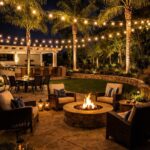
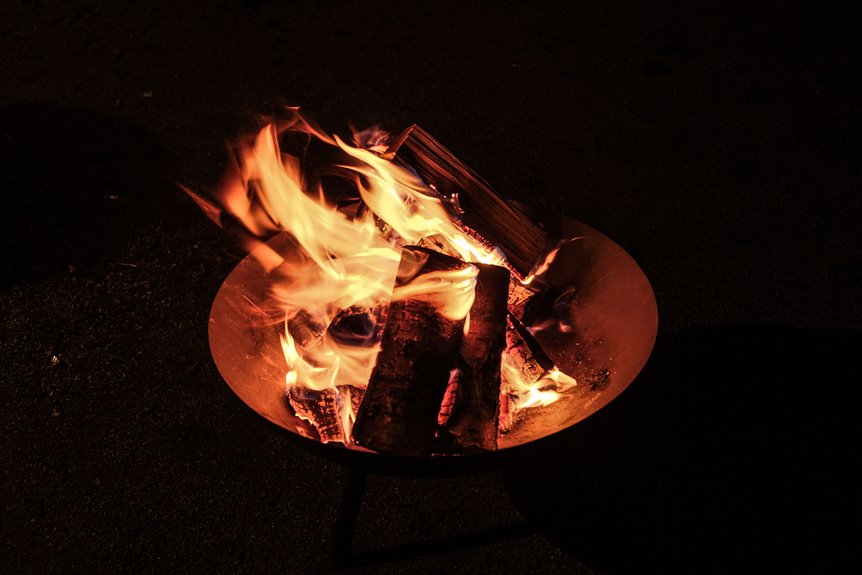
I’ve helped hundreds of homeowners pick between these two. Fire pits give you that 360-degree gathering circle with serious radiant heat (think 100,000–200,000 BTU from wood), while fire tables top out around 65,000 BTU but give you a usable 6–12 inch perimeter for drinks and snacks.
Pits need 10 feet of clearance and spark screens; tables squeeze onto narrow patios and flip from flame to coffee table in seconds.
Wood demands 15–20 minutes of ash cleanup per burn, gas needs monthly valve checks.
Your seating layout decides it: circular democracy versus linear conversation.
Your fuel choice (portable propane tanks, permanent natural gas lines, or split oak) determines your maintenance requirements.
Heat reach, safety certifications, and whether that indoor-rated bioethanol model delivers sufficient performance for your space are the key factors to evaluate.
Fire Pit vs. Fire Table: Core Differences Explained
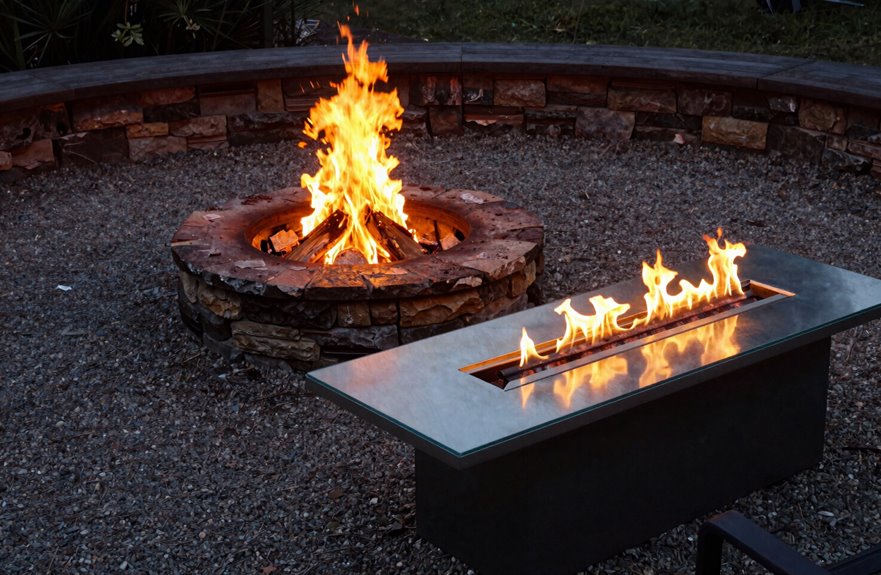
So, how do you actually choose between a fire pit and a fire table when both promise cozy flames and outdoor vibes? Both options have distinct advantages depending on your needs.
Fire pits stand alone with a 360-degree flame chamber. Everyone gathers around, and no one’s left out. Fire tables embed that burner into a table structure, so you’re not just staring at flames; you’re resting drinks on a usable perimeter surface, usually 6–12 inches wide.
When fuel matters, wood-burning fire pits dominate for raw heat, while fire tables lean propane or bioethanol. Some indoor-capable models even include an Indoor Safety Tray and Efficiency Ring for apartment dwellers craving that communal spark.
Space dictates everything. Fire pits need 10+ feet clearance for embers. Fire tables squeeze into narrow patios, acting as room dividers between seating groups.
Heat Output Compared: Which Warms Your Patio Better?
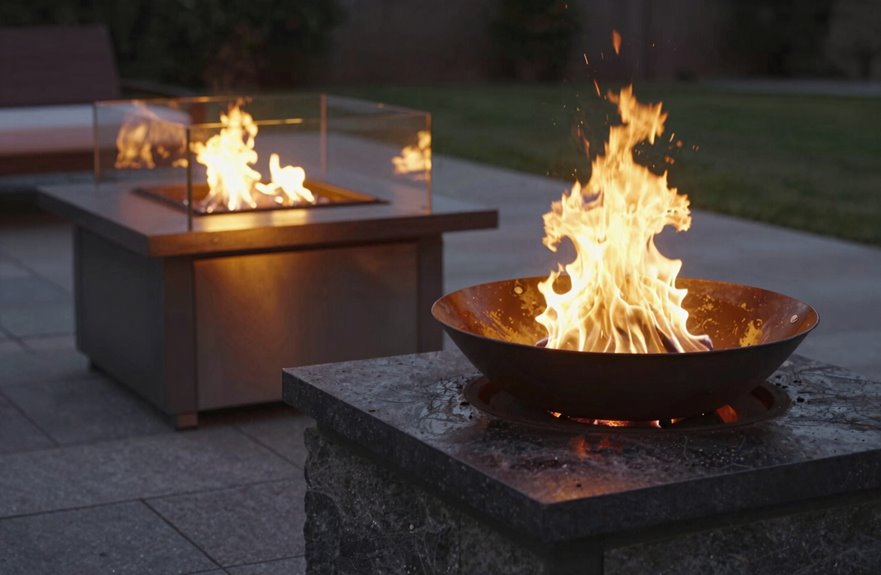
BTU ratings translate to warmth you can feel in different ways depending on your heat source. A 50,000 BTU fire table can feel chilly at six feet while a 40,000 BTU fire pit keeps you toasty at the same distance. Wood is unpredictable, throwing off heat between 100,000–200,000 BTUs depending on your log size and airflow. Gas gives you dial-controlled comfort, but seating distance matters more than the sticker on the box. Pull your chairs within 3–4 feet of either unit, and you’ll notice the difference immediately.
Whether you’re choosing propane (portable, 20-pound tank swaps) or natural gas (permanent line, no refills), match your fuel choice to how you actually use the space. Close conversation calls for focused heat, while sprawling gatherings need that wide, pit-style radiation.
BTU Ratings Explained
When you’re trying to figure out which outdoor fire feature will actually keep you warm on a chilly evening, BTU ratings become your best friend or your biggest source of confusion. BTU (British Thermal Units) simply measures heat output; higher numbers mean more warmth potential. Bioethanol units typically deliver 12,860–20,433 BTU/h, while propane fire tables often pump out around 65,000 BTU/h. Raw numbers don’t tell the whole story. Heat distribution matters enormously. Fire pits spread radiant warmth in a wider circle, perfect when you’re hosting a group and everyone’s seeking that cozy belonging. Fire tables concentrate heat upward, prioritizing ambiance over blanket-like comfort. Your fuel type influences this too, affecting how that warmth actually reaches you. Wind and seating distance will reduce the heat you receive faster than expected.
Wood Versus Gas
BTU ratings tell you what a fire feature *can* do, but they don’t tell you what it’ll actually feel like when you’re sitting there with a drink in your hand. When I’m choosing between gas and wood-burning options, I think about how we actually gather. I’ve found wood-burning pits deliver serious heat output. That crackling, wide flame throws radiant warmth in every direction. Gas tables give me flame control I can’t match with logs, since there’s no need to adjust logs at midnight. For pure heat delivery, nothing beats seasoned oak in an open pit; the radiant heat hugs you even from a few feet back. Gas models, whether propane or natural gas line, burn cleaner, but their heat output concentrates upward rather than outward. A wood-burning pit works best for winter hangouts, while gas is better when you’re eating and need that tabletop space.
Seating Distance Matters
How far back can you actually sit and still feel the warmth? I’ve tested this myself, and seating distance changes everything.
- Wood fire pits push serious heat output, letting you lounge 6–8 feet back and still toast your toes
- Gas fire tables keep flames lower, so you’ll want chairs within 3–4 feet (cozy, but cramped for big groups)
- Flame height on gas models rarely exceeds 12 inches, while my pit shoots flames 2–3 feet high
- Wind exposure kills gas heat fast. I’ve watched guests shiver while my pit performs adequately in gusts
- Fuel type matters. Propane burns cooler than natural gas, and both lose to seasoned oak
Your fuel type and wind exposure determine where friends actually gather. I arrange my pit seating in a wide circle, but my table setup stays tight, almost intimate. The layout you choose directly affects how your group interacts.
Fuel Types and Setup: Wood, Propane, or Natural Gas?
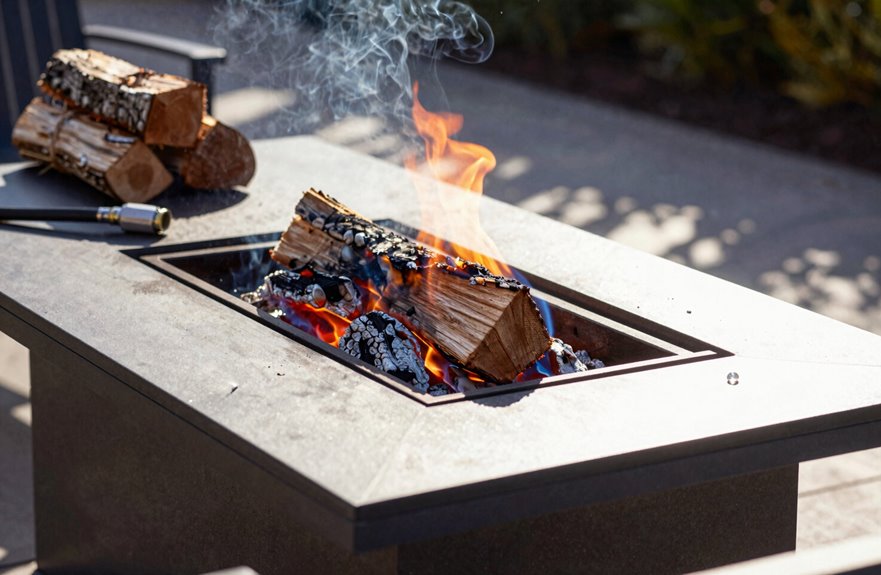
Wood-burning setups demand clearance (at least 10 feet from structures, plus a spark screen you’ll forget to use), while gas connections, whether propane with its 20-pound tank swaps or natural gas with a hardline, need certified installers and pressure tests that shouldn’t be DIY projects. Some units let you convert later (check the orifice sizes and burner ratings first), but matching your fuel to your space now prevents wrestling retrofit kits mid-season.
Wood-Burning Setup Requirements
Before you pick out that perfect fire feature, consider whether you’re ready to commit to the wood life, or if flipping a switch sounds more appealing. If you’re leaning toward a wood-burning setup, you’re joining a community that values crackling flames and smoky nostalgia. This fuel source demands significant commitment in both cost and time investment.
Here’s what you’re signing up for:
- Ash cleanup after every burn (think shovel and metal bucket, not your kitchen trash)
- Maintenance including grate scraping and spark screen checks
- Installation on non-combustible surfaces only; concrete pavers, gravel, or dedicated fire pads
- Proper clearance: 10 feet from structures, overhanging branches, and wooden decks (embers spread easily)
- Seasoned hardwood stockpiling, because wet wood compromises fire quality
The ritual requires dedication and planning. Evaluate your readiness accordingly.
Gas Connection Options
Maybe wood-burning isn’t your speed, and that’s perfectly fine. You want that fire without the smoke in your eyes and the woodpile taking up half your patio.
When you’re picking your fuel type, you’ve got two main connection options: propane or natural gas. Propane’s the plug-and-play choice. Grab a 20-pound tank (the same one your grill uses), hook it up, and you’re glowing in twenty minutes. No tools, no permits, no fuss.
Natural gas means running gas lines, which takes planning. You’ll need a plumber (budget $500–$1,500), a fixed location, and a quick-connect fitting. The payoff is significant: infinite fuel, no tank swaps, and instant flame at the turn of a knob.
Both give you controlled heat, clean burning, and the kind of gathering spot your friends linger around. Choose what fits your setup.
Fuel Conversion Possibilities
So you’ve got your heart set on a fire feature, but you’re stuck on fuel. What happens when you want options down the road? Fuel conversion possibilities deserve careful consideration before purchase.
Here’s what matters when keeping your options open:
- Fire pits typically offer wider fuel flexibility (wood, propane, or natural gas) versus many fire tables that lock you into gas configurations
- Some convertible models let you switch between propane and natural gas, though you’ll need to verify compatibility before buying
- Installation requirements differ dramatically. Natural gas demands permanent hardline connections with proper venting
- Safety standards vary by fuel type, so certification labels (CSA, UL) become essential for validating safety compliance
- Propane delivers portable flexibility at approximately 65,000 BTU/h, while natural gas trades portability for continuous supply without refilling
Check conversion kits early in your decision process. This step prevents costly modifications or incompatible purchases later.
Off-Season Utility: Empty Fire Pit or Usable Table Surface?
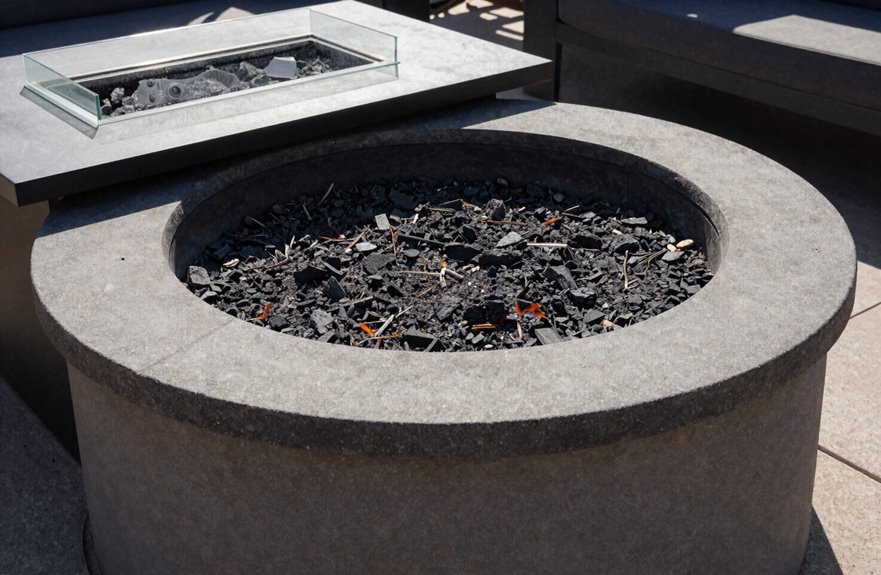
Why let your outdoor centerpiece sit unused half the year? Traditional fire pits become useless metal bowls when summer hits, their weather dependence leaving you with an empty, awkward space you’re constantly working around.
A fire table surface completely changes the game. You can flip a switch, extinguish the flame, and keep right on using that perimeter for drinks, books, or a potted succulent. The table utility doesn’t quit when temperatures rise.
Your off-season use becomes seamless, since designs range from compact end tables (think 18 inches square) to full coffee tables spanning 48 inches. Whether propane-fed and indoor-capable (with proper ventilation, always check local codes) or strictly outdoor, you’re gaining functional furniture, not just flame.
Seating Layouts: Circular Fire Pits vs. Linear Fire Tables
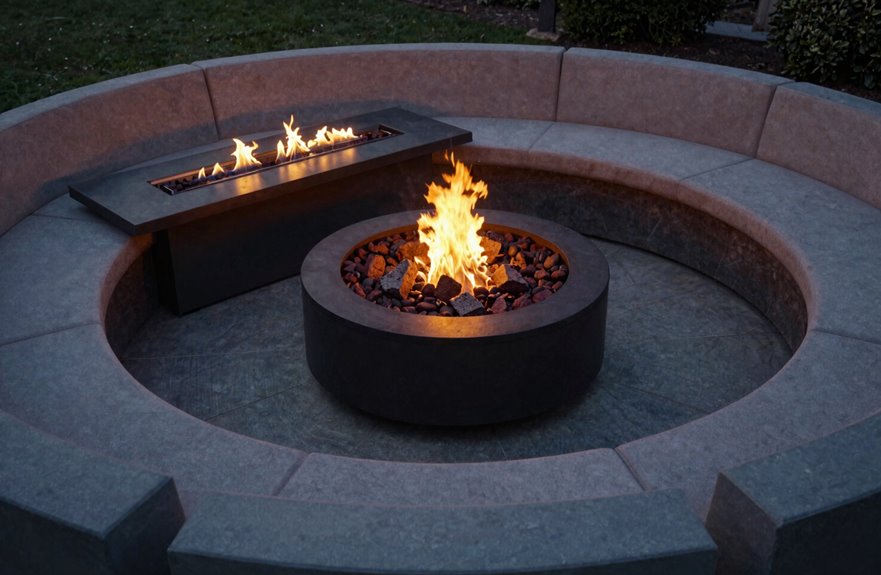
Because I’ve spent too many nights awkwardly straddling a log just to feel the warmth, seating layout is where fire pits and fire tables really diverge. Fire pits draw us into a circle, where we’re equals sharing stories across 360 degrees of flame. Fire tables create something different: a linear gathering where faces align, not encircle.
When choosing between these seating layouts, consider these factors:
- Circular fire pits demand open space (think 8–10 feet diameter minimum) for that democratic, campfire vibe
- Linear fire tables squeeze beautifully into narrow patios, balconies, or between sectional pieces
- Fire pits radiate expansive warmth outward, inviting loose, shifting arrangements
- Fire tables preserve precious tabletop real estate for drinks, phones, s’mores supplies
- Pits become the room’s heart; tables act as elegant dividers between conversation zones
Your space, your crew, your call.
Maintenance Requirements: Ash Removal or Gas Servicing?
How often do you want to get your hands dirty? That’s the core difference between these two options.
With fire pits, expect real hands-on maintenance. After every burn, you’ll spend 15–20 minutes removing ash with a metal scoop, 5-gallon bucket, and shop vac for fines. Debris cleanup is necessary so your flames stay bright and heat spreads evenly. You’ll manage embers and spent logs regularly.
Fire tables operate differently. Gas servicing involves checking connections with soapy water to spot leaks, inspecting valves and ignition systems monthly, and wiping the burn area clean. No ash residue accumulates.
Both need covers when idle, and wind guards require regular inspection. Fire pits demand more frequent tending, while fire tables require consistent but lighter maintenance routines.
Safety Profiles: Open Flames vs. Controlled Gas Burns
Fire pit hazards aren’t just theoretical; they’re hot, unpredictable, and surprisingly close to your ankles with 24-inch diameter burn zones and zero barrier protection. Gas table controls provide an instant-off safety mechanism through a simple knob turn that wood-burning pits cannot match, though you’ll still need to check propane connections with soapy water every season. When someone trips, a spark jumps, or wind suddenly shifts at your backyard gathering, these two fire sources perform very differently.
Fire Pit Hazards
Where exactly does the danger lurk when you’re gathered around a crackling fire? I’ve learned fire pit hazards hide in plain sight, especially with open flames dancing unpredictably. Unlike gas fire tables, wood-burning pits demand constant attention.
Key hazards include:
- Embers can travel 10-15 feet on breezy nights, threatening nearby furniture
- Ventilation matters enormously. Poor airflow traps smoke and carbon monoxide
- Spark screens (mesh domes costing $40-80) aren’t optional accessories; they’re essentials
- Open flames need 10-20 foot clearances from structures, significantly more than gas alternatives
- Wind gusts steal warmth and scatter burning debris unpredictably
I never skip the screen. I’ve felt too many surprise sparks landing on my sleeve. The 360-degree warmth feels communal, but that belonging requires responsibility. Cleanup, vigilance, and respecting what open flames actually demand are non-negotiable.
Gas Table Controls
Gas tables flip the script on everything previously mentioned with wood pits. With gas table controls, you get instant on/off capability without waiting for embers to die or midnight water bucket duty. The safety features are certified: interlock systems cut gas if something’s wrong, efficiency rings (metal collars that concentrate heat), and top trays that stop spills from becoming disasters.
Indoor safety isn’t just marketing; it’s EN 16647 certified, requiring proper ventilation and those safety trays mentioned above. ANSI Z21.97 covers outdoor versions. Wind screens (glass barriers, usually 6-8 inches tall) keep flames steady when breezes kick up, so you won’t need to dance around flare-ups. Controlled burns mean you can use gas tables on a patio or in a living room with consistent, manageable flames.
Pricing Breakdown: Fire Pit and Fire Table Costs Compared
When you’re standing in front of a display at the home store, trying to decide between a fire pit and a fire table, the price tag often settles the debate before you’ve even finished comparing BTU outputs.
Here’s what determines where your dollars go:
- Fire pit costs typically run $200–$800 for basic models, while fire table prices start around $500 and climb past $2,500 for premium designs
- Propane and natural gas setups differ: propane tanks (portable, swap-and-go) versus hardline gas (permanent, pricier upfront)
- Installation budgeting jumps with natural gas. Professional line work costs $500–$1,500
- Table surface value means you’re buying furniture, not just flame
- Convertible fuel models cost 15–20% more but future-proof your patio
Your choice determines how you gather.
Small Space Fit: Compact Fire Pit or Space-Saving Fire Table?
Once you’ve settled on a budget that won’t torpedo your summer plans, the real puzzle becomes where this thing’s actually going to live. I’ve squeezed furniture onto a 10×12 patio before, so every inch matters.
For compact outdoor spaces, you’re really choosing between heat vs surface. A fire pit gives you that raw, open flame (think 30,000+ BTUs from wood), but it’s a single-purpose beast. A fire table, on the other hand, is your space-saving option, giving you a spot for drinks while flames dance in the center.
Here’s how they stack up:
| What You Get | Fire Pit | Fire Table |
|---|---|---|
| Heat Output | High (unobstructed flame) | Moderate (contained burner) |
| Usable Surface | None (just the rim) | Full tabletop around flame |
| Best For | Cozy circles, s’mores nights | Dining, cocktails, tight quarters |
| Space Needed | 6-8 foot clearance radius | 3-4 feet, doubles as furniture |
Fire tables work better for balconies. Which would suit your space?
Final Decision: Match Your Goal to the Right Feature
So how do you actually pick? I ask myself what I’m really after. Fire pits give me that primal, 360-degree flame we gather around, while Fire tables keep my drink handy with their integrated burner tucked into furniture.
The choice comes down to what you’re really after: primal gathering flame or sophisticated convenience with your drink close at hand.
Here’s what guides me:
- Raw heat output? Wood-burning fire pits win every time
- Outdoor ambiance with sophistication? Fire tables nail it
- Need tabletop space for plates and decor? Integrated burner tables deliver
- Want indoor coziness (bioethanol, with Indoor Safety Tray per EN 16647)? Fire tables flex there
- Craving communal, circle-up energy? Fire pits create that belonging
I match my goal to the feature. For me, it’s about how we’ll actually live in the space, not just how it’ll look in photos.