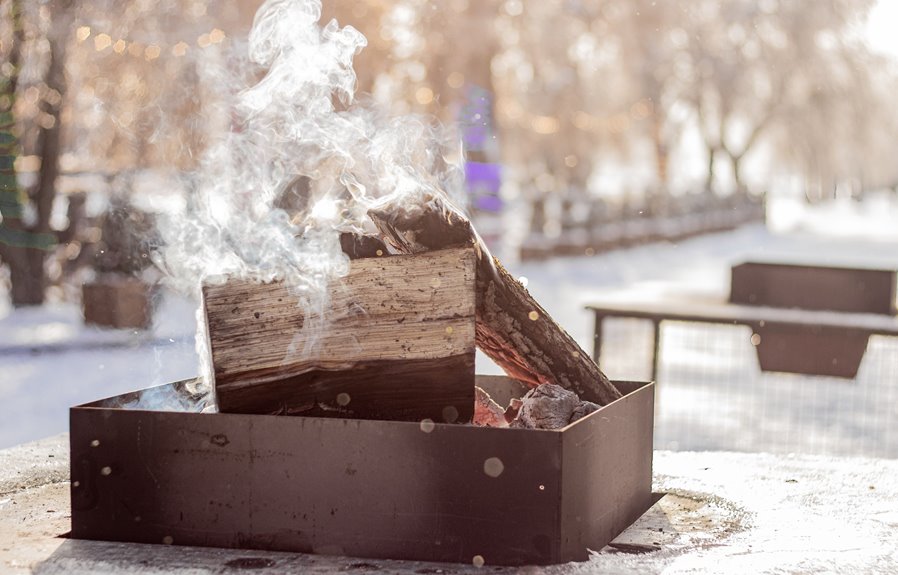
I’ve watched homeowners wrestle with this choice for years. Fire pits run 30–60 inches across with 360-degree seating that roams like a party, while fireplaces hit 4–8 feet wide and 6–10 feet tall with formal, fixed seating facing one way. Pits throw heat in every direction (great for groups); fireplaces blast forward like a space heater (cozy but directional). Pits need 15–20 feet of clearance. Fireplaces demand permits, chimneys, and 1–3 weeks of pro work. Built-in stone fireplaces score luxury resale points, permanent pits balance value with lower upfront cost, and portable units barely budge your property value. Wood gives you crackle and ash duty; gas flips on instantly but needs line work.
Both smoke differently. Pits follow the wind, fireplaces channel up and out, and your fuel choice shapes everything from maintenance hours to marshmallow logistics. The real trick is matching your pick to how you’ll actually use the space, with the specific differences outlined above determining your best option.
Fire Pit or Fireplace: How to Choose the Right One
So you’re standing in your backyard, drink in hand, wondering whether you need a crackling campfire vibe or something that looks like it belongs on a magazine cover.
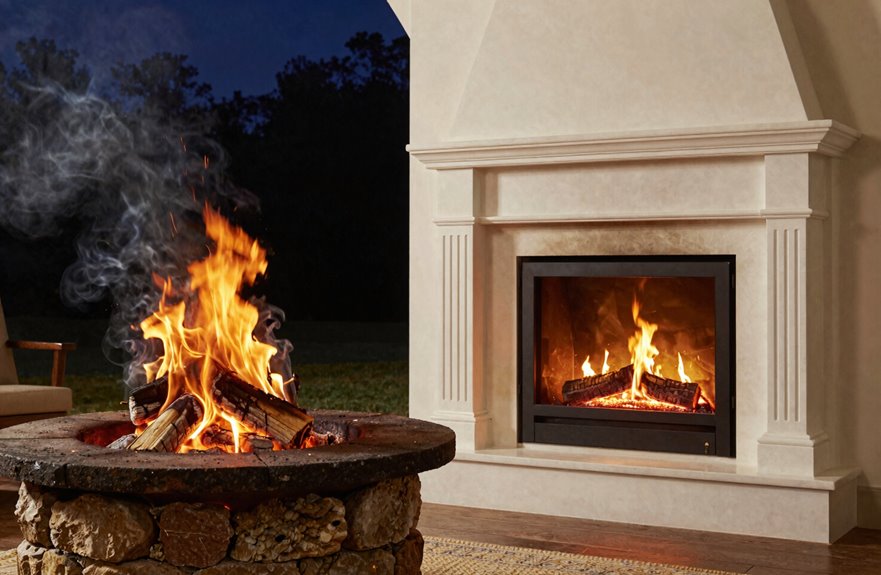
Fire pits give you that 360-degree magic, with everyone gathered round like you’re telling stories under stars. Heat distribution radiates evenly, warming folks six to eight feet out in every direction. You’ve got flexibility too. Grab a portable model, think 30–60 inches across, or sink something permanent into your patio.
Outdoor fireplaces are permanent architectural features, four to eight feet wide and six to ten feet tall, anchoring your space with serious presence. Heat pushes forward eight to twelve feet, perfect for intimate seating. You won’t get portability here, but you’ll have that stately focal point year-round.
Design Compared: Circular Openings vs. Enclosed Fireboxes
Why does the shape of your fire feature matter so much? It changes everything about how we gather.
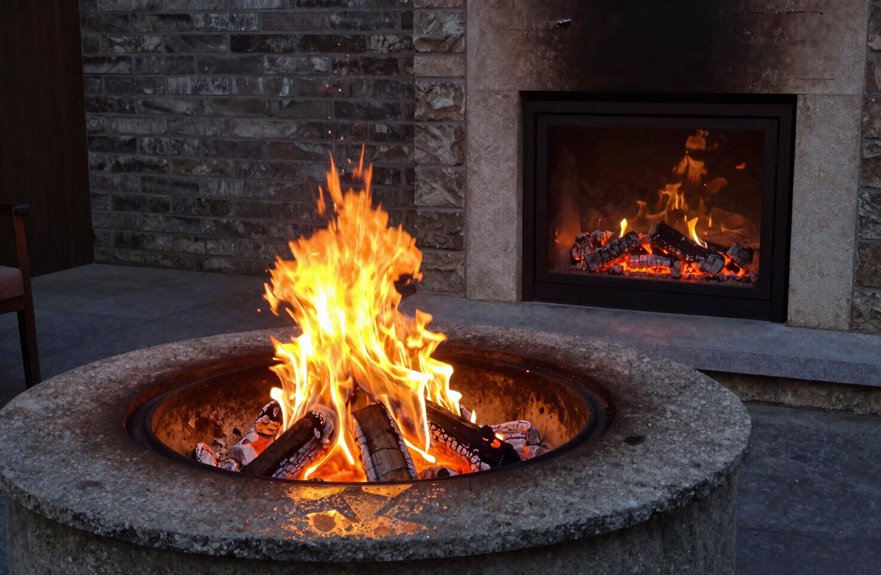
Outdoor pits with their circular openings create that campfire feeling we all crave. Flames are visible from every angle, and heat spreads 360 degrees so nobody’s left out in the cold. You’re roasting marshmallows together, passing stories around like the wine.
A fire pit turns strangers into friends gathered around the same flame, sharing what matters.
Fireplaces offer a different appeal. That enclosed firebox transforms your backyard into something magazine-worthy. The architectural centerpiece anchors your patio with clear purpose, directing heat forward like a cozy furnace while smoke management happens quietly through the chimney. No more shifting seats when wind changes. You sacrifice some spontaneity, sure. You gain sophistication, control, and zero hair-smelling-like-smoke mornings.
Both designs welcome people home, just differently.
Seating and Socializing: Flexible Gatherings vs. Formal Entertaining
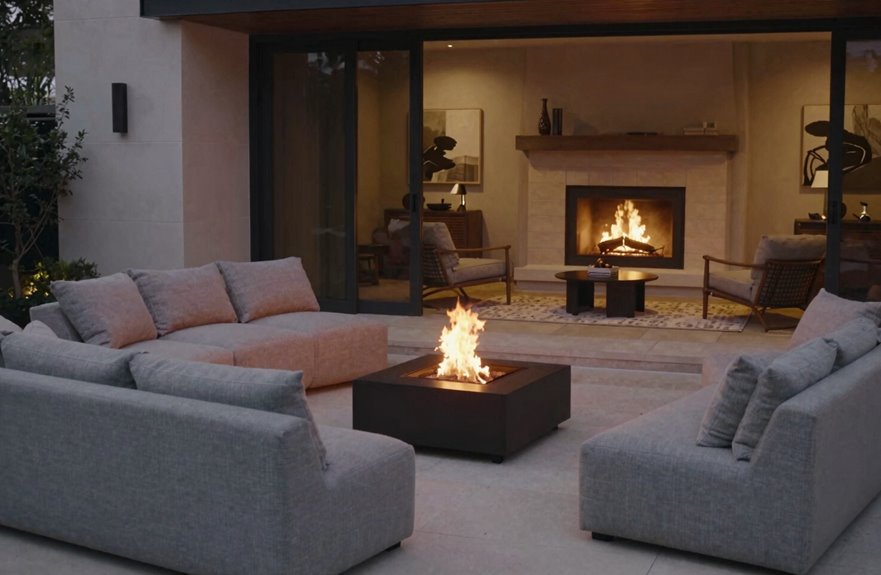
Fire pits create this incredible 360-degree outdoor seating arrangement where everyone’s facing each other, not just the flame. You’re gathering around something primal, and it breaks down barriers fast.
What makes the social dynamic so different:
- Fire pits let you circulate, roast marshmallows, and join conversations from any angle (no one’s stuck in the back row)
- Outdoor seating stays flexible; bring chairs, benches, or just pull up a log when extra friends show up
- Social gatherings feel inclusive because the circle naturally includes everyone
Fireplaces, though, are built for formal entertaining. That fixed seating area faces one direction, creating a performance-like setup. Great for intimate conversations, but you’ll miss that roaming energy. Both serve different purposes, each suited to different social occasions.
Heat Output: How Warm Will Each Actually Keep You?
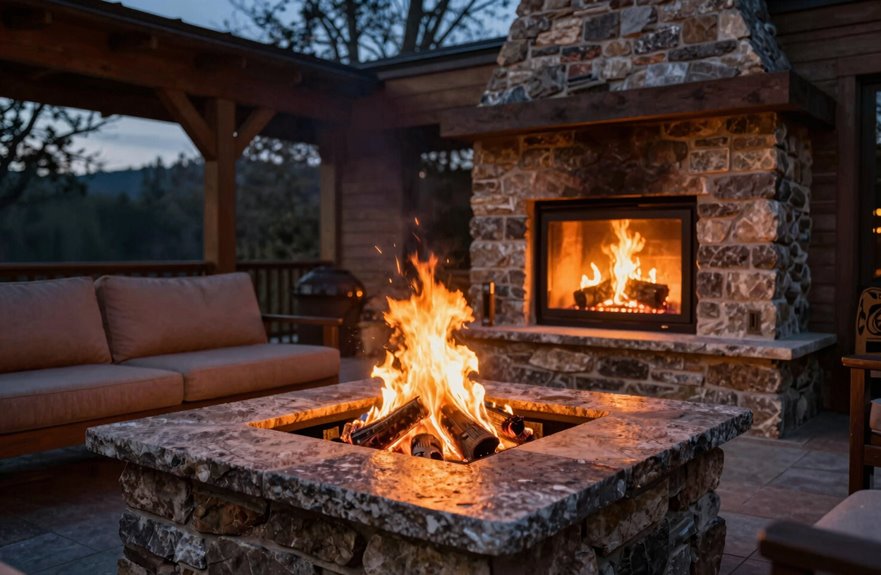
I want you to feel the warmth difference before you buy, because it’s not just about flames. It’s about where you’ll actually sit. Fire pits throw that cozy, 360-degree radiant heat across a 6–8 foot circle, so everyone’s getting toasted equally, but a stiff breeze will cool you down noticeably. Fireplaces, meanwhile, aim their heat like a space heater. The warmth is directed, steady, and mostly windproof thanks to that chimney stack. This makes them perfect if you’re huddled in one spot with your favorite person and a blanket.
Radiant Heat Patterns
How exactly does heat travel from these two setups, and where will you actually feel warm?
Fire pits and outdoor fireplaces create completely different radiant heat experiences. Fire pits generate 360-degree warmth, sending heat outward in every direction like a campfire. Outdoor fireplaces are more like a space heater; they’re directional, focused, and front-heavy.
Your comfort depends on these factors:
- Fire pits spread radiant heat evenly around all sides, perfect when your whole crew gathers in a circle
- Outdoor fireplaces concentrate heat distribution forward, creating a cozy nook for two or three people
- Wind impact hits pits harder since nothing blocks the breeze, while enclosed fireboxes protect your flame’s warmth
Choose your setup based on how you actually want to gather.
Effective Warming Radius
So you’re wondering exactly how close you’ll need to huddle to actually feel the warmth. Fire pits give you that communal magic with a 6–8 foot effective warming radius, spreading radiant warmth in a full circle so everyone’s included. The heat distribution is beautifully democratic, perfect for open gatherings where friends circle up. Outdoor fireplaces work differently. They push heat directionally, 8–12 feet forward toward your seating area, which feels more intimate, like you’re sharing secrets. Fire pits suit big groups well, but when you want focused coziness, that targeted warmth from a fireplace works better. Pick based on how you actually gather.
Wind Sensitivity Factors
Wind can turn your cozy evening into a chase-your-napkin-across-the-patio situation, and it affects how warm you’ll actually feel. Wind sensitivity varies dramatically between these two options and will shape where you actually want to gather.
Here’s what affects comfort:
- Outdoor fire pits radiate 360-degree heat (about 6–8 feet all around), but their open design means wind-driven warmth disappears fast. You’ll need to rotate positions to catch residual heat.
- Outdoor fireplaces use their enclosure and chimney to block gusts, directing focused heat 8–12 feet forward. You trade expansive heat distribution for consistent, intimate warmth.
- Your group size matters: pits suit sprawling circles, while fireplaces cradle smaller gatherings in reliable, wind-protected comfort.
Space Requirements: Real-World Dimensions and Clearance Needs
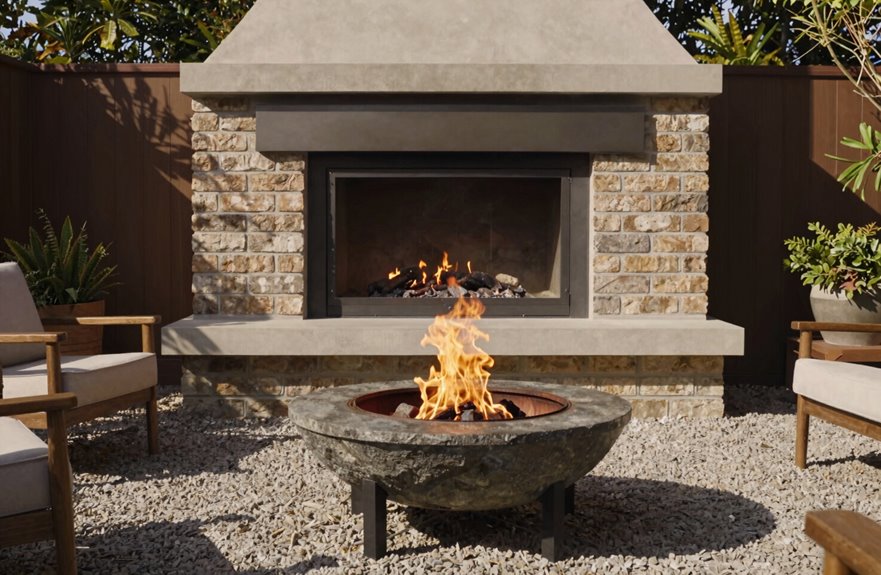
I’ve learned the hard way that eyeballing space for a fire feature results in either a scorched fence or a very awkward apology to your neighbors. When I mapped my outdoor space, I discovered fire pits demand precise dimensions: 30–60 inches in diameter with a 6–10 foot safe perimeter, totaling 15–20 feet of clearance. That’s your bare minimum for roasting marshmallows without singeing your siding.
Fireplaces are space hogs. We’re talking 4–8 feet wide, 6–10 feet tall, and 3–5 feet deep, roughly 12–15 feet by 8–12 feet total. Their vertical chimneys and built-in structures, think masonry rather than movable items, anchor your patio permanently.
I’ve squeezed compact pits into cozy backyards, but fireplaces need room to breathe. Measure twice, burn once. Accurate measurements prevent costly mistakes and unwanted attention from the fire department.
Installation Reality: Timeline, Permits, and Professional Requirements
Installation timelines for fire features vary dramatically depending on complexity. A portable fire pit (24-inch steel bowl, propane tank, bag of lava rock) requires about fifteen minutes of setup. A masonry fireplace with proper chimney drafting and gas-line rough-ins requires several weeks and involves permits, inspections, and professional contractors familiar with components like dampers (the metal flaps controlling airflow).
Whether you’re handling installation yourself or hiring professionals, understanding permit requirements is critical. States like Massachusetts require permits for gas lines and permanent structures. Skipping this step can result in costly removal and reinstallation of non-compliant work.
Setup Time Comparisons
Although both options have different installation demands, you deserve accurate information when planning your outdoor space. Installation timelines vary significantly between these two paths, and understanding this distinction is essential for scheduling your project.
Here’s what you’re really looking at:
- Portable fire pits (think ModFire-style units) often need just 15 minutes. Unbox, position, connect propane, done.
- Permanent fire pits demand 2–5 days with permits, site prep, and weatherproofing for safety compliance.
- Fireplaces require 1–3 weeks, professional installation, and chimney clearance checks. Those chimneys need licensed contractors.
I chose portable initially. When you’re ready for that statement fireplace, budget extra weeks and definitely hire professionals who understand local codes.
Permit Requirements Explained
Getting those timelines locked down feels good. Permits aren’t just bureaucratic speed bumps; they’re the guardrails keeping your backyard from becoming a neighborhood headline. Masonry fireplaces almost always need permits, especially when you’re running gas lines (think 20-foot runs from your house meter). Your local codes will dictate everything: clearance distances, ventilation requirements, and whether you need a spark arrestor. Skipping this step creates significant problems. For DIY fire pits, you’re not exempt either. Check if your town requires permits for permanent installations, even kit-based ones. Deck installations require heat-proof barriers (concrete pavers work, 4-inch minimum) and proper airflow spacing. When permits get complex, many services handle the paperwork for you.
Professional Installation Needs
While you might daydream about roasting marshmallows by Friday night, the installation path you choose determines whether that dream becomes reality or a half-dug hole in your yard.
Fire pits often let you DIY. Portable models take 15 minutes, while permanent ones require 2–5 days. Fireplaces, however, demand professional installation. You’ll need a licensed contractor for 1–3 weeks of work, plus permits and building codes compliance. Gas line safety and chimney inspection are mandatory requirements for safe operation.
What separates successful installations from problematic ones:
- Fireplaces require certified pros for chimney construction and gas connections. These cannot be skipped.
- Permanent pits may need permits, but rarely demand licensed contractors unless gas-fed.
- Both need ongoing maintenance, including annual gas line checks and chimney sweeps.
A properly installed fire feature provides safe operation and reliable performance for years to come.
Smoke and Wind: Will You Fight Flames or Relax?
How much smoke are you willing to swallow for the sake of ambiance? I’ve sat around enough fire pits to know that wind sensitivity can turn your cozy circle into a smoke-chasing nightmare. Fire pits create a 360-degree smoke plume that follows the breeze, leaving you playing musical chairs to dodge ground-level exposure. Your guests won’t feel comfortable when they’re all shifting left, then right, eyes watering.
Outdoor fireplaces solve this with an enclosed design and chimney that directs smoke upward, away from your face. For windy sites, such as open yards or pavilions, that chimney makes smoke management nearly automatic. You’ll spend evenings relaxing, not battling sparks and ash. If your layout lacks natural windbreaks, involving a landscape architect is a practical next step. They’ll position your pit or fireplace to minimize gust-driven smoke before you pour that first patio stone.
Fuel Types Compared: Wood, Gas, and Alternative Options
What’ll it be: the snap and pop of real wood, the instant gratification of a gas flame, or something else entirely? Your fuel choice shapes everything: smoke patterns, heat output, and even your hearth design.
Consider these options:
- Wood-burning delivers that authentic crackle and cook-ready coals, but you’ll store cords of oak or hickory (seasoned 6–12 months) and manage flying embers.
- Gas-powered systems ignite with a dial twist. No smoke, no ash, just steady BTUs. However, you’ll need propane tanks or buried gas lines.
- Alternative fuels like ethanol or electric plug-and-play anywhere, sacrificing heat (roughly 3,000–5,000 BTU versus 40,000+ for gas) for zero-install flexibility.
Many homeowners use a hybrid approach: gas for weeknight convenience and wood when friends gather. Your maintenance tolerance determines this choice more than aesthetics.
Maintenance and Upkeep: Time, Tasks, and Hidden Costs
Although that dancing flame looks effortless, maintaining a fire feature demands real commitment, and the type you choose determines whether you’re looking at weekend chores or annual contractor visits. Maintenance breaks down significantly between these two options.
With a fire pit, you’re shoveling ash removal after every burn; this takes about fifteen minutes with a metal scoop with a long handle. Seasonal upkeep means wire-brushing rust spots, touching up high-heat paint, and checking for cracks. Portable models can be wheeled to the garage for storage.
Fireplaces require more intensive maintenance. You need yearly chimney inspections since creosote buildup is a safety concern, and you’ll seal mortar joints every few seasons. Gas line safety checks are mandatory for both pit and fireplace setups. Winterization covers work for both types, but fireplaces typically require professional installation and servicing.
Final Verdict: Match Your Choice to Your Priorities
Three factors determine your ideal outdoor fire feature: lifestyle alignment, budget considerations, and long-term value. Your daily habits (hosting big groups versus intimate dinners), your upfront spending limit (portable pits run $200–$800, while custom masonry fireplaces easily hit $5,000–$15,000+), and how many years you plan to stay in your home all pull the decision in different directions. Each factor deserves careful consideration so you can make a confident choice and start building.
Lifestyle Alignment
So how do I actually decide between these two? Start by assessing your outdoor living priorities, because lifestyle alignment trumps everything else.
- Evaluate your gathering style: Do you host big, casual groups who want to roast marshmallows and circle up? Fire pits deliver 360-degree heat distribution, letting everyone feel included. Or do you prefer intimate, structured conversations with a few close friends? Fireplaces create that formal, mantel-centric focal point.
- Consider your space constraints: Limited room means that 6–10 foot safe perimeter around a pit matters. Fireplaces need permanent commitment, but they’re architectural statements that boost property value significantly.
- Factor in practical comfort: Smoke management affects how much you actually use it. Chimneys handle smoke elegantly, while pits depend on wind patterns, which can create uncomfortable smoke exposure.
Match your choice to your real life, not your fantasy life.
Budget Considerations
Your lifestyle picture is getting clearer, but let’s talk numbers before you commit, because your wallet gets a vote too.
Outdoor budget anxiety hits hard when you’re dreaming of cozy nights. Fire pits run $500–$3,000 for basic setups with minimal installation costs, while fireplaces demand $2,000–$10,000+ once masonry costs pile up, including chimneys, footings, and gas lines. Portable vs permanent matters significantly. You can grab a steel bowl for under $800, or pour a concrete pad for a fixed pit. Maintenance costs stay lower with pits; there’s no chimney sweeping or mortar repairs required.
| Feature | Fire Pit | Fireplace |
|---|---|---|
| Entry Price | $500–$3,000 | $2,000–$10,000+ |
| Installation | Weekend DIY-friendly | Pro crew, permits |
| Yearly Upkeep | $50–$150 | $200–$500 |
Choose what fits your budget so you can actually gather without financial strain.
Long-Term Value
Where does your money actually work hardest when the flames die down? The numbers show clear differences in long-term value.
Built-in stone fireplaces win the ROI contest. They’re a permanent architectural feature buyers actively seek, adding $5,000–$15,000 to your property value. Fire pits remain valuable, though with lower returns ($2,000–$8,000 for permanent installs, portable ones barely register).
Value comparison breakdown:
- Built-in stone fireplaces deliver premium returns because they’re seen as luxury infrastructure, not accessories
- Permanent fire pits offer moderate property value bumps with lower upfront investment
- Portable features maximize flexibility but minimize long-term value; they’re essentially furniture
Match your choice to your priorities. Want maximum resale impact? Choose a fireplace. Prioritize adaptability? A pit provides that flexibility at the cost of lower property value appreciation.