I’ve tried every trick in the book, and these seven actually stick. String 15–30 pound test fishing line (basically invisible deer tripwire) at three feet outside your beds, add a second line for skittish herds, and watch them bolt.
Build eight-foot fencing with 45-degree angles or double four-foot barriers spaced four feet apart, no gaps bigger than six inches.
Layer motion-activated lights, sprinklers (the Critter Ridder provides sudden water bursts), and ultrasonic alarms so they can’t adapt.
Rotate synthetic scents (menthol, capsicum) weekly, swap scare devices monthly, and keep them guessing.
Wrap hostas, roses, and fruit trees with half-inch mesh netting draped loose; tight nets snag antlers.
Add four-foot wire cages for tender stuff.
Plant deer-avoiders like lavender, catmint, and Russian olive as living barriers.
Match your approach to yard size: portable electric netting ($150–300) works for small plots, while permanent woven wire ($4–8 per foot) suits larger properties.
Check HOA rules first, track what works season to season, and combine several sensory deterrents at once for maximum effectiveness.
Try the “Dad’s Trick”: Invisible Fishing Line Barrier
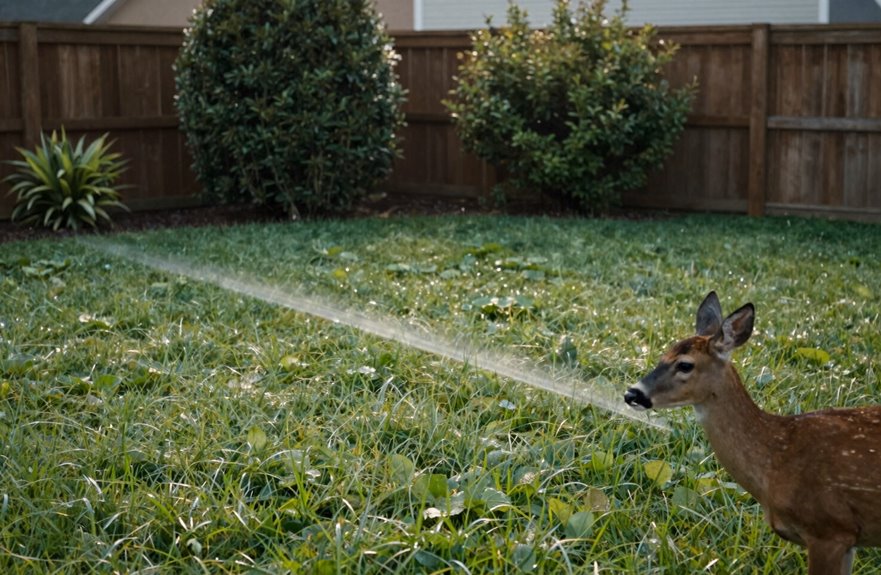
Ever wonder what stops deer dead in their tracks without them even seeing it? Dad’s trick is a clever deer deterrent that’s been saving gardens for generations, using an invisible barrier made from simple fishing line. Fifteen to 30 pound test works perfectly, strung between stakes about 3 feet high for maximum startle factor. Set the line outside your beds, not directly overhead, creating landscape fencing that deer literally walk into. Since they can’t see it coming, they spook and retreat, building deer avoidance memories that last. For serious yard protection, add a second line. This wildlife management approach uses gear you’ve probably got stashed already.
Build 8-Foot Fencing That Blocks Deer
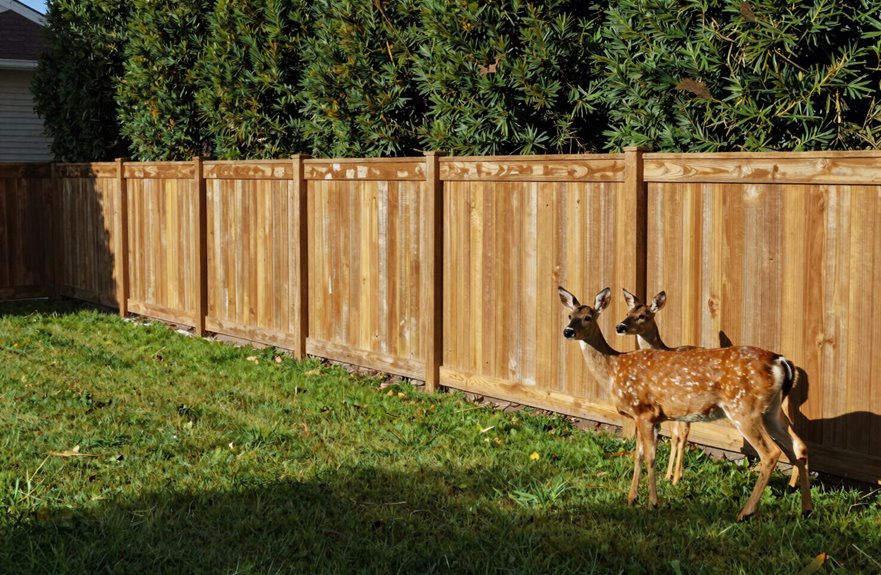
How do you stop a deer that can clear your head with room to spare? It takes serious fence height, specifically an eight-foot fence, to achieve reliable deer exclusion.
For anti-deer fencing that actually works, there are three proven approaches. First, the 45-degree slanted fence (think angled outward, like a ski jump in reverse) confuses their depth perception. They won’t jump what they can’t judge. Second, try a two-layer fence: two four-foot barriers with a four-foot gap between them. Deer hate landing in tight spaces between obstacles.
Your fence must follow ground contour closely with no dips where they can squeeze under and maintain absolute fence integrity. Gap size containment must be under six inches everywhere, as deer exploit weaknesses systematically. Anchor posts deep, check annually, and prevent costly crop damage and property destruction.
Add Motion Lights, Sounds, and Sprinklers
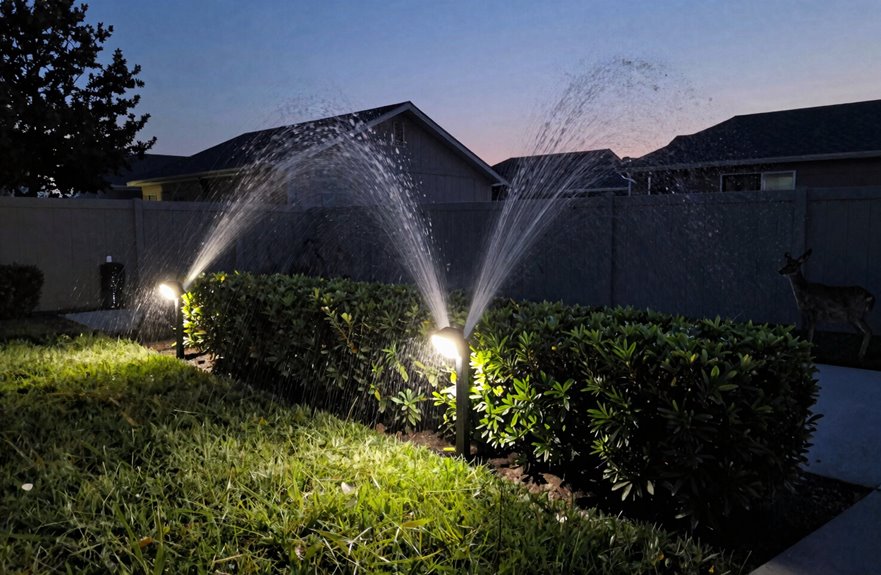
I’ve found that layering motion-activated lights, sudden sounds, and water sprays creates a multi-sensory defense that keeps deer confused and wary of returning. Infrared sensors, which detect body heat rather than just movement, let these systems guard your yard around the clock, whether during high noon or 3 AM when deer typically feed. The Critter Ridder sprinkler, a garden hose with enhanced functionality, delivers a startling water burst that works effectively with ultrasonic alarms or a simple radio left on talk radio. Deer avoid human voices, making this combination particularly effective.
Motion-Activated Light Systems
Three motion-activated tools (lights, sounds, and sprinklers) can turn your yard into a deer-free zone without you lifting a finger after setup. Motion-activated sprinklers serve as excellent environmental deterrents, startling deer with sudden water bursts when infrared detection triggers during night operation. These deterrents work best alongside motion-activated lights and scare tactics for complete wildlife defense. Layering tools prevents deer from adapting to just one method.
| Feature | Benefit |
|---|---|
| Infrared detection | Works 24/7, no light needed |
| Sudden water burst | Startles without harm |
| Adjustable range | Covers 10–30 feet typically |
| Battery/solar options | Flexible placement anywhere |
Products like Critter Ridder Motion Activated Animal Repellent Sprinkler offer ready-made deer repellent solutions. Combining multiple methods produces better long-term results than relying on a single strategy.
Sound and Water Deterrents
What if you could startle deer away without ever leaving your porch? Motion-activated sprinklers deliver instant water bursts that send deer running, and pairing them with sound deterrents creates a powerful combination. Models like Critter Ridder use infrared detection to catch movement day and night, protecting your trees and shrubs around the clock. Layer these with non-harmful spray deterrents to cover smell, taste, and surprise simultaneously for integrated deterrence.
Electronic deterrents work like invisible fencing, emitting mild shocks or light-sound cues without ugly barriers. Mixing water, sound, and scent strategically creates a defense system that reduces nighttime garden damage while you sleep.
Rotate Deer Repellents Before They Stop Working
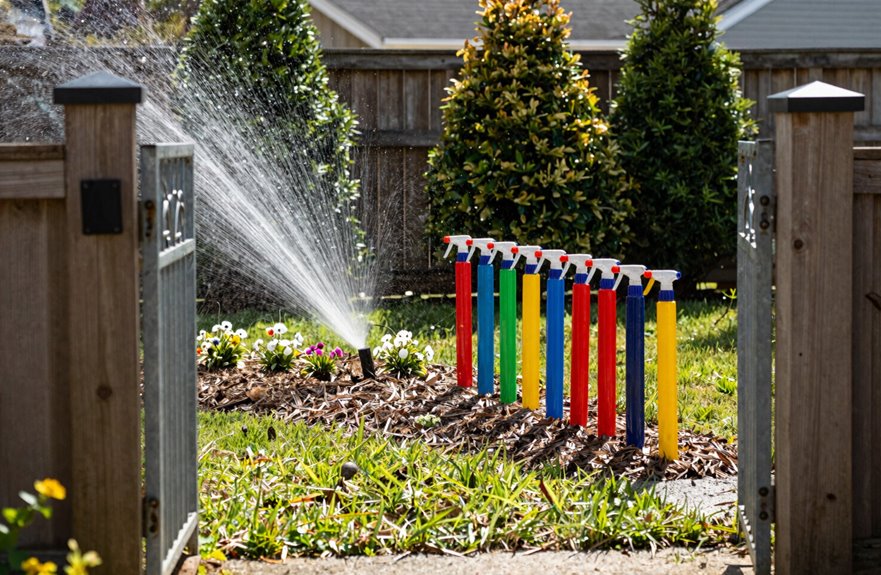
Most gardeners learn this lesson the hard way. I’d been complacent, relying on the same deer repellents month after month, until clever deer strolled right through my “protected” beds. That’s habituation, and it’s frustrating.
Now I rotate deterrents systematically. I cycle synthetic scents weekly, such as menthol capsicum sprays. I swap scare devices monthly, rotating between motion-activated sprinklers, ultrasonic stakes, and predator-eye balloons. I alternate fencing tactics with living barriers like thick hedgerows. This is smart wildlife management.
Deer possess excellent memories, so I never let them decode my patterns. In prime browse zones near my vegetable patch, I layer deterrents, hitting multiple senses simultaneously. This integrated approach keeps them guessing. The result is watching them choose my neighbor’s predictable setup instead.
Wrap and Cage Plants Deer Target Most
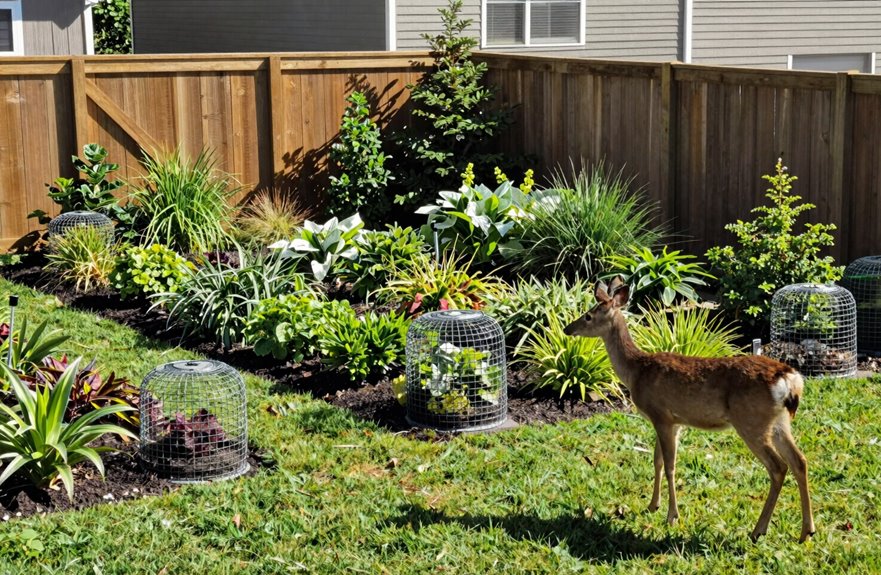
Protecting high-value plants like hostas, roses, and tender fruit trees requires physical barriers that deer cannot chew through or push aside. Wrapping individual specimens in sturdy netting with half-inch mesh prevents their noses from getting stuck, while caging with chicken wire provides season-long defense without requiring extensive yard fortification.
Timing matters for effectiveness. Autumn netting prevents winter browsing of bulbs, while spring wraps protect new growth before it leafs out and becomes vulnerable to browsing.
High-Value Plant Protection
Some of my favorite plants are basically deer candy, so I’ve learned the hard way that wrapping and caging high-value specimens beats replacing them every spring. For plant protection, I use tree shelters and wire cages about four feet tall, 1.5 feet in diameter to stop deer exclusion failures and antler rubbing on young trees. Netting is my preferred method for bushes, fruit trees, and bulbs, letting water and light through while guarding new growth. This provides landscape protection without full fencing. I pair netting with dense hedges, such as boxwood, near the house to block deer sightlines. For bigger areas, eight-foot fencing would be necessary, but that requires separate planning. These methods, not deer repellents, form my core strategy for keeping high-value plants safe and my yard intact.
Physical Barrier Methods
While high-value plant protection handles my favorite specimens, deer don’t discriminate once they know food lives on your property. That’s why I’ve embraced physical barrier methods that create real deer entry prevention without breaking my budget.
I wrap vulnerable plants in netting protection, which blocks browsing while letting rain and sunshine through. For property-wide defense, I installed deer fencing, specifically an eight-foot fence with no-gap fencing at ground level (six inches max, or they’ll squeeze through like furry escape artists). I paired this with a hedge border using dense boxwood, creating a shrub barrier that doubles as a visual block. Together, these layers form a deer deterrence barrier that transforms my yard into an uninviting dense landscape.
| Barrier Type | Best For | My Pro Tip |
|---|---|---|
| Netting protection | Bushes, fruit trees, bulbs | Secure with ground stakes (no gaps.) |
| Eight-foot fence | Property perimeter | Angle top outward 45 degrees |
| Hedge border | Sight-line blocking | Plant boxwood 18 inches apart |
| Shrub barrier | Entry point reinforcement | Layer thorny varieties inside |
| No-gap fencing | Foundation plantings | Bury mesh 6 inches deep |
Seasonal Netting Strategies
The real workhorses of my deer defense strategy aren’t fences or sprays, but the humble nets I haul out season after season. Seasonal netting beats rigid barriers for flexibility, cost, and practicality.
My protective netting ritual follows the deer’s calendar. Come autumn activity, I’m wrapping fruit trees with protection (think 1/2-inch mesh, 6-7 feet tall) before those bucks start rubbing antlers. For early spring protection, I cage bulbs with chicken wire domes (12 inches high, staked firmly), since tulip shoots are candy to deer emerging hungry from winter.
Bushes get draped loosely with netting, ensuring water and light permeability stays intact. Tight nets cook plants, while loose nets snag antlers. High-risk targets like blueberries and hostas need double-layer defense: netting plus a companion spray.
Combine these deer deterrents with perimeter tactics, and you’ll garden more efficiently.
Choose Plants Deer Ignore
- Pungent herbs like lavender, catmint, garlic, and chives create natural barriers deer avoid
- Textured foliage on Russian olive, boxwood, or oleander reduces browse pressure significantly
- Ornamental options vary by region, so I study region-specific preferences before buying
- Trial planting lets me test small quantities before committing my whole yard
- Monitoring results season after season refines my approach
Deer browse pressure changes. Adaptable strategies keep pace with shifting deer behavior patterns.
Match Methods to Your Yard Size and Budget
Plant selection helps, but even “deer-proof” plants need backup when hungry herds move through. When sizing up deer deterrents, start with your yard size. Protecting a 4×8 raised bed (8 feet by 4 feet, standard lumber) demands different exclusion methods than fencing five acres. For small spaces, mix repellents with portable electric netting (about $150-300). Larger properties need permanent fence options, like 8-foot woven wire or polypropylene mesh, running $4-8 per linear foot installed. Budget shapes everything. Professional-grade repellents need reapplication with monthly costs that add up, while solid wood fencing preserves landscape aesthetics but requires higher upfront investment. Check HOA rules first; nothing complicates a project more than installing barriers they’ll require you to remove. Cost considerations include maintenance as well. Matching herbivore management to species-specific damage (browsing height, seasonal pressure) keeps your approach practical, affordable, and neighborhood-friendly.