I switched from cages to staking years ago and never looked back.
Six-foot T-posts with twine let me train indeterminate tomatoes to a single stem, which doubles my yield per square foot and makes hornworms visible before they demolish half a plant.
Pruning suckers weekly keeps the canopy open for airflow. No more blight surprises hiding in dense foliage.
I harvest clean fruit in five-minute checks instead of hunting through cages.
Come winter, the whole system breaks down in ten minutes and fits in a five-gallon bucket.
Bulky remesh cages, by contrast, hog garage space.
The setup is simpler than you’d think, and the payoff starts the moment you clip that first stem to the twine.
Stake Indeterminate Tomatoes: Skip the Florida Weave for Vining Varieties
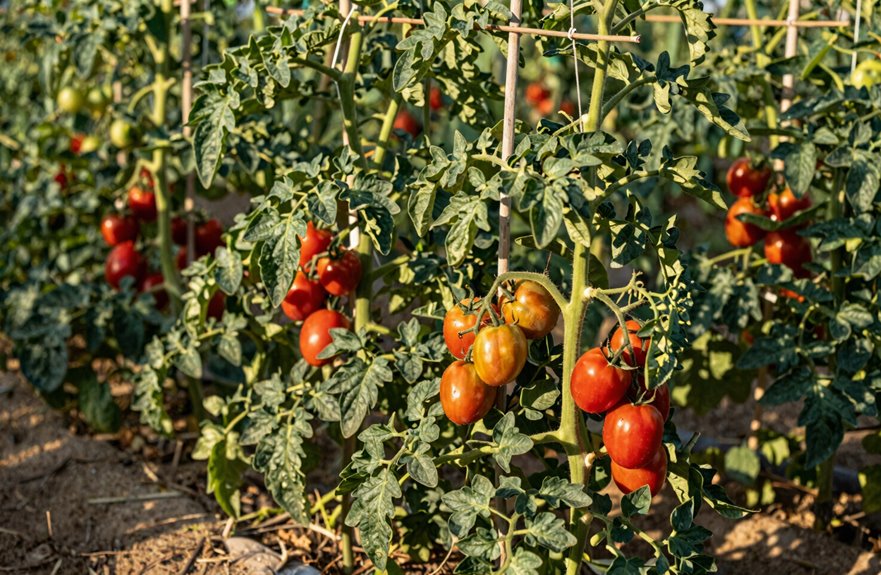
Why do folks wrestle indeterminate tomatoes into Florida Weave systems that were never meant for them? The answer is simple: it looks tidy at first, then collapses into chaos by July.
To avoid this problem, stake these vining plants properly from day one. Use 6-foot T-posts, minimum, with sturdy twine or wire for vertical support. Staking indeterminate tomatoes means embracing their nature, not fighting it.
Single-stem training (removing suckers weekly, yes it’s work) transforms tall plants into manageable columns. The payoff is significant: pruning access without gymnastics, and fruit visibility that makes harvesting actually pleasant. A simple trellis beats dense cages every time. You’ll spot blight faster, pick sooner, and keep airflow moving through the canopy.
Build a Single-Stem Trellis: T-Posts, Rebar, and Twine Setup
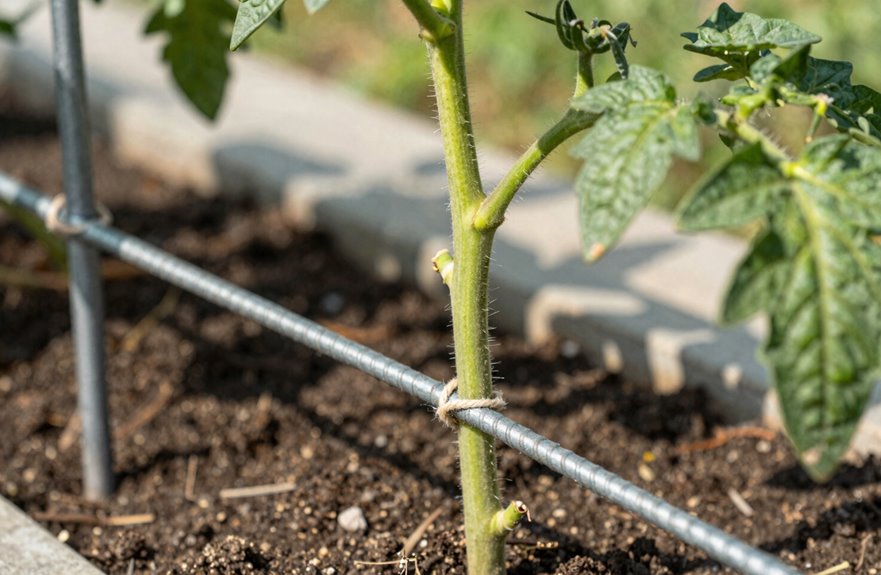
With a little planning and the right materials, I’ll show you how I built my single-stem trellis last season. This system changed my approach to tomato cultivation. I drove 6 tall T-posts 6 feet apart, then topped them with PVC couplers to hold rebar for my horizontal trellis. That high, flat wire framework became my vertical support backbone. I ran twine from the rebar down to landscape pins at each tomato plant’s base, using tomato clips every 12 inches for main-stem training. When my vines hit the top, I discovered end-of-season adaptation by training stems sideways across the rebar. With 28 plants in two dense rows, this staking method proved effective for serious growers managing high-density plantings.
| Component | My Setup | Why It Works |
|---|---|---|
| T-posts | 6 posts, 6 feet apart | Creates sturdy anchor points |
| Rebar | Horizontal trellis top | Holds tension, lasts years |
| Twine | Ground to rebar, 12″ clips | Flexible, cheap, replaceable |
| Tomato clips | Every foot on main stem | Gentle grip, easy adjusting |
| End trick | Train sideways on top | Extends harvest, no waste |
Prune Suckers and Train Stems to Double Yields Per Square Foot
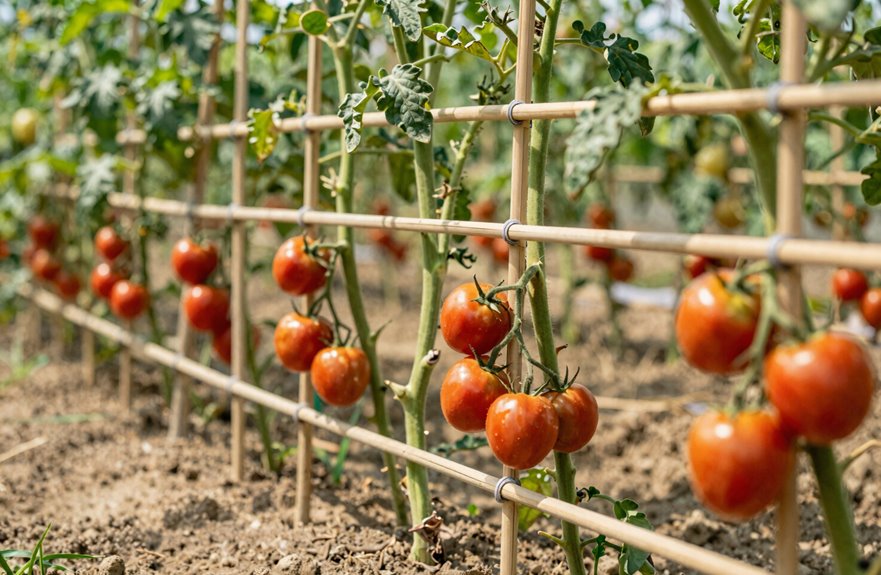
How exactly do I squeeze twice the harvest from the same patch of dirt? I prune suckers like my season depends on it because it does.
Aggressive pruning suckers on stakes redirects all that energy into one single-stem powerhouse instead of bushiness everywhere. I’m talking 28 plants per two-row bed (tight plant spacing, I know), yet each pumps out roughly double the pounds. The math on yield per square foot compounds quickly.
Vertical training starts with ground ties, then main stem tying every foot or so up my trellis. This keeps everything upright, air flow moving through the canopy, and disease minimized. When vines hit the top, I train them horizontally for season extension without replanting.
Sure, less leaf area means sunscald risk increases, but careful pruning leaves just enough shade to prevent it. The tradeoff delivers measurable results.
Spot Hornworms Early and Harvest Clean With Exposed Fruit
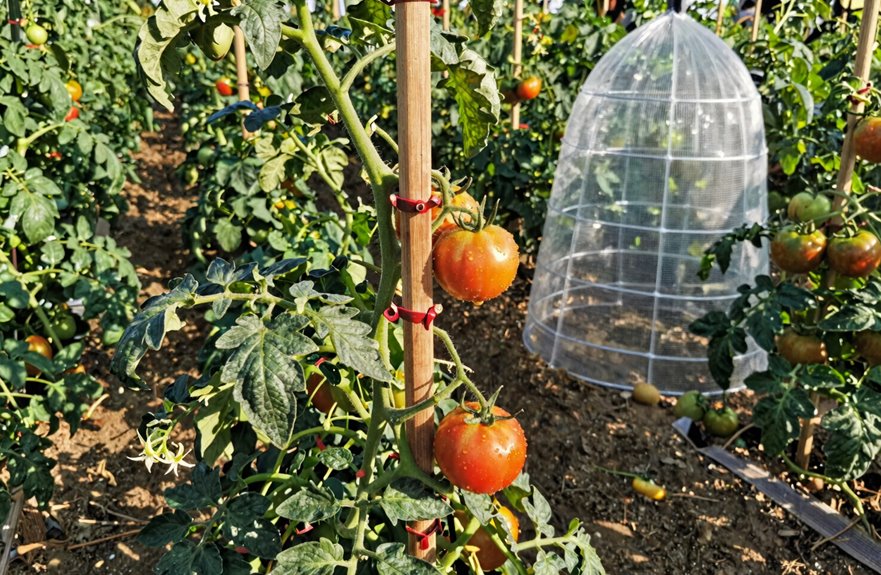
Because I stake my tomatoes, I catch hornworms before they turn my plants into salad bars, and I don’t miss a single ripe fruit hiding in jungle-thick foliage. Tomato staking gives me the visibility I can’t get with cages.
My single-stem setup, trained up stakes with careful pruning, keeps everything exposed. I spot those fat green hornworms (even this colorblind gardener sees them against the open framework) in seconds, not after they’ve stripped branches bare. No rummaging through dense walls of leaves. I walk my hedge-like rows, scan, and snag.
That exposed fruit means quicker pest monitoring too. I check vines in under five minutes, pluck hornworms by hand, and harvest at peak ripeness. Staking doesn’t just organize plants; it puts me in control. The result is clean tomatoes with no surprises.
Store Stakes Flat in Minutes: Cages Demand Garage Real Estate
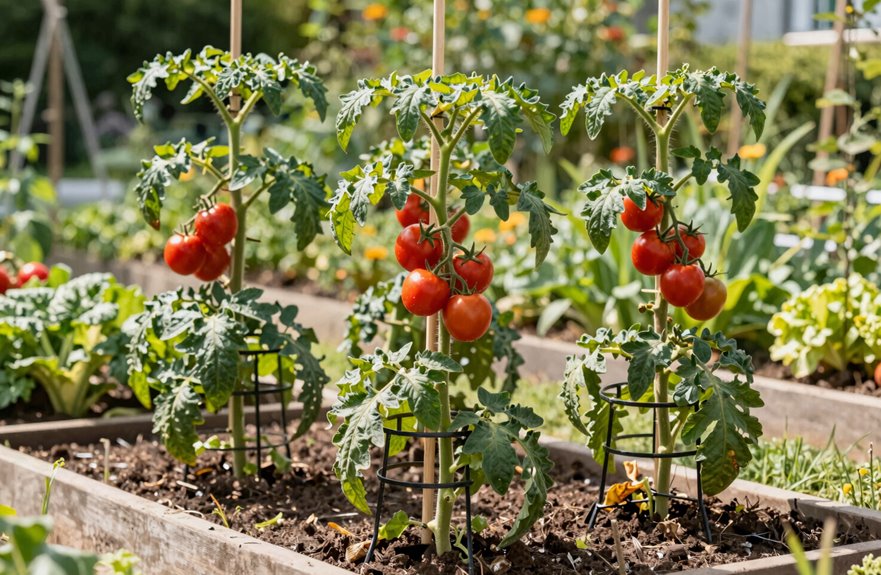
Come winter, I break down my entire tomato setup in about ten minutes flat. My lightweight stakes slide right out of the ground, strings wind onto old soup cans or your hand, and everything fits in a 5-gallon bucket.
Cages demand serious garage storage space. Those bulky tomato supports, remesh panels, concrete wire, and fancy folding ones take up significant footprint. I’ve seen neighbors wrestling 4-foot cages through narrow shed doors, stacking them like awkward Jenga towers.
Staking wins on space-saving. My installation takes maybe twenty minutes in spring, but the winter storage advantage is worth it. No heavy lifting, no searching for storage solutions. Just compact, efficient storage that leaves room for actual projects.
Your garage gains usable space.