
Greenhouse interiors styling ranges from a weekend potting bench with pea gravel underfoot to a dining table under trained grapevines.
The 30–36 inch walkways and LED grow bulbs in standard pendants are the details that keep the space usable once the plants move in.
1. Comfortable Walkways
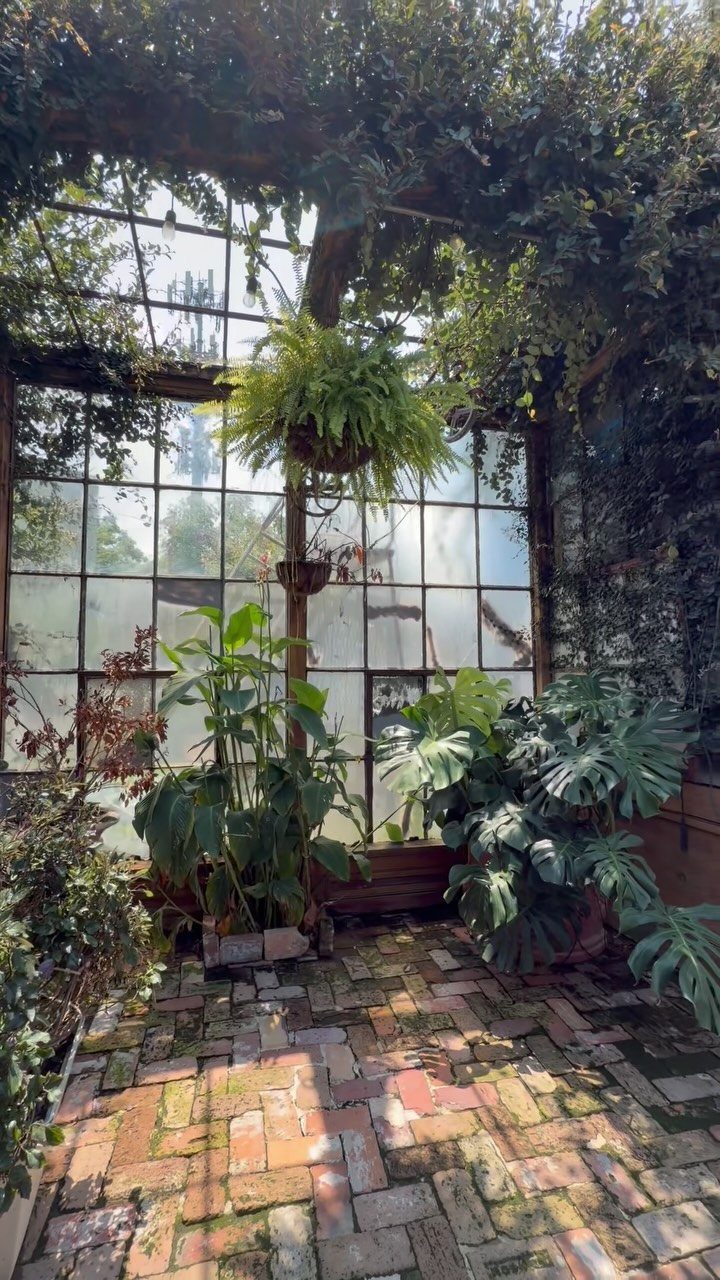
Wide paths keep a greenhouse usable even when plants spill over their pots or staging. I would plan for 30–36 inches minimum between benches or beds; anything narrower and you’re brushing against wet foliage with every trip to the back.
Brick handles moisture well and stays flat underfoot, though it costs more than gravel upfront. For a weekend project on a tighter budget, compacted crusher run with stepping stones set on top gives similar width without the full material bill.
Check your door width too. If you can’t wheel a barrow through, you’ll carry every bag of soil by hand.
2. Incorporate Flooring

Flooring sets the temperature and the tone. Checkered tile reads deliberate, almost conservatory-like, and it cleans with a quick sweep; I would choose porcelain over ceramic for freeze-thaw cycles if your greenhouse runs unheated through winter.
Wood subfloors need vapor barriers underneath or they rot from below. Brick on sand is more forgiving of heaving soil and drains splashed water, though it can grow slippery with algae in deep shade.
Decide first whether you stand to garden or sit to relax. A floor that suits one posture all day punishes the other.
3. Plant Room

A plant room is the greenhouse stripped to its purpose: growing, surrounded by the tools of growing.
The green tile here is a smart choice; it hides soil stains and water spots that would show on pale stone in a month.
I would put the potting table dead center, not against a wall. You walk around it to reach every plant, and daylight hits the work surface from both sides.
The vintage watering cans on shelves are display, not storage; keep daily tools in the bins below where your hands find them without looking.
Pendant lights extend usable hours into short winter days. LED grow bulbs in standard fixtures cost less than dedicated greenhouse rigs and screw into any pendant you like the look of.
4. Multi-purpose Space
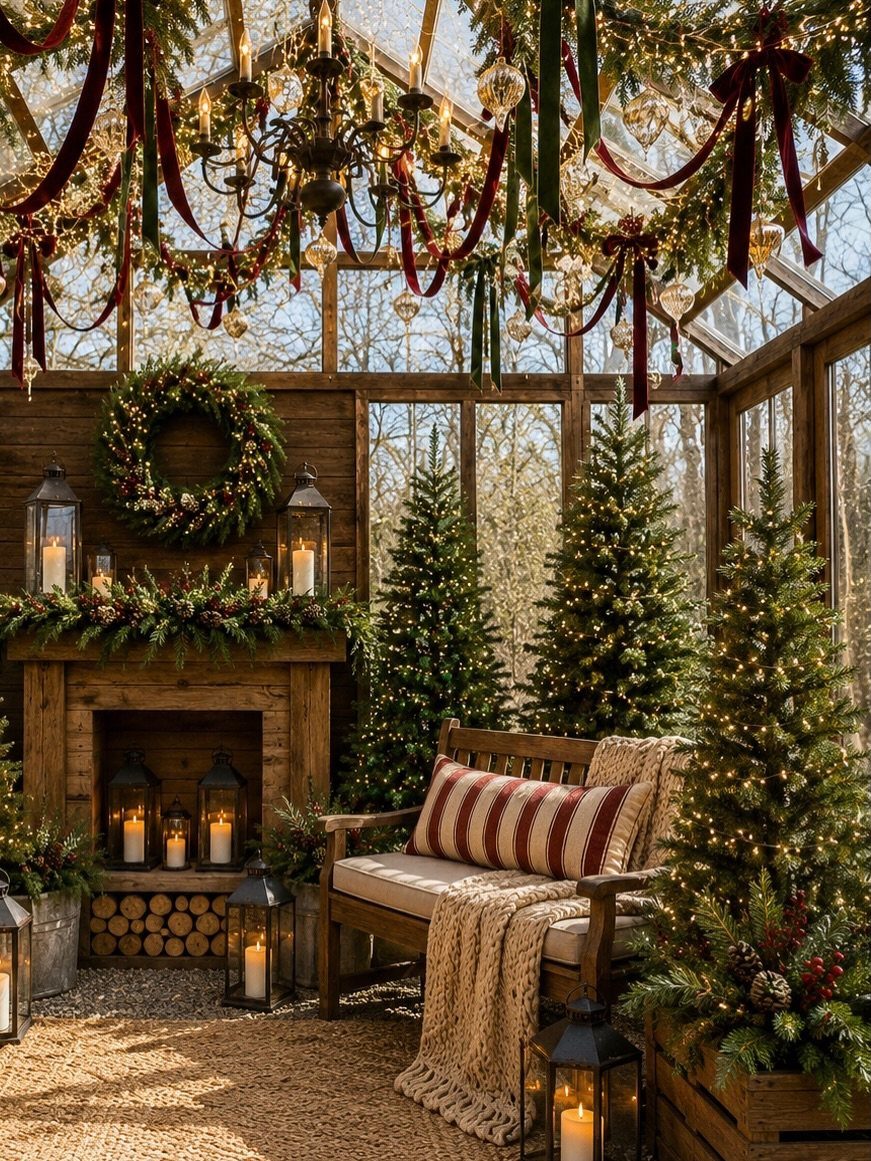
A greenhouse earns its keep year-round if you treat it as living space, not just storage for tender plants.
Swap seasonal decorations through the year and the bones stay the same; trailing ivy in summer fills the same visual role as winter garlands.
The faux fireplace is the telling detail. It gives a focal point without the moisture and combustion issues of a real fire in a humid glass box.
I would add a small electric stove with a flame effect for actual heat in February, sized to the cubic footage.
Cushions and textiles need to be the outdoor-rated kind. Standard upholstery mildews in greenhouse humidity within one season.
5. Potting Bench
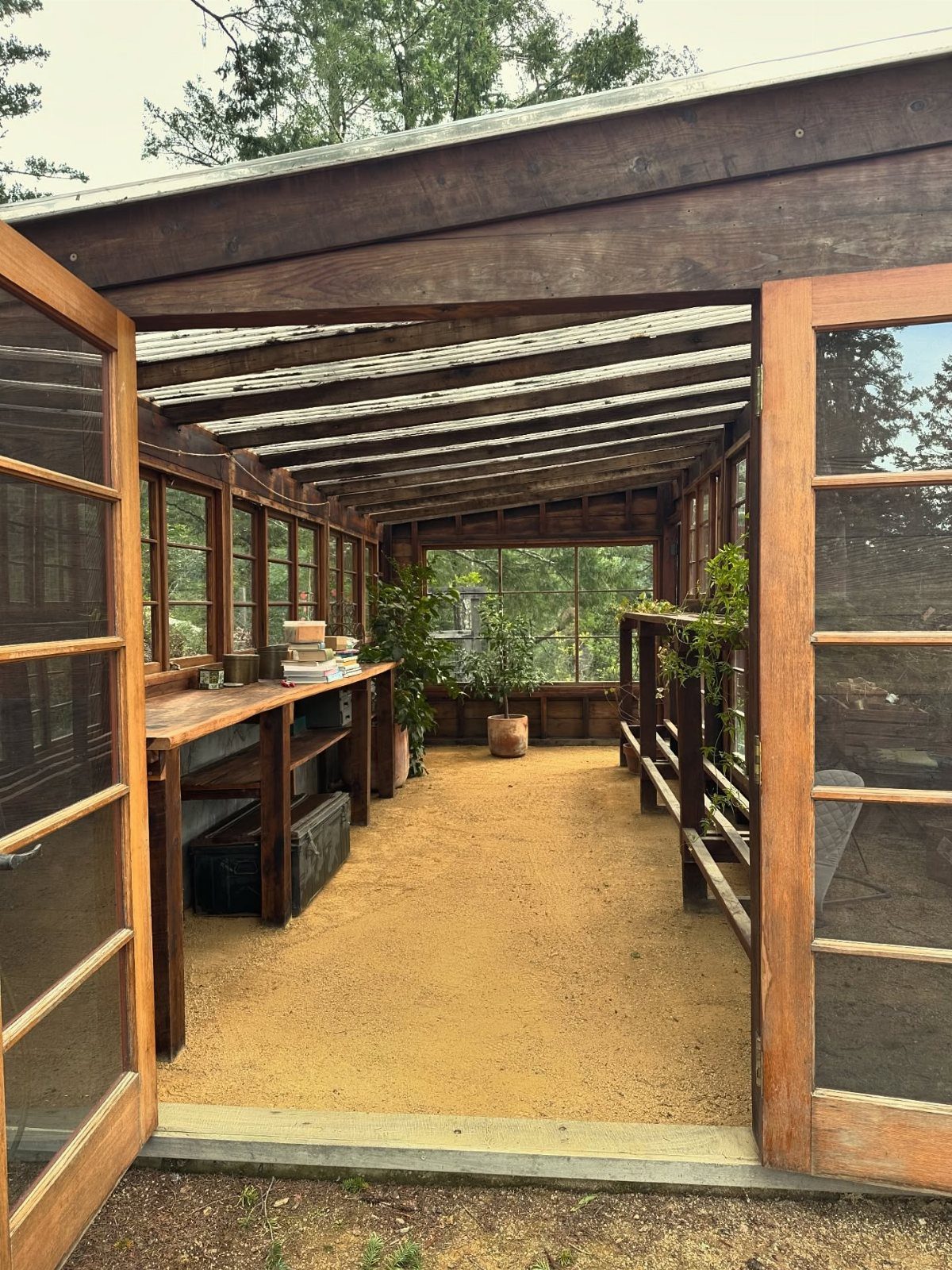
A potting bench is where the messy work happens, and it needs to survive that.
Pea gravel underfoot drains well and catches spilled soil; you rake it smooth in spring and top it off every few years.
The open shelving above the bench should hold pots and labels you grab constantly; store bags of mix below or they sag the shelf and shed peat onto your head.
I would build in a soil bin with a hinged lid, sized to hold one bag of potting mix. It keeps the medium dry and the bench surface clear.
6. Outdoor Kitchen
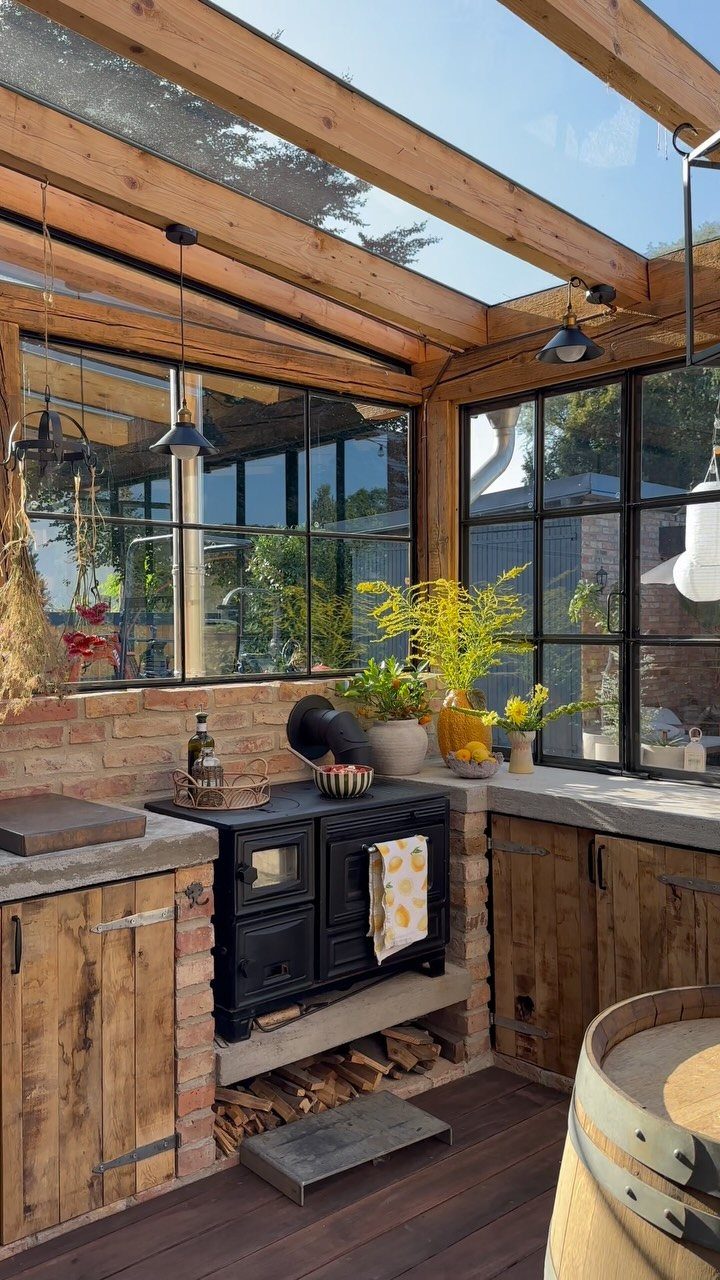
A greenhouse kitchen trades the usual patio grill for something you use in any weather. A wood-burning cookstove is handsome and puts out serious heat, but check your local codes; many jurisdictions restrict solid-fuel appliances in attached or semi-enclosed structures.
Brick counters handle hot pans and splattered grease without complaint. I would seal the mortar joints annually; unsealed, they absorb oil and wine stains that do not scrub out.
Running water and drainage are the make-or-break details.
A garden hose spigot is not enough for food prep; plan for a sink tied to your house drainage or commit to carrying graywater out. The potted herbs on the counter are the easy part.
7. Weather-resistant Furniture

White wicker and a hanging swing chair turn a greenhouse into a sitting room that happens to have plants.
The materials matter more than the style: natural wicker mildews in greenhouse humidity within a season, so I would choose resin wicker with UV-stabilized fibers. It weathers to a softer white rather than graying like unfinished teak.
Outdoor-rated cushions with open-cell foam drain rain and morning condensation instead of trapping it. Check the tag for solution-dyed acrylic; cheaper fabrics fade where the sun hits through glass.
A rug defines the seating area and warms the floor underfoot.
Polypropylene versions hose clean and dry by afternoon. The doormat is practical too; it catches grit before it scratches the floor.
8. Cozy Greenhouse Lounge

Bamboo chairs with woven shades overhead give a greenhouse the feel of a covered porch that happens to have glass walls.
Bamboo holds up well in humidity if you keep it off direct contact with wet floors; teak or eucalyptus legs last longer.
Cushions need to be the outdoor kind, same as Entry 7. A dog on the furniture means hair and the occasional accident; performance fabrics with a Crypton or similar finish wipe clean without soaking in.
Potted herbs on side tables are the greenhouse version of cut flowers: useful, fragrant, and easy to replace when they go leggy.
I would stick to compact varieties like dwarf basil or trailing thyme; rosemary gets woody and sheds needles on the cushions.
9. Dining Table Under Grapevines
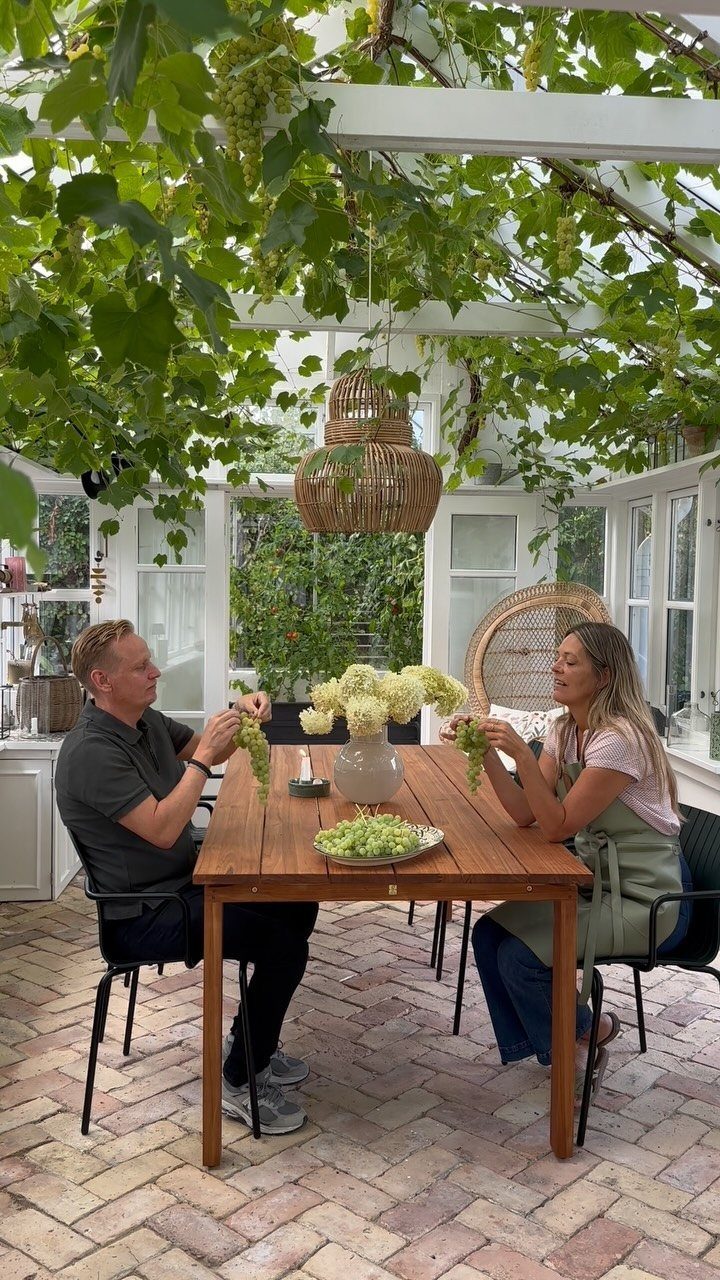
A grapevine trained overhead turns a greenhouse dinner into something you cannot replicate indoors.
The vine needs a sturdy pergola frame; mature grapes weigh more than they look, and a fall harvest season drops fruit you may not want on your plate.
Brick flooring, as in Entry 2, handles dropped stems and spilled wine. A wooden table warms the space but needs periodic oiling; glass or metal would read colder against all that green.
I would run LED string lights or a single wicker pendant at grapevine height, not higher. The light filters through leaves and casts shadow patterns you cannot get from a ceiling fixture.
A grapevine trained overhead turns a greenhouse into a dining room with its own ceiling. The fruit comes a few years after planting, once the vine has filled out and set properly.
10. Formal Banquet Dining Setup

A long table in white and brown, tall tapers, and flowers trailing to the floor: this is event styling brought into a greenhouse, not gardening dressed up.
The reflective floor doubles candlelight but shows every water spot; I would choose sealed concrete or polished porcelain over wood for this look.
Taper candles in a glass house need watching. LED tapers with realistic flames exist now and remove the fire risk entirely; for real wax, I would keep a spray bottle handy and never leave the room.
The floral installations are the budget line. A table this size takes serious money in fresh flowers, or one good afternoon with foraged greenery and a few dozen supermarket stems.
Brown linens hide soil and water better than white; I would own them rather than rent, since greenhouse events tend to repeat.
Planning Greenhouse Layout
Start your layout by walking the path you will use every day.
I would plan for 30–36 inches minimum between benches or beds; anything narrower and you’re brushing against wet foliage. 3 feet is more comfortable for carrying trays or a watering can without that constant contact.
An eight-foot-wide greenhouse with a three-foot walkway down the middle leaves you roughly two and a half feet of growing space on either side, which I find is enough for most shelving setups without feeling cramped.
That space must hold benches, pots, tools, and soil, so the walkway often eats more square footage than you expect. Plan it before you add a single plant.
If you want a dry place to sit and admire the growing space, a greenhouse with an attached shed portion gives you that without sacrificing growing area.
Choosing Greenhouse Size
Most owners later wish they had; the protected space makes seed starting easier, new crops possible, and overwintering plants achievable. That small growing corner you start with tends to turn into the hardest-working part of your whole garden.
A wider build moves air better and gives plants the elbow room they need to fill out. It also leaves you space to shift things around when your projects change, which they will.
Add plants slowly. A greenhouse that feels spacious in March can feel cramped by July if you fill every bench at once.
"There is an increase in customers choosing a larger structure that can be used as part greenhouse/part lifestyle space for hosting and relaxing. There’s nothing better than tending to your plants, then being able to sit back and relax amongst them."
Maintaining Plant Health
Packed-in plants trap humidity and rot from the inside out. Strategic fan placement lets you pack more plants in without that risk; the air movement matters as much as the spacing.
For light, wire or clear shelves let it reach plants below. Hang plants at ceiling height and place low-light varieties on the floor underneath benches.
Watering method depends on what you grow.
A misting system that covers the whole space is something tropical plants genuinely respond to. If you are fighting humidity in a packed house, a drip system takes more effort to install but keeps foliage drier.
Frequently Asked Questions
How should I set up the interior of my greenhouse?
A 30–36 inch center aisle is the width I would build around; brush against damp leaves on every pass and you will regret going tighter.
In an 8-foot-wide greenhouse that aisle leaves about 30 inches of bench space to each side, enough for standard shelving without the shoulder squeeze.
Potting benches and chairs come after the path is locked in; once soil bags, trays, and overflow pots collect, that walkway swallows more room than the floor plan suggests.
How to make a greenhouse look nicer?
Flooring sets the tone fast; checkered porcelain reads deliberate and conservatory-like, while brick on sand forgives heaving soil and drains splashes. LED string lights or one pendant dropped to plant height throw leaf-shadow patterns that no overhead fixture can match.