A backyard park can mean a plastic toddler slide you hose off on Sunday or a splash pad tied into your water line with a plumbing permit.
What matters is your child’s stage, not their age: a two-year-old stays busy in a sandbox with landscape fabric underneath, while a six-year-old needs monkey bars with ground anchors rated for dynamic load.
The 12 to 20 inches of safety surface depth stays the same either way, and bare grass under any fall zone is a broken wrist waiting to happen.
1. Backyard Playsets

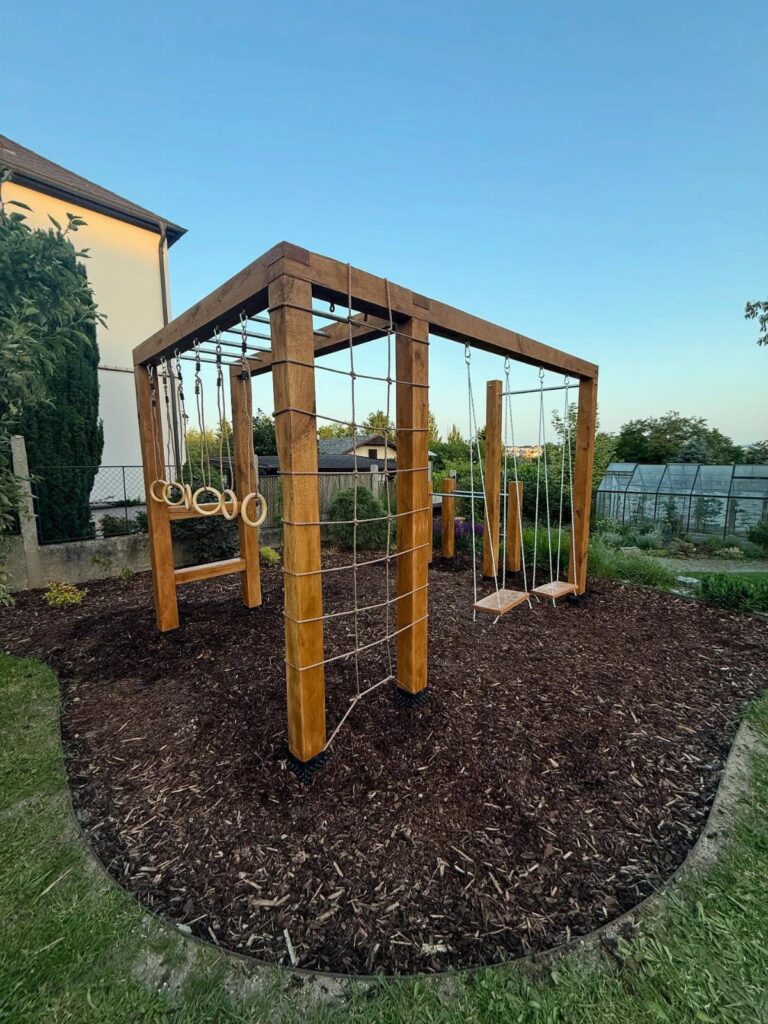
A backyard playset bundles swings, bars, and climbing pieces into one structure. I like timber framing for how it weathers into the yard rather than screaming "park equipment," though metal runs cheaper and needs less upkeep over time.
Check your slope before ordering; most sets need level ground and clearance on all sides. Wood chips or rubber mulch underneath beats bare grass for the inevitable falls.
2. Two-story Playhouse

A two-story playhouse buys you years of use because the upper level stays interesting after toddlers outgrow ground-level doors. Resin molding over a wood frame keeps weight down and resists rot without the maintenance of real stone.
I would size the footprint against your lawn realistically; these run larger than they look, and the height may trigger permit checks in some towns. A slide exit from the second floor needs a landing zone clear of hardscape.
3. Backyard Sandbox

A sandbox keeps toddlers absorbed for longer stretches than almost anything else you can set down in grass.
A raised wooden frame lifts the play surface off the damp ground and keeps some crawling insects out. I would line the bottom with landscape fabric before filling; it drains water and blocks weeds without letting sand wash through.
Plan on enough fill depth for real digging, and cover it between uses unless you want the neighborhood cats to adopt it.
4. Toddler Slide

A toddler slide is the piece you buy when your youngest is too small for the big set but too mobile for blanket time on the lawn.
The plastic shell is typical: light, inexpensive, and fine left outside year-round in most climates.
I would check the step height against your child’s reach before ordering; too tall and you are lifting them every time, too short and they outgrow it in one summer.
The base needs to sit flat or it rocks on uneven grass.
5. Built Around the Tree

A bench built around a tree turns an existing trunk into the center of a sitting circle instead of an obstacle to work around.
Slatted construction lets the wood expand and contract without splitting as the tree grows, which solid boards would not manage.
I would use a hardwood like ipe or black locust for the slats; soft pine rots where it contacts bark and ground moisture.
Leave a gap between slat ends and the trunk so the tree has room to thicken without pushing the bench apart.
6. Monkey Bars

Monkey bars teach grip strength and shoulder coordination in a way few other backyard pieces match. A metal A-frame stands independent of any larger structure, which I prefer for flexibility; you can relocate it or sell it separately later.
Check the bar diameter before buying; thinner bars suit small hands, while standard sizing is harder for under-5s to close their grip around.
Set it in concrete or use ground anchors rated for dynamic load, not just static weight, since a swinging child generates more force than their body mass suggests.
7. Backyard Splash Pad

A splash pad turns a patio into running water play without the fence, chemicals, or supervision load of a pool.
The jets and bucket post need a recirculating pump and drain tied to your water line; most towns treat this as a plumbing permit, not a pool permit, but check before you cut concrete.
I would budget for a backflow preventer and expect your water bill to climb in July. The paver base has to slope to a drain so standing water does not breed mosquitoes.
8. Trampoline

A trampoline with full netting keeps jumping contained in a way open-bounce models never did.
I would still set it on level grass, not pavers, and keep a 6-foot clear zone around the net for the landings that miss the mat.
Check the posted weight limit before adults join in; most large ovals accommodate several kids but not a full-grown adult landing hard.
9. DIY Water Table

A DIY water table gives toddlers the sensory play of a creek without the depth or current. A small pump keeps water moving through tunnels and over rocks, which keeps it from going stagnant in an afternoon.
I would build the basin deep enough for splashing but shallow enough that a face-forward fall is just wet, not dangerous.
Live cuttings root in the water and give the scene something growing, though they need replacing as the season turns.
10. Backyard Climbing Wall

A freestanding climbing wall on a timber frame lets you set the angle and move it if your kids outgrow the difficulty.
The holds bolt through pre-drilled t-nuts in plywood; a slight overhang suits beginners, while vertical works for younger kids still learning to weight their feet.
Crash pads underneath are non-negotiable; I would not build even a modest wall without a thick landing pad rated for the drop height.
Treat the wood or use marine-grade plywood if you want the frame to last more than a few seasons outside.
11. Rope Climbing Net

A rope net slung between trees turns a flat yard into a climbing surface without a single post hole.
Polyester or nylon climbing rope, rated for dynamic load and UV-treated against sun rot, holds up better than hardware-store line left outside. I would anchor each trunk with a tree-friendly sling, not screws or bolts, so the bark keeps growing.
Check your trees first: healthy hardwoods with solid girth at attachment height, spaced so the net hangs low enough for a controlled fall but not so low it drags on roots.
Importance of Outdoor Play
Screen time among kids keeps climbing, and the American Academy of Pediatrics links heavy exposure to slower physical development, less social interaction, and weaker imaginative play.
A backyard setup flips that script without the scheduling and driving of a public park trip.
Kids climb, swing, and run within sight of the kitchen window, and parents get the practical win of knowing exactly where they are and what surface they might fall on.
Building the habit at home means outdoor play becomes default, not an event you plan.
Choosing Materials
Cedar and vinyl hold up longest against weather and rot, with cedar weathering to a silver-gray and vinyl staying the color you bought it in.
For what goes underneath, engineered wood fiber is the cheapest certified safety surface, though it needs topping off as it compacts and scatters.
Rubber mulch costs more upfront but lasts years without replenishment. Either way, plan on 12 to 20 inches of depth in any fall zone; bare grass or packed dirt under a swing set is a broken wrist waiting to happen.
I would skip pea gravel for any child still at the mouth-everything stage.
Planning for Space
Measure your yard before you fall in love with any footprint, and sketch it to scale.
A swing needs 6 feet of clear space on all sides, not just in front and back, and that clearance is measured from the moving arc, not the frame legs.
Slides and climbing walls need their own zones too. If your yard is tight or you might move, modular playsets let you add a climbing wall or extra swing bay later without replacing the whole structure.
Sun matters as much as square footage: afternoon shade over the sand box or water table keeps kids at it longer without the August meltdown.
Check your town’s rules on height and setback before you build; a two-story playhouse can trigger a permit in some places, and finding out after delivery is an expensive lesson.
Frequently Asked Questions
What materials do I need to build a backyard playground?
For the frame itself, I would go with cedar, redwood, or pressure-treated pine; cedar costs more upfront but I think it pays off in how long it lasts without warping.
Concrete for setting the posts, galvanized bolts and brackets, and something soft underneath, rubber mulch or pea gravel, are the other basics I would not skip.
How long does it take to build a DIY playground?
A basic swing set with a small slide is usually a two-weekend job, maybe eight to thirteen hours of actual work if the ground is level and the kit is decent.
Add a second tower or a bridge and you are looking at 3 weekends, mostly because concrete needs its full cure before kids climb on it.