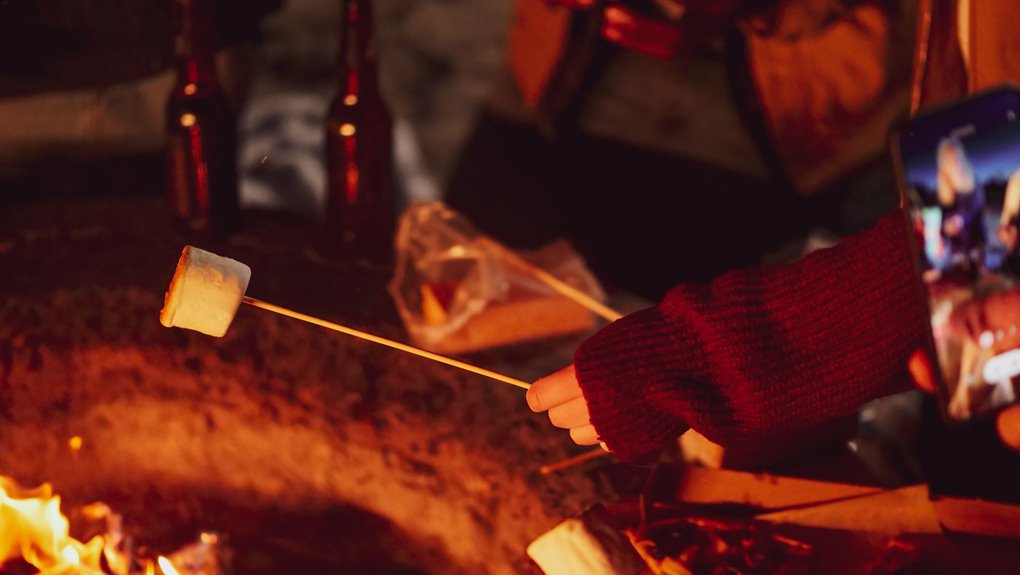
I roast marshmallows on my propane fire pit by holding them about one inch above a low, steady blue flame (roughly thumb-width) using long-handled skewers.
32-inch extendable metal ones work best, though soaked wooden ones do the job. I rotate slowly, like stirring honey, for even golden-brown results without letting sugar touch the burner ports or lava rocks below.
I keep flames gentle to avoid flare-ups, wipe surfaces immediately after, and never dunk marshmallows directly into the fire.
Proper technique requires attention to distance, rotation speed, and flame control for consistent results.
Is Roasting Marshmallows on a Propane Fire Pit Safe?
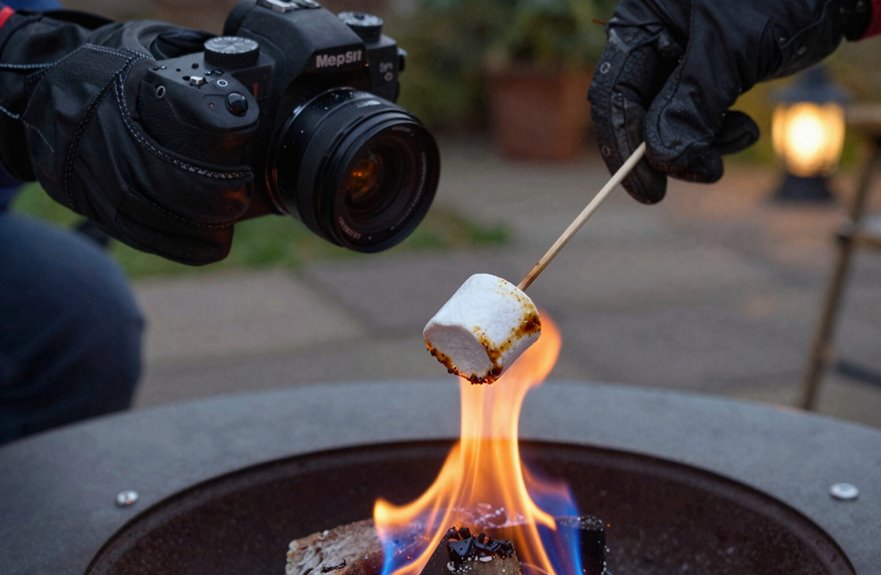
This is the question I hear most often when folks spot my propane fire pit with marshmallows in hand. Yes, it’s absolutely safe.
Propane burns clean. No smoke, no soot, no weird smells messing with your marshmallow’s flavor. The classic vanilla-toasted taste stays pure. I keep my flame low, hold skewers about one inch above, and never dunk marshmallows directly into the fire. Doing so will clog the burner ports and cause flare-ups. I use metal skewers or soaked wooden ones, and I wipe everything down after. Sugar residue turns into sticky trouble later. Watch the kids, keep it controlled, and the results speak for themselves.
Does Propane Fire Pit Gas Affect Marshmallow Taste or Safety?
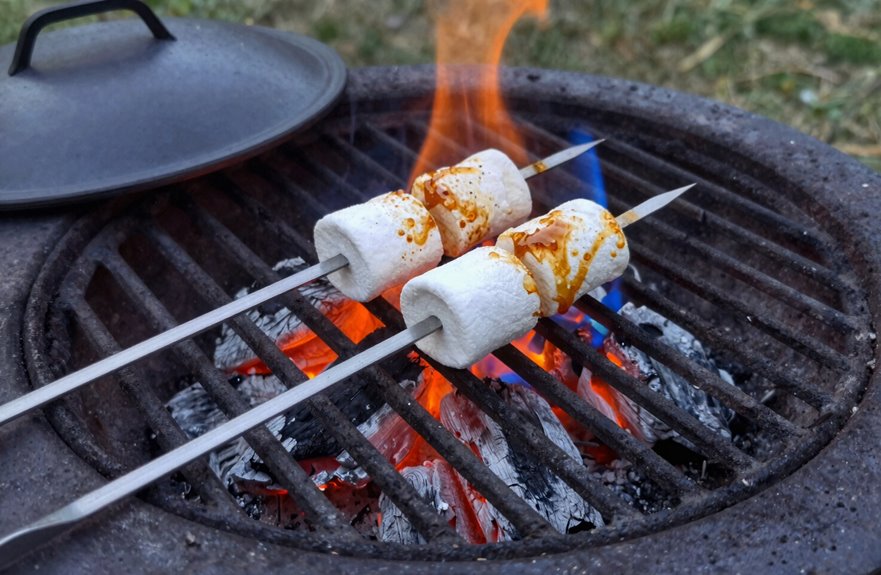
Why does everyone side-eye my propane flames when I pull out the marshmallows. There’s a myth that gas will poison your s’mores, but propane burns cleanly, so it won’t add any funky taste, smell, or chemicals to your marshmallows. I’ve roasted hundreds this way, and they taste exactly like childhood without the eye-burning smoke.
Safety requires attention. I keep my marshmallows about an inch above the flame, never directly in it. Uneven heating causes burning and flare-ups. If one drops, I kill the pit immediately and let everything cool before cleaning. Melted sugar gunking up burner ports is a problem I avoid. Quick browning works best since propane pits aren’t built for slow cooking, so I don’t attempt to cook marshmallows through.
Propane vs. Wood Fire: Which Is Better for Roasting Marshmallows?
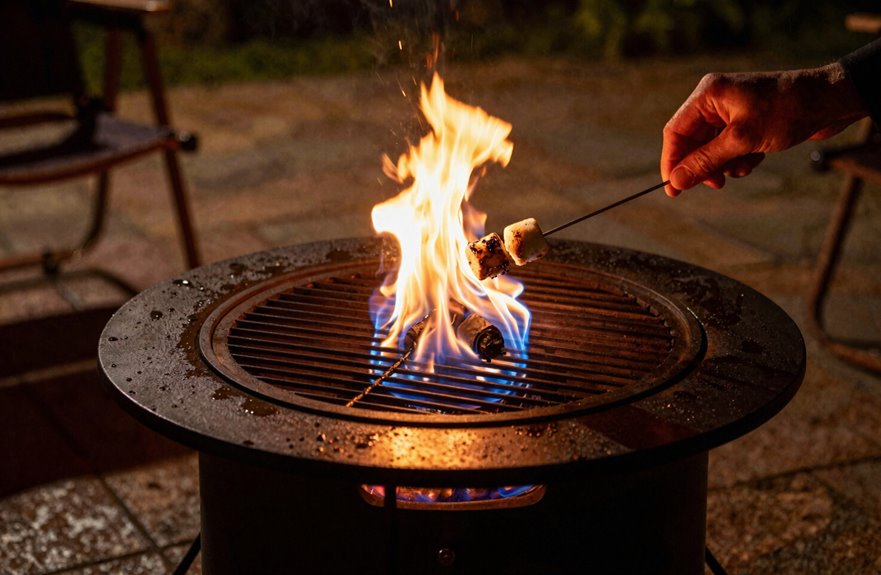
I’ll break down how propane stacks up against wood fires across three key areas, starting with the clean burn comparison (propane wins here), then we’ll explore flavor profile differences (smoke isn’t always beneficial), and finally I’ll weigh the convenience factor analysis (because setting up a wood fire takes significantly longer than roasting marshmallows over propane).
Clean Burn Comparison
A clean burn makes all the difference when you’re chasing that perfect golden marshmallow. Propane fire pits deliver exactly that:
- Propane burns with zero smoke or odor, so your marshmallow stays sweet, not smoky
- The controlled flame means steady, even browning instead of unpredictable scorching from wood embers
- Cleanup’s a breeze; no soot buildup means you’re done in minutes, not scraping for an hour
- Keep treats about an inch above a low flame, never directly in it, as this clogs the burner ports
- These pits aren’t built for full meals; stick to marshmallows and simple stuff
Wood fires are charming, but propane offers consistent results and easy maintenance.
Flavor Profile Differences
Sometimes I catch myself chasing that nostalgic campfire taste, and wood smoke delivers something propane just can’t replicate. When I’m propane roasting, I get a cleaner, sweeter marshmallow. No ash, no resin, just pure golden fluff. My friends and I gather around fire pits to feel connected, and flavor shapes that experience.
| Wood Fire | Propane Fire Pit |
|---|---|
| Smoky, caramelized, charred depth | Mild, uniform sweetness |
| Variable heat (watch closely!) | Steady 300-400°F control |
| Ash-speckled, rustic exterior | Smooth, consistent surface |
| That “camping” memory trigger | Light, modern, fuss-free |
Propane roasting doesn’t match wood’s soul. The tradeoff becomes clear when prioritizing reliability and consistent results without active flame management, which propane provides and wood requires.
Convenience Factor Analysis
When I’m deciding between propane and wood for marshmallow night, convenience tips the scales faster than you’d think. Propane wins hands-down for our crew due to several safety advantages:
- No gathering, splitting, or storing firewood (my back thanks me)
- Instant ignition with zero wait time for flames
- Minimal cleanup; just a quick wipe-down post-roast
- No wind-blowing embers threatening sleeves or patio furniture
- Consistent, controllable heat that won’t surprise you
I keep my flame low, holding treats about an inch above. Any closer and you’ll melt marshmallow onto burner ports. I’ve learned that debris causes clogs, flare-ups, and real hazards. Afterward, I clear every crumb. This routine protects my investment and keeps everyone gathered safely around the fire.
Why Your Fire Pit Has Rocks (and Whether They Change Anything)
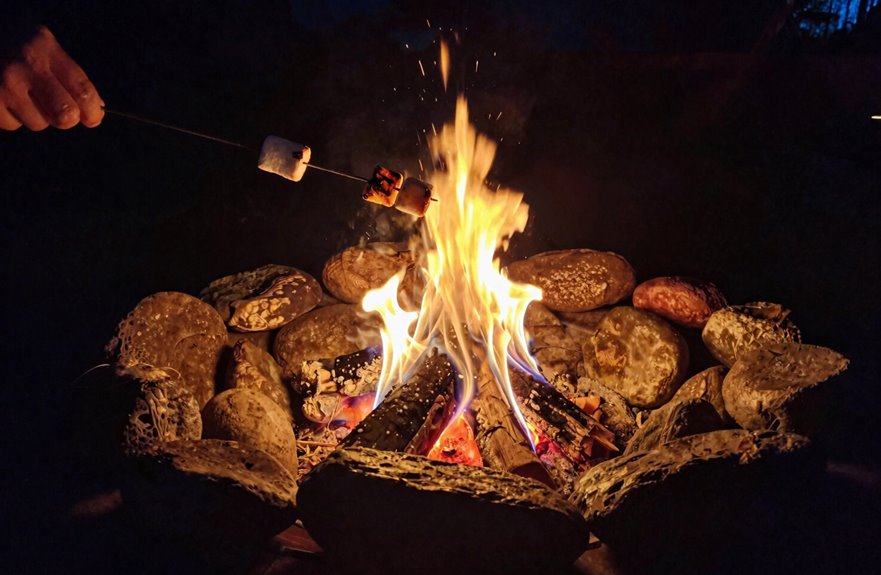
I’ve always wondered why my fire pit came stuffed with those lava rocks (they’re actually volcanic rock, not just decorative gravel), and it turns out they’re working harder than I thought by spreading flames evenly and protecting the burner from direct heat. These rocks aren’t a cooking surface, and they will absolutely torch your marshmallow if it touches them, so keep that skewer elevated. You’ll want to understand what these rocks mean for safety, and why a dropped marshmallow isn’t just a bummer; it’s a maintenance issue that requires immediate attention to prevent buildup and potential damage to your burner.
Rock Purpose Explained
Although you might assume those rocks in your propane fire pit are just there to look pretty, they’re actually serving dual purposes as both heat distributors and burner protection. I learned this the hard way when I tried cooking without them. The result was uneven heat and scorched marshmallows.
Your rocks accomplish several important functions:
- Heat distribution: they spread warmth evenly across the surface, eliminating hot spots
- Burner protection: shielding those tiny ports from debris and accidental kicks
- Pure propane compatibility: no weird chemicals, unlike charcoal or treated wood
- Style choices: lava, basalt, ceramic, pick your vibe (I went with black lava, classic)
- Retention power: they hold warmth after you shut off the gas, extending your evening
Keep them properly placed without blocking ventilation, and you’ll achieve consistent, even roasting results.
Safety With Rocks
Those lava rocks might look like pure decoration, but they’re actually your setup’s unsung bodyguards and performance partners (think of them as a protective middleman between you and the gas line). I always double-check that my rocks are heat-safe fire pit media, not random stones from the yard, and I leave at least two inches of clearance around burners so nothing blocks venting or traps heat. When I’m roasting, I keep my marshmallow skewers elevated above the rocks, never resting directly on them. This prevents scorched sugar and surprise flare-ups. After each session, I clear debris and wipe surfaces to keep burner performance in top condition.
| Rock Safety Check | What I Do | Why It Matters |
|---|---|---|
| Pre-use inspection | Verify heat-safe rating | Prevents cracking, toxic fumes |
| Positioning | Maintain 2″ burner clearance | Ensures proper ventilation |
| Post-roast cleanup | Remove debris, wipe surface | Protects long-term burner health |
If a rock shifts or cracks mid-use, I shut everything down immediately and inspect for obstructions. This keeps the circle safe.
The Right Flame Height for Golden-Brown Marshmallows
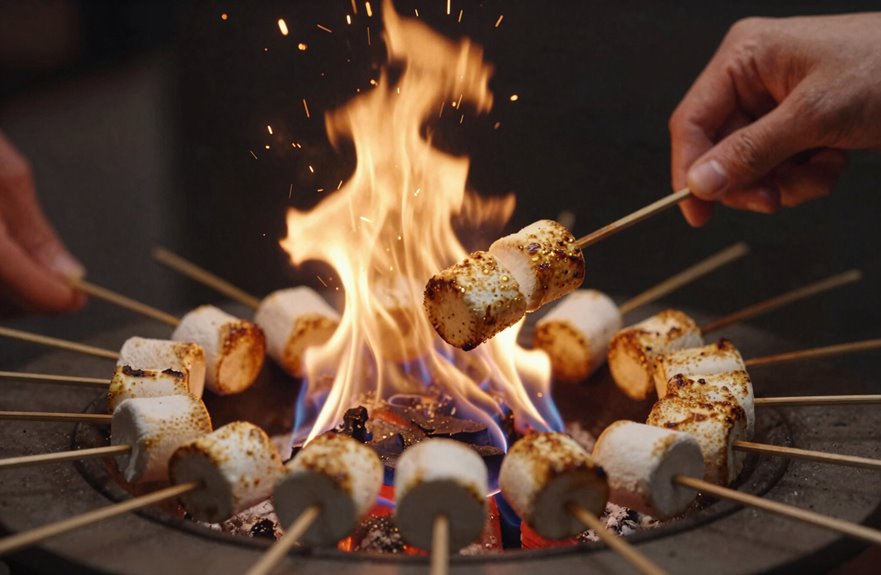
How often have you torched a marshmallow into a sad, flaming ball of goo. (I’ve been there, friend, and it’s not pretty.) Getting that perfect golden-brown crust starts with flame height. Your propane fire pit isn’t a bonfire, so cranking it to maximum is a rookie mistake.
Mastering gas fire pits means dialing it way down. Low and steady wins the race; a gentle blue flame, not a roaring monster. Here’s my method:
- Keep that propane flame low, just enough heat to toast without boiling the sugar inside
- Hold your marshmallow about one inch above, not in, the flame
- Grab a long, sturdy skewer for safe distance and control
- Never block burner ports; nobody wants a clogged fire pit
- Rotate constantly for even browning, watching carefully
Patience is essential.
Where to Hold Marshmallows Over a Propane Fire Pit Flame
I hold my marshmallows about an inch above the lowest, steadiest flame I can manage. Any lower and you’ll end up with a sticky disaster from burnt sugar buildup on burner ports. The sweet spot sits just outside the bright blue cone where the heat’s intense enough to toast but gentle enough to buy you time for that slow rotation. Keep your skewer angled slightly upward so any drips fall away from the fire rather than gumming up your gas ports. Shutting down the whole pit mid-roast to chisel off molten marshmallow wastes time and effort.
Ideal Flame Height
While propane flames look temptingly close to the action, holding your marshmallow about one inch above the burner (roughly the width of your thumb) makes the difference between a golden crust and a molten mess.
Propane fire pit safety and flame control requires:
- Keep the flame low and steady, not cranked high, so heat gently browns the outside without torching the center
- Hold steady at one inch up (about thumb-width) to dodge direct flame contact with burner ports
- Skip the temptation to plunge into blue fire, which creates flare-up territory
- Circle slowly, like you’re stirring honey, for even coloring
- If it ignites or drops, kill the flame, let everything cool, then clean up
This rhythm becomes your evening routine.
Safe Roasting Distance
Where exactly should you park that marshmallow so it toasts instead of torches? I hold mine about one inch above the flame, just high enough to dodge direct contact while catching enough heat for that perfect golden crust. You’ll want to keep your skewer angled so the marshmallows never touch the burner ports. Melted sugar clogging those ports ruins the burner for everyone.
Lower your flame first. A gentle glow works better than a blazing fire. Then keep that one-inch distance steady. I slowly circle my skewer, rotating the marshmallow like I’m spinning a tiny planet. This motion spreads the heat evenly with no scorch spots. If your marshmallow starts dripping toward the burner, kill the flame immediately. Let everything cool before cleaning, since melted sugar causes permanent damage if you rush the process.
Wood or Metal Skewers: Which Work Better on Propane Pits?
The question of skewer material comes down to heat management and cleanup hassle. I’ve tried both, and here’s what I’ve learned about choosing the right skewers for your propane fire pit:
- Metal skewers conduct heat better, so the handle stays cooler (no more sudden “hot potato” moments)
- Wooden skewers need soaking first, or they will ignite mid-roast (it’s not the campfire vibe you’re after)
- Metal cleans up fast, reusable forever, and won’t leave gunky residue behind
- Wood can add an odd, smoky flavor when it chars, which is not ideal for pure marshmallow sweetness
- Look for rounded handles either way, so your grip stays steady while you’re rotating for that perfect golden crust
Metal skewers require less prep and offer more control. You’ll never need a backup when wood catches fire.
What Happens If a Marshmallow Drops Into the Burner?
Even the steadiest hand can lose a marshmallow mid-toast. When that sticky mass hits the flame, you’re looking at flare-ups, debris buildup, and potential clogs in your burner holes. Sugary residue attracts pests and causes sticking.
Kill the gas immediately when this happens. Let everything cool completely, usually 20–30 minutes. Use long-handled tongs or a metal skewer to fish out the debris; never use your fingers. After clearing the drop, wipe surfaces clean and inspect your fire media.
For prevention, get a quality marshmallow skewer with a grip handle. It minimizes wobble and keeps your puffs above the danger zone.
Why Marshmallows Clog Propane Fire Pit Burners: and How to Stop It
I’m going to explain why that gooey, sticky sugar (you know the stuff that makes s’mores irresistible) becomes a serious headache for your propane burner, then show you how to keep those ports wide open. When a marshmallow drops or melts into the flame zone, that liquefied sugar cools fast, hardening into a cement-like blockage inside your gas ports or flame diffusion holes (think tiny straws that need to breathe). The fix is straightforward: keep your mallows on skewers held about one inch above the flame (not in it), control your flame height especially on round tables where sugar can drift, and wipe down the surface after every roasting session to stop residues before they accumulate.
Sticky Sugar Hazards
Why do melted marshmallows turn into such troublemakers? It’s all about that sticky sugar, which drips onto burner ports and hardens into stubborn blockages that choke your flames right out.
Keeping your fire pit roasting without hassle requires these steps:
- Hold marshmallows one inch above flames, never directly on grates or burners
- Soak wooden skewers first (prevents fires and keeps debris out of ports)
- Wipe surfaces immediately after roasting, before sugar sets
- Turn off and cool the pit completely if drops occur, then clean burner holes
- Remove all sugary residue promptly to prevent flare-ups and buildup
A sputtering fire pit ruins the s’mores experience. Regular attention to these prevention measures protects your burner ports from sugar damage and keeps your equipment functioning properly for future roasting sessions.
Burner Protection Methods
Marshmallows are basically sugar torpedoes that can damage your burner through drips and debris. Protecting those tiny gas ports requires strategy.
Keep marshmallows on skewers, holding them about one inch above the flame, not in it. Soak wooden skewers in water first to prevent flare-ups near those burner openings. Keep the flame low, since excessive heat can blast debris into unwanted areas.
If a marshmallow escapes, immediately turn off the gas and let everything cool completely before cleaning. Never poke around a hot burner. After roasting, wipe surfaces clean to stop sugar buildup from restricting gas flow. This maintenance preserves your burner’s function and longevity.
How to Clean Your Propane Fire Pit After Roasting
Sticky fingers, smoky memories, and probably a few rogue marshmallows. The aftermath of a good roast session leaves my fire pit looking like a campsite crime scene. Proper cleanup isn’t just about aesthetics; it’s about keeping our gathering spot safe and ready for next time.
Sticky fingers, smoky memories, and rogue marshmallows—cleanup is about safety, not just aesthetics.
Here’s my post-roast routine:
- I let everything cool completely (usually 30–45 minutes) before touching anything near the burner
- I wipe the surface with a damp microfiber cloth to grab debris before it bakes on
- I check burner ports with a flashlight, using a soft brush (toothbrush works) to clear sticky residue
- I inspect for dropped marshmallows in the burner pan, removing them with tongs
- I verify flame pattern before my next fire, ensuring even blue distribution
These safety measures protect my investment and extend the lifespan of the equipment. Regular maintenance prevents clogs and ensures the fire pit operates safely for gatherings.
Why Marshmallows Work but Other Foods Don’t
So what makes marshmallows the exception to my “no cooking on the gas fire pit” rule? It’s all about simplicity, control, and clean burning. Marshmallows roast perfectly just one inch above a low propane flame. No direct contact is needed, unlike hot dogs or eggs that demand sustained heat and proper cookware, which your gas fire pit simply isn’t built for.
Propane burns clean, so marshmallows pick up zero chemical aftertaste. No smoky residue, no weird flavors. Just pure, golden sweetness. I keep mine on long skewers, rotate slowly, and never let them drip into the burner ports since flare-ups create safety hazards. Wipe surfaces immediately after, and your equipment stays in good working order.
Other foods require too much time, too much mess, and risk clogging your equipment. Stick with marshmallows to avoid equipment damage and maintain safe operating conditions.
Are Propane Fire Pits Legal During Fire Bans?
When can you actually use your propane fire pit without getting sideways glances from neighbors or, worse, a citation? Fire bans vary significantly by location.
To stay compliant, follow these steps:
Stay compliant with local fire regulations by researching exemptions, verifying equipment safety features, and confirming placement requirements before use.
- Check your local fire bans first; rules vary wildly by county
- Look for “outdoor gas devices” exemptions, which often cover propane (not charcoal)
- Verify your pit has a shutoff valve and fixed heat output
- Confirm placement on non-combustible surfaces with proper clearances
- Note time or location restrictions that may still apply
Many jurisdictions allow clean-burning propane with stable flames, provided you’re not doing open burning. Some bans prohibit all flames, though, so call your local fire marshal before lighting up. This verification step prevents potential citations and ensures compliance with local regulations.
How to Keep Kids and Pets Safe While Roasting
Once I’ve confirmed my propane fire pit’s legal and ready to go, I turn my attention to the real challenge: keeping small humans and four-legged chaos magnets from turning s’mores night into an ER visit. Safety starts with constant adult presence. I don’t take quick bathroom breaks or leave to grab my drink. I designate myself the skewer sheriff, handing out 32-inch extendable roasting sticks (never those flimsy wire hangers) and demonstrating the two-hand grip. I walk kids through the rules before anyone touches a marshmallow: hold steady, don’t wave it around, and absolutely no dropping into the burner, since those sugary bombs clog ports and create flare-ups. I position everyone at least three feet back, myself included, with stable footing and an oven mitt on my non-dominant hand for steadying skewers.
| Safety Rule | Why It Matters |
|---|---|
| Constant adult supervision | Kids wander; burns happen in seconds |
| Long-handled skewers only | Keeps little hands 24+ inches from flames |
| No unsupervised marshmallow access | Prevents burner clogs and sudden flare-ups |
| Pre-roasting safety briefing | Sets expectations, builds good habits |
| Stable stance + hand protection | Stops slips that send kids toward heat |
When Should You Replace the Rocks in Your Fire Pit?
I’ve roasted enough marshmallows to know that soggy, half-burned sugar blobs usually mean my fire pit’s rock bed has seen better days, even if I can’t quite pinpoint why the heat feels off. Fire pit safety isn’t just about the flame itself; it’s about what’s underneath, holding everything together. When your rocks start failing, you’re not getting that even, golden toast we all crave.
Soggy, half-burned marshmallows are your fire pit’s cry for help—check those rocks before your next roast.
What to watch for:
- Cracks, crumbling, or weird discoloration (your rocks are breaking down chemically)
- Embedded soot or fuel residue that won’t brush off
- Sticky marshmallow spills you can’t fully excavate
- Rocks that rattle or shift during burns (half-inch movement is too much)
- That glazed, glassy look from too many hot-cold cycles
I swap mine every season, or sooner if needed. Fresh rocks ensure consistent cooking results.