I can squeeze about eight and a half hours from a standard 20-pound propane tank (that’s roughly 430,000 BTU) on my 50,000 BTU fire pit, but that number decreases significantly when I crank the flame, fight a stiff breeze, or forget to clean the burner ports.
Five variables ultimately determine whether I’m roasting marshmallows all evening or making a midnight run to the hardware store: tank capacity, BTU consumption rate, flame height, weather conditions, and maintenance frequency.
Each factor significantly impacts burn time.
How Long Your Propane Tank Lasts (And How to Calculate It)
How exactly do you figure out when your propane’s going to run out mid-s’more. It’s simpler than you’d think.
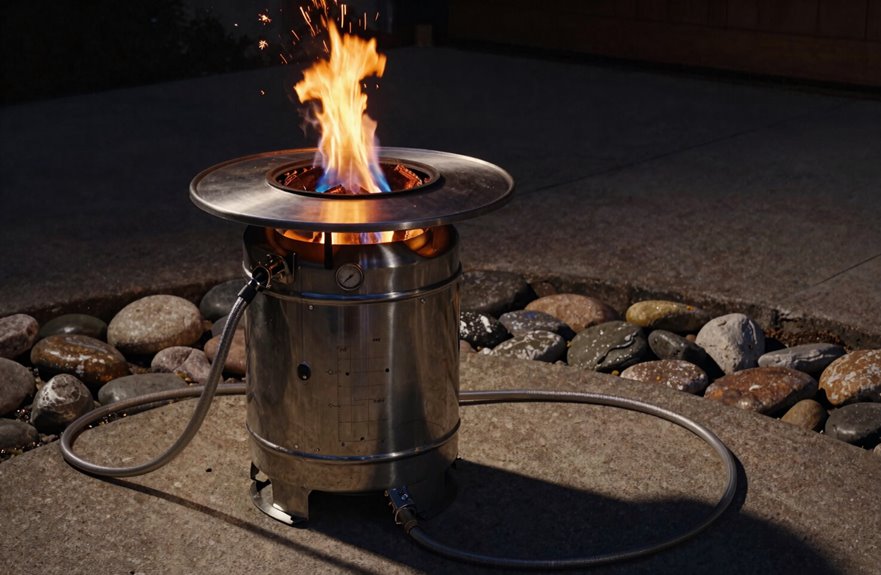
Your propane tank holds about 430,000 BTU of energy, which is British Thermal Units or heat fuel. To find your burn time, divide that by your fire pit’s BTU/hour rating. A 50,000 BTU/hour pit provides roughly 8.6 hours of runtime on a standard 20-pound tank size.
Your actual efficiency drops with wind blasting heat sideways, or when you crank that flame setting to max. Dialing the flame lower extends burn time for longer evenings. Ambient temperature matters too; cold tanks deliver less pressure.
Pick your calculation method: some folks use 91,500 BTU per gallon, which equals about 4 gallons in that tank. Either way, you have your answer.
Why BTU Rating Drains Your Propane Tank Fastest
Why does my propane vanish so fast when I’m just trying to roast a marshmallow? Your pit BTU/hour rating dictates your propane burn rate like a speedometer for fuel.
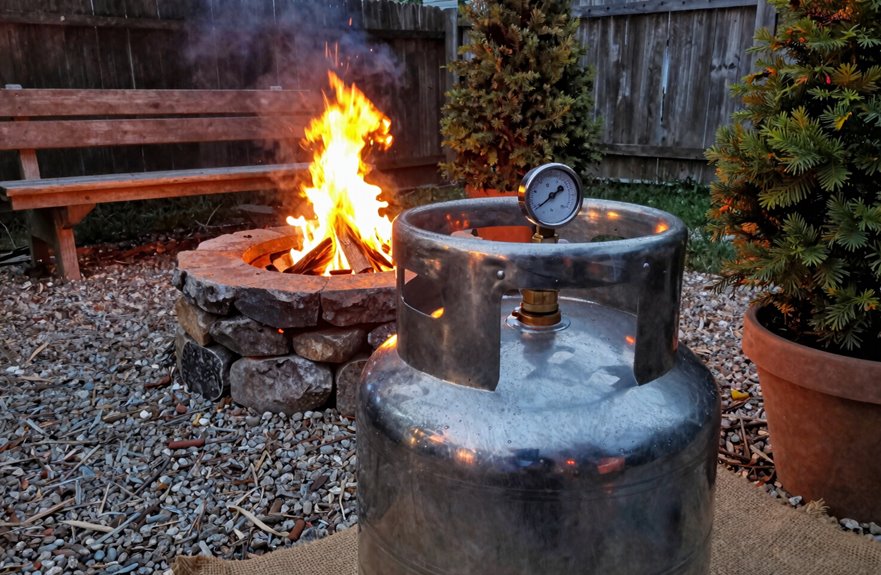
The math is straightforward: your propane tank holds roughly 430,000 BTU (for a standard 20-pounder), divided by your BTU rating equals burn time. A 50,000 BTU/hour fire pit will run about 8.6 hours on high. Crank that BTU rating higher and your fuel consumption soars proportionally.
Real life introduces variables that change these calculations. Wind effects force your flame height higher. Ambient temperature drops efficiency. Suddenly you’re burning faster than the math predicted. That flame setting you love consumes propane proportionally to its heat output. Higher heat means shorter nights; it’s physics.
How Flame Settings Stretch Your Propane Tank Runtime
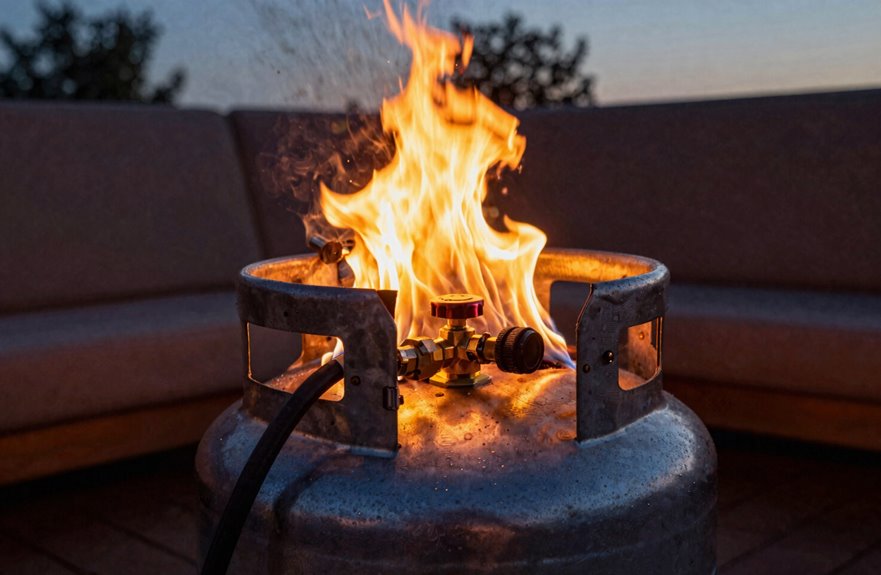
Control over your flame height directly impacts propane tank runtime. This isn’t guessing; it’s measurable fuel management.
Here’s what stretches your runtime:
- Match your BTU/h to your needs — that 50,000 BTU/h fire pit flame setting burns through a 20 lb tank in roughly 8.6 hours on high, but dial it to medium and you’re looking at 15–20 hours (same cozy vibes, way more nights)
- Master the ignition and steady-state flame technique — blast heat output briefly for ignition, then settle into a lower steady-state burn. This approach boosts fuel efficiency dramatically.
- Account for environmental variables — wind and ambient conditions force higher effective burn rates, so factor those conditions in when planning propane flame height for maximum runtime.
How Wind and Cold Affect Your Fire Pit’s Fuel Use
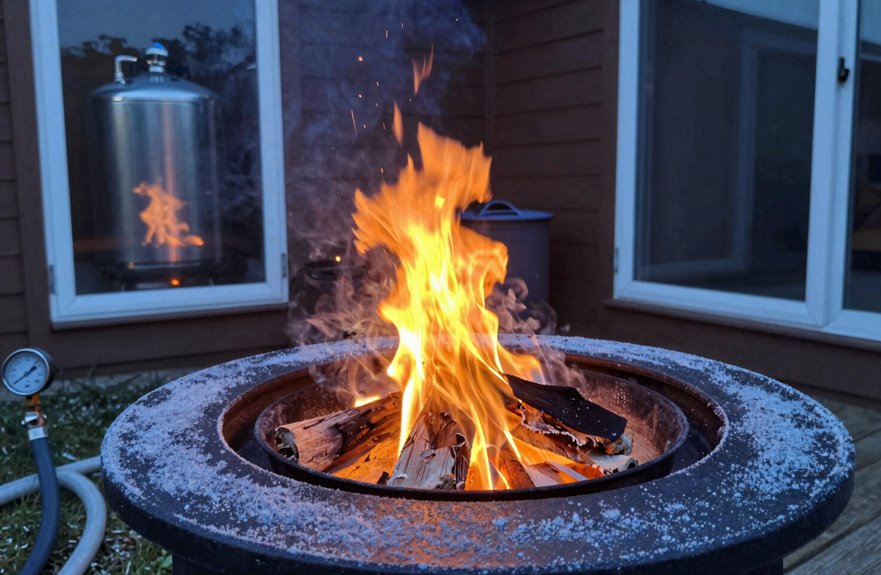
Ever wonder why your fire pit seems to guzzle propane faster on breezy nights? I’ve been there, huddled with friends while my propane tank drains before the marshmallows even toast. Wind steals heat through constant heat loss, forcing your burner to work harder just to keep flame height steady. That means higher fire pit BTU consumption than you’d expect. Cold compounds the problem. Dropping temperatures reduce pressure inside your tank, which cranks down regulator efficiency and can leave you with a wimpy flame until things warm up. Combustion efficiency also tanks in frigid air, so you’re burning more fuel per hour for the same cozy glow.
What I’ve learned about protecting my setup:
| Condition | Problem It Causes | Quick Fix |
|---|---|---|
| Wind | Accelerated heat loss, shorter runtime | Wind sheltering with screens or walls |
| Cold | Poor regulator efficiency, weak flame | Insulate tank, pre-warm connections |
| Both | Reduced combustion efficiency, erratic flame height | Combine sheltering + tank warming |
Smart wind sheltering and keeping connections cozy stabilizes performance, so you can linger longer with friends.
Maintenance Habits That Keep Your Propane Tank Efficient
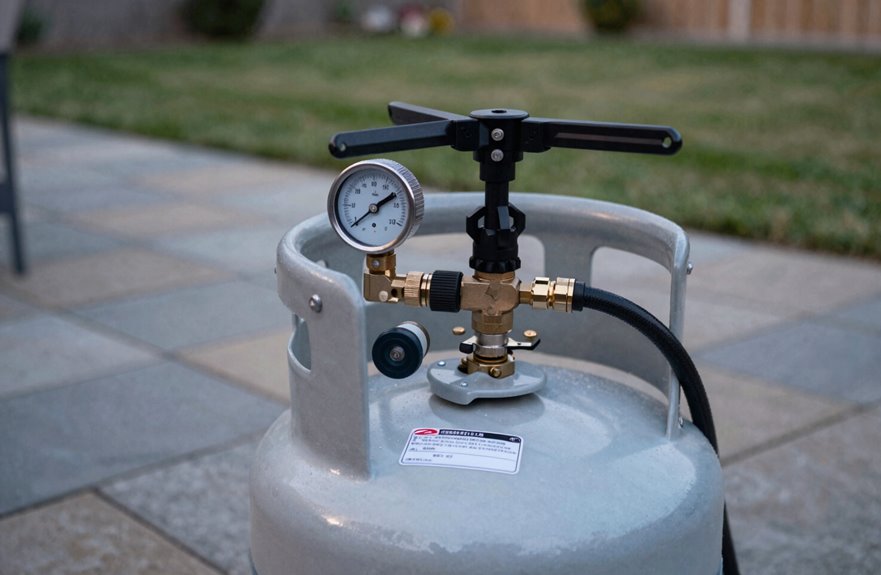
How often do you actually peek under your fire pit’s hood? Propane tank maintenance isn’t glamorous, but it’s what separates efficient users from folks who burn through fuel twice as fast. Here’s what actually works.
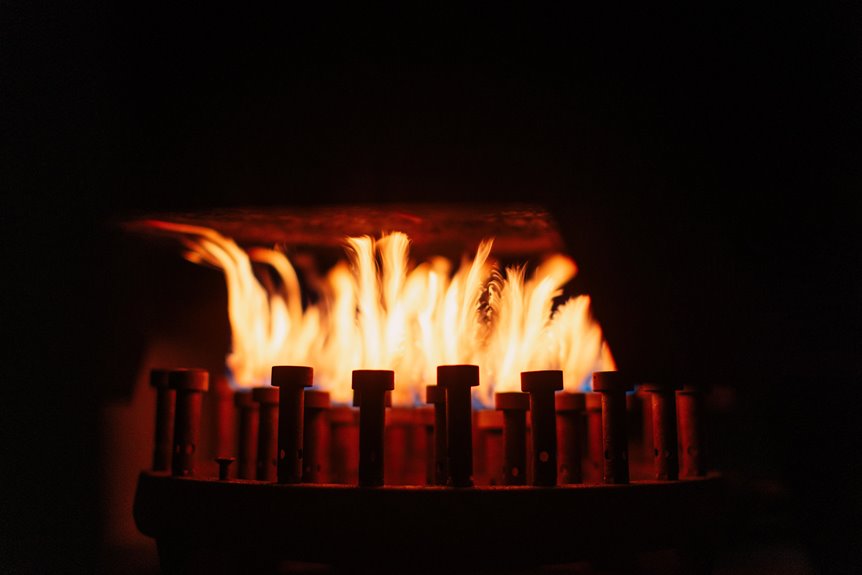
- Inspect those burner ports monthly. Use a wire brush (or a paperclip in a pinch) to clear debris, ensuring that clean blue flame for peak burn efficiency.
- Check for propane leaks every season. Mix dish soap with water, brush it on connections and hoses, then watch for bubbles. No bubbles means no fuel loss.
- Master tank storage and regulator checks. Keep DOT-compliant cylinders upright, shaded, and cool. Schedule safety inspections, prioritize debris prevention, and you’ll maximize fuel efficiency. Proper maintenance directly reduces fuel consumption and prevents dangerous leaks.