
The 8 vegetables below range from a 2-inch windowsill tray to a 5-gallon bucket, and the deciding factor is how much sun your space gets and how many weeks you want to wait.
A shallow 2–3 inch container of microgreens does fine on a south windowsill with no outdoor space at all, while eggplant in black grow bags demands full sun and steady August heat to set fruit.
1. Lettuce
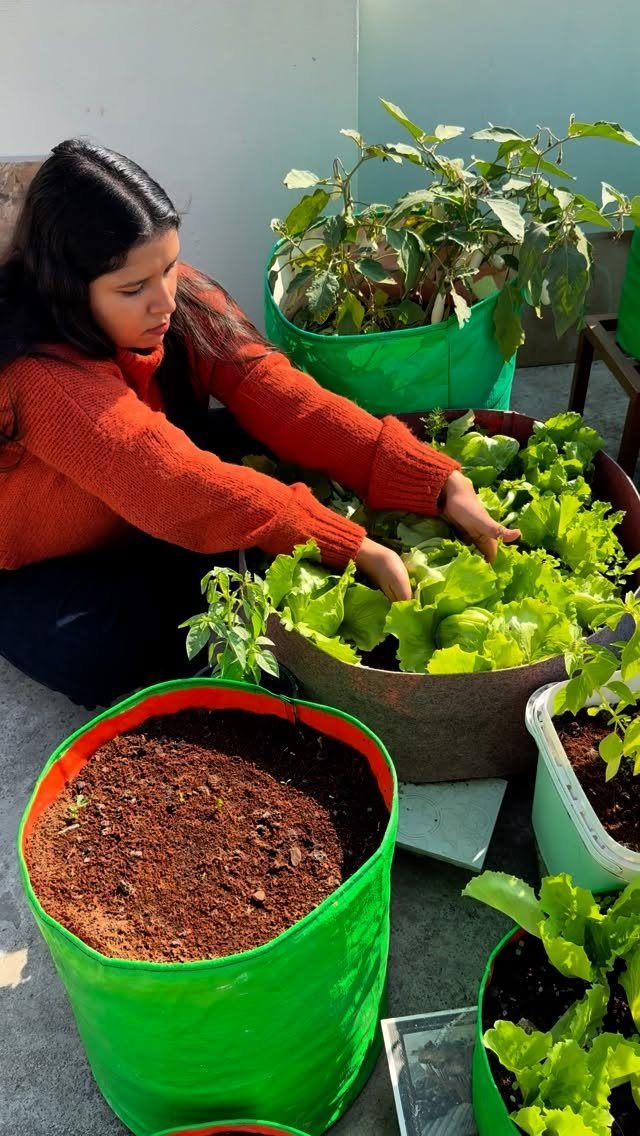
Lettuce in a round container or green fabric pot gives you cut-and-come-again harvests for weeks. I would pick loose-leaf varieties over heading types; they mature faster and you can snip outer leaves while the plant keeps producing.
A pot that gives the roots room to spread handles one plant comfortably, or crowd a few together for a denser harvest you thin as you eat.
Keep the soil consistently moist, not soaked; lettuce turns bitter when it dries out or bolts in heat.
Partial shade in summer afternoons extends your season. For the reader with a patio and a weekend, this is the lowest-stakes entry point I know.
2. Tomatoes
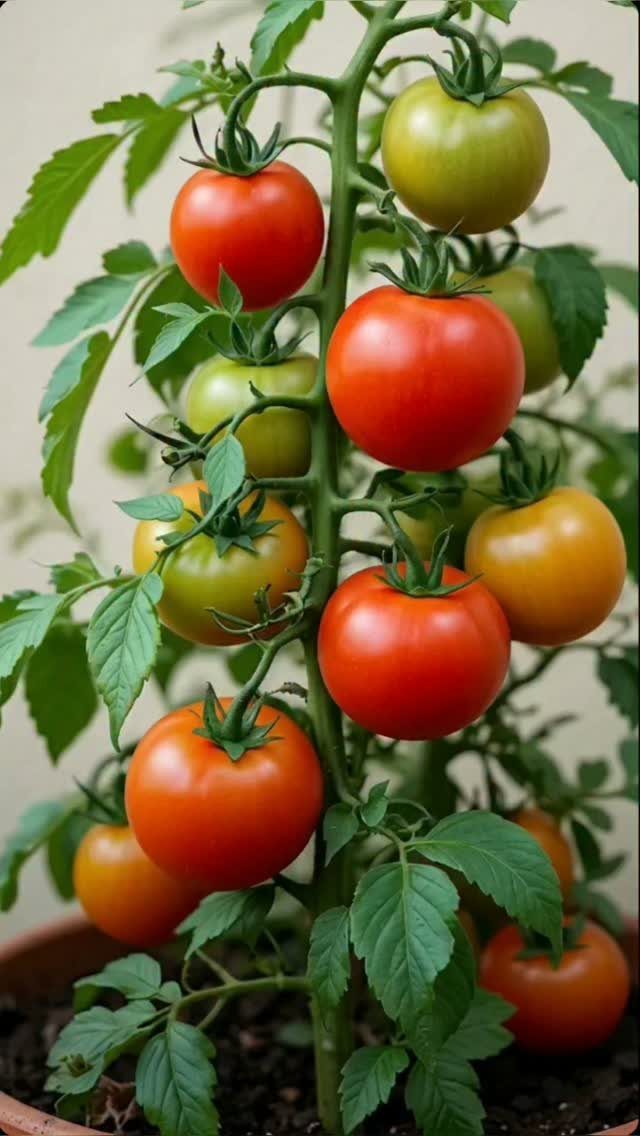
A determinate or dwarf tomato, not a sprawling indeterminate, belongs in a container. The plant in that terracotta pot is probably a compact variety like Patio or Tiny Tim, topping out at 2 feet rather than 6.
I would check the tag for the word "determinate" before I bought; that growth habit matches pot life without the constant pruning and staking.
A 5-gallon minimum pot size is the figure I have seen most often, with drainage holes non-negotiable.
Full sun, regular feeding, and a cage or stake at planting time, not after the roots spread. The trade-off is volume; you get fewer tomatoes per plant than in-ground, but the flavor beats store-bought on a small scale.
3. Onions
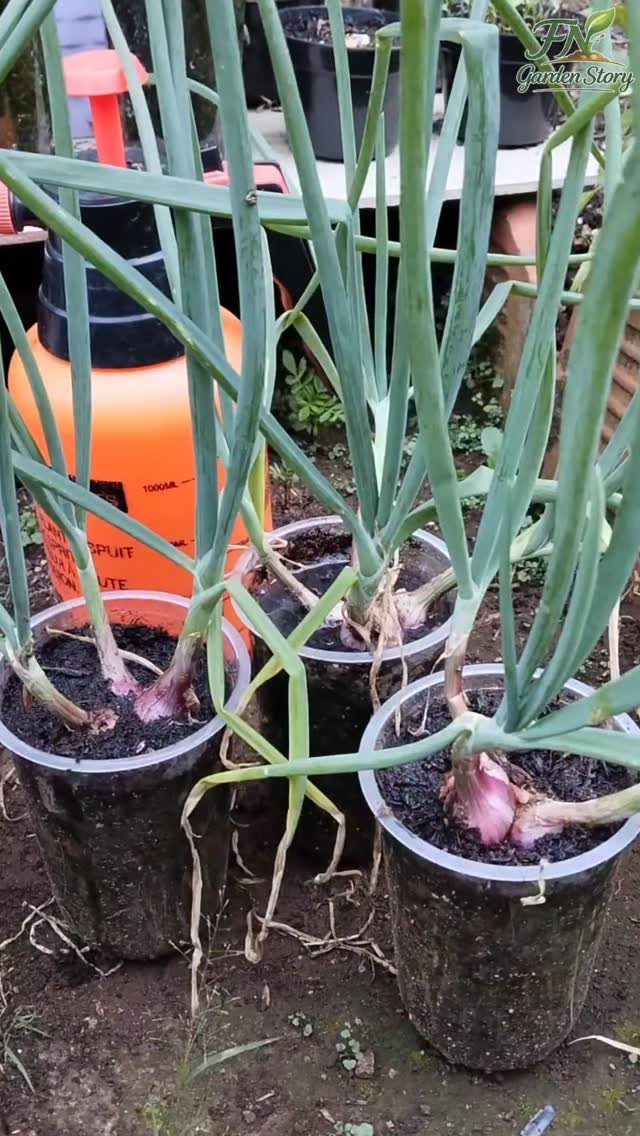
Onions in clear cups or small black pots start from sets or seedlings, not seed, which shortens the timeline by weeks.
I would use this method for green onions harvested young rather than full bulbs; the container volume limits how large the bulb can swell.
Space them so each has elbow room, and move them to a larger pot or garden bed if you want actual storage onions. The green stalks you see are edible at any stage, snipped like chives.
Keep them in full sun and do not let the cups sit in water; those clear sides show you exactly when to water, which is useful for a beginner learning the rhythm.
4. Eggplant
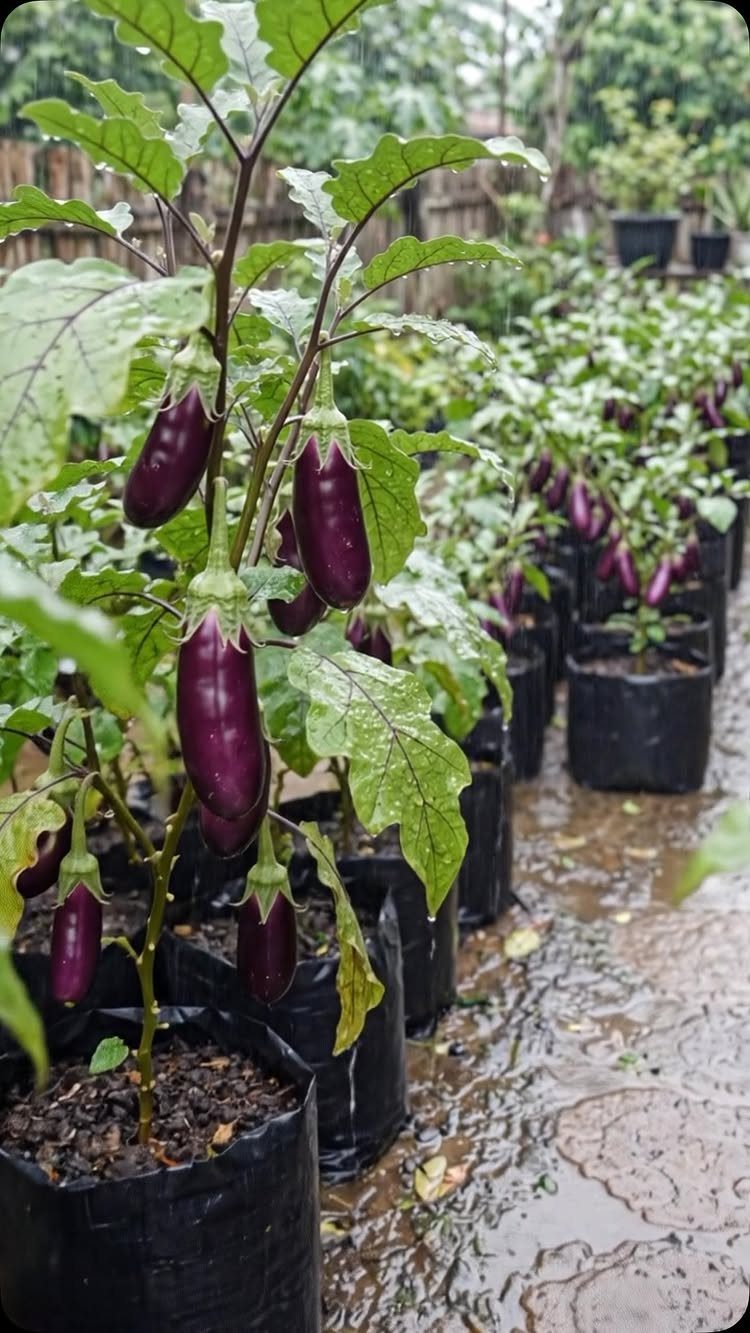
Eggplant in black grow bags needs the compact varieties: Fairy Tale, Ichiban, or Patio Baby, running 18–24 inches rather than bushing out to 3 feet.
I would set the bags on a hard surface like that wet stone, not bare soil; the fabric breathes but wicks moisture, and ground contact invites pests up through the drainage holes.
One plant per 5-gallon bag, full sun, and support early; the branches split under fruit load.
The purple fruits you see set best in steady heat, so this suits the reader in a warm zone or a summer with real August temperatures.
Cool nights stall them out, so bring pots inside or cover them once the thermometer drops.
5. Microgreens
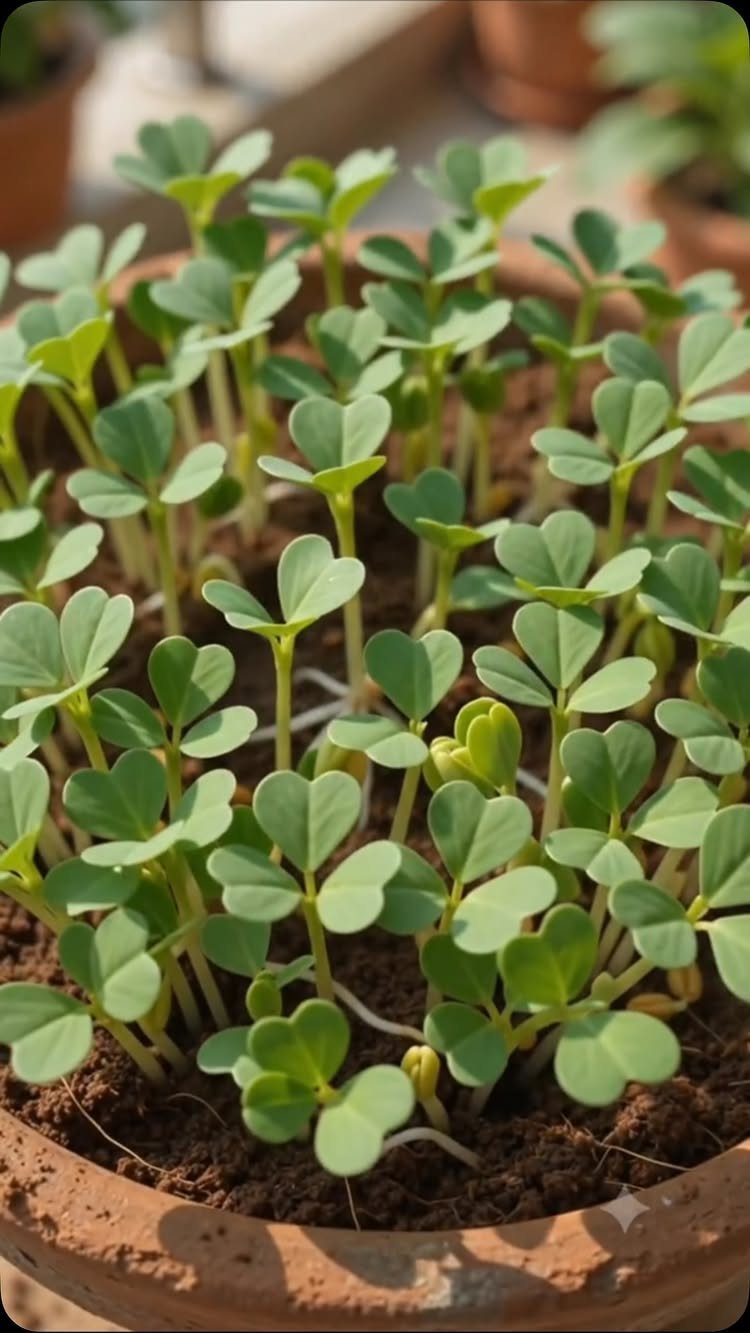
I would use a shallow container, 2–3 inches deep, with a seed-starting mix rather than potting soil; the fine texture gives the small roots even contact.
Sow densely, press in, cover with a thin layer of mix, and keep dark until germination. The heart-shaped leaves you see are likely radish or broccoli microgreens, mild and reliable for first attempts.
No fertilizer needed; the seed carries its own nutrition. A south windowsill works, so this is the option for the reader with no outdoor space at all.
6. Spinach
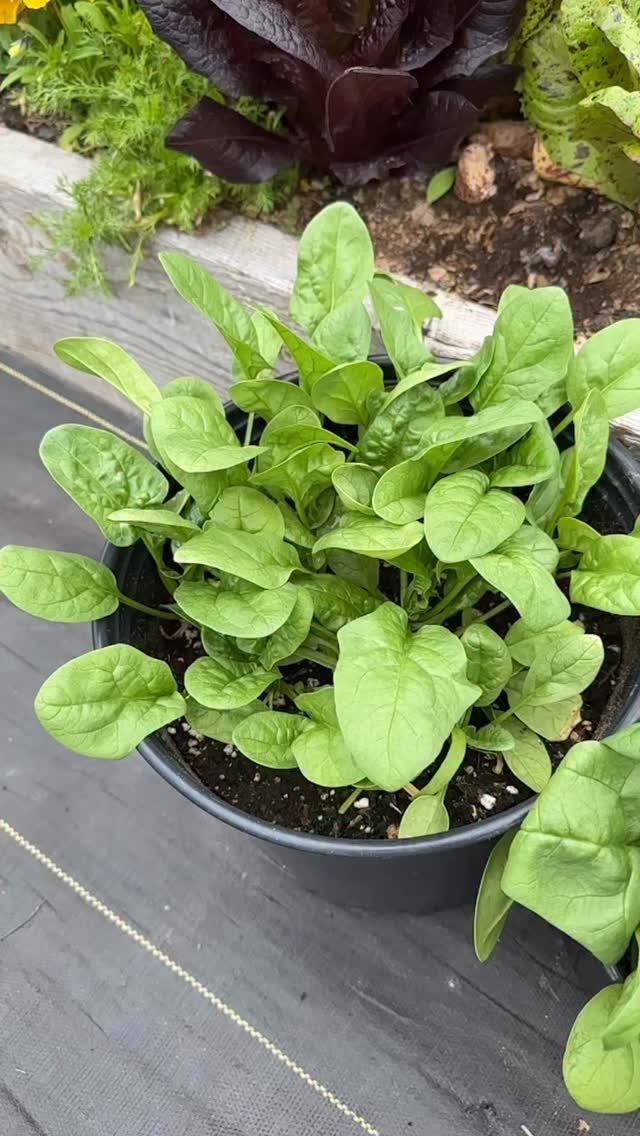
Spinach in a small black pot thrives in the cool shoulder seasons, not mid-summer heat.
A pot sized to the root system, partial shade, and harvest outer leaves to extend production. The dense growth you see comes from sowing fresh seed in intervals, not one big planting.
For the reader with limited space, this fits on a balcony that gets morning sun and afternoon shade, and it finishes before your summer crops need that same pot.
7. Bell Peppers in Buckets

A five-gallon bucket with drainage holes drilled in the bottom is the standard starting point, and the blue plastic you see is often free from restaurant or bakery castoffs.
Compact pepper varieties work best in containers; the plant supports full-sized fruit on a frame that fits bucket life without sprawling.
One plant per bucket, full sun, and the same feeding rhythm as tomatoes: start with a slow-release fertilizer at planting, then switch to a balanced liquid feed once fruit sets and keep that up through the season.
Wall thickness matters; thin plastic heats up fast in sun, so roots can cook in July.
I would wrap the bucket in burlap or set it inside a second container for insulation. The reader with a driveway or a strip of concrete and a drill already owns this setup.
Bush green beans do well in containers as small as 8" deep and 8" wide per plant.
8. Radishes in Fabric Pots

Radishes ask almost nothing: seed to harvest happens fast, and the fabric pot lets you grow them anywhere the sun reaches.
I would fill that grey grow bag with a loose potting mix rather than garden soil; the radish itself needs easy pushing, and compacted dirt makes forked, woody roots.
Sow seeds close, thin once they sprout, and keep the fabric damp. Round red radishes are the familiar kind, but the same bag works for French breakfast or watermelon types if you want variation.
No deep pot needed; the radish grows a short taproot that fills out in just a few inches of soil.
I would use this for the reader who wants something edible before Memorial Day, or who needs a crop finished and the same bag freed up for summer basil.
Soil Requirements
A lightweight potting mix is the only thing that belongs in your containers. Garden soil compacts in a pot, blocks airflow, and drains poorly without the earthworms and soil structure it has in the ground.
The mix I would buy contains coir, peat moss, or compost blended for drainage and root aeration. A moisture-control version helps if you tend to overwater or travel on weekends.
If you are filling more than a few pots, mixing your own costs less. A solid mix for potting vegetables is equal parts coco coir or peat moss, perlite or vermiculite, and quality compost.
The first holds water, the white bits add drainage, and the compost feeds the plant. That balance matches what the bags sell, and you control the proportions.
Watering Practices
Potted plants lose moisture fast, so I check mine every morning during summer. I would stick a finger into the top inch of soil; when it reads dry, water until it runs from the drainage holes.
Once roots crowd the container, the plant drinks more and you will need to water more often to keep harvests coming.
A drip kit from a hardware store handles the schedule if you are forgetful or away often.
For shorter trips, a 200ml self-watering globe releases moisture gradually as the mix dries, usually needing a refill every 7–10 days. It prevents the stress of wet-to-cracked cycles.
Steady moisture helps pods and fruit form properly, though too much water will rot seeds and suffocate roots. You want the soil damp through, not swimming.
Frequently Asked Questions
Can you grow lettuce in pots?
Loose-leaf lettuce in a container keeps producing for weeks if you harvest the outer leaves and let the center grow on. Keep soil consistently moist and give it partial shade in summer afternoons so it doesn’t turn bitter or bolt.
What are common mistakes in container gardening?
Using garden soil instead of potting mix is the big one; garden soil compacts in a pot, blocks airflow, and drains poorly without earthworms and soil structure.
Not ensuring drainage holes is another, since excess water will drown roots. Container soil loses moisture fast in July and August heat, so I check mine every morning with a quick finger test.
What are easy veggies to grow?
Lettuce, radishes, tomatoes, peppers, spinach, and microgreens are all easy to grow in pots. Radishes ask almost nothing and reach harvest fast; lettuce gives repeated cuttings; tomatoes and peppers need more space but reward you with flavor that beats store-bought.
I would start with lettuce or radishes if you want something edible before summer, or microgreens on a windowsill if you have no outdoor space at all.
How to grow plants in pots?
Start with the right container size for what you are growing: a 10-inch pot works for lettuce or bush beans, while tomatoes and eggplant need 5-gallon minimums. Drainage holes are non-negotiable.
Fill with lightweight potting mix, not garden soil; the mix should contain coir or peat moss for water retention and perlite or vermiculite for drainage. Water when the top inch of soil dries, and feed regularly once fruit starts forming.