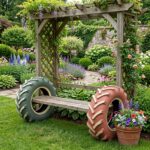

The glass dome ideas ahead range from a $1,200 weekend kit you build yourself to an $8,000 permanent structure, with custom work climbing past $10,000.
What separates one dome from another is not the look but the use: whether you need growing space, sleeping space, or a single evening of dining under curved glass.
The Climatron in St. Louis, standing since 1960 on triangular geodesic panels, is the proof that this geometry works at scale.
1. Mini Greenhouse Dome

A mini greenhouse dome is the smallest entry point into year-round growing, and the one I would start with if my only goal were plants, not entertaining.
A wooden frame built from triangular panels solves the problem of curving glass, since flat glass will not bend.
Before buying a kit, I would check whether the wood is treated for outdoor use or if I need to seal it myself; untreated cedar will gray nicely but rot fast in wet climates.
The table and chairs inside mean this owner uses it as a potting station too. I would not add seating unless I had a clear path to walk around; working around furniture in humid, tight quarters gets old fast.
2. Geodesic Dome

Geodesic domes distribute stress across their triangular panels, which is why the Climatron in St. Louis has stood since 1960 without internal columns blocking light.
For a residential build, I would skip the custom engineering and buy a prefab hub-and-strut kit in aluminum or steel.
A dome among mature trees needs a foundation that levels without cutting roots; a gravel pad or deck blocks on compacted stone let you adjust, and I would not pour concrete near established trunks.
Standard works fine for ornamentals; I would pay the premium only for fruiting plants that need every photon.
The design of the Climatron greenhouse was developed by St. Louis architects Murphy and Mackey, winning the 1961 Reynolds Award, an award for architectural excellence in a structure using aluminum. In 1976 it was named one of the 100 most significant architectural achievements in United States history.
3. Outdoor Dining Dome
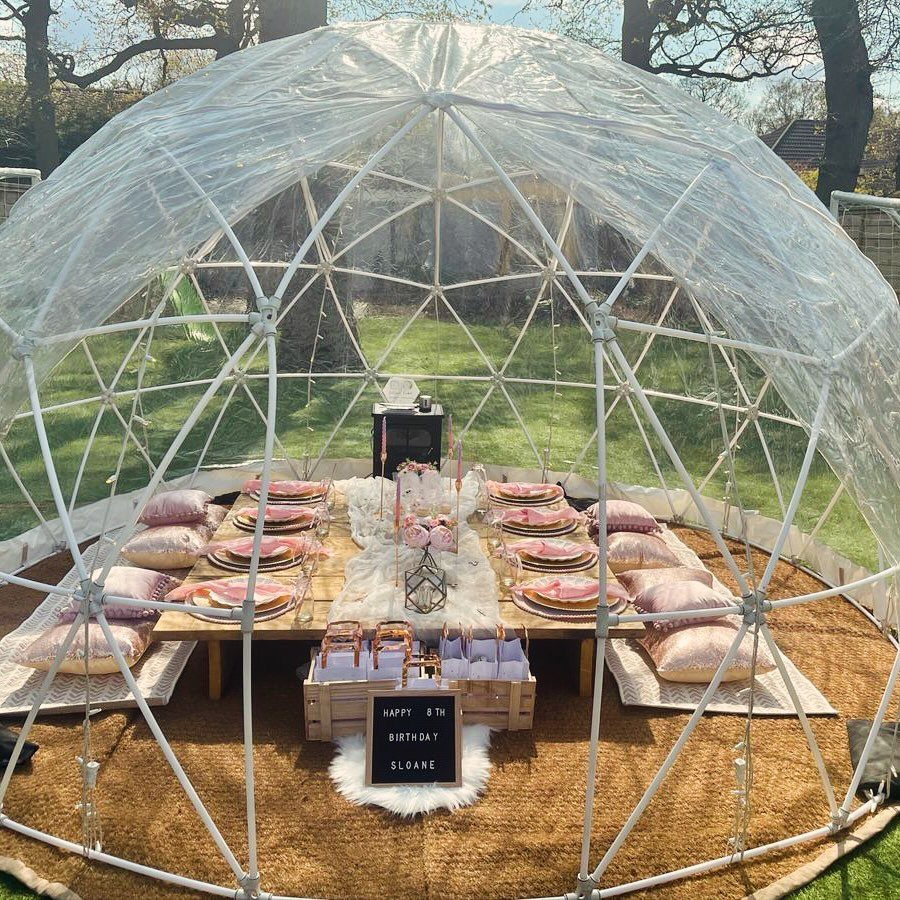
Outdoor dining domes blew up as restaurant seating a few years back, and the rental market still makes them accessible for a single birthday or season without buying.
The "Happy 8th Birthday" sign tells me this is a rental setup, and that is the smart play: a commercial-grade clear PVC dome is expensive to buy, or far cheaper for a weekend rental.
I would still ask about anchoring; a geodesic frame handles wind better than most structures, but only if it is pinned down properly on uneven ground.
4. Meditation or Yoga Dome

A meditation dome works because the curved walls let light pour in from every angle, which is harder to achieve with a square shed.
A wider diameter gives enough floor space for two people to practice; one person can manage less room, but mats, blocks, and a small altar fill that fast.
I would add a vent panel or zippered window. Clear vinyl traps heat, and a cool morning turns stifling in direct sun within a couple of hours.
5. Garden Dome Lounge

The bubble chair hanging outside this dome, not inside, is the tell: the dome itself is too small for statement furniture, so the owner staged the photo op externally.
A dome this furnished is not for growing plants. Lounge domes stay humid and dim enough to kill most vegetables, so decide the purpose before you buy.
6. Wooden Frame Glass Dome

An oval wooden and glass pod like this one reads as architecture, not camping gear, and the integrated strip lighting along the deck edges means the owner planned for use after sunset.
The warm color temperature of those strips, probably 2700K, is what I would specify; cooler light fights the wood tones and turns the glass into a glare panel.
I would check local building codes before ordering. A fixed structure of any size often needs a permit, and this shape, with its curved load path, may trigger engineering review even under the usual square-foot threshold.
7. Garden Dome Bedroom

Sleeping in a glass dome trades privacy for the view, and the ambient lighting in this one keeps it functional after dark without washing out the stars.
I would check whether the structure is rated for overnight occupancy; some domes sold as garden features lack the insulation or ventilation for sleeping, and morning condensation on the interior glass is common without airflow design.
A wooden deck base like this one needs to drain, or the sleepers wake to musty bedding.
8. Custom Canopy Print Dome
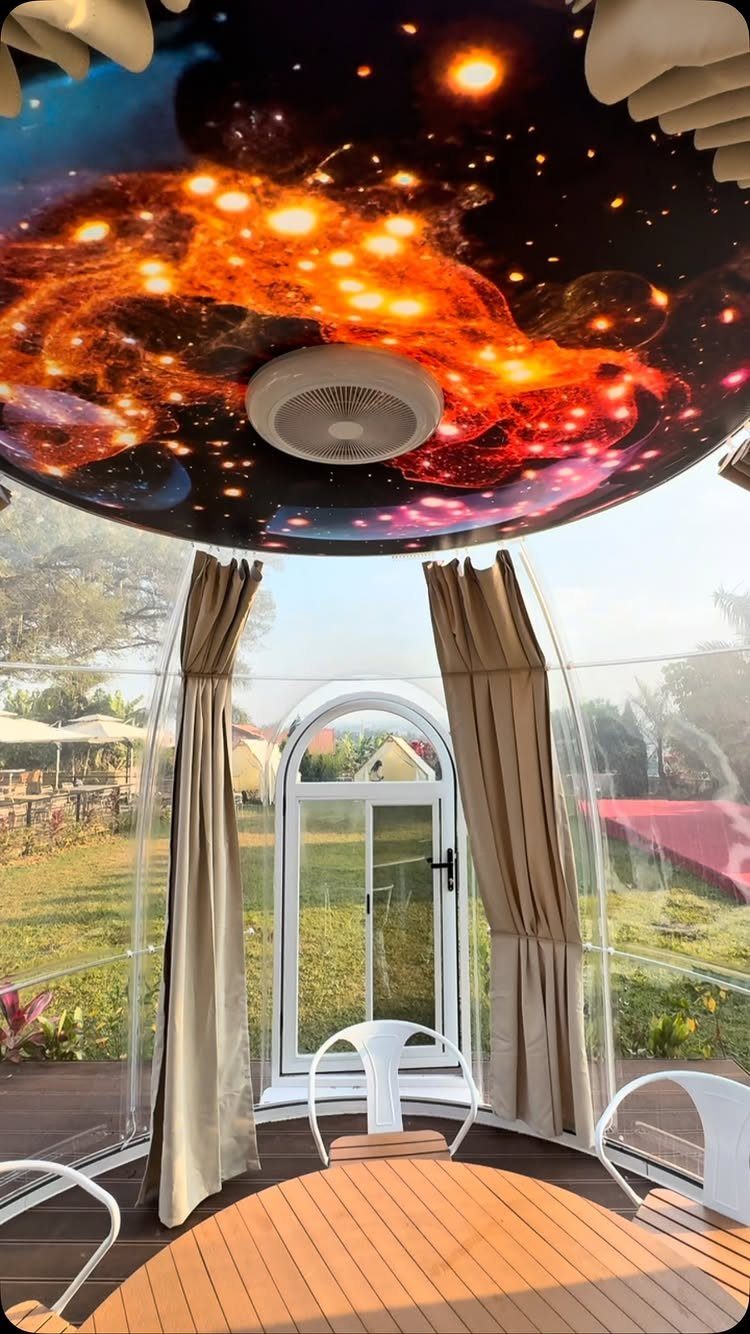
A printed ceiling canopy turns the dome into a room with a point of view, and the nebula print here gives the sky competition rather than pretending to be it.
The integrated fan is the detail I would not skip; clear vinyl ceilings gather heat, and a ceiling fan breaks the thermal layer that otherwise sits on your shoulders.
Tan curtains frame the view without blocking it, which matters when the whole reason for the structure is looking out.
I would order a canopy print that reads at night under the dome’s own lighting, not just in daylight.
9. Courtyard Glass Dome

Multiple domes in one courtyard mean each structure carries less visual weight, and the brick paving here ties them to the ground as permanent architecture rather than temporary event tents.
The water channels need drainage planning I would verify before building; standing water breeds mosquitoes and stains brick.
Illuminated at dusk, these domes function as lanterns for the whole space, not just dining rooms, so I would plan the lighting for the courtyard, not the table alone.
A setup this scaled suits a commercial host or a compound, not a single-family weekend project.
10. Copper-Toned Dome
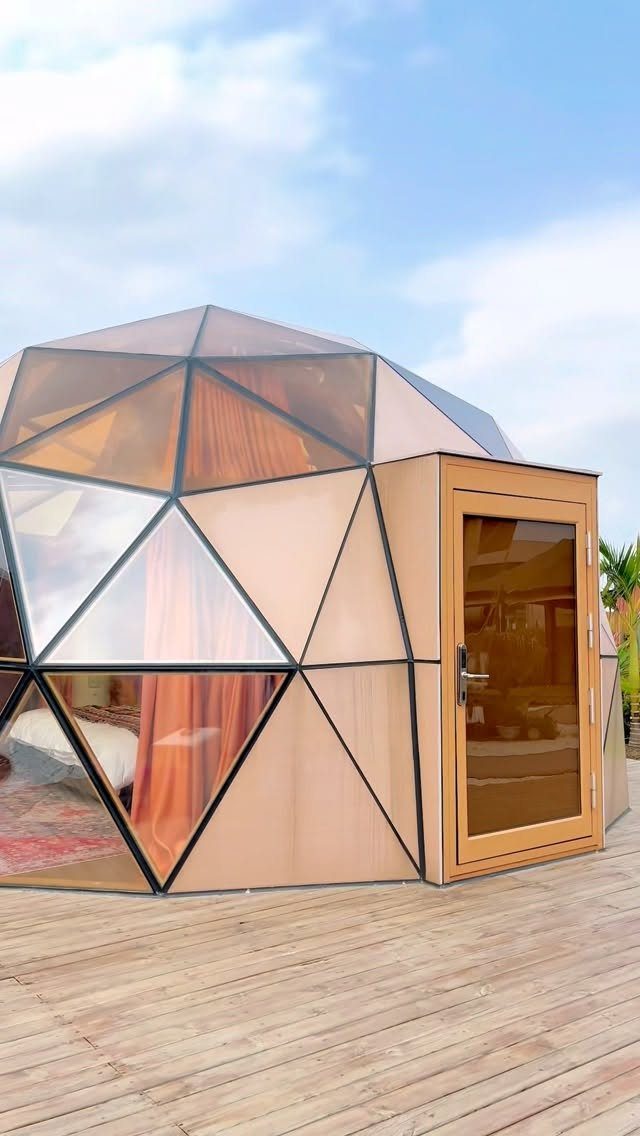
Copper-colored panels warm the exterior without the maintenance of real copper, and the geodesic pattern here breaks up the mass so the dome reads smaller than its footprint.
The visible bed inside confirms this is built for sleeping, not growing, and the glass panels are placed for views, not horticultural light.
I would check whether the color is powder-coated aluminum or actual copper cladding; the latter patinas to green in wet climates, which may or may not be the look you want in year three.
A wooden deck base this finished needs sealing every season, or the grain splinters and traps moisture against the frame.
Maintenance Tips
Glass panels beat PVC fabric on maintenance, and the gap widens over time. A geodesic dome built with quality glass should last past 15 years with basic care, where fabric covers fray, fade, and need replacement every few seasons.
I clean mine with the same soap I use on windows; no special product required.
Sturdy glass and a sound frame are what buy you that low-effort lifespan, so I would inspect hub connections and sealant lines once a year, in late fall before the hard weather.
Catching a loose bolt or cracked gasket early is the difference between a 5-minute fix and a panel replacement.
The upfront cost runs higher, but the maintenance math flips inside a decade.
Cost Considerations
A garden dome runs $1,200 to $8,000 for most builds, with size, materials, features, and how it goes together driving where you land in that band.
Custom work or an imported brand pushes past $10,000, which is why I would pin down whether I am paying for engineering or just a label.
I would not assume the sticker price covers installation. Some kits need a crew, others two people and a Saturday, and that labor line can shift the total by thousands.
Foundation work sits outside most quotes too; gravel and deck blocks are cheap, but a poured pad or engineered piers are not.
The real question is what you are buying durability for. A sleep-rated dome with ventilation and insulation earns its place at the top only if you will use it nightly for years.
Design Inspiration
A dome is already half garden; what you plant inside finishes the thought. Hanging ferns, lavender in terracotta, a small citrus tree, or a vertical herb garden each softens the geometry without fighting it.
I would avoid anything that needs more light than the panel orientation gives, or you are running grow lamps and losing the point.
For pure display, a moss layer with stone and wood reads as a contained forest floor.
A succulent setup needs a vented dome; sealed glass cooks them. Seasonal swaps work too, pinecones and bare branches in January, forced bulbs in March, though I would keep the storage simple or the rotation becomes a chore.
The USDA Urban and Community Forestry Program tracks what green space does for outdoor living and biodiversity, and a dome is a small, dense version of that same idea.
It will not replace a yard, but it concentrates the effect in a space you actually sit in.
Frequently Asked Questions
Are garden domes worth it?
A garden dome is worth the cost if you will actually use it for the purpose you build it for.
A sleep-rated dome with proper airflow and insulation justifies its cost if you are out there nightly for years; a mini greenhouse dome makes sense faster if you just want to keep plants alive through winter.
How much does a glass dome cost?
Most garden domes fall between $1,200 and $8,000, and where you land depends on size, materials, features, and how complex the assembly gets.
Custom work or imported brands push past $10,000. The sticker price rarely includes installation or foundation work; some kits need a hired crew, others need two people and a Saturday, and gravel costs little where a poured pad does not.
How do you create a glass dome?
For a residential build, I would skip custom engineering and buy a prefab hub-and-strut kit in aluminum or steel.
Foundation work depends on site: gravel or deck blocks on compacted stone adjust around tree roots, while a fixed structure may need permits and engineering review.
What are the disadvantages of a dome home?
Clear vinyl traps heat, and a cool morning turns stifling in direct sun within hours without vent panels or zippered windows.
Morning condensation on interior glass is normal without airflow design, and a wooden deck base that does not drain leaves you with musty bedding.
Fixed structures often trigger building permits and engineering review even under usual square-foot thresholds, especially with curved load paths.