
These designs run from a weekend seed sowing to a season-long hardscape install, and the deciding factor is how much structure you already have in the yard.
A fence line or stone urn already in place saves you the step of building structure from scratch, and both show up later in the list as their own ideas.
1. Wildflower Meadow
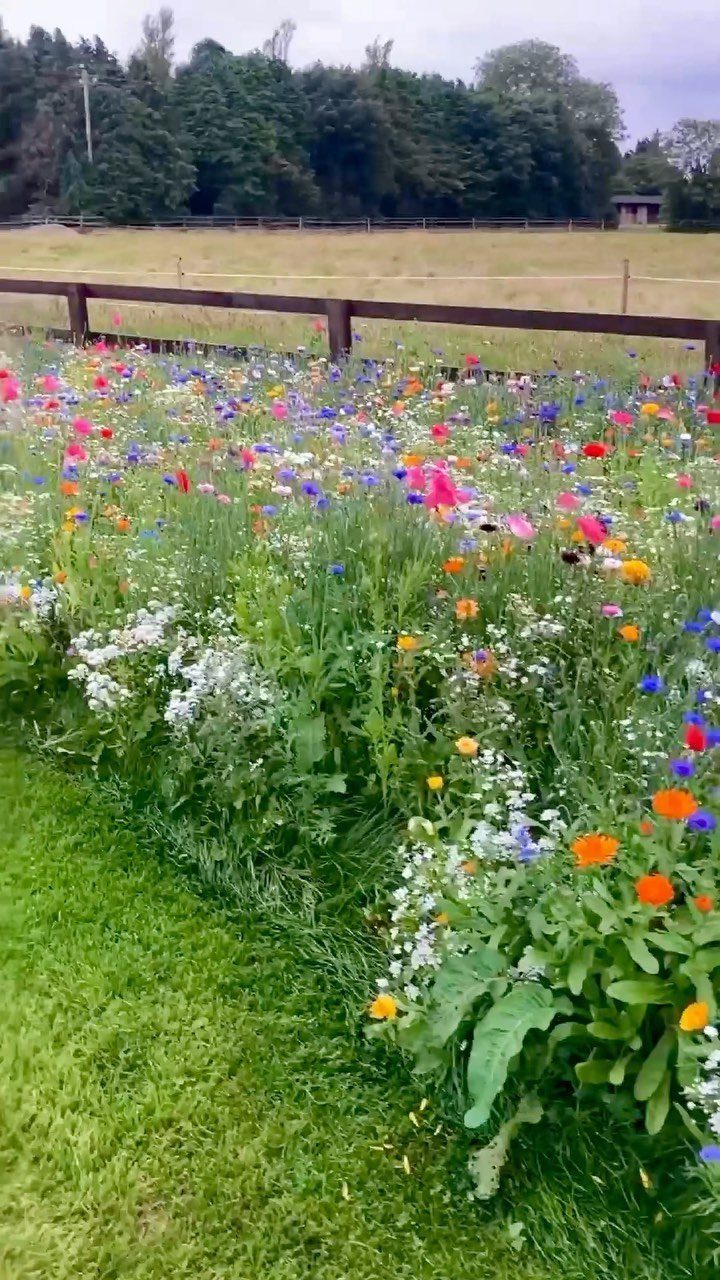
A wildflower meadow replaces turf with a mix of native grasses and flowering species that reseed themselves.
I would check sun exposure before buying seed; most meadow mixes need full sun to perform well. Poppies and cornflowers against a post-and-rail fence tell me this plot sits at a property edge where the mower already stops.
That boundary is the easiest place to start, since you are working with less foot traffic and existing grass that can be suppressed rather than stripped.
Seed for a meadow area is not where the money goes; the work is mostly timing, with late fall or early spring sowing giving the best establishment.
The terms “meadow garden” and “wildflower garden” are often used interchangeably, but there can be distinct differences. Wildflower gardens may have some of the traits of meadow gardens, but are often grown from seed mixes that may contain annuals or non-natives.
2. Mow Paths
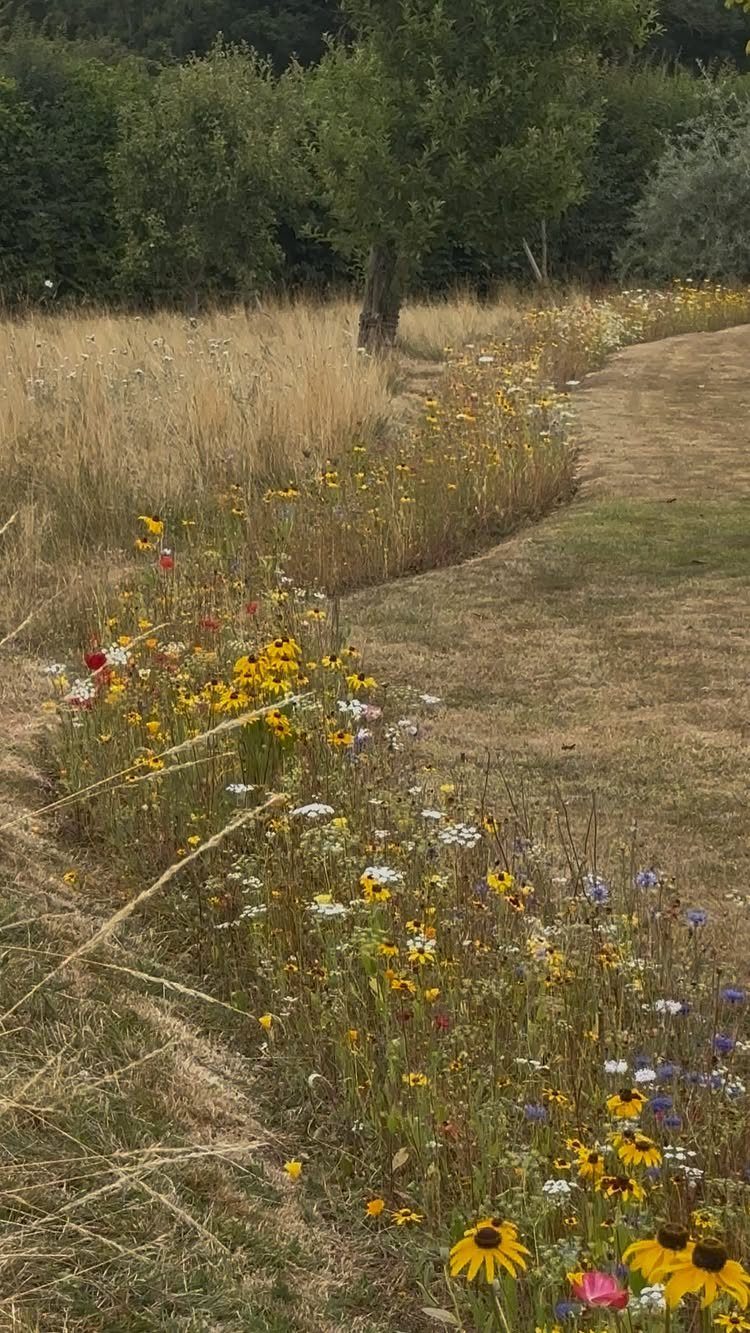
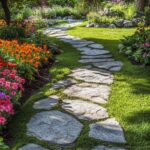
Mowing paths through a meadow or lawn lets you walk the garden without losing the wildflower mass.
A curved grass strip keeps the maintenance familiar; you are running the same mower, just less often and with the deck raised where flowers grow.
One creator working on client meadows noted that even a single mown strip changes how a space reads.
I would cut the path before the flowers set seed in late summer, so you do not track ripening seed into the lawn.
2 passes with the mower keeps the edge neat without string trimmer work, dropping the deck lower on the grass side and higher where flowers grow.
3. Cottage Garden
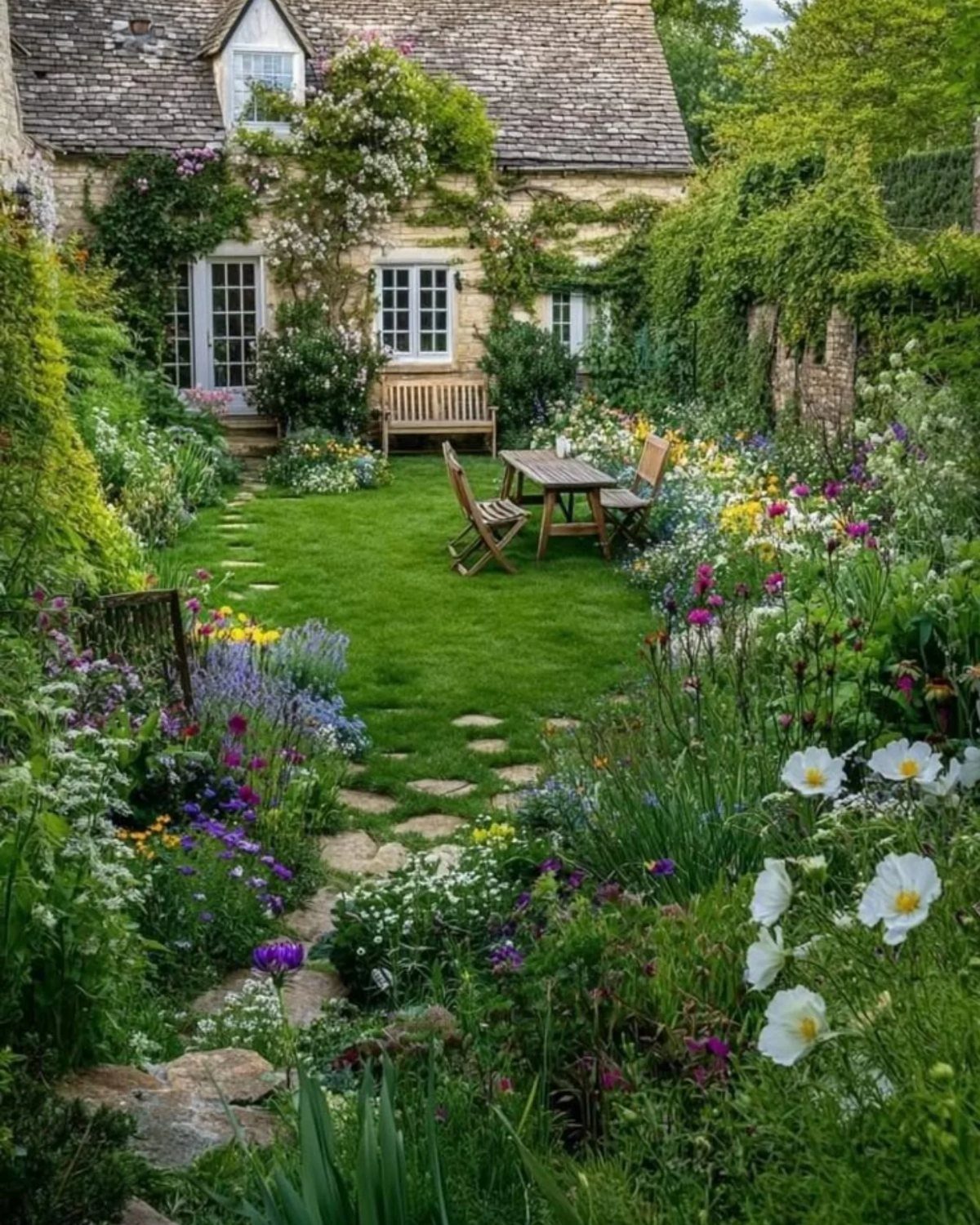
A cottage garden mixes wildflowers with traditional perennials and edibles in loose, layered borders.
A stone house sets the style for a cottage garden; without that architecture, I would still borrow the approach for any yard where a straight wildflower block looks too formal.
The visible details show climbing vines, a stepping path, and furniture placed inside the planting, which means you are designing for sitting among the growth, not viewing it from a distance.
Check your soil first; cottage gardens lean on heavy feeders like roses and delphiniums that need richer ground than meadow species.
Add compost where soil shows deep green turf, and the wildflowers will hold their own against the denser cottage plants.
4. Perennial Wildflower Garden

Perennials return each spring, which matters if you are planting against a structure or in a bed where annual reseeding feels like too much commitment.
Coneflowers, allium seedheads, and a metal obelisk with a birdbath are hard elements that stay year-round, so the planting needs to do the same.
I would place the obelisk and bath first, then arrange perennials in sweeps that hide the bed edges as they fill out.
Coneflowers take time to reach mature size from seed, so budget for nursery plants if you want the first-season show the photo promises.
Divide clumps on a regular schedule to keep the bloom dense and prevent the center from dying out.
5. Drifts of Species

Grouping single species in broad sweeps, rather than mixing plants individually, gives a wildflower border the visual weight of a designed bed.
Coral coneflowers massed beside yellow black-eyed Susans with purple spires behind read as distinct color blocks; each color reads as one shape from a distance.
I would limit myself to three species in a small yard, five in a larger one, and repeat at least one of them elsewhere so the eye connects the drifts.
Buy plants in multiples of five or seven; the odd count forces a naturalistic spacing that reads looser than soldier rows. Water the first season, then let the established clumps compete on their own.
6. Wildflowers Along Fences
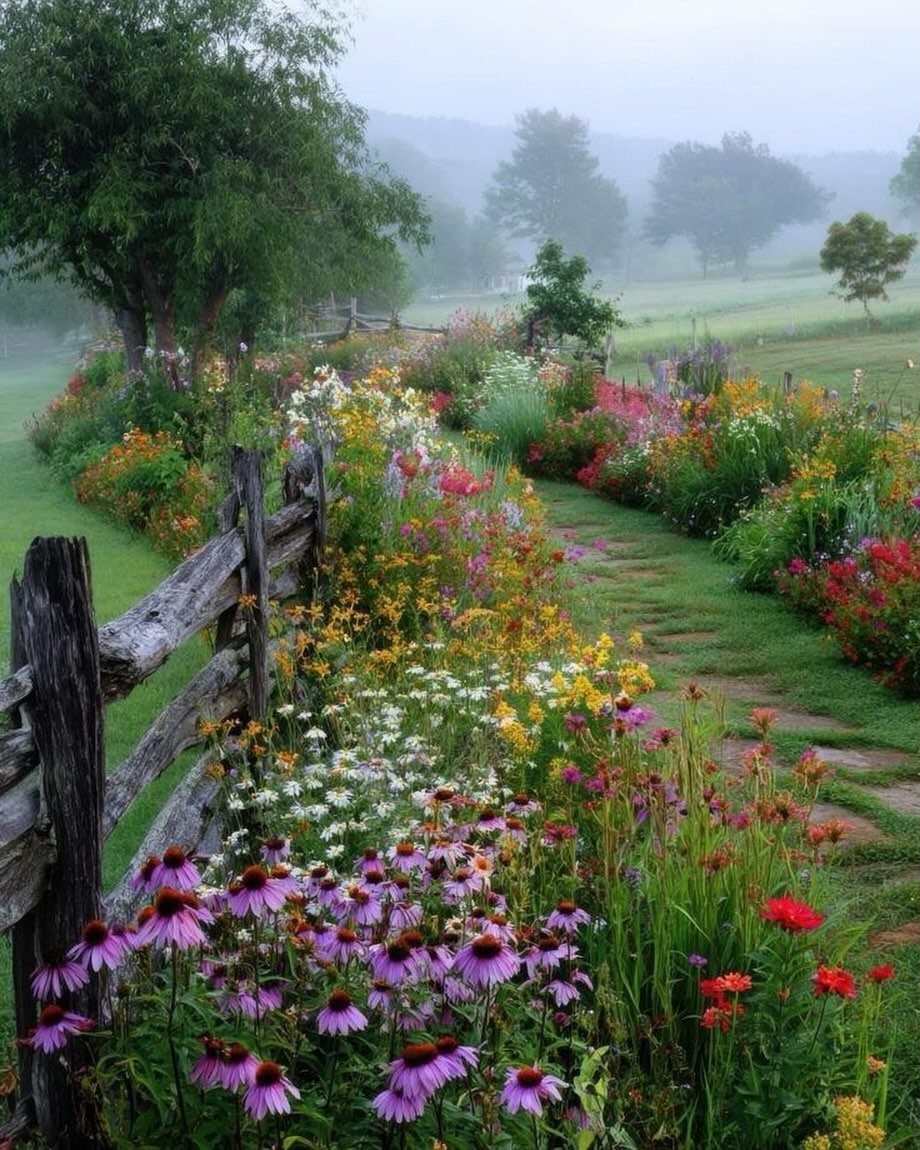
A fence line is built-in structure for a wildflower border; the vertical wood or stone gives the planting a backdrop and a stopping point for the mower.
A split-rail fence against open land is the classic look, but the same logic works on a suburban lot where the fence faces a driveway or neighbor’s yard.
Daisies and coneflowers both handle the root competition from fence posts and the reflected heat off wood or stone. Plant the tallest species on the rail side, shortest on the path side, so the view opens as you walk.
7. Wildflowers Around Stone Urns
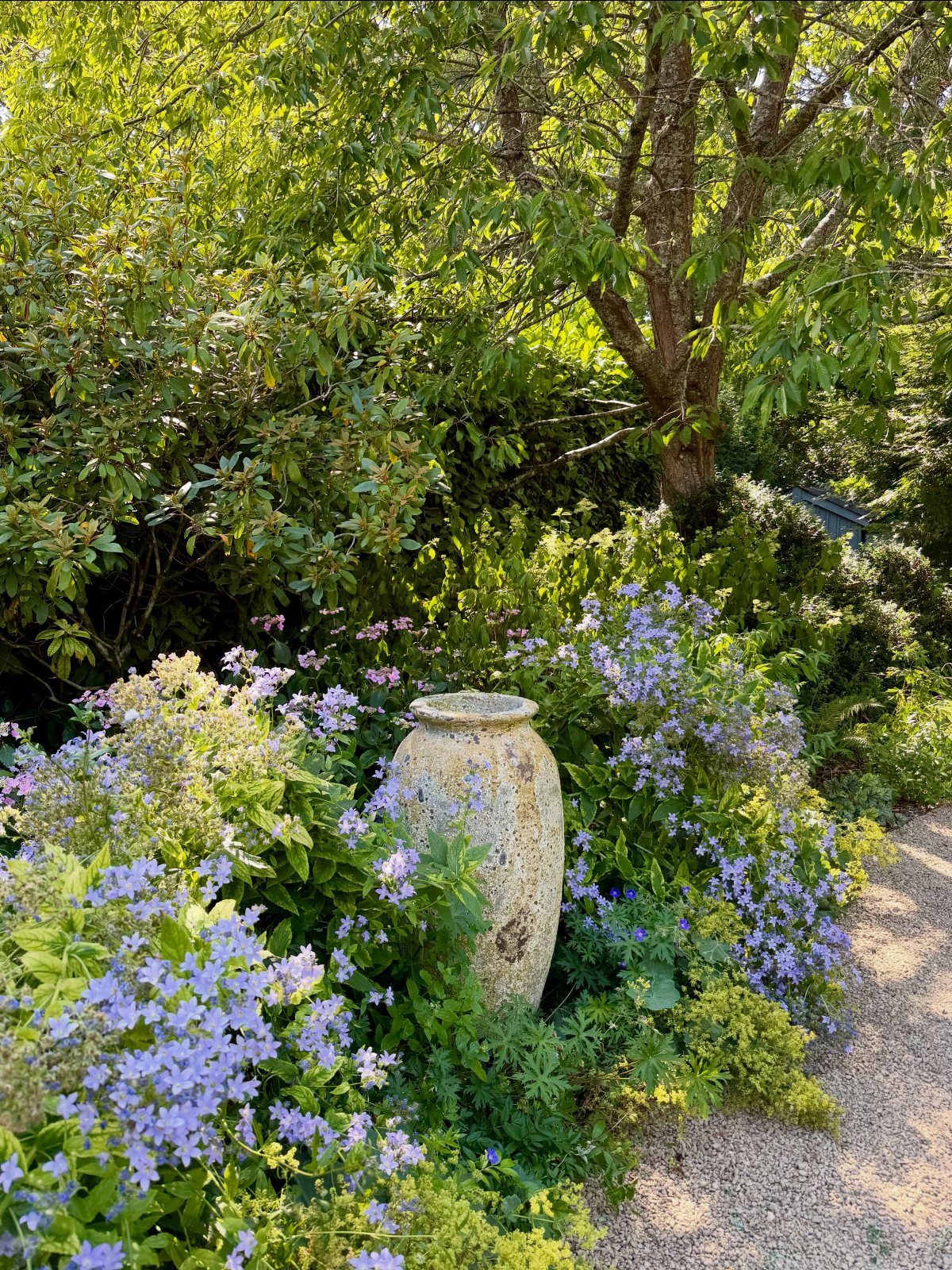
Stone urns carry weathering that new planters spend years trying to fake, so I would buy used or salvage-yard pieces rather than fresh cast stone.
Purple blooms spread at the base of the urn, rooted in the ground around it rather than inside; that open soil dries fast in summer sun, so I would run a soaker hose through the bed before the heat arrives.
Gravel paths radiate heat upward, and the urn adds reflected warmth from the sides: both mean drought-tolerant species like coneflower or salvia beat thirsty annuals here.
One urn anchors a corner; three in a row reads as a designed walk, which only works if you have the path width to carry it.
8. Sunflower Arch Over a Bench
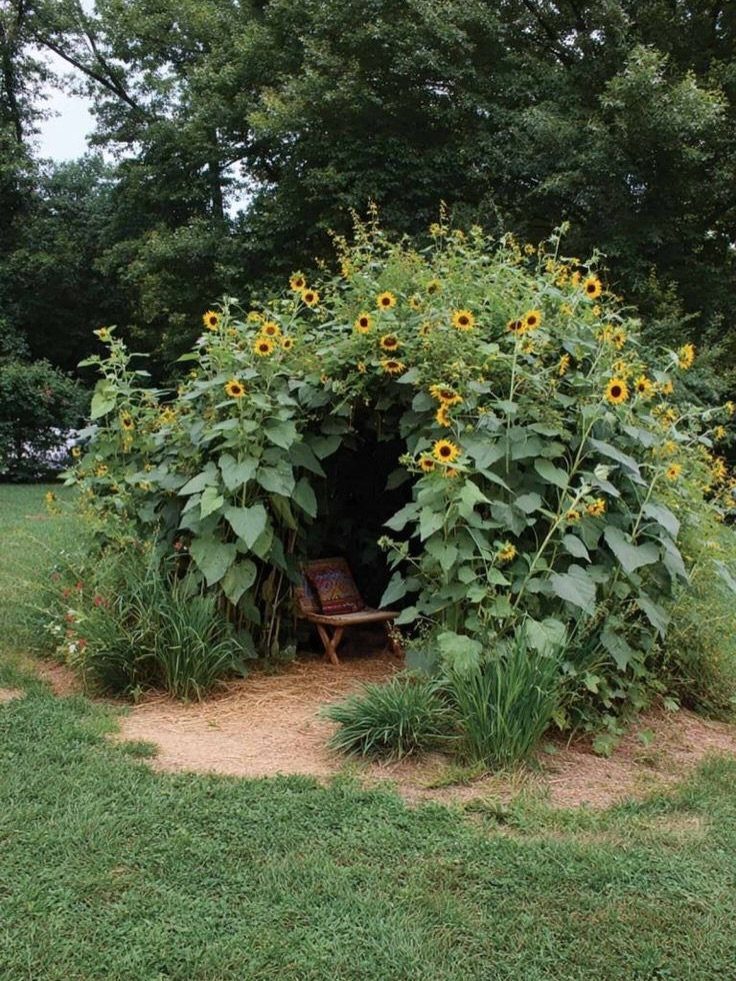
A living arch needs structure the first season, since sunflowers hit full height fast but woodies take years to fill in.
I would drive steel T-posts in a row behind the bench and run twine or light wire between them at 2 heights, letting the sunflowers climb and lean until their stems stiffen.
Plan on replanting each spring; even perennial sunflowers die back to the ground and leave you with bare posts by November.
9. Wildflowers Around a Birdbath
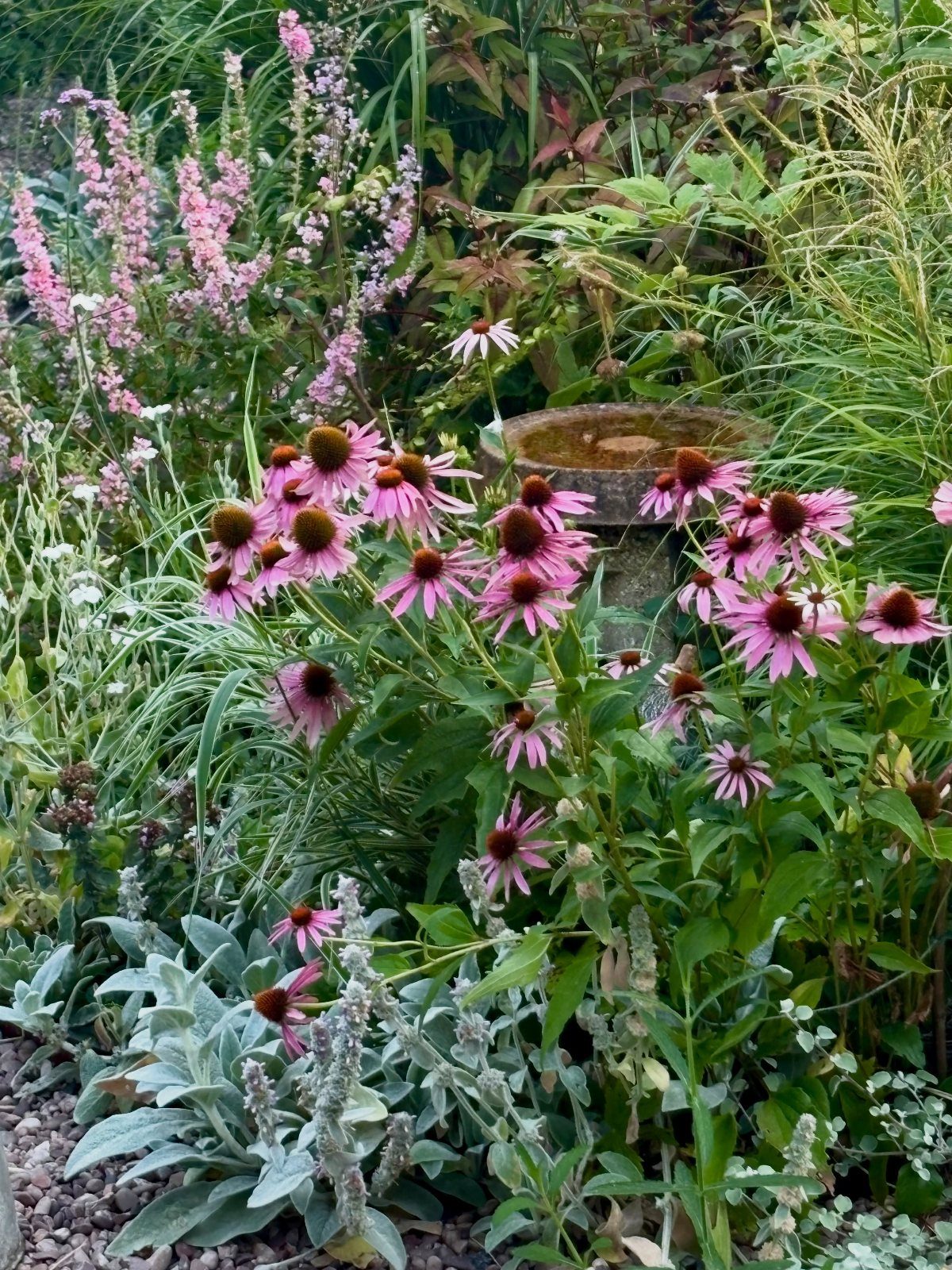
A birdbath in a border works best when the basin sits low enough that birds can drop in from surrounding stems, but the lip still clears the tallest growth.
The stone piece here looks to put the water surface at flower-top level; I would check that any bath I bought matched that proportion, since a tall pedestal leaves birds exposed and a shallow saucer on the ground collects leaf litter.
Pink coneflowers and lamb’s ear both take the root disturbance of occasional bath scrubbing, and neither minds the splash.
Ornamental grasses at the back handle the wetter soil where bath overflow lands, since those species tolerate moisture better than most wildflowers.
10. Stone Archway Garden Border
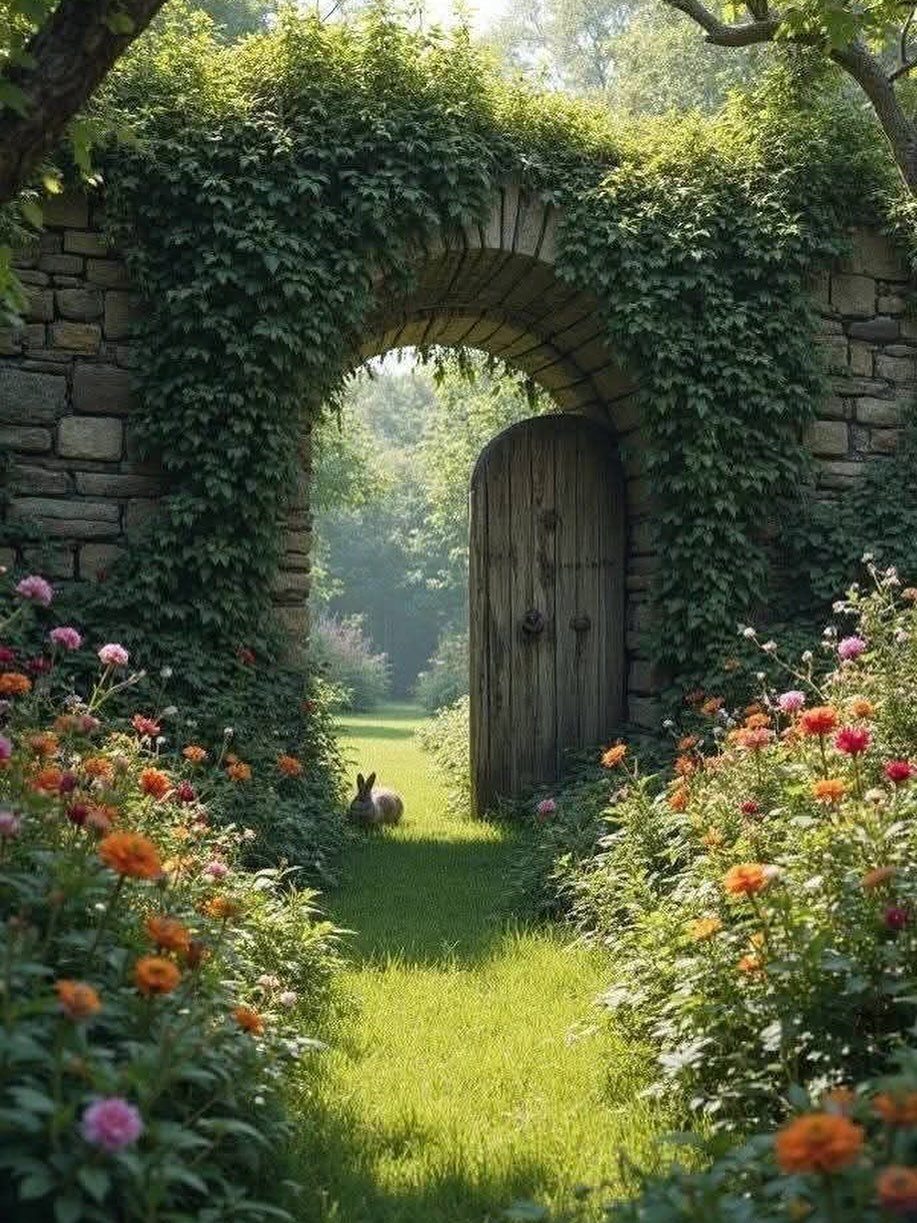
An archway with a working door, even one that leads nowhere, turns a flower bed into a threshold you walk through rather than past.
The orange and pink blooms here are set in distinct beds that flank the path, not mixed together; that separation keeps each color readable from a distance and simplifies maintenance, since spreading plants like the orange poppies stay contained by the mown grass between.
Ivy on stone is slow to establish and fast to overgrow once it takes; I would plant it the first season and wait before adding the border flowers, or buy stone already draped and cut the ivy back hard each spring.
The rabbit tells me this garden sees no fence, which means your wildflower mix needs to handle browsing or you are replanting.
Wildflower Benefits
Native species handle your local weather without the fuss of imports.
I would skip the heavy soil prep and skip fertilizer entirely; most wildflowers grow lean and bloom worse in rich ground. Yellows draw bees, reds pull hummingbirds, and a mix of both keeps the garden busy from April through October.
The flowers are only part of it: pollinators drawn to your wildflowers will also visit vegetables and fruit plants nearby, so the garden edges pull twice their weight.
Local nurseries stock what already grows in your county, which saves the guesswork of ordering regional mixes by mail.
I would buy plants over seed only where I need the first season to count; otherwise, late fall sowing lets winter do the stratification work for free.
Maintenance Differences
A wildflower plot is not less work than turf; the work just moves to the margins. Mow the paths and edges weekly through the growing season so the planting reads as intentional, not forgotten.
In late winter, cut the whole meadow to 4–6 inches and rake off the thatch; this is the single reset that signals active management to anyone passing by. Spot-weed monthly, pulling invaders before they set seed.
Re-seed thin patches every two or three years if the mix starts looking tired. The difference between a designed meadow and an abandoned lot is this visible schedule, not the height of the flowers themselves.
Soil Requirements
Wildflowers germinate from seed that needs light, so press it into the surface rather than burying it; a light raking to settle contact with soil is all the depth it gets.
I would mix seed with sand before spreading; the bulk helps even distribution and marks where I have already cast.
A light cover of leaves or grass clippings after sowing hides the seed from birds without blocking sun. Well-drained soil matters more than fertility; compost helps structure but skip the nitrogen boosters that push leafy growth over bloom.
Test pH each spring and adjust with organic matter if the reading drifts acidic or alkaline. Leftover soil from hardscaping projects works as a base layer if it is not compacted clay; just blend in finished compost before seeding.
Frequently Asked Questions
Can I just throw wildflower seeds down?
You can, but you will get patchier results than if you mix the seed with sand first. The sand bulks out the seed so you can see where you have already cast, and it helps even distribution across the ground.
I would still rake the spot bare of competing plants first, since seed landing on thick turf faces long odds.
What is the 3-5-7 rule in landscaping?
I use a version of this for drifts of wildflowers: three species in a small yard, five in a larger one, bought in multiples of five or seven plants.
The odd count keeps spacing loose and natural-looking rather than lined up like soldiers. Repeating at least one species in more than one drift lets the eye connect the beds across the yard.
How to design a wildflower garden?
Start with the site itself: check sun exposure, since most mixes need full sun, and test soil so you know whether you are working with meadow lean or cottage-garden richness.
Before I plant a single seed, I settle on one hardscape element that holds the eye: a split-rail fence, a mown path, a birdbath. Without that anchor, a wildflower bed tips from relaxed to just messy.
Then choose between a meadow mix for low fertility, a cottage border for richer soil with perennials and edibles mixed in, or perennial drifts if you want the bed to return each spring without reseeding.
What month should you plant wildflowers?
Late fall or early spring gives the best establishment, and I lean toward fall where winters are cold enough. Sowing in autumn lets winter handle seed stratification for free, and you face less weed competition than with a spring planting.
If you choose spring, get the seed down early so the plants have the full season to set roots and self-sow.