
These 24 small front garden designs run from a single afternoon with a raked gravel bed to a multi-weekend espalier project against a wall, so the deciding factor is how much hands-on time you can give and whether you want a space to sit in or simply pass through.
1. Front Yard Seating Area with Benches
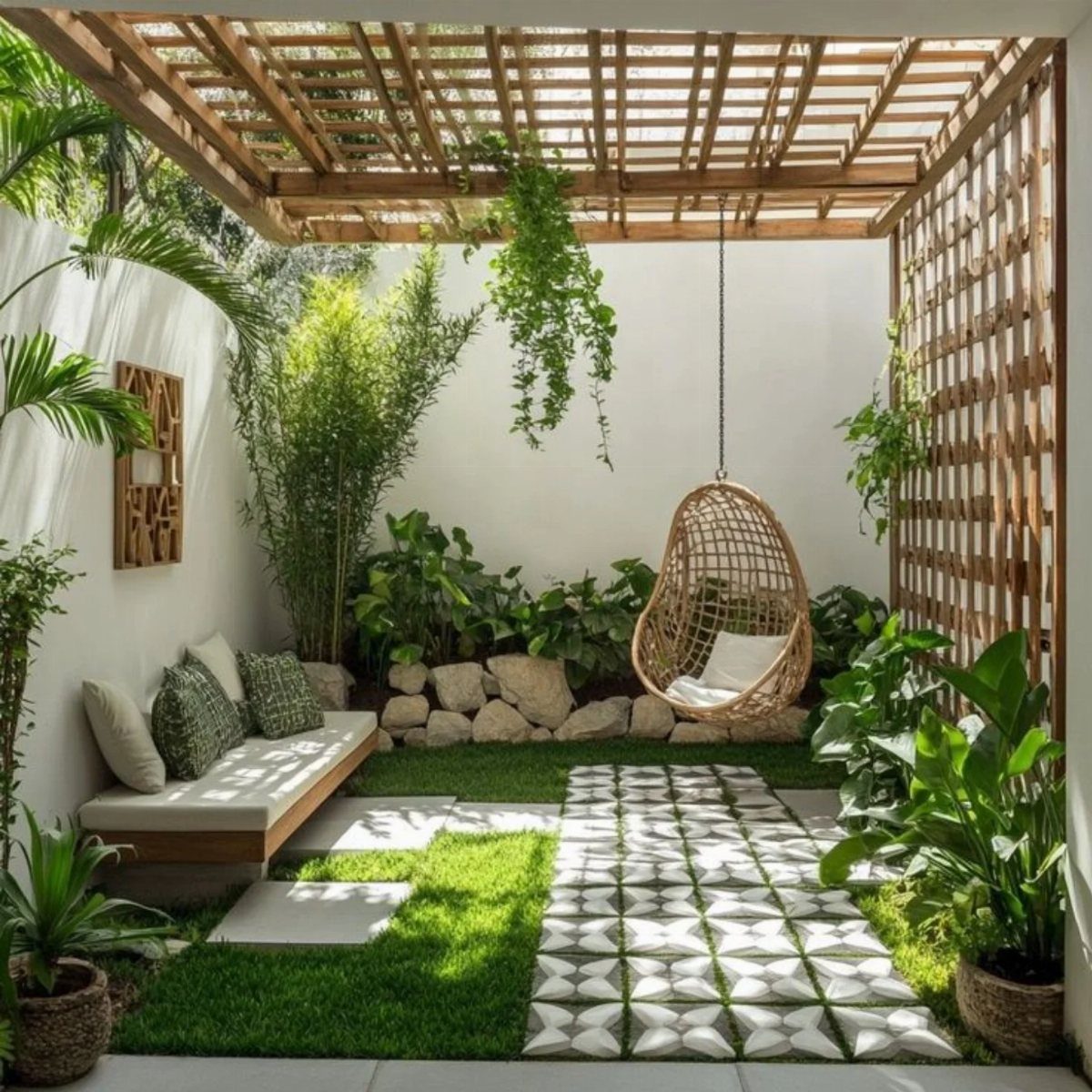
A built-in bench under a pergola turns a tiny front yard into usable outdoor space you actually sit in.
I would check the footprint first: a small rectangle can hold a bench and a hanging chair if you keep the planting tight to the edges.
Wood needs sealing on a regular schedule in most climates; metal or resin frames skip that step but trade away the warm look. Cushions stored in a deck box extend their life by half, in my view.
2. Vertical Garden Space
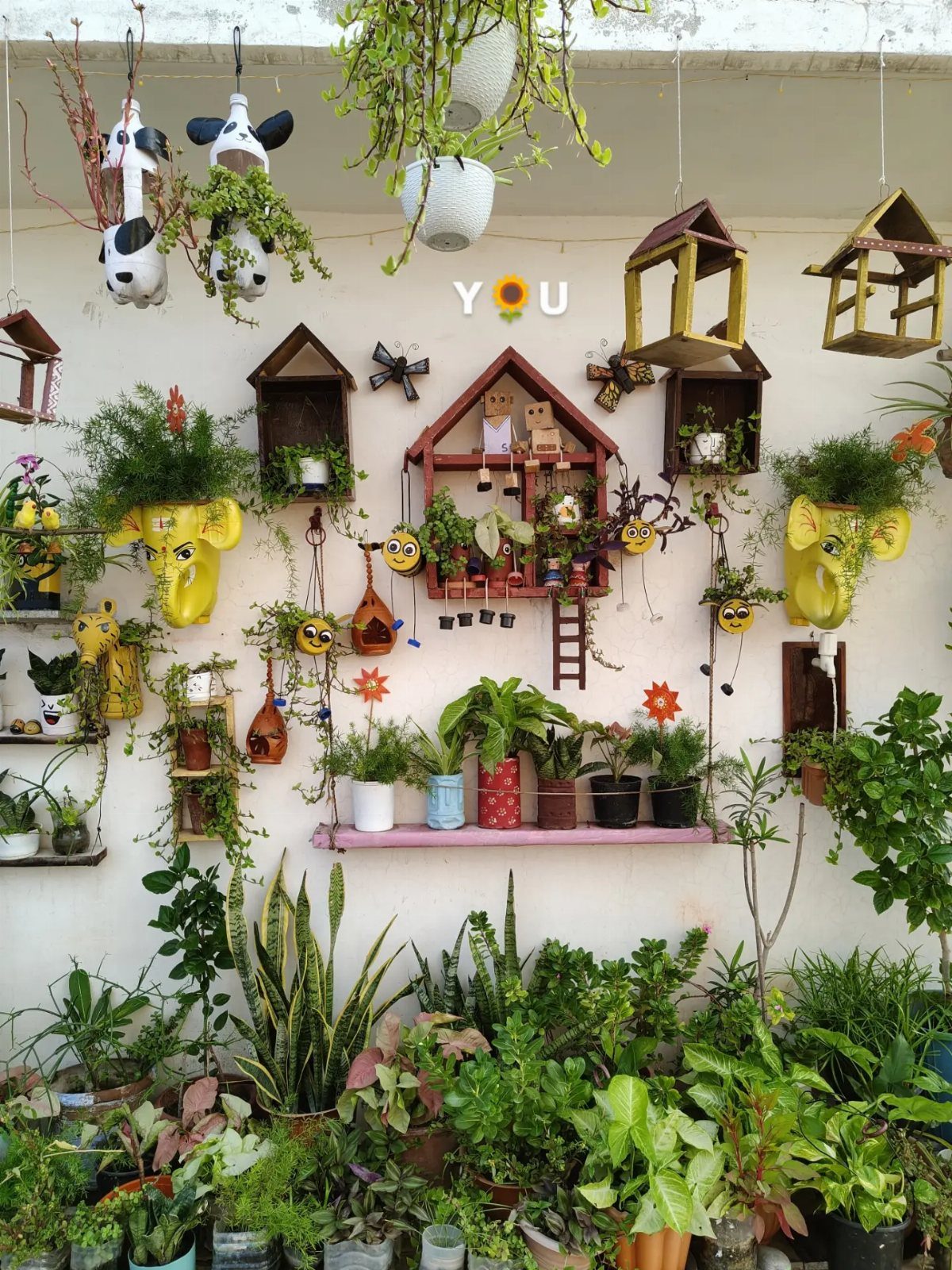
Wall-mounted planters, shelves, and hooks let you garden upward when ground space is basically a doormat.
Any exterior wall that gets morning or afternoon sun works. Check that your mounting hardware is rated for the wet weight, terracotta plus soaked soil runs heavy fast.
3. Standout Front Garden Focal Points

One sculptural plant, like a cloud-pruned topiary, gives a small front garden the anchor that scattered flowers cannot.
The rest stays low and simple so the focal piece actually reads. I would place it where you see it from inside the house too, not just from the street.
4. Potted Plants
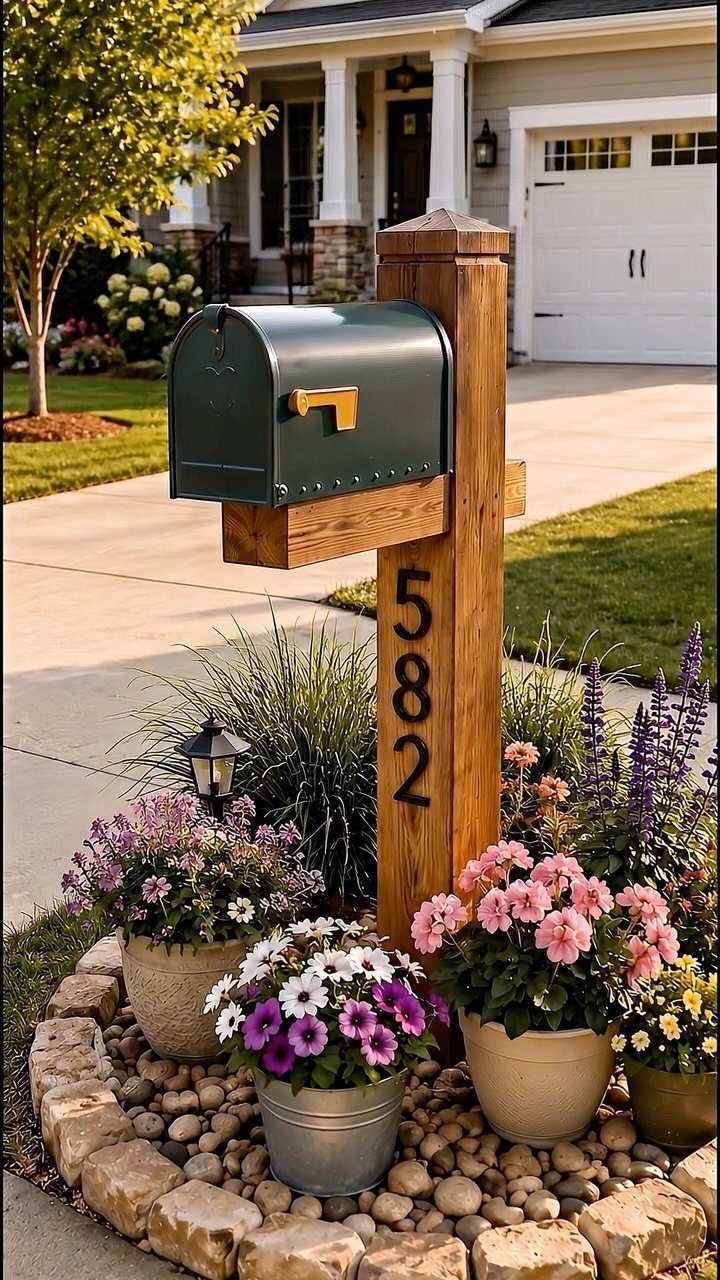
Pots clustered around a mailbox or steps let you change color and height without digging. I like odd numbers, three or five, and varying the pot size so the grouping looks gathered, not bought as a set.
Drainage holes matter more than pot price; a basic resin planter with holes outlasts a sealed ceramic one that drowns roots.
5. Minimalist Front Garden with Clean Lines
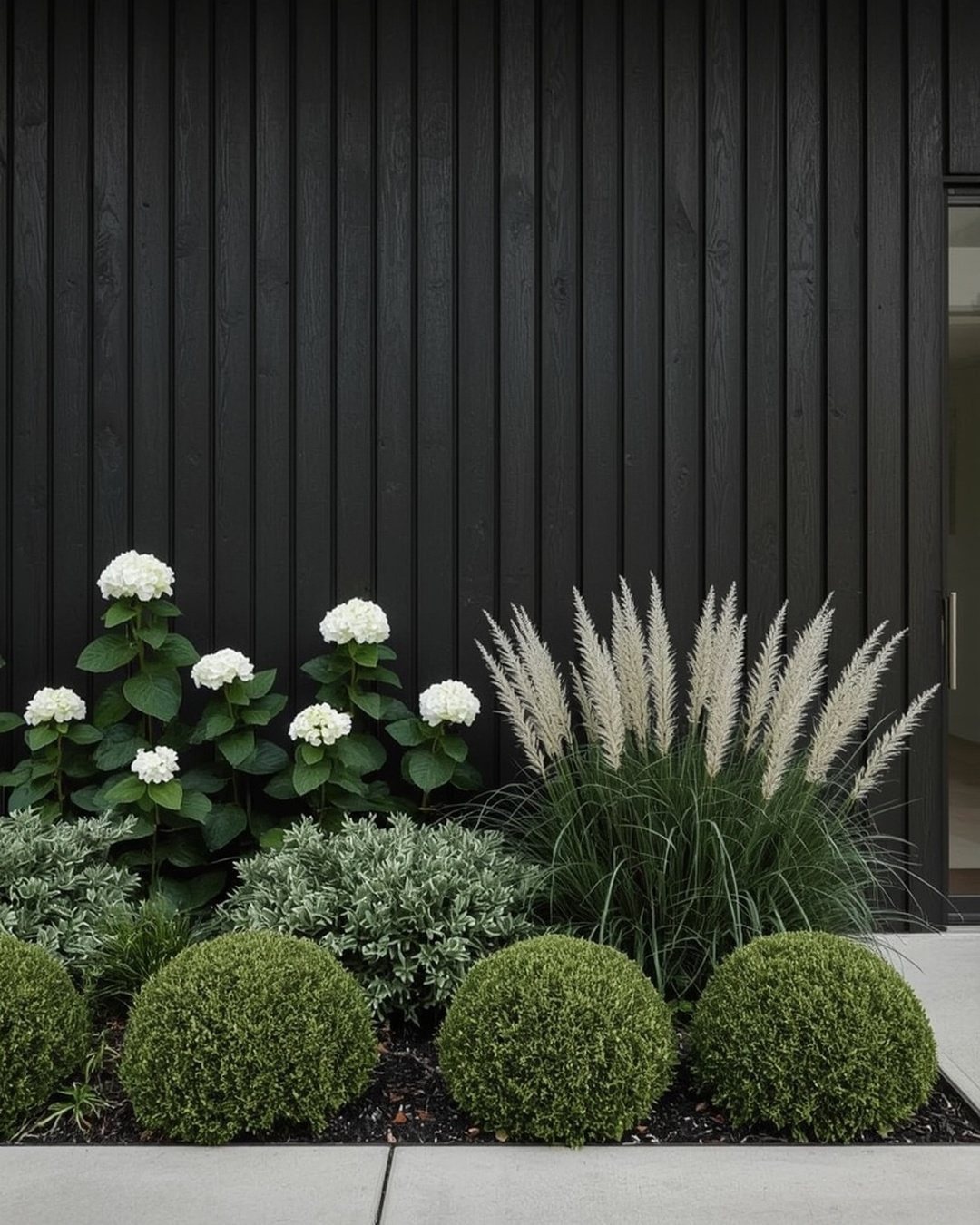
Rounded boxwood and a single grass variety against a dark wall prove a pulled-together look takes only a few plants. The restraint carries the whole design: every shape repeats, nothing competes.
I would budget for the boxwood to be close to mature size, small ones leave gaps for years. Concrete edging, visible here, keeps the line crisp and saves the annual re-cutting that plastic edging needs.
6. Raised Garden Beds

Raised beds lift vegetables out of bad soil and save your back, though they read more utilitarian than ornamental.
Plan for a narrow bed if you want to reach the center without stepping in. Gravel between the beds, as here, drains better than bare dirt and stays cleaner.
7. Hanging Planters

Umbrella-shaped baskets hung from a branch bring planting up to eye level where ground space barely exists. I would check the branch load first; a water-soaked basket runs heavy, and dead wood cracks without warning.
Chain or rope length sets the height: too low and heads bump, too high and watering becomes a ladder job. The light-colored wall behind these makes the green read brighter, a trick I would borrow for any shaded corner.
8. Pathway Lighting

Small lights tucked along a walkway turn a dark front yard into something you can actually use after dinner. Warm color temperature, around 2700K, keeps the look residential rather than parking-lot stark.
I would space them close enough for even pools of light without runway effect. Solar units skip the wiring but their output fades by late evening in most climates; low-voltage LED costs more up front and stays consistent.
9. Light-colored Paving

Large pale concrete slabs reflect light rather than absorbing it, which matters when your front garden sits in shadow half the day.
Sealing on a regular schedule keeps the color from going mottled with tire marks and leaf stain. Path lights set at the slab edges, as visible here, turn the geometry into a feature at night.
10. Ground Cover
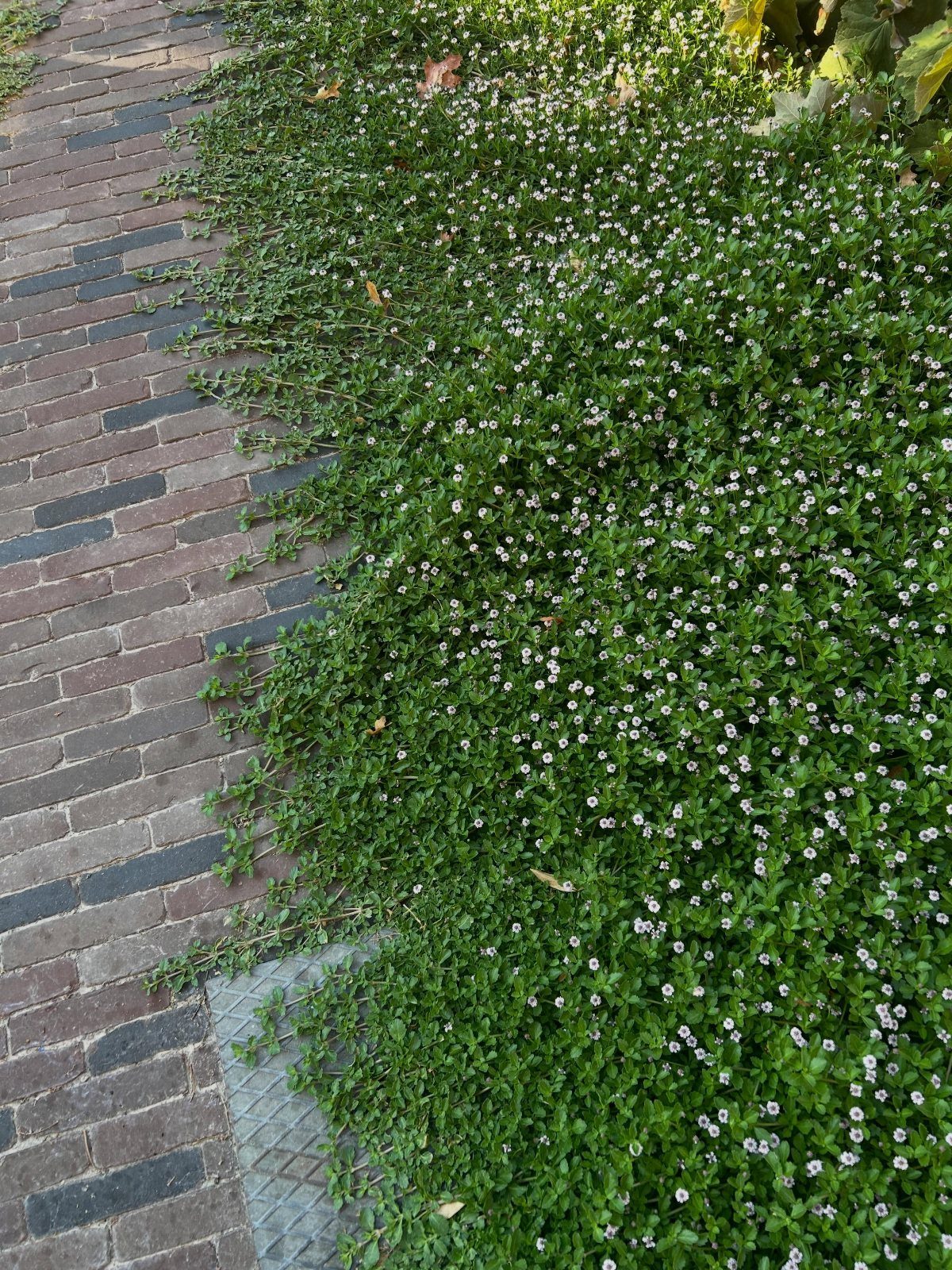
A dense mat of low growers replaces lawn in spots where grass struggles and mowing annoys. The small white flowers here read charming for a short stretch; the rest of the season it is foliage texture that carries the look.
I would plant closer than the tag suggests, half the spacing, to fill in by the end of year one.
Brick edging, like this pathway border, contains the spread and gives a crisp line that loose ground cover cannot hold on its own.
11. Pathways

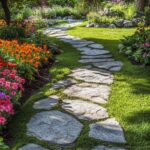
Wide rectangular pavers separated by grass strips give structure without the hardscape dominating a small front garden. The grass gaps need a dwarf variety that stays flat; regular turf grows lumpy and demands edging twice a year.
White pebbles at the perimeter, visible here, catch light and keep the bed from looking heavy against the pale stone. I would set the pavers flush to lawn grade, a raised path trips guests and collects runoff.
12. Water Features

A rain chain into a stone basin gives running water sound without the pump, filter, and winterizing that a recirculating fountain demands.
The copper develops a green patina in most climates; I would let it, or polish only the chain and leave the basin weathered.
Pebbles inside the basin, as here, hide the water line and give birds footing, which matters more than it looks. Position it where you will hear it from a window, not just from the sidewalk.
13. Arbors and Trellises
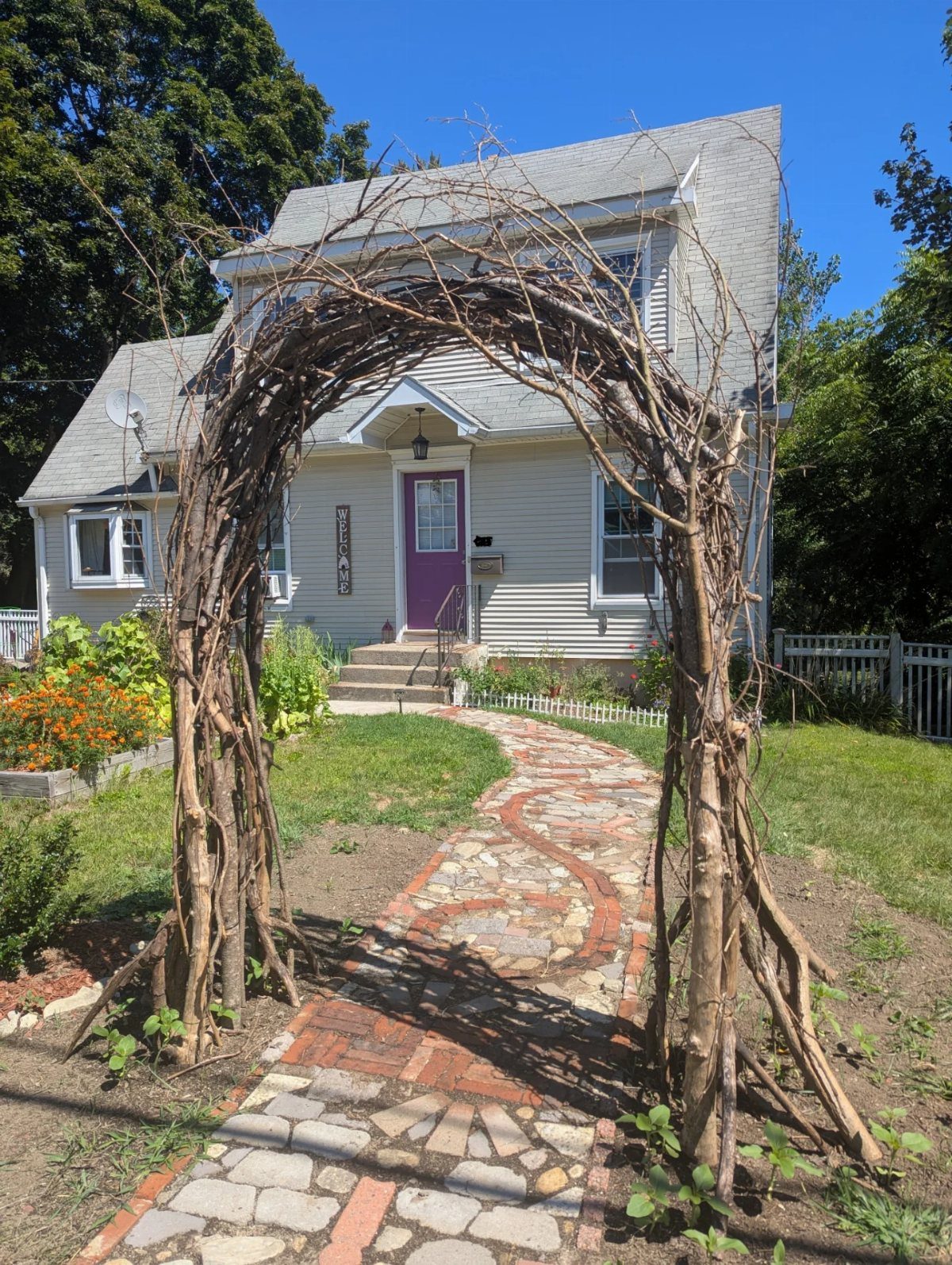
A branch-built arbor turns a straight walk into an actual approach, something you pass through rather than cross. I would anchor the uprights in concrete below frost line, wobbly arches sag and look abandoned fast.
The rustic material needs checking for rot every spring; peeled bark traps moisture and invites insects. A painted house behind it, like this purple door, makes the natural wood read as intentional contrast rather than unfinished.
14. Rock Garden with Succulents and Stone

Succulents in pale gravel with scattered stone give a dry, sunny corner structure without the watering schedule of a flower bed.
The purple echeveria here shows why I would plant for foliage color, not bloom; flowers on succulents are brief and often awkward.
Drainage is the whole game: if your soil holds water, build a mound or use a raised bed before planting. The light gravel reflects heat and keeps the root zone from staying damp after rain.
15. Ditch the Lawn
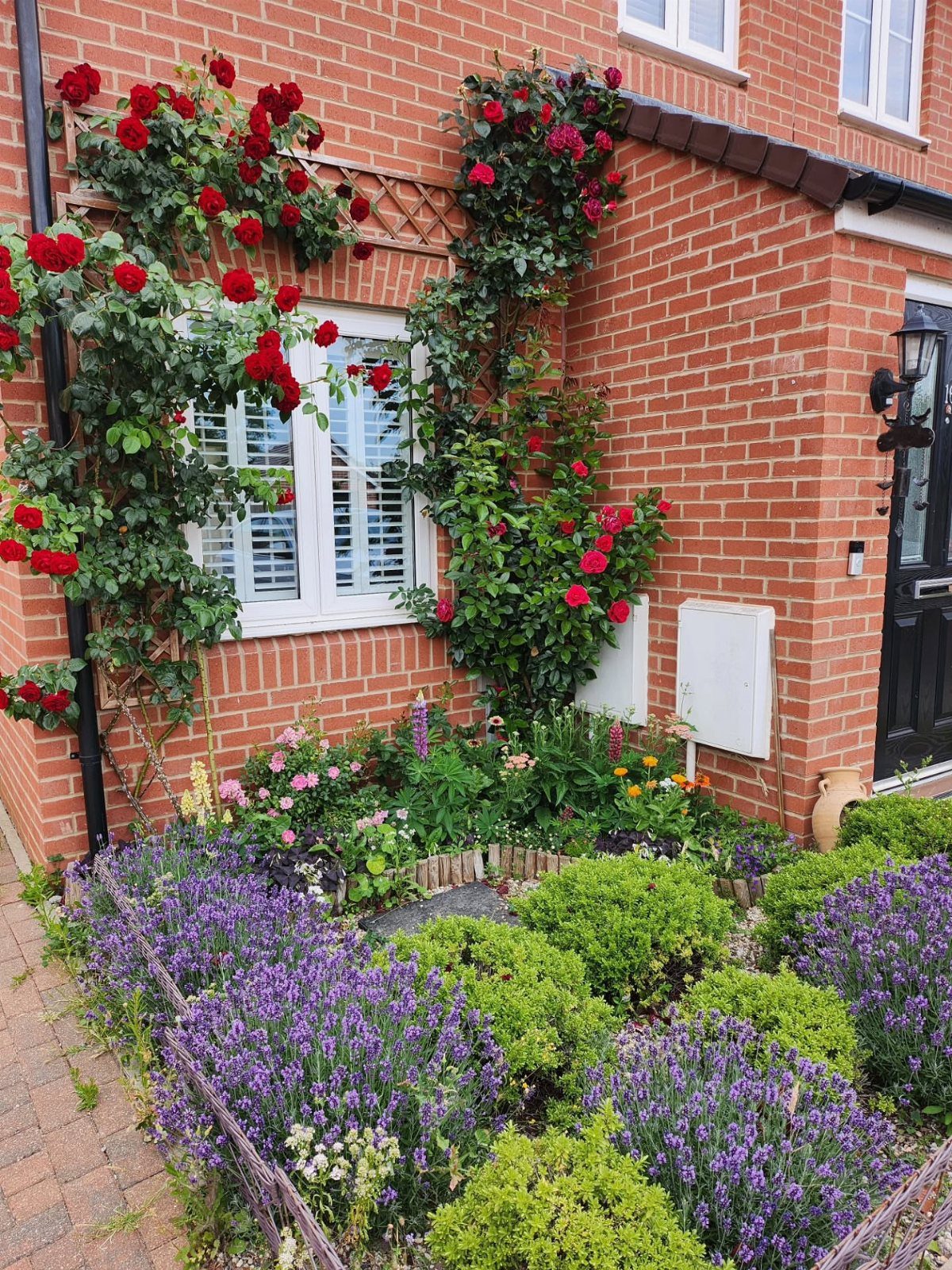
A narrow front yard planted wall-to-wall with roses, lavender, and shrubs gives more interest than turf ever could, and skips the mower entirely. Climbing roses need a trellis or wires against brick; without structure they flop and mildew.
I would check the rose’s mature spread before planting, a climber left to its full size will swallow a window in 2 seasons. The woven fence border keeps the look tended and protects plants from sidewalk traffic.
16. Layered Planting

Tall grasses backed by a wall, with alliums at knee height, stack 3 visual layers into a strip barely knee-deep. The seed heads catch late light and extend the season after the purple globes finish.
I would plant the alliums in drifts of 7 or more, scattered singles read as mistakes. The asphalt edge means this border faces reflected heat; grasses handle that, but I’d avoid anything labeled "moisture-loving" against hardscape.
17. Decorative Rocks and Mulch
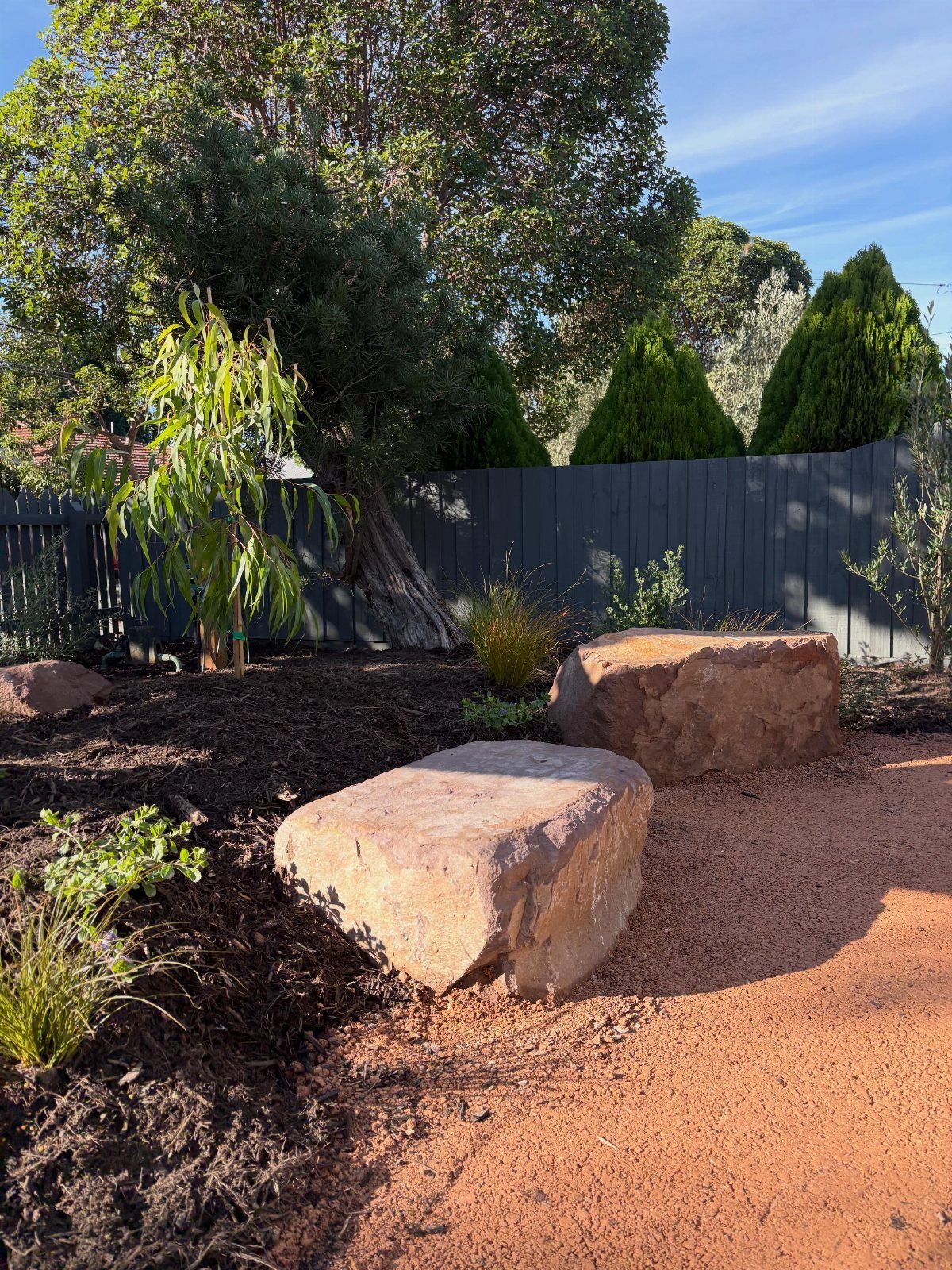
Boulders set in dark mulch with small plantings give a new garden the gravity of established ground without waiting years.
The red rock against dark mulch here is a strong contrast; I would go lighter on the boulder count than this, a few reads as placed, a pile reads as leftover construction material.
The compacted gravel path in front drains better than poured concrete and costs less, though it shifts and needs raking back twice a year.
18. Symmetrical Front Garden Design

Mirrored planting around a central tree gives a formal front garden its structure without needing a degree in design. The lollipop shape here is key: clipped geometry at center, softer shrubs at the edges, so the eye travels inward.
I would buy the evergreens near mature height; symmetry fails when one side waits half a decade to catch up. The grey brick behind it stays quiet, a busy house color would fight the planting for attention.
19. Grow Trained Fruit Trees
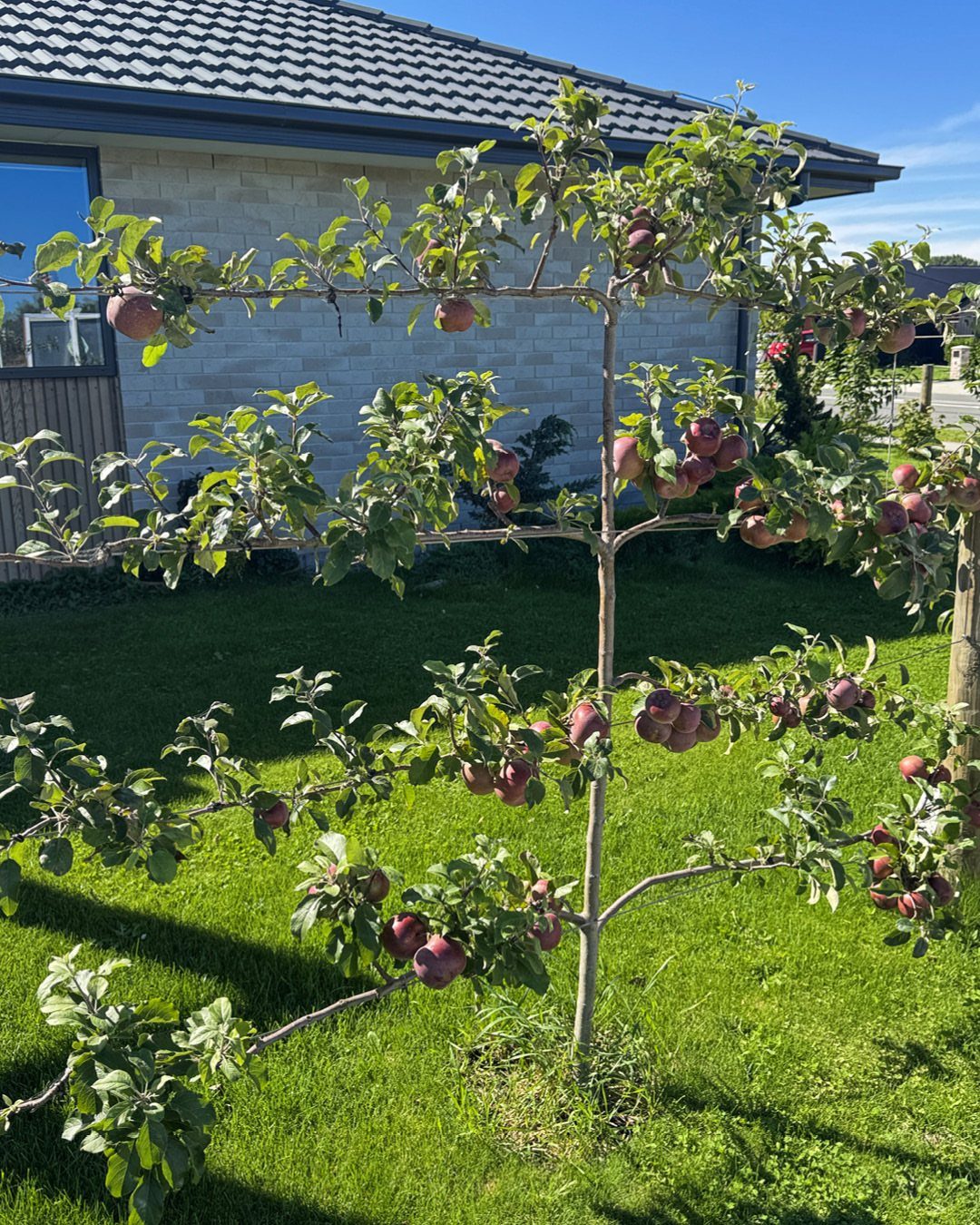
Espaliered apples grow flat on wire supports in open ground, turning a narrow strip into actual fruit production.
The horizontal wires carry the weight and guide the branches; I’d use 12-gauge galvanized set close enough together to train new growth as it comes.
Pruning happens twice a year, summer for shape and winter for structure, so this suits someone who gardens with shears, not just a hose. A south-facing wall ripens fruit fastest; east-facing gives softer apples and fewer scalded shoulders.
20. Install a Picket Fence

A picket fence low enough to talk over keeps a small front yard friendly while it defines the edge.
Painted grey, as here, reads modern; white leans traditional and shows dirt faster. I’d leave a gap between pickets for air flow and a glimpse of planting behind.
Pressure-treated 4×4 posts in concrete at proper spacing carry the rails without sagging. The gravel base inside means no mower line to maintain against the boards.
21. Zen Garden with Gravel and Rocks

Raked white gravel with placed stones and a water basin gives a front garden that needs almost no water and absolutely no mowing.
A bamboo spout runs from a simple recirculating pump in the basin; I’d hide the cord along the wall base.
Large stones stay where you put them, small ones migrate, so a contained edge matters. This suits dry climates and homeowners who find maintenance calming rather than tedious.
22. Fairy Garden

Tiny houses and lights strung over a stone path turn an ordinary front bed into something that reads magical after dark.
I’d keep the scale small, a tiny house gets lost in dense planting, an oversized one reads as lawn ornament.
The fountain here adds sound; a recirculating unit with a small reservoir needs topping off weekly in summer. This idea works best where children visit or where the gardener already collects small objects.
23. Lush Cottage-style Flower Border

A packed border of varied heights and bloom times gives more color per square foot than any other planting style. The tall grasses here carry the look after the flowers finish; I’d include at least 3 different grasses for texture.
Cottage style means no bare soil, so I would plant at half the spacing on the tags and divide in year 3. The dense mix hides individual plant decline, which matters because some of these perennials will fail every season.
24. Curved Metal Edging Bed

Curved metal edging, with just enough showing, lets you shape a bed that reads designed rather than leftover. The grey powder coat here matches modern siding; raw steel rusts to orange, which I would use only with warm brick.
Set the top flush with lawn grade for mowing ease, and anchor with stakes at close intervals or the curve will straighten under soil pressure.
The mix of lavender, coneflower and succulent handles reflected heat from the gravel path beside it.
Evaluate Your Front Yard
Start by measuring the actual footprint. A narrow, wide, or oddly shaped yard pushes you toward vertical elements or ground cover rather than spreading things out.
I would note where sun falls morning versus afternoon; the list’s ideas for seating, succulents, and vegetable beds each want different light.
Check your city or HOA rules early. Restrictions on fence height, plant height, or hardcover percentage kill some options before you invest.
I would also test the soil if you are considering raised beds or lawn alternatives; bad drainage turns a rock garden into a pond and drowns succulents.
Budget for mature plant sizes where symmetry or immediate structure matters. Small boxwood or matched evergreens take too long to fill in, and a focal point topiary just looks like a mistake when it sits below knee height.
Gardening isn’t just rewarding—it’s an easy way to bring personality to your space, even if you’re working with a small footprint.
Trends in Front Yard Landscaping
Eco-friendly design has moved from niche to expected. Lawn alternatives, rain capture, and drought-tolerant plantings now read as standard care rather than statement.
I would consider whether your climate justifies the maintenance a traditional lawn demands; ground cover, gravel, or mixed planting skips the mower and the water bill.
Edible landscaping is showing up in front beds where it used to hide in back.
Vegetables, herbs, and trained fruit trees against a wall or fence turn sun exposure into actual production. I would tuck edibles among ornamentals rather than giving over the whole yard; the mix keeps the look intentional.
Social front yards are gaining ground. Seating, small patios, and paths that invite pausing treat the front as usable space, not just a pass-through.
I would place seating where afternoon sun and street view make you want to stop, not just where it photographs well; a bench facing the right direction gets used, one baking against a south wall does not.
Common Challenges
Limited space forces every element to earn its place. Multi-functional design solves this: a bench with storage beneath, a path wide enough for seating, a raised bed that doubles as a wall.
I would pick one or two functions and do them well rather than crowding in three that compete.
Awkward shapes benefit from strong geometry or strong curves, nothing in between.
A diagonal path or a single circular bed organizes a narrow rectangle; hesitant, wandering lines make it feel smaller. I would anchor one edge with a wall, fence, or dense planting to simplify the shape the eye reads.
Low light limits the plant palette but not the design. Pale paving reflects what light exists, and a water feature or white gravel reads brighter than dark mulch in shade.
I would skip the lawn substitute ground covers that demand sun; fescue and clover in dim corners grow thin and weedy fast.
City restrictions and HOA rules need checking before you buy materials.
Height limits on fencing, bans on front-yard vegetables, or hardscape percentage caps can void a whole plan. I would get the written rules, not a neighbor’s memory; the variance process, where one exists, takes months you may not have.
Frequently Asked Questions
What is the 3-5-7 rule in landscaping?
This rule suggests using 3, 5, or 7 plants in a grouping for a more natural, gathered look rather than a rigid, symmetrical arrangement.
Odd numbers keep the eye moving and prevent a static, catalog-page feel. Three, five, or seven plants grouped together reads intentional; two or four looks like you lost one or had one extra.
I use this for potted clusters and for drifts of perennials like alliums, where a single bulb standing alone just looks forgotten.
What is the 70/30 rule in gardening?
This rule recommends a 70 percent planting area to 30 percent hardscape for visual balance in a garden design.
It keeps green space dominant while allowing paths, patios, or edging to structure the layout. In a small front yard, I would push that planting ratio even higher since every square foot counts and hardscape can dominate fast.
What are some good landscape ideas for a small front yard?
Vertical gardens, layered planting, and multi-functional elements earn the most space in a small front yard. When the ground is small, I look up: wall-mounted planters and arbors add height without eating footprint.
A bench with storage underneath, or a path you can sit on, lets one piece do two jobs instead of parking a chair where it only sits.
I would pull out a tape measure first, then watch where the sun hits across the day.
A narrow or irregular yard forces the choice: grow up with trellises and climbers, or spread low with ground cover, because there is no middle ground to waste.
What are the trends in front yard landscaping for 2026?
Buyers and neighbors now expect lawn alternatives, rain barrels, and plantings that survive on local rainfall.
What read as statement 5 years ago now reads as baseline. I am seeing vegetables and herbs move from back corners to front beds, with espaliered fruit trees trained flat against sunny walls.
The same exposure that grows a good lawn grows food, and the water bill buys something you can eat.
Social front yards are also gaining ground, with seating, small patios, and inviting paths that treat the space as usable rather than just a pass-through; I would place seating where afternoon sun and street view make you want to stop, not just where it photographs well.