
Vertical vegetable gardens run from free pallets and old ladders to tower systems that need a pump and power outlet.
What decides which one works for you is whether you own the wall or fence you would grow against, or whether you need something that folds up when the lease ends.
A ladder planter leans and leaves no mark; a mounted wall system needs masonry anchors rated for wet soil weight and a stud finder.
1. Pallet Gardens

Old pallets bolt upright make a frame for mounting pots or pockets directly to the slats. I like that you can stand one against any wall or fence where ground space is already gone.
Screw small metal containers to the face and label each one for a single herb. That labeling matters more than it looks: herbs grow at different rates, and knowing which is which keeps you from overharvesting the slow ones.
I would check that any pallet you pick is stamped HT for heat-treated, not MB for methyl bromide, before plants or soil touch it.
Small galvanized pots and exterior screws will get you the same tidy look without costing much. The pallet itself is usually free from a local hardware store if you ask for their damaged ones.
2. Ladder Planters

An old wooden ladder leaned against a wall becomes instant shelving for planting boxes, with each rung holding a tier.
An A-frame against a building needs feet that sit level on whatever surface you have. Cobblestone means shimming or letting the legs settle into gaps.
I would check the ladder’s weight rating before filling all tiers with wet soil.
A household ladder rating includes your own weight, not dirt and water concentrated on every step. For a lighter load, I would fill the top 2 tiers with herbs and keep the bottom for deeper-rooted greens.
3. Hanging Gardens
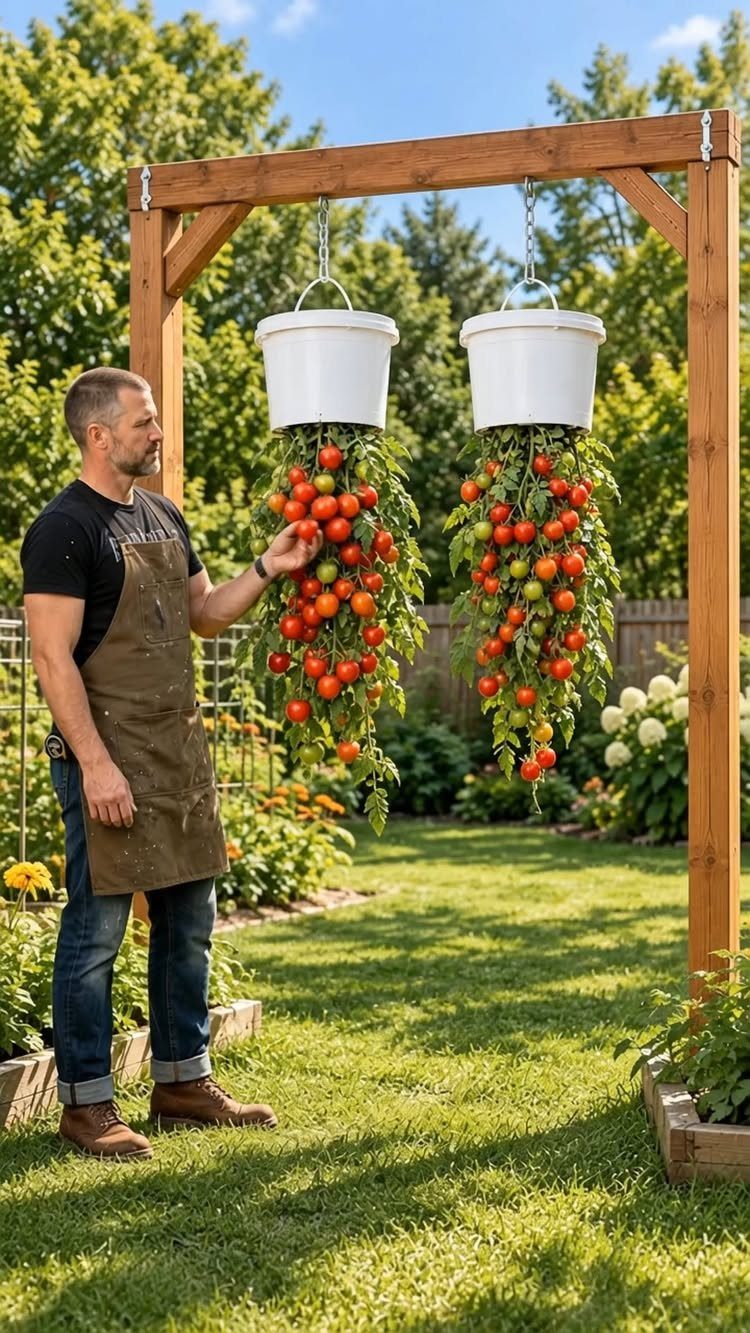
Upside-down planters use vertical space you cannot walk through anyway, like the open center of a frame or the air above a path.
Hang buckets from chains on a simple wooden stand, with tomatoes growing down through holes cut in the base.
I would use 5-gallon buckets with lids, the kind restaurants throw out, and drill a 2-inch hole dead center for the seedling.
The plant needs to be young enough to thread through without breaking the stem, and the bucket needs a lid to hold moisture in.
Use chains rated for the full weight of 2 buckets saturated after rain; I would not trust rope that wicks water and rots.
4. Vertical Hydroponic Systems

PVC pipes stacked in tiers with holes drilled for lettuce roots deliver water and nutrients without soil. Elbows that return the flow from top to bottom let one pump move everything.
Pipe that holds enough root mass for leafy greens without getting heavy is the size I would start with. Lettuce needs room to form heads, and cramming them closer gives you spindly leaves.
A small submersible pump is all you need, and the whole frame can sit on a patio without the drainage mess of pots. I would keep this to greens, though.
5. Vertical Wall Systems

Wall-mounted planter boxes in a stacked grid turn any exterior surface into growing space. Black boxes on a gray wall under sconce lights read as a finished patio, not a raw construction site.
I would check that the mounting hardware hits studs or use a masonry anchor rated for the wet weight of soil plus plants. Soil depth that suits shallow-rooted herbs will not work for carrots or beets.
The boxes are rectangular and uniform, which makes watering predictable: the top row dries out first, the bottom last. I would plant thyme and rosemary up high where drainage is sharpest, and basil lower where moisture lingers.
6. Vertical Herb Garden

A wire grid hung on a balcony wall lets you clip pots anywhere you have sun. A black metal grid disappears visually and lets the plants read as growing from the wall itself.
I would use S-hooks or cable ties that release without cutting, because herbs shift with the season.
Mint will overrun its neighbors by July, so I would hang it on an edge I can reach without disturbing the rest. Measure your balcony before ordering, since a grid too large bows outward under load.
I like that this moves with you, unlike mounted boxes. When the lease ends, the grid comes down fast and the holes are just nail holes.
Vertical gardening has many advantages, such as maximizing space, increasing food production, and improving plant health.
7. Pole Beans

Pole beans climb whatever you give them and keep producing for weeks once they start.
Bamboo poles lashed into a teepee or a flat trellis both work; the plant does not care so long as the structure holds when the vines are heavy with pods.
I would plant them directly in ground or a deep container at the base, since beans fix their own nitrogen and need less feeding than most vegetables.
Check that your variety is a true pole bean, not a bush type sold in similar packaging.
The long harvest is real, but it starts later than bush beans, so I would not count on them for the earliest crop of the season.
8. Trellises and Supports

Black metal obelisks and arched trellises turn a raised bed into vertical growing space without bolting anything to a wall.
The obelisk shape suits peas or beans that wrap themselves around a pole; an arch trains vines across a path or creates a green doorway.
I would set metal supports at planting time, not after seedlings are up and fragile.
A gravel base handles drainage, but on bare soil I would check that legs sink deep enough or get anchored so wind does not tip a full-grown tomato vine sideways.
Wood rots in contact with wet soil; metal pays for itself if you keep the garden more than 2 seasons.
9. Tower Gardens

Stacked white columns with planting ports every few inches grow cherry tomatoes in a footprint no wider than a trash can. Water mists or trickles through the core, so roots stay wet without sitting in it.
This tower method uses less water than growing tomatoes in ground, according to the maker. I would take that seriously in a dry climate or where hose access is limited.
The startup cost runs higher than buckets or pallets, and the pump needs power nearby. I would keep this to shallow-rooted crops like lettuce or strawberries; carrots or beets need depth these ports do not give.
10. Tiered Bucket Stand

A wooden A-frame holds rows of white buckets at staggered heights, each one a separate planter you water from the front. A stand against a fence catches drips and blocks wind that would dry exposed buckets faster.
Side access matters for watering; a stand too deep to reach the middle row becomes a maintenance problem by August.
Standard 5-gallon buckets fit this frame and are free if you ask at a bakery or restaurant; I would drill drainage holes an inch up the side, not the bottom, so a saucer is not required.
Maintenance Tips for Vertical Gardens
Every surface of a vertical garden catches sun and wind, so the soil dries out faster than it would flat on the ground.
I would water daily in midsummer, especially for vegetables and flowers that need steady moisture, and let succulents go longer between drinks.
I add liquid fertilizer to the water each time, which feeds the plants in small, steady amounts instead of one heavy hit. That matches how fast vertical roots use them up.
Check leaves for powdery mildew and stems for aphids even in containers; they are less trouble than in-ground beds but not immune. Neem oil handles both if you catch them early.
Inspect wood or metal supports once a season for rot or bent brackets. A planter that holds wet soil through a freeze will split or rust faster than one moved under cover for winter.
Frequently Asked Questions
What veggies grow vertically?
Cucumbers, tomatoes, peas, pole beans, and squash all climb or hang naturally and fit vertical setups. Pole beans are the easiest starter, since they wrap themselves around any support and keep producing for weeks.
Seed packets tell you what you need to know: skip anything labeled bush, since those varieties spread low and leave your vertical frame empty.
What are the downsides of planting a vertical garden?
Soil dries out faster when every surface catches sun and wind, so daily watering is common in midsummer.
Once a year I look over the hardware for rust or brackets that have pulled loose, and if a planter sat wet through a freeze I check for cracks or corrosion.
These are manageable, but they add tasks a flat bed does not have.
How to DIY a vertical garden?
A pallet stood on end and bolted to a wall or fence gives you slats to screw pots or pockets onto; look for the HT stamp that means heat-treated, never MB for methyl bromide.
An old wooden ladder propped against siding turns into stepped shelves: shallow boxes of herbs up top, deeper containers for greens with more root room underneath.
Restaurant 5-gallon buckets with drilled holes and chains rated for saturated weight work for hanging tomatoes.