
These four-season garden ideas range from a bag of bulbs to a pond deep enough for koi, and the deciding factor is how much maintenance you will actually keep up with come February.
I would match the project to the hours you have, not the ones you hope for, whether that means a single shrub border or a full layered bed.
1. Spring-Flowering Shrub
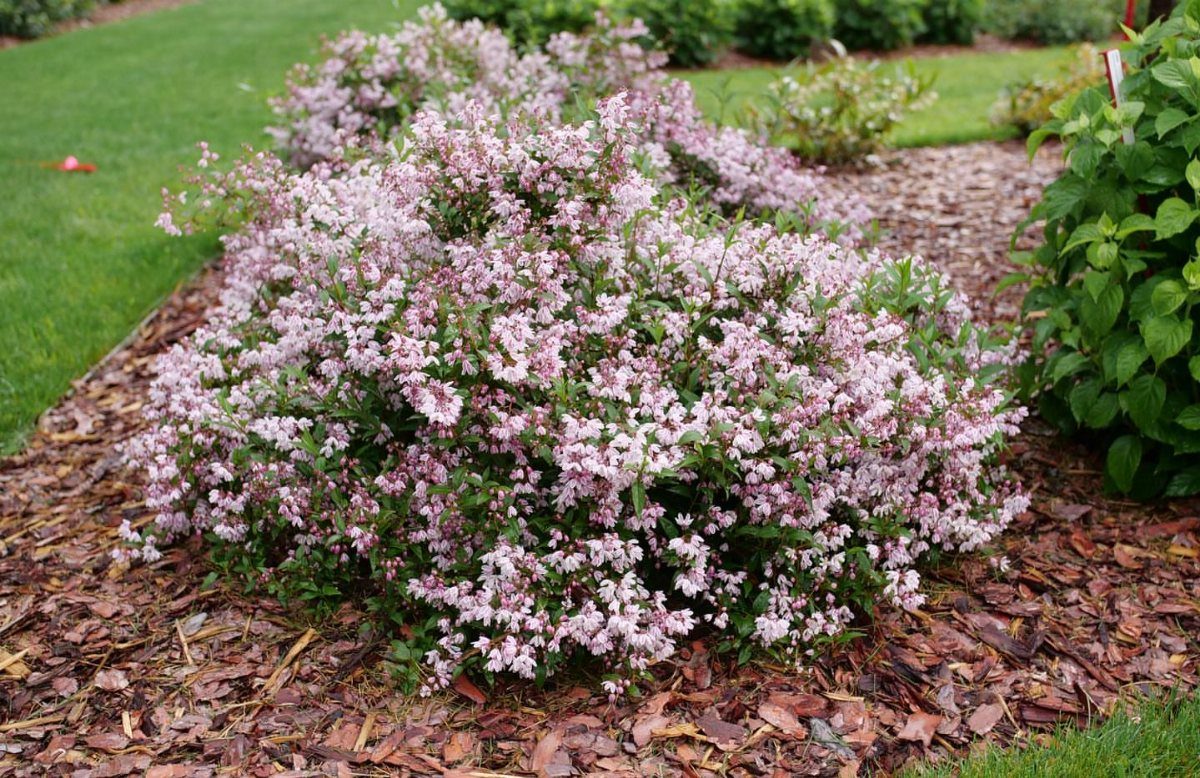
A spring-flowering shrub wakes the garden before most perennials have even broken ground. I look for varieties that bloom on old wood, since that timing means the flower buds formed the previous summer and sit ready through winter.
Check your USDA hardiness zone against the label; a shrub rated one zone too tender will lose its blooms to late frost every few years.
I plant these where I can see them from a kitchen window or front path, because the show lasts only 2–4 weeks and I want to catch it.
2. Spring Bulbs
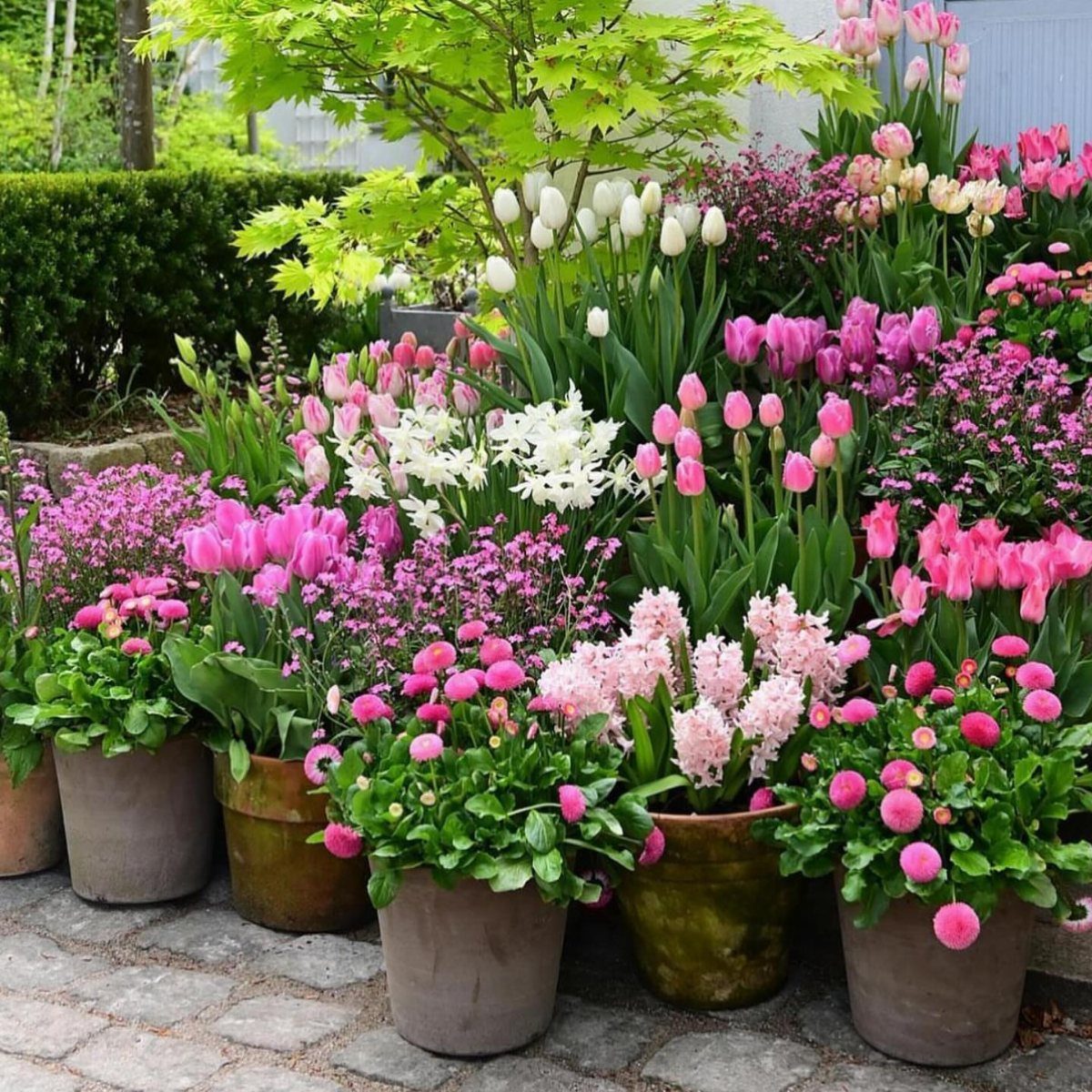
Fall planting for spring color requires patience that pays off in March and April when little else is ready.
I buy bulbs in September, before the bins get picked over, and get them in the ground well ahead of your first hard frost.
Pre-chilled bulbs forced in containers can move around wherever you need color. If you go that route, store the pots somewhere cool like an unheated garage or cold frame until shoots start to show.
Drainage matters more than soil richness; a handful of grit at the bottom of each hole or pot keeps bulbs from rotting.
3. Garden Arbors
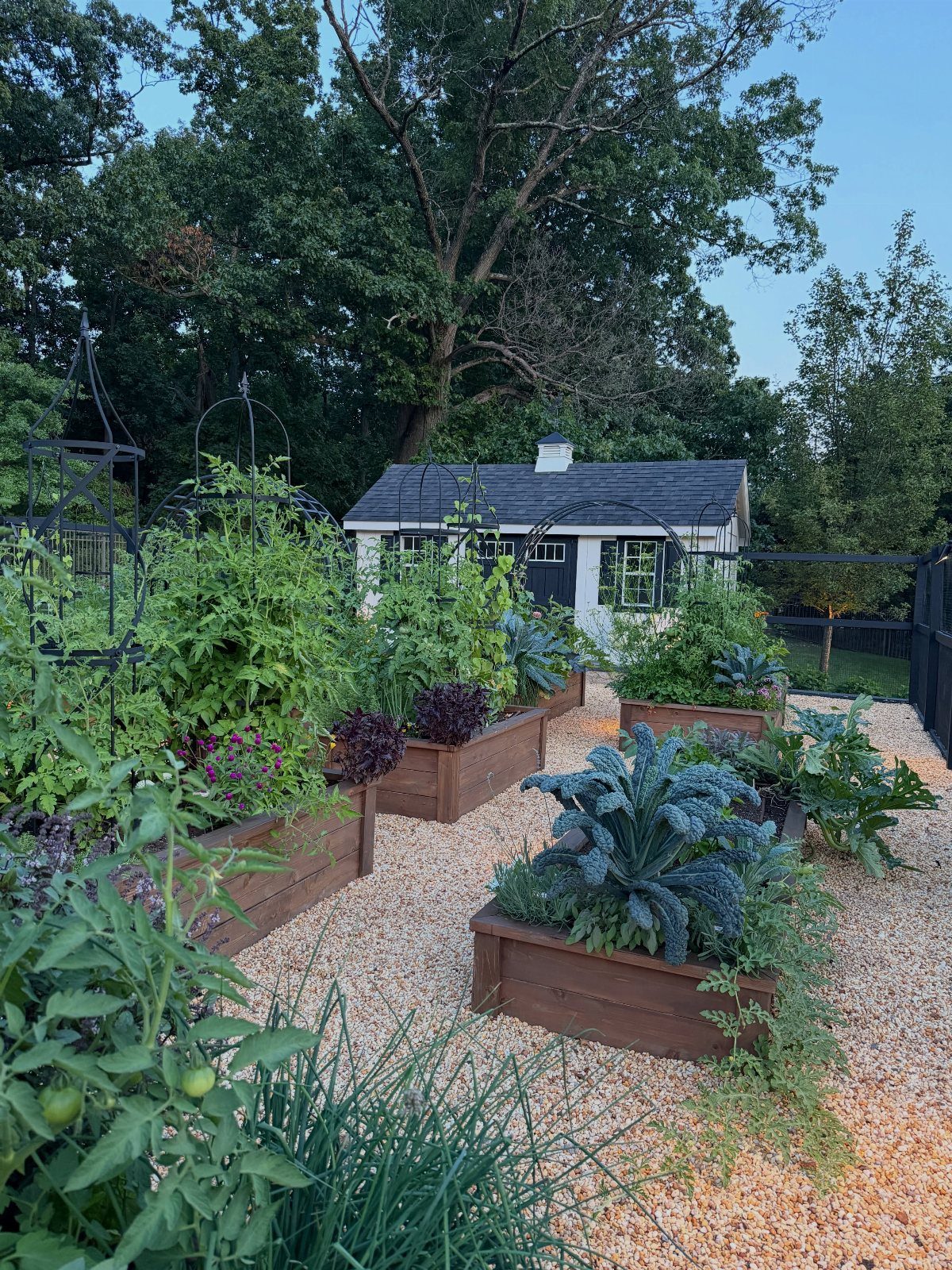
Metal arbors give climbing plants something to grab and give the gardener a vertical moment in a flat bed.
The black finish soaks up heat, which can stress young clematis roots if you plant too close; I leave plenty of clearance and let the vine find its way.
These particular arbors are steel, so they will rust eventually unless you touch up scratches.
I would not trust a lightweight aluminum version in a windy spot, but for vegetables like the tomatoes and kale shown, weight barely matters. Set posts deep enough for your frost line, shallower only in the warmest zones.
4. Layering Plants

Layering means thinking in 3 dimensions, not just filling a bed from front to back.
Tree canopy above, mid-size shrubs and perennials in the middle, and ground-level plantings below; that structure carries the eye even when individual plants are not blooming.
I start with the tallest element, usually a small tree or large shrub, and work downward rather than planting piecemeal.
The lawn in this garden acts as a visual pause, which I find necessary; a solid wall of layered planting reads as chaos without some breathing room.
Budget for the bones first: one good tree outlasts three seasons of annual filler.
5. Native Plants

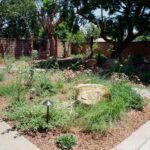
Native plants match the conditions they evolved in, which for most American gardeners means less water, less fertilizer, and fewer interventions once established. Apricot mallow handles full sun and poor soil that would crisp a hydrangea in a week.
I check regional native plant society lists rather than nursery tags, since "native" gets stretched to mean anything North American, and a Maine plant will drown in Texas clay.
Wildlife benefit is real but not instant; a native planting needs time to build the insect population that draws birds. I would plant in groups of three to five, not singles, so pollinators can work efficiently.
6. Fall Foliage and Berries
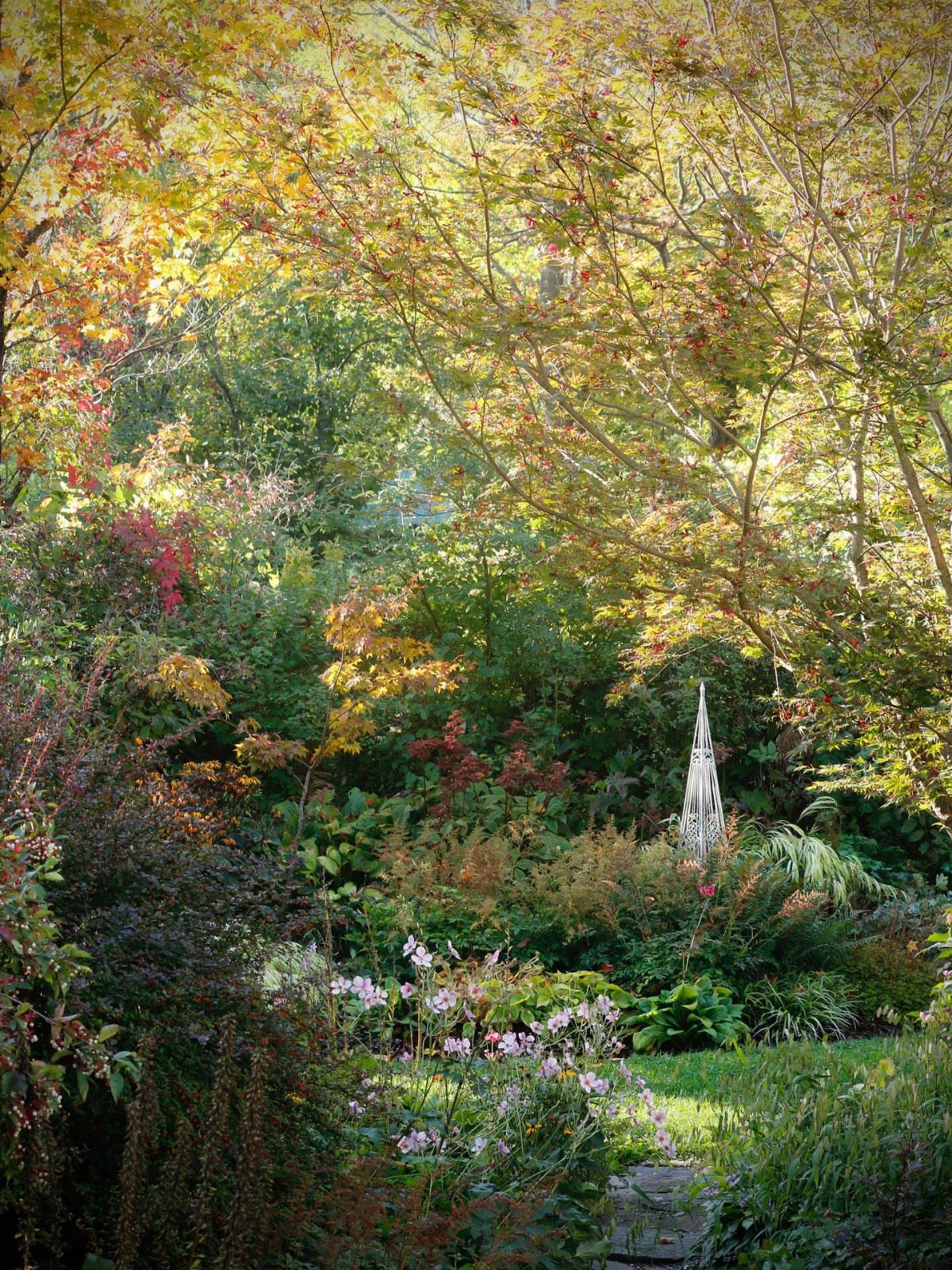
Fall color is not an accident; it is a selection you make in spring when the nursery stocks only green.
The photo mixes trees with yellow and red foliage, late perennials still in pink flower, and shrubs with berries, which means something is performing at every level.
I prioritize berries that persist after leaves drop, since bare branches with fruit read as intentional rather than spent.
The white obelisk gives the eye a resting point; without a vertical, autumn beds can look like a pile of unrelated hues.
If your yard is small, one serviceberry or viburnum covers both foliage and berry duty without demanding multiple planting holes.
7. Multi-Season Interest Plants
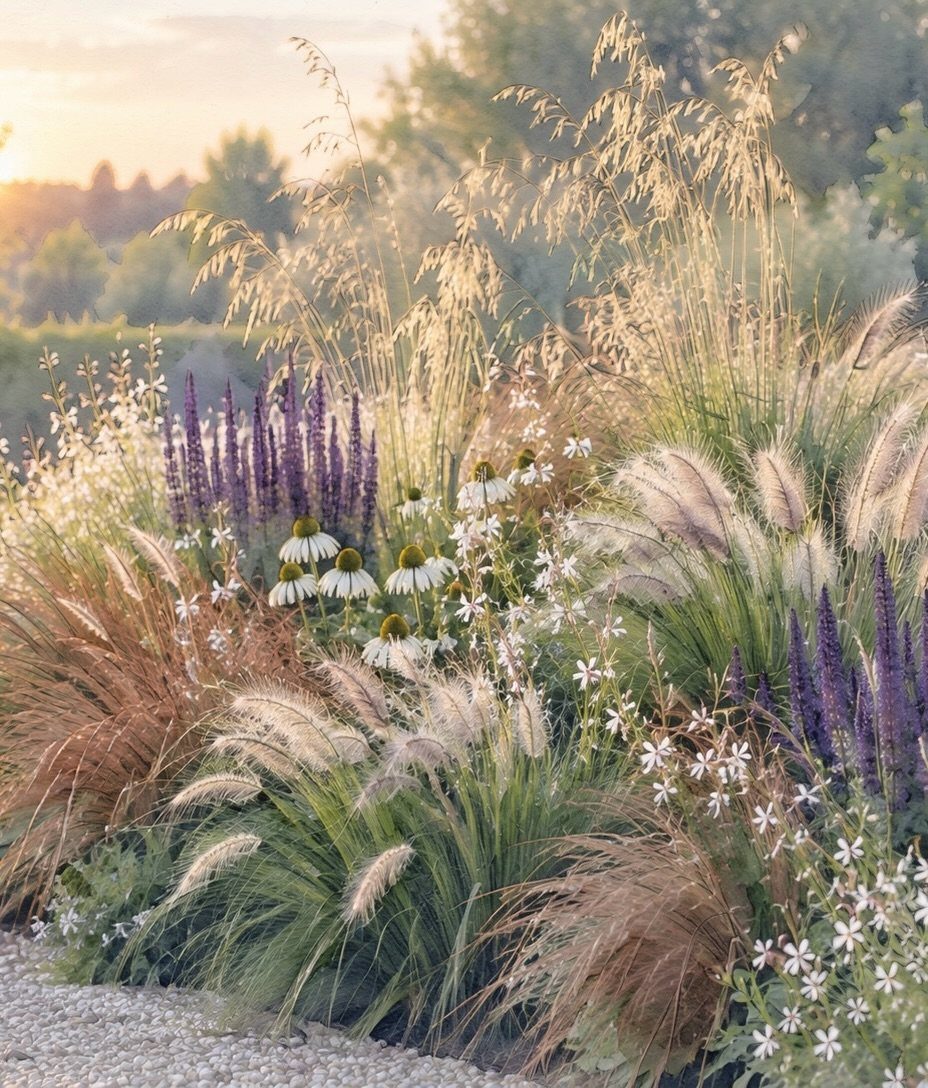
Ornamental grasses, salvia, and coneflowers together give you texture in June, seed heads in August, and winter structure when everything else is cut back.
I look for plants that earn their spot at least three seasons, not one spectacular month and eleven of bare sticks.
Grasses handle this best; their foliage starts early and the dried blades catch frost light through January. Purple salvia blooms for weeks if you deadhead, and spent cones attract goldfinches once color fades.
Check mature height before you plant; a grass that reads as "medium" on the tag can shoot up taller than you expect and shade out everything you paired it with.
8. Garden Fountains and Ponds

A pond with moving water brings sound and reflection into a garden that flowers alone cannot manage.
Koi need depth below your frost line to survive winter; in zone 6 and colder, that means a deep pond or a bubbler to keep ice from sealing the surface.
Submerged seating looks playful in photos but stays wet, so I would skip it for a space I actually use and keep chairs on the surrounding deck.
Pumps clog with leaves and need cleaning twice a season; budget that time or the water goes stagnant and the sound stops.
9. Late-Blooming Sedum and Grasses

Pink sedum starts when summer perennials finish, carrying color into September while hosta leaves turn gold and grasses shift to tan.
I plant sedum where I can see it from the house, since the bees it draws are pleasant to watch and the blooms age to rust-colored heads that last through light frost.
Brick edging like this keeps lawn grass from invading the bed but needs resetting every few years as ground shifts.
Sedum wants lean soil; too much nitrogen and it flops open at the center. I would divide clumps every 3–4 years to keep them dense and upright.
10. Hydrangea and Perennial Borders
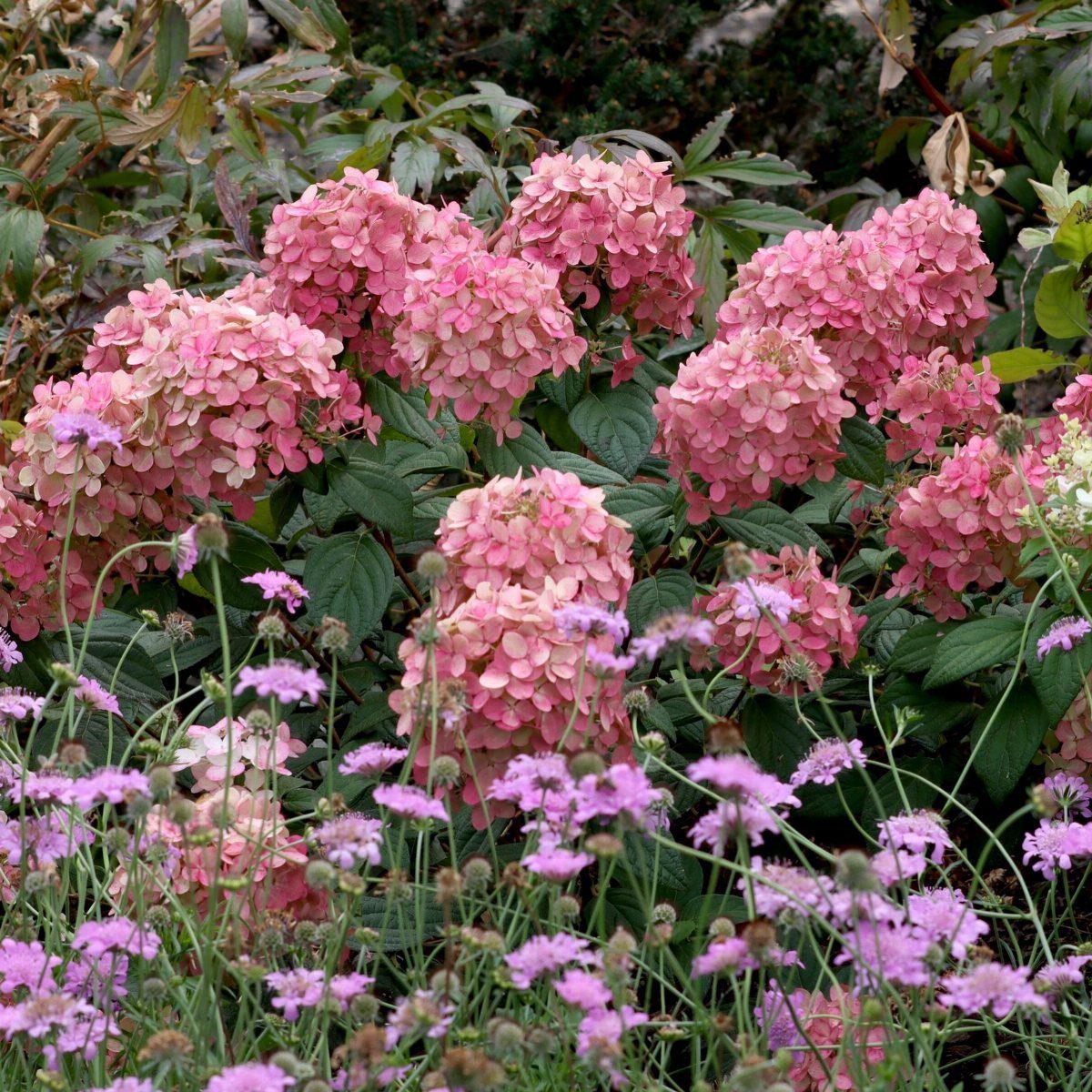
Bigleaf hydrangeas in pink give you July impact at a scale few perennials match, and the dried heads can stay standing into winter if you do not cut them.
The finer purple flowers in front provide contrast in scale; without that lacy layer, the bed reads as heavy and flat.
I plant hydrangeas where they get morning sun and afternoon shade, especially in hotter zones where leaves scorch by August without some cover.
Importance of Planning
I would start any four-season plan with one unifying element beyond the basics of zone, soil, and light.
That shared thread, whether it is leaf texture, color family, or plant form, keeps the garden from reading as a collection of random purchases.
Decision fatigue is real even with beautiful things, and a rule you set in advance cuts the field down fast.
A landscape designer can draw the bones if your budget allows, though plenty of gardeners map their own beds with graph paper and patience.
Either way, invest the hours before the first plant goes in. Four-season gardens have too many moving parts to sort out as you dig; transitions that look effortless in July were usually plotted the previous winter.
Wildlife Benefits
A garden that performs year-round gets used more often, and that alone justifies the effort.
I notice the shift most in the margins of the day, early morning coffee or evening walks, when there is still something to catch the eye.
Native plantings build insect populations over time, which then draws birds.
That benefit is not instant; a single season of new natives will not flood your yard with goldfinches. The habitat value compounds as the planting matures.
But beyond enhancing your garden’s aesthetic appeal, a well-designed four-season garden can also support local wildlife, ensuring that your garden remains a focal point of beauty and life, even in the depths of winter.
Seasonal Cleanup Advice
I hold off on cutting perennials back until late winter, not because I am lazy but because the standing structure carries the garden through months when nothing is green.
Seed heads catch frost, dried stems hold snow, and the silhouette of a grass clump reads as intentional against bare ground.
Evaluate each plant before you cut.
Coral bells, hellebores, prickly pear, amsonia, hydrangeas, and ornamental grasses all earn their keep past bloom time. I only cut out what looks sick, broken, or genuinely sloppy; everything else I leave standing until I prep for spring.
For dogwoods and willows grown for those red or yellow winter stems, I cut them back hard right as the buds start to swell.
That timing matters; too early wastes the color you are trying to renew, too late and you lose the flush of young wood.
That bright stem color only runs in the newer wood, so skipping this cut means watching the whole plant go dull gray.
Frequently Asked Questions
What is a four season garden?
A four season garden is designed to look good every month of the year, not just when flowers are blooming.
It builds interest from flowers, foliage, berries, bark, evergreens, seed heads, and the structure of plants themselves. A four season garden is planned so that something looks alive or interesting in every month, not just the warm ones.
What is the 70/30 rule in gardening?
This guideline suggests planting 70% perennials and 30% annuals. Perennials come back each year and form the backbone of a four-season plan, while annuals fill gaps with reliable color.
What are the season vegetables?
These are vegetables that can grow and be harvested across multiple seasons, including winter in milder climates.
Hardy greens like kale, chicory, and endive handle cold well; broccoli, Brussels sprouts, cauliflower, cabbage, and winter squash also extend the harvest. Heavy mulch, row covers, or garden blankets improve your odds when temperatures drop.